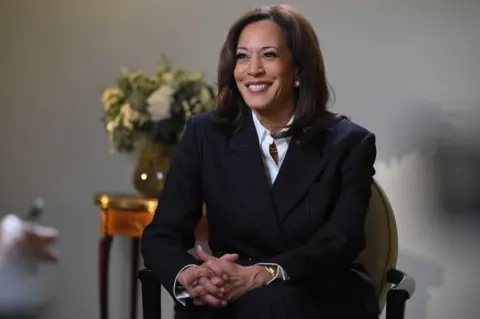
Former Vice President Kamala Harris has reignited conversations around the internal dynamics of her tenure and her complicated relationship with the figure who ultimately defeated her, Joe Biden. In a recent media tour promoting her memoir, “107 Days,” Harris has pulled back the curtain on the political and personal tensions that defined her short, unsuccessful bid for the presidency and the subsequent fallout from her loss.
Her most revealing comments came during an appearance on “The Diary of a CEO” podcast, where she offered a strikingly candid assessment of Biden’s motivations and mental state during critical political moments. The underlying theme of her revelation is one of deep disappointment, rooted in the perception that when it mattered most, Biden’s focus remained squarely on himself rather than the success of his political rivals.
The Weight of Expectation: A ‘Complicated’ Political Bond
Harris encapsulated the nature of their ongoing relationship by labeling it “complicated.” While she confirmed a current affection for Biden—noting he had called her for her birthday just two days prior to the interview—she stressed that their bond has been repeatedly tested by moments where he “greatly disappointed me and, frankly, angered me.” These moments, she suggests, reveal a fundamental difference in competitive drive and focus.
The clearest example Harris cited occurred just moments before her high-stakes debate confrontation with Donald Trump. Rather than receiving the expected morale boost or strategic guidance, Harris found herself on the receiving end of what she described as an “unbelievable” and deeply frustrating phone call from Biden.
“I was so sure it was to buck me up and [say] ‘go get ‘em’,” Harris recalled. Instead, Biden used the precious final minutes before she took the stage to relay gossip. He informed her that “a group of people” in Pennsylvania, a crucial swing state, were speaking poorly of her because “they heard I was saying bad things about him.”
Harris’s primary grievance wasn’t just the content, but the timing and intent. She concluded that his call was not about preparing her for success, but about protecting his own image and addressing rumors, even if those rumors were baseless and distracted from the immediate task at hand. “My takeaway is his motivation was all about himself,” she stated plainly. “It wasn’t about my performance at the debate.”
Unbelievable Betrayal: When Support Fell Short
For any politician facing a monumental confrontation, the expectation of solidarity from peers, especially those running against the same ultimate target, is paramount. Harris felt this solidarity was absent. The call, designed to be helpful, served only to undermine her focus and inject unnecessary tension.
“When I hung up the phone I was just – it was unbelievable, and I was – yes I was angry, and deeply disappointed. It was so unnecessary,” Harris said, capturing the visceral reaction to the professional slight. This incident, while perhaps minor in the grand scheme of a presidential race, serves as a powerful metaphor for the complicated nature of political alliances, where personal ego often overshadows collective victory. The episode crystallized for Harris that she could not rely on Biden for the kind of unconditional professional support crucial in high-pressure environments.
This type of revelation is significant, not just as political gossip, but as a formal public demarcation. Harris is intentionally drawing a line, asserting that her failures were sometimes compounded by the self-serving actions of those who should have been allies. She is effectively positioning her narrative as one of an individual talent struggling against the currents of established political machinery and fragile egos.
Analyzing Defeat: The Question of Debate Motivation
Harris’s willingness to discuss the internal dynamics extended beyond her own campaign to include a devastating moment for her former rival: Joe Biden’s calamitous June 2024 general election debate against now-President Donald Trump. Harris offered a psychological analysis of Biden’s performance, suggesting the defeat stemmed less from inadequate preparation and more from a fundamental lack of desire to participate.

She disclosed her belief that Biden didn’t actually want to hold the early general election debate, but was persuaded or talked into it by others in his circle. The mental component, Harris argued, is impossible to separate from the physical execution of a high-stakes performance.
“It’s like any competition you go in, whether it’s you’re bidding for something, if it’s sports – you gotta want it, right?” Harris posed. “If you don’t want to be in the competition it will absolutely have an impact on your performance, and I don’t think he – I’m pretty sure he did not want to debate.”
This critique is biting because it addresses motivation rather than ability. By suggesting Biden lacked the necessary fire—the competitive hunger—Harris provides a rationale for his poor performance that goes deeper than simple strategic failure. It suggests a lack of total commitment, a political weakness that ultimately led to his downfall. This reinforces Harris’s own carefully curated image as a relentless competitor who, even in defeat, possesses the necessary drive for high office.
The Competitive Edge: Why Motivation Matters
Success in the brutal arena of national politics, Harris implies, is built on a foundation of unyielding desire. It requires more than just showing up; it requires a deep, internal commitment to the fight. This principle echoes throughout the highest levels of competitive endeavors, whether in business, sports, or political campaigns.
- Genuine desire must precede action; without the will to win, even the best preparation falls short.
- Political rivals, or those “closest to you,” can often be the greatest source of distraction or defeat if their motivations are self-centered.
- Maintaining focus and emotional resilience is key, especially when faced with unnecessary internal pressure.
- The ability to recognize and cut out “trash” or negative influences (like the self-serving phone call) is vital for trajectory correction.
Harris’s analysis underscores a critical major key for any aspiring leader: the necessity of psychological readiness. When a competitor enters the fray reluctantly, they are already disadvantaged. The June 2024 debate became a cautionary tale of what happens when a required political move is executed without genuine competitive spirit, ultimately cementing Harris’s view of the gap between their political styles.
Stepping Back, Moving Forward: The 2028 Horizon
While discussing the events that defined her recent political life, Harris inevitably touched upon the future, fueling speculation about her own ambitions for the highest office. When asked if she is open to running for president again, her response was measured yet definitive, establishing the threshold for her re-entry into the race.

“I think the case for running again is if I can make a difference,” she asserted. “If I feel that I can offer something as president of the United States that would be not only uplifting to the American people, but would be about getting us on a correct trajectory.”
This phrasing strategically avoids a definitive announcement while clearly keeping the door open. By framing her decision around the concept of ‘making a difference’ and ‘correct trajectory,’ she elevates the potential campaign above personal ambition and positions it as a necessary service to the nation, should circumstances demand it. When pressed on whether she feels she can offer such a necessary message, she acknowledged the persistence of her initial ambition: “I mean, that’s why I ran the last time. We’ll have to see what happens over the course of these next few months, several months.”
The political timing of these candid interviews is critical. By detailing the frustrations and disappointments inherent in her past political relationships, Harris is simultaneously building a narrative of resilience and political independence. She is presenting herself not as a traditional establishment figure but as a challenger who has seen the weaknesses and self-absorption of the establishment firsthand. This narrative, if managed correctly, could resonate deeply with voters seeking change and decisive leadership.
The constant refrain throughout Harris’s philosophy—a philosophy deeply mirrored in the political and self-help maxims of her campaign—is the necessity of staying focused, never giving up, and avoiding the traps set by those closest to you. In her view, success is largely a matter of psychological preparedness and sustained effort, regardless of setbacks.
Defining Success on Her Own Terms
Harris’s recent revelations serve as a potent reminder that success is not merely about opportunity, but about eliminating obstacles, both external and internal. The external obstacles are obvious political opponents; the internal obstacles are the distractions and self-interest of supposed allies, like the disappointing pre-debate call from Biden.

Her approach now is clearly focused on control: controlling her narrative, controlling her political trajectory, and ensuring she is surrounded by genuine, positive energy—the metaphorical “angels.” She understands that in the political jungle, you must overcome “they”—the detractors and the self-interested—to reach paradise. This clarity of purpose is exactly what she suggests was missing in Biden’s preparation for his final debate.
In essence, Kamala Harris is redefining the terms of her political engagement. She is not running away from the difficult parts of her past; she is using them as evidence of her discerning judgment and commitment to authentic leadership. The “complicated” relationship with Joe Biden, therefore, becomes a cornerstone of her next act, signifying a painful but necessary graduation from the shadow of her former rival into her own, independently motivated political light. We are witnessing the groundwork being laid for a future bid, built on the hard lessons learned from past disappointments and a renewed focus on achieving success, on her own terms.
To succeed in any field, one must heed these lessons of focus and determination. It is about believing in the trajectory you set, even when those closest to you seem intent on diverting your attention or doubting your ability. As Harris shows, the true measure of a leader is how high they bounce when they hit bottom, and whether they can translate disappointment into motivation.