Path of Exile 2 has officially confirmed its 1.0 release date for December 11, alongside the debut of the iconic Duelist class, the introduction of swords as a weapon type, and a suite of free rewards for the community. The explosive announcements arrived during the Gamescom Opening Night Live showcase, which also featured a gameplay trailer demonstrating new skills—including the beloved Cyclone—and a fresh stance mechanic that transforms combat dynamics. With another presentation scheduled for August 27, Grinding Gear Games (GGG) continues building momentum toward the full launch of this highly anticipated action RPG.
- 1.0 Release Date: Path of Exile 2’s full launch arrives December 11, nearly two years after the early access debut on December 6, 2026
- New Class: The Duelist returns from the original PoE, bringing sword mastery, stance mechanics, and fresh Ascendancy classes to the skill tree
- Sword Weapon Debut: For the first time in Path of Exile 2, swords become equippable, introducing new skill gems including Cyclone, Lacerate, and Dual Strike
- Stance Mechanics: Blood and Sand Stances alter skill behavior—Blood Stance adds projectiles to Cyclone while Sand Stance creates damaging area pools
- Free Rewards: Five exclusive cosmetic items unlock through community email registration including the Soulframe Crown Helmet Attachment, Soulflame Weapon Effect, Soulflame Portal, Chained Chimera Wings, and Scourgeborn Boar Pet
- Community Milestone: All five rewards require five million registered email addresses, with progress tracking available on the official Path of Exile website
The 1.0 update represents a monumental shift for Path of Exile 2, which entered early access on December 6, 2026, with a paid Supporter Pack model that departed from its predecessor’s free-to-play roots. While this decision initially disappointed some veterans and newcomers, the game has since evolved through numerous patches, including the recent 0.5 update where Druid builds dominated the meta. GGG demonstrated its commitment to technical stability by shipping a full computer setup to their engineers to resolve a persistent NVIDIA crash bug, a dedication that now pays off with the full release just months away.
GGG’s Gamescom presentation confirmed that the 1.0 patch introduces not just incremental changes but transformative content: the Duelist class, sword weapons, and the return of Cyclone with a stance-based twist. The Duelist, originally a Strength/Dexterity hybrid in the first game, appears to maintain its martial identity while integrating new mechanics that differentiate it from existing Path of Exile 2 classes like the Warrior and the Huntress. Players can expect the Duelist’s Ascendancy classes to offer distinct playstyles, though specific details remain under wraps until the August 27 showcase.
The introduction of swords marks a significant milestone for Path of Exile 2. Despite the game’s extensive weapon roster, swords have been conspicuously absent since early access launched. The 1.0 update rectifies this omission with a full suite of sword-based skill gems. Cyclone leads the charge, but teaser footage also hinted at Lacerate and Dual Strike, suggesting GGG is bringing over fan-favorite melee skills while adapting them to Path of Exile 2’s revamped combat system. Official details can be found on the Path of Exile official website, which provides comprehensive patch notes and developer commentary.
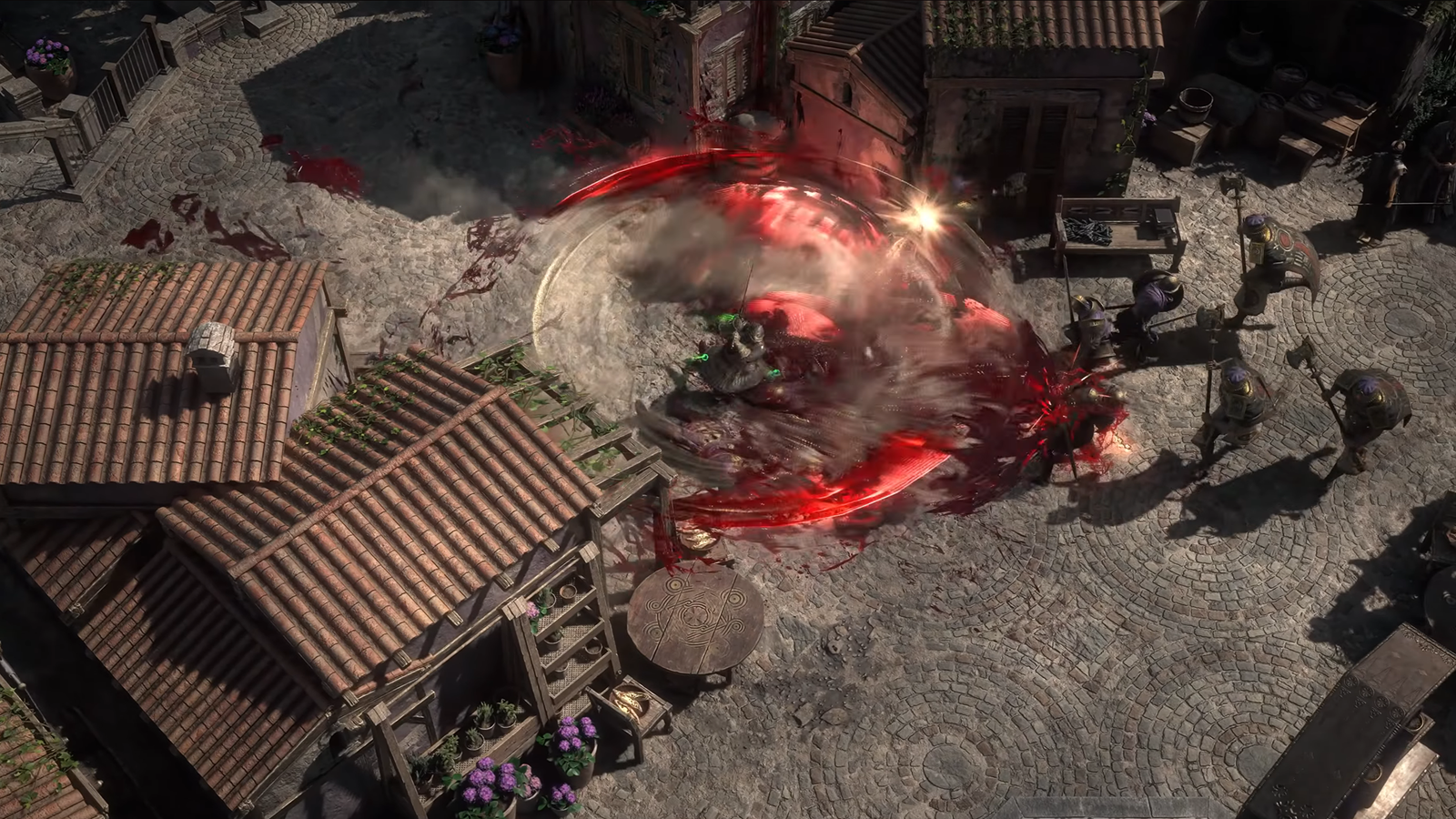
What sets the 1.0 iteration of Cyclone apart is its integration with the stance system. In the original Path of Exile, Blood and Sand Stances offered offensive and defensive tradeoffs through skills like Flesh and Stone. Path of Exile 2 expands this concept by directly modifying Cyclone’s behavior. The Blood Stance enables Cyclone to fire projectiles, creating a ranged-spin hybrid that maintains damage output while engaging enemies at distance. The Sand Stance, conversely, causes Cyclone to leave damaging area pools in its wake, transforming the skill into a zone-control tool. This duality allows the Duelist to adapt to different encounter types, a flexibility that could redefine melee gameplay in the current meta.
The community milestone rewards add another layer of engagement to the 1.0 launch. Players can register their email addresses on the official Path of Exile website to contribute to the five million registration goal, unlocking exclusive cosmetics. The Soulframe Crown Helmet Attachment provides a regal headpiece, while the Soulflame Weapon Effect and Soulflame Portal add fiery visual flair to weapons and travel animations. The Chained Chimera Wings offer an imposing back accessory, and the Scourgeborn Boar Pet accompanies players on their adventures. GGG has not yet clarified whether these rewards will remain available post-launch, but the registration page provides real-time tracking of community progress.
The Duelist Class Returns to Wraeclast With Sword Mastery and Stance Combat
The Duelist’s inclusion in Path of Exile 2 bridges the gap between the original game and its sequel, offering veterans a familiar archetype while introducing mechanics tailored to the new engine. In Path of Exile 1, the Duelist occupied the Strength/Dexterity area of the passive skill tree, excelling in one-handed and dual-wielding combat with a focus on physical damage and evasion. Path of Exile 2’s version appears to retain these core attributes while adding depth through the stance system and sword-specific passives.
GGG has indicated that the Duelist’s Ascendancy classes will emphasize different combat philosophies, potentially including gladiator-style dueling, champion-based leadership, or slayer-inspired brutality. While the August 27 presentation will likely unveil these specializations, early speculation points to synergies with the new sword skills and stance mechanics. For example, one Ascendancy might enhance Blood Stance projectile damage, while another focuses on Sand Stance area denial, creating distinct build paths for ranged-spin or zone-control playstyles.
The Duelist’s addition also expands the Path of Exile 2 class roster, which previously included the Warrior, Huntress, Sorceress, Monk, and Mercenary. With six more classes planned beyond the current lineup, the Duelist represents the first of these expansions. Players can anticipate that each new class will bring unique weapons and skills, with the Duelist serving as a template for how GGG integrates legacy content with new systems. The passive skill tree will receive new nodes tailored to swords and stances, further diversifying endgame builds.
Community reaction to the Duelist announcement has been overwhelmingly positive, with forums and social media buzzing about Cyclone’s return and the potential for sword-based endgame farming. Reddit threads highlight the nostalgia factor while expressing curiosity about how stances will affect bossing and mapping efficiency. Content creators have already begun theorycrafting builds, with early predictions suggesting that a Blood Stance Cyclone Duelist could rival the current Druid meta for clearing speed.
Swords and Cyclone Redefine Path of Exile 2 Combat With Stance-Driven Mechanics
The debut of swords in Path of Exile 2 is perhaps the most understated yet impactful feature of the 1.0 update. Throughout early access, players have wielded axes, maces, staves, bows, and even spears, but swords remained conspicuously absent despite being a staple of the genre. The 1.0 patch rectifies this omission by introducing a full spectrum of sword types—ranging from one-handed blades to two-handed greatswords—alongside skill gems that leverage their unique properties.
Cyclone’s return carries particular significance because it was one of the most iconic skills in Path of Exile 1, enabling spin-to-win builds that dominated multiple leagues. The Path of Exile 2 iteration modernizes the skill by integrating it with the stance system, a feature unique to the sequel. The Blood Stance transformation allows Cyclone to fire projectiles in a spiral pattern, effectively turning a melee skill into a hybrid ranged ability. This approach retains the satisfaction of continuous spinning while addressing the vulnerability that melee characters often face against ranged enemies.
The Sand Stance variation, conversely, creates damaging area pools along Cyclone’s path. This mechanic encourages players to reposition strategically, laying down pools that persist for several seconds and damage enemies who enter them. This design promotes active engagement with the stance system, as players must toggle between Blood and Sand based on encounter demands—Blood for single-target burst or kiting, Sand for area denial and crowd control. The skill gem’s description in the Gamescom trailer confirmed that stance toggling occurs seamlessly, with visual cues differentiating the two modes.
Beyond Cyclone, the trailer hinted at Lacerate and Dual Strike, suggesting that sword skills will encompass both spinning and slashing techniques. Lacerate, historically a dual-wield skill that inflicted bleeding wounds, could benefit from stance modifications that alter its area or debuff application. Dual Strike, another legacy skill, might receive enhanced critical strike chances or additional projectiles in Blood Stance. These speculations align with GGG’s design philosophy of honoring the first game’s legacy while innovating within the sequel’s framework.
Players can reference the Grinding Gear Games YouTube channel for the full gameplay trailer, which showcases these skills in action and provides developer commentary on the design decisions behind swords and stances.
Path of Exile 2 Free Rewards Drive Community Engagement Through Email Registration
The free rewards initiative is a clever community engagement strategy that benefits both GGG and players. By requiring five million registered email addresses, GGG secures a robust marketing database while offering players exclusive cosmetics that would otherwise cost real money in the in-game shop. The rewards bundle, collectively titled the Soulframe Collection, includes five distinct items that reflect the game’s dark fantasy aesthetic.
The Soulframe Crown Helmet Attachment stands out as a striking headpiece with burning ember effects that trail behind the player. The Soulflame Weapon Effect applies a similar fiery aura to any equipped weapon, creating a visual synergy with the helmet. The Soulflame Portal transforms the player’s travel animation into a swirling vortex of flame and shadow, adding a mobility flair that stands out in party play. The Chained Chimera Wings provide a massive back accessory with animated chains that clink during movement, and the Scourgeborn Boar Pet serves as a faithful companion with rugged, battle-scarred aesthetics.
GGG has not disclosed whether these items will be available for purchase after the registration campaign ends, creating a sense of urgency among the community. The registration page tracks the total number of emails submitted, and progress bars for each milestone indicate how close the community is to unlocking specific rewards. As of the Gamescom announcement, the counter sits at approximately 800,000 registered addresses, meaning the community must mobilize to reach the five million target before the December 11 launch.
This strategy mirrors previous GGG campaigns, such as the Supporter Pack early access keys, where community participation unlocked additional rewards. The developer’s experience with community-driven events ensures that the registration process is straightforward—players simply visit the official website, enter their email address, and confirm their subscription. No purchase is required, and existing Supporter Pack holders can still participate to claim the free items.
While the rewards do not provide gameplay advantages, they offer cosmetic prestige that demonstrates a player’s involvement in the 1.0 launch. For collectors and completionists, the Soulframe Collection represents a limited-time opportunity to obtain items that may never return to the shop. GGG has hinted that additional community milestones might be added if the registration goal is met before December, further incentivizing early participation.
What Path of Exile 2 1.0 Means for Endgame Content and Future Expansions
Beyond the headline features, the 1.0 update carries significant implications for Path of Exile 2’s endgame and long-term trajectory. League mechanics like Breach, Delirium, and Heist remain intact, though GGG has not confirmed whether they will receive balance adjustments or new content. The introduction of swords and the Duelist class may shift the endgame meta, particularly in mapping and bossing, where current Druid builds excel through minion and area damage synergies.
Endgame content in Path of Exile 2 revolves around the Atlas of Worlds, where players complete maps to progress toward pinnacle bosses. The Duelist’s stance mechanics and sword skills could offer new strategies for handling high-tier maps, especially those with dangerous ranged enemies that Blood Stance Cyclone can address. Sand Stance area pools provide additional crowd control for dense maps, potentially reducing the reliance on minion-based defenses.
The Ascendancy classes for the Duelist remain the most significant unknown. In Path of Exile 1, the Duelist had three Ascendancies: Gladiator (block and bleed), Champion (armour and impale), and Slayer (two-handed and leech). Path of Exile 2 may adapt these archetypes while introducing new ones that leverage the sequel’s mechanics. For instance, a stance-focused Ascendancy could enhance the transition speed between Blood and Sand, allowing players to switch fluidly based on combat flow. Alternatively, a sword-master Ascendancy might emphasize critical strikes or elemental conversion, broadening the Duelist’s viability across different damage types.
GGG’s August 27 showcase will likely address these questions, offering a deeper dive into Ascendancy passives, skill gem interactions, and potential synergies with existing classes. The developer has also teased that 1.0 is just the beginning, with additional content planned for 2027 including new classes, weapons, and league mechanics. For now, the focus remains on ensuring a stable launch, with GGG’s engineers working tirelessly to patch any remaining technical issues.
Path of Exile 2 Release Date and August 27 Showcase: What to Expect Next
The August 27 presentation promises to be the definitive preview before the December 11 launch. GGG has confirmed that the showcase will feature extended gameplay footage, detailed explanations of the stance system, and the full reveal of the Duelist’s Ascendancy classes. Additionally, the developer will outline the 1.0 patch notes, addressing balance changes, bug fixes, and quality-of-life improvements that fans have requested throughout early access.
Speculation among the community suggests that the August 27 event might also reveal the second new class planned for 2027, or at least a teaser for upcoming content. Given that the Duelist represents the first of six additional classes, GGG likely wants to maintain momentum by hinting at what follows. The developer has historically used such showcases to drop surprise announcements, so fans should temper expectations while remaining open to unexpected reveals.
For players eager to prepare for 1.0, the current early access servers will remain operational, allowing veterans to farm currency, level additional characters, and experiment with gear. The transition from early access to full release will likely preserve player progress, as GGG has indicated that characters and items will carry over. This decision contrasts with Path of Exile 1’s league-based resets, offering continuity that rewards long-term commitment. Players can also look forward to other major RPG releases on the horizon, with the Persona 6 release date generating similar excitement among fans of the genre.
New players, meanwhile, can take advantage of the free rewards campaign to secure cosmetics before the 1.0 launch. The registration process takes less than a minute, and the email subscription provides updates on patch progress and community milestones. GGG has also announced that the Supporter Pack model will continue, with new packs themed around the Duelist and swords, offering additional cosmetic and currency bonuses for those who wish to support the developer.
As December 11 approaches, the Path of Exile community stands on the cusp of a transformative moment. The 1.0 release represents not just a milestone for the game but a testament to GGG’s iterative development philosophy, which values player feedback and continuous improvement. Whether you’re a veteran spinning through maps with Cyclone or a newcomer claiming free rewards, Path of Exile 2’s full launch promises an action RPG experience that honors its predecessor while forging a bold new path.