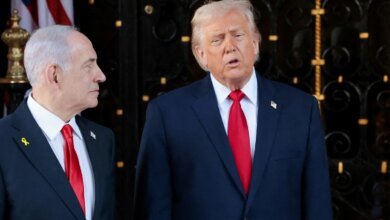
A Storied Feud: Trump’s Longstanding Battle with CNN
You know, the relationship between Donald Trump and CNN has been anything but cordial for years. It’s a feud that has played out dramatically in public, often dominating news cycles itself. From the moment he launched his presidential campaign, Trump singled out CNN as a prime example of what he frequently labeled “fake news” and a purveyor of “enemy of the people” journalism. His rallies often featured specific condemnations of the network, with crowds chanting in agreement. “They are constantly attacking me,” Trump famously declared at a rally in Florida back in 2016, “and I tell you, CNN is probably the worst offender. It’s truly a sad state of affairs for American journalism.” This wasn’t just political rhetoric; it was a strategic dismantling of trust in a major media institution, laying the groundwork for his persistent calls for its re-evaluation or outright sale.
This deep-seated animosity isn’t just about policy disagreements; it runs much deeper, touching on issues of narrative control, perceived bias, and the very role of media in a democracy. Trump’s supporters often echo his sentiments, believing CNN to be fundamentally biased against conservative viewpoints and his political movement. “Every time I turn on CNN, it’s nothing but negativity about President Trump,” remarked Martha, a retired schoolteacher from Ohio who frequently attends Trump rallies. “It’s like they have an agenda. Someone needs to shake things up over there, or just sell it to someone who wants fair reporting.” This sentiment, repeated across millions, provides the grassroots fuel for Trump’s ongoing campaign against the network. It’s a fascinating study in how a political figure can influence public perception of media outlets, creating a climate where corporate decisions become politically charged battlegrounds. The intensity of this conflict means that any move involving CNN, especially its ownership, is immediately scrutinized through a highly polarized lens.
Warner Bros. Discovery’s Dilemma: A Media Giant Under Pressure
Now, let’s pivot to the corporate side of this story, because that’s where the real business vulnerability lies. Warner Bros. Discovery (WBD), the behemoth forged from the merger of WarnerMedia and Discovery Inc., is facing some serious headwinds. The company inherited a massive debt load – we’re talking tens of billions of dollars – from the merger, and that’s a weight that can crush even the most robust corporations if not managed carefully. CEO David Zaslav has been on a mission to cut costs, streamline operations, and pay down that debt, leading to significant layoffs and strategic shifts across the entire portfolio. It’s a challenging environment for any company, let alone one trying to integrate two massive cultures and their diverse assets.

In this high-pressure environment, asset sales become a very real consideration. When a company is drowning in debt, everything gets a price tag, even iconic brands. “Look, WBD has been under immense pressure from investors to deleverage,” explained Sarah Chen, a senior analyst at MediaTech Insights. “Every quarter, the earnings calls are dominated by questions about debt reduction and free cash flow. If an asset isn’t performing optimally or isn’t core to the future strategy, it becomes a candidate for divestiture. A CNN sale, while complex, certainly fits that profile as a high-value, non-core asset that could fetch a substantial sum and significantly impact the debt picture.” This isn’t just theory; we’ve already seen WBD make tough choices, like removing certain films and shows from its streaming services to save on residuals. The idea of shedding a major news network, especially one that requires significant investment and often draws political fire, starts to make some cold, hard business sense in this context. It’s not about whether CNN is valuable; it’s about whether it’s the *right* kind of valuable asset for a company in WBD’s current financial straits. The company is, quite frankly, in a bind, forced to consider all options to appease shareholders and stabilize its foundation amidst a rapidly evolving media landscape. It’s a brutal reality of modern corporate finance.
The Political Calculus: Why a CNN Sale Matters to Trump’s Agenda
Let’s be honest, for Donald Trump, the calls for a CNN sale are far more than just casual commentary; they’re a calculated part of his broader political strategy. His interest isn’t in maximizing shareholder value for WBD. No, his focus is squarely on shaping the media narrative and, in his view, neutralizing a perceived adversary. “Trump sees the media as an extension of the political battlefield,” notes Dr. Evelyn Reed, a political communications expert at Georgetown University. “For him, controlling or influencing the narrative is paramount. If CNN were sold to an owner more sympathetic to his viewpoint, or even just one that he believes would offer ‘fairer’ coverage, it would be a significant victory for his movement.”
Imagine the impact if a major cable news network, which has historically been critical of his administration and policies, suddenly shifted its editorial stance. It would undoubtedly change the tenor of political discourse, especially for his base. This isn’t just about wanting a friendlier news channel; it’s about altering the entire ecosystem of information dissemination. Potential buyers could range from conservative media moguls who align with Trump’s ideology, to private equity firms looking for a distressed asset, perhaps hoping to rebrand it. A sale to a more conservative-leaning owner, or even a neutral owner pressured to avoid controversy, would be a dream scenario for Trump, potentially transforming a source of constant friction into something more amenable, or at least less overtly critical. It’s a shrewd political play, leveraging the financial weakness of a major media corporation to achieve a strategic political outcome. The power of suggestion, especially from a figure like Trump, can itself influence market dynamics, making a sale seem more inevitable or even desirable to certain parties.

Untangling the Web: The Complexities of Selling a Major News Network
So, let’s say WBD decides, under pressure or by strategic choice, to explore a CNN sale. You might think, “just put it on the market, right?” Oh, if only it were that simple! Selling a global news organization like CNN is an incredibly intricate undertaking, fraught with financial, regulatory, and reputational hurdles. First, there’s the valuation. What is CNN actually worth? It’s a powerful brand, yes, but cable news viewership is declining, and its digital revenues need scaling. Analysts would have to pore over subscriber numbers, advertising revenue, global reach, and brand equity to arrive at a price tag that satisfies WBD’s debt obligations while also being attractive to a buyer. “It’s not just the financials,” noted David Miller, a managing director at a prominent investment bank specializing in media mergers. “You’re selling a brand that is intensely scrutinized and carries significant political baggage. Any potential buyer needs to factor that into their risk assessment, and that often means a lower premium, or at least a more cautious approach to valuation.”
Then there are the regulatory issues. Any major media acquisition in the United States would be subject to review by the Federal Communications Commission (FCC) and potentially the Department of Justice (DOJ) for antitrust concerns. If a buyer with existing media holdings or strong political ties were to emerge, the scrutiny would be intense. Think about it: ensuring diversity of media ownership, preventing monopolies, and maintaining public interest are all factors that would come into play. A sale to a politically aligned entity, particularly one that might be perceived as consolidating too much influence, would undoubtedly spark a fierce debate and potentially face legal challenges. It’s a minefield, truly.
Beyond that, there’s the sheer logistical challenge of separating CNN from the broader WBD ecosystem. It’s deeply integrated with various technical, operational, and administrative functions. Carving out a standalone entity is a massive project requiring significant legal and operational disentanglement. Finally, and perhaps most importantly, there’s the question of who would even buy it. Private equity might see an opportunity for restructuring and digital transformation, but they’d also be buying into a highly politicized asset. Other media companies might be interested, but few have the capital or the appetite for such a high-profile, controversial acquisition in the current economic climate. It’s a puzzle with many missing pieces.
Beyond the Headlines: What a CNN Sale Means for Journalism
This entire saga, from Trump’s push to WBD’s financial woes, really forces us to confront some fundamental questions about the future of journalism and media integrity. What happens to the editorial independence of a news organization when its fate is so deeply intertwined with corporate debt and political maneuvering? If a CNN sale were to occur, particularly to an owner with a distinct political agenda, it could fundamentally alter the network’s editorial direction, potentially eroding public trust further. “The independence of a newsroom is paramount,” stated Dr. Lena Khan, a professor of journalism ethics at Northwestern University. “When ownership changes, especially under such public and politicized circumstances, there’s always a risk that the new owners might exert influence over coverage, consciously or unconsciously. That’s a dangerous path for a democratic society, where a robust, independent press is essential.”
The implications extend far beyond CNN itself. It sends a chilling message to other news organizations: that even major, established outlets are vulnerable to political pressure and corporate cost-cutting, potentially forcing them to compromise their journalistic mission. In an era where trust in media is already fragile, any perception that news is being shaped by political or financial masters could further polarize audiences and make it even harder for citizens to access objective information. It’s a concerning thought, isn’t it? The erosion of journalistic independence, even if subtle, can have profound effects on public discourse and the health of democratic institutions. We depend on news organizations, flawed as they may be, to act as watchdogs, to hold power accountable, and to inform the public. When those watchdogs become targets in a political game, or are treated as mere assets on a balance sheet, it’s not just a business transaction; it’s a critical moment for the future of information itself.
The situation with Trump and the potential CNN sale is a stark reminder that the media landscape is constantly shifting, influenced by powerful forces both inside and outside the newsroom. It’s a story that encapsulates the challenges facing modern journalism: financial instability, political polarization, and the relentless pressure to adapt. As we watch this drama unfold, it’s impossible not to feel a sense of unease about the implications for objective reporting and the very foundation of a well-informed populace. Will CNN navigate these choppy waters to emerge with its journalistic integrity intact, or will it become another casualty in the ongoing battle for media control? Only time will tell, but one thing is certain: the stakes couldn’t be higher for everyone involved.
Frequently Asked Questions
| What is Donald Trump’s primary motivation for pushing a CNN sale? | Donald Trump’s primary motivation stems from his longstanding belief that CNN exhibits a strong bias against him and conservative viewpoints. He consistently labels the network “fake news” and views a sale as an opportunity to neutralize a perceived adversary, influence the media narrative, and potentially see the network’s editorial stance shift to one he considers fairer or more aligned with his political agenda. |
| How does Warner Bros. Discovery’s financial situation contribute to the possibility of a CNN sale? | Warner Bros. Discovery (WBD) inherited a massive debt load from its recent merger. Under pressure from investors to reduce this debt, WBD is actively seeking ways to streamline operations and potentially divest non-core assets. As a high-value, high-profile asset, CNN becomes a candidate for sale, as a divestiture could generate significant capital to help pay down WBD’s substantial financial obligations, despite the brand’s iconic status. |
| What are the main challenges in selling a major news network like CNN? | Selling CNN presents numerous complexities. These include determining an accurate financial valuation in a declining cable news market, navigating stringent regulatory reviews (FCC, DOJ) to prevent media monopolies or political influence, and the logistical challenge of disentangling CNN from WBD’s broader operational and technical infrastructure. Additionally, finding a suitable buyer willing to take on a highly politicized asset in the current economic climate is a significant hurdle. |
| Who are the potential buyers for CNN, and what might their motivations be? | Potential buyers for CNN could include conservative media moguls seeking to expand their influence and align the network’s editorial stance with their ideology, private equity firms looking to acquire a distressed asset for restructuring and digital transformation, or other large media conglomerates aiming to expand their news portfolio. Their motivations would vary from political alignment and narrative control to purely financial opportunities in a shifting media landscape. |
| What are the broader implications of a potential CNN sale for journalism and media integrity? | A potential CNN sale, especially under political pressure, carries significant implications for journalism and media integrity. It could risk compromising CNN’s editorial independence if new owners exert influence over coverage, potentially further eroding public trust in media. It also sends a message to other news organizations about their vulnerability to political and financial pressures, raising concerns about the future of objective reporting and the critical role of an independent press in a democratic society. |
Important Notice
This FAQ section addresses the most common inquiries regarding the topic.