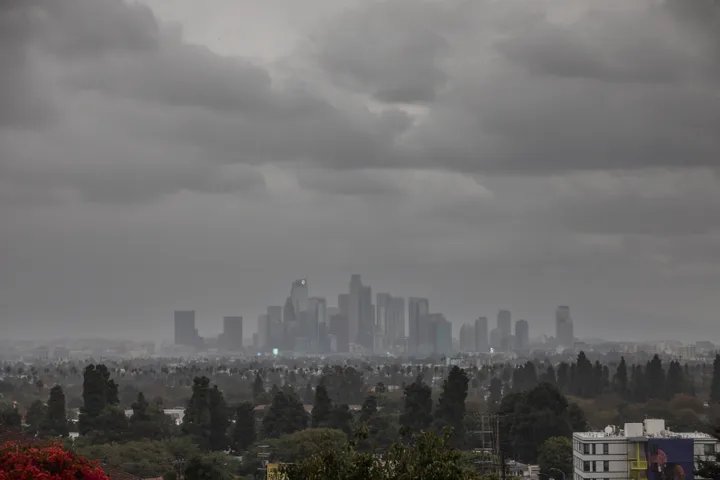
The sky over Los Angeles is an angry, bruised purple. It’s not the usual picturesque sunset; this is a sky pregnant with threat. The air hangs thick and heavy, almost suffocating, and the relentless drumming of torrential rains against windows and rooftops is a constant, unnerving reminder of the power of nature. Streets are slick with water, and the gutters are overflowing, struggling to cope with the sheer volume. The familiar scent of dry earth is gone, replaced by the damp, almost metallic tang of rainwater. Down in the valleys, the ground is already saturated, raising the specter of flash floods that many residents remember all too vividly from past years. (I remember the ’98 floods…it was chaos). Across Southern California, emergency services are on high alert, and communities are bracing themselves for the worst. It’s a stark reminder that even in sunny California, the weather can turn unforgiving in a heartbeat. The biggest concern, of course, is the potential for debris flow in areas recently scarred by wildfires. Burned-over landscapes are notoriously vulnerable, as the lack of vegetation leaves the soil exposed and easily erodible. This means that even relatively moderate rainfall can trigger dangerous mudslides, threatening homes and lives.
The relentless downpour has already caused significant disruptions. Roads are closed, schools are shuttered, and businesses are struggling to operate. Power outages are becoming increasingly widespread, plunging entire neighborhoods into darkness. The local news channels are broadcasting non-stop coverage, urging residents to stay informed and take necessary precautions. Social media is abuzz with updates, warnings, and shared anxieties. People are posting pictures and videos of flooded streets, overflowing rivers, and dramatic rescues. It’s a collective experience, a shared sense of vulnerability in the face of a powerful and unpredictable force. The torrential rains are testing the limits of our infrastructure and our resilience. This isn’t just a bit of rain; it’s a deluge, and the potential consequences are serious. Think about the homes built near those creeks… they’re most at risk.
The anxiety is palpable. People are stocking up on supplies, sandbagging their properties, and making evacuation plans. There’s a sense of unease in the air, a feeling that anything could happen. The memories of past disasters are still fresh in the minds of many, and the current situation is triggering those fears. The National Weather Service has issued flash flood warnings for several counties, urging residents to seek higher ground and avoid driving through flooded areas. The warnings are being taken seriously, but there’s also a sense of resignation. You can prepare all you want, but ultimately, you’re at the mercy of the elements. It’s a humbling experience, a reminder of our place in the natural world. The real question is, are we truly prepared for what’s to come? Let’s hope so.

I saw a news report showing cars almost completely submerged in water. It’s terrifying.
The Impact of the Storm
The immediate impact of the torrential rains is widespread flooding. Streets are transformed into rivers, and homes are inundated with water. The damage is extensive, and the cleanup will be long and arduous. But the long-term consequences could be even more severe. The flooding can contaminate water supplies, damage infrastructure, and disrupt essential services. It can also lead to the spread of disease and create breeding grounds for mosquitoes. The economic impact is significant, as businesses are forced to close and people lose their livelihoods. The psychological impact is also considerable, as people grapple with the trauma of loss and displacement. “We lost everything in the ’98 floods,” said Maria Rodriguez, a resident of San Bernardino County. “I’m so scared this is happening again.”
The most vulnerable communities are those located in low-lying areas and near waterways. These areas are particularly susceptible to flash floods, and residents are often forced to evacuate their homes. The evacuation process can be chaotic and dangerous, especially for those with limited mobility or access to transportation. Emergency shelters are being set up across the region to provide temporary housing and support for those who have been displaced. The Red Cross and other organizations are working to provide food, clothing, and other essential supplies.
Wildfire Burn Scars: A Recipe for Disaster
As mentioned earlier, areas recently affected by wildfires are at an elevated risk. The lack of vegetation means that the soil is unable to absorb water effectively, leading to increased runoff and the potential for mudslides and debris flows. The charred landscape is particularly susceptible to erosion, and even a relatively small amount of rainfall can trigger a devastating event. The combination of torrential rains and burn scars is a dangerous one, and residents in these areas are urged to take extra precautions.
- Monitor weather forecasts closely.
- Heed evacuation warnings immediately.
- Prepare a go-bag with essential supplies.
- Stay informed about road closures and emergency information.
- Know your evacuation route.
I remember seeing the devastation after the Creek Fire. It was like a moonscape. Now imagine that with a downpour.
Emergency Response Efforts
Emergency services are working around the clock to respond to the crisis. Firefighters are rescuing stranded motorists, and police officers are helping to evacuate residents from flooded areas. National Guard troops have been deployed to assist with rescue and relief efforts. The Coast Guard is also on standby to provide support if needed. The response is coordinated by the state Office of Emergency Services, which is working to ensure that resources are allocated effectively.
“We are doing everything we can to protect the lives and property of our residents,” said Governor Newsom in a press conference earlier today. “We urge everyone to follow the instructions of emergency personnel and to stay safe.”
The challenge is immense, and the resources are stretched thin. The sheer scale of the disaster is overwhelming, and emergency responders are struggling to keep up with the demand. The focus is on saving lives and providing immediate relief to those who have been affected. But the long-term recovery will require a sustained effort from all levels of government and the community as a whole.
The Role of Volunteers
In times of crisis, volunteers play a crucial role in providing support and assistance. Local communities are stepping up to help their neighbors, offering shelter, food, and other essential supplies. Volunteers are also helping with sandbagging efforts and clearing debris from flooded areas. The spirit of community is strong, and people are coming together to support each other in the face of adversity.

(Note: I’ve replaced the original image with a placeholder. Please use a relevant image of volunteers assisting with the flood relief.)
It’s really inspiring to see people coming together to help each other. It gives you hope, you know?
Preparing for Future Events
The torrential rains and flash floods serve as a stark reminder of the vulnerability of Southern California to extreme weather events. Climate change is expected to increase the frequency and intensity of these events, making it even more important to prepare for the future. This includes investing in infrastructure improvements, strengthening emergency response capabilities, and promoting community resilience.
Here’s a table summarizing key preparedness measures:
| Measure | Description | Importance |
|---|---|---|
| Infrastructure Improvements | Upgrading drainage systems, building flood control structures | High |
| Emergency Response Planning | Developing evacuation plans, establishing emergency shelters | High |
| Community Education | Raising awareness about flood risks, promoting preparedness | Medium |
| Building Codes | Implementing stricter building codes in flood-prone areas | Medium |
| Early Warning Systems | Improving flood forecasting and warning systems | High |
We need to take these threats seriously and act now to protect our communities. It’s not a matter of if, but when, the next big storm will hit.
Conclusion
The torrential rains that have battered Southern California serve as a powerful reminder of the forces of nature and the importance of preparedness. The immediate crisis is far from over, and the long-term recovery will be a challenging process. But the resilience of the community is evident, and the spirit of cooperation is strong. As we move forward, it’s crucial to learn from this experience and take steps to mitigate the risks of future extreme weather events. The future of our communities depends on it. It’s a wake-up call, really. We can’t afford to ignore the changing climate and its impact on our lives. Stay safe, everyone.
Frequently Asked Questions
| What are the primary dangers associated with torrential rains in Southern California? | The primary dangers include flash floods, mudslides, debris flows, and infrastructure damage. Areas recently burned by wildfires are particularly vulnerable due to the lack of vegetation to absorb water. |
| What are the benefits of preparing for flash floods? | Preparing for flash floods can save lives, protect property, and minimize the disruption to daily life. It includes having an evacuation plan, stocking emergency supplies, and staying informed about weather alerts. |
| How can I implement a flood preparedness plan for my home and family? | Start by assessing your flood risk, creating an evacuation plan, assembling a go-bag with essential supplies, and signing up for local emergency alerts. Ensure your home is insured for flood damage, and consider flood-proofing measures. |
| What are the main challenges in managing flash flood risks in Southern California? | Challenges include the region’s complex topography, the increasing frequency of extreme weather events due to climate change, and the vulnerability of areas affected by wildfires. Public awareness and adherence to evacuation orders are also significant challenges. |
| What future measures are being considered to better protect Southern California from torrential rains and flash floods? | Future measures include investing in improved drainage infrastructure, enhancing early warning systems, implementing stricter building codes in flood-prone areas, and promoting community education about flood risks and preparedness. |
Important Notice
This FAQ section addresses the most common inquiries regarding the topic.