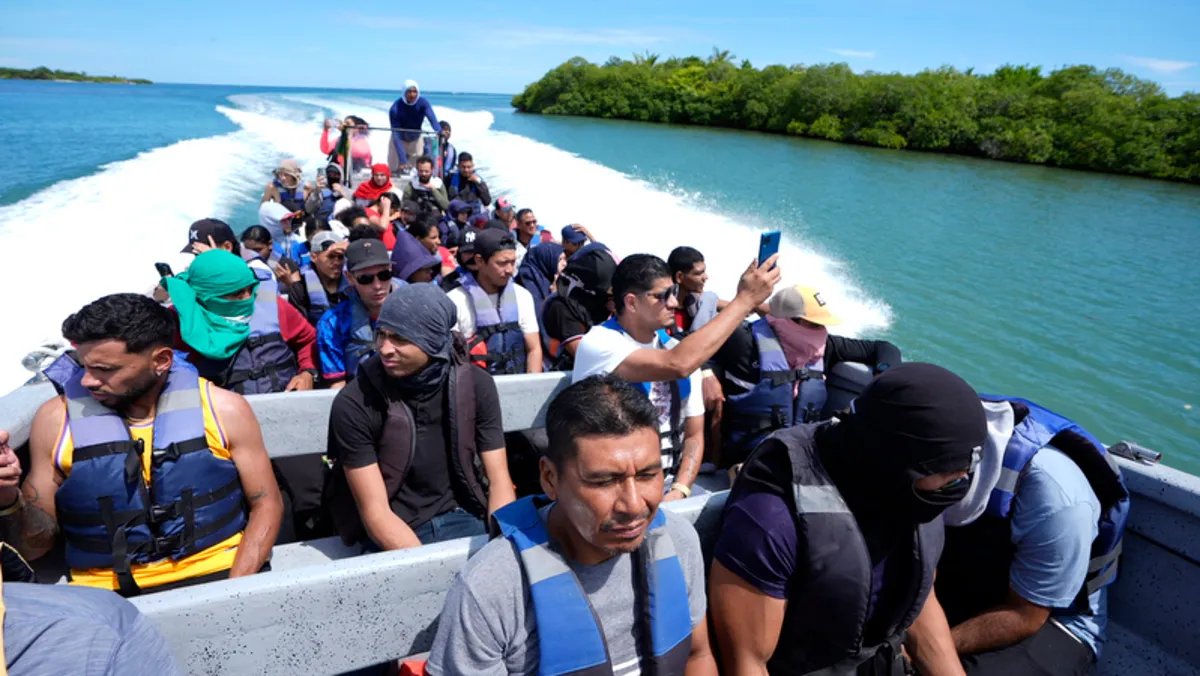
It’s a sweltering August afternoon in Tijuana, Mexico. The air hangs thick and heavy, smelling of exhaust fumes and street tacos. Just a stone’s throw away, the shimmering mirage of San Diego promises opportunity and prosperity. Or, at least, it used to. For years, the siren call of the American dream has drawn people from all corners of the globe, lured by the promise of a better life. But now, a growing number of those who once yearned for a life in the United States are packing their bags and heading home. The reasons are complex, a tangled web of economic hardship, shifting visa policies, and a growing sense of disillusionment. I saw a family with three young children, sitting on battered suitcases, their faces etched with a weariness that belied their years. They were waiting for a bus to Guadalajara, giving up on their attempt to cross the border after multiple failed attempts. (It broke my heart.)
The phenomenon of reverse migration, as it’s becoming known, is a stark reminder that the American dream isn’t always what it seems. It’s a tough reality check. While the U.S. still holds appeal for many, the rising cost of living, particularly in major metropolitan areas, has made it increasingly difficult for newcomers to establish themselves. Add to that the ever-present threat of deportation and the challenges of navigating a complex immigration system, and it’s easy to see why some are choosing to return to the familiarity of their home countries. The stories are heartbreaking. From skilled professionals unable to find suitable employment to families torn apart by strict immigration enforcement, the human cost of this shift is undeniable. It’s a situation that demands a closer look, a deeper understanding of the factors driving this unexpected exodus. It is not one simple thing.
And it’s not just about money. For some, it’s about being closer to family, reconnecting with their culture, and finding a sense of belonging that they couldn’t find in the U.S. The isolation and cultural differences can take a toll, especially for those who arrive without a strong support network. “I missed my mother’s cooking,” one woman told me, her voice thick with emotion. “I missed the sound of Spanish in the streets. I missed feeling like I belonged.” So, let’s delve into why this is happening and what it means for both the U.S. and the countries these individuals are returning to.
The Economic Squeeze: When the American Dream Becomes a Nightmare
The cost of living in the United States has skyrocketed in recent years, particularly in major urban centers. Rent, healthcare, and education expenses have all seen significant increases, making it increasingly difficult for low- and middle-income families to make ends meet. For immigrants, who often arrive with limited resources, the financial strain can be overwhelming.
“I was working two jobs, just to pay the rent,” said Maria Rodriguez, a former restaurant worker who recently returned to El Salvador. “I never saw my kids. I was always tired. It wasn’t the life I dreamed of.” She added, shaking her head, “The American dream felt more like a nightmare, honestly.”
The economic downturn has also played a significant role. Job losses and wage stagnation have left many immigrants struggling to find stable employment. The competition for jobs is fierce, and many immigrants are forced to accept low-paying jobs with little or no benefits.
The Housing Crisis: An Unattainable Goal
Homeownership, a cornerstone of the American dream, has become increasingly unattainable for many immigrants. Skyrocketing housing prices and strict lending requirements have put homeownership out of reach for all but the most affluent. This creates a sense of instability and prevents immigrants from building long-term wealth.

Even renting can be a struggle. Landlords often require high security deposits and proof of income, which can be difficult for newly arrived immigrants to provide. This can lead to overcrowding and substandard living conditions. “Finding a decent place to live was a constant battle,” said Javier, who now lives back in Colombia.
The Impact of Immigration Policies
U.S. visa policies have become increasingly restrictive in recent years, making it more difficult for immigrants to enter and remain in the country legally. The threat of deportation looms large, creating a climate of fear and uncertainty.
“I was always afraid of getting pulled over,” said Elena, who returned to Mexico after living in the U.S. for ten years. “I didn’t have papers, and I knew that if I got caught, I would be deported.” The constant fear took a toll on her mental health and ultimately led her to return home.
Family Separation: A Heartbreaking Reality
One of the most devastating consequences of stricter immigration enforcement is family separation. Parents are deported, leaving children behind. Spouses are separated, and families are torn apart. This can have a profound and lasting impact on the lives of those affected.

“My children were born in the United States,” said Carlos, who was deported to Honduras. “They don’t understand why I can’t be with them. It breaks my heart every day.” The emotional toll of family separation is immense and is a major factor in the decision of many immigrants to return to their home countries, even if it means leaving behind loved ones who are U.S. citizens.
The Pull of Home: Beyond Economics and Politics
While economic hardship and restrictive immigration policies are significant factors, the decision to return home is often driven by more personal and emotional considerations. The desire to reconnect with family, culture, and a sense of belonging can be powerful motivators.
Cultural Differences: Finding a Sense of Belonging
Adapting to a new culture can be challenging, especially for those who don’t speak the language or have a strong support network. Cultural differences can lead to feelings of isolation and alienation. The longing for familiar customs, traditions, and social connections can be overwhelming.
“I missed the food, the music, the way people talked to each other,” said Sofia, who returned to Argentina after living in New York for five years. “I felt like a stranger in my own skin.”
The Changing Landscape of Home
It’s not just about the difficulties faced in the US. Many immigrants are also finding that their home countries have changed for the better. Improved economic opportunities, greater political stability, and a growing sense of national pride are all contributing to the pull of home.

“When I left Mexico, things were very different,” said Ricardo, who returned after 15 years in the U.S. “Now, there are more opportunities, more jobs. It’s not perfect, but it’s home.” He works in IT, something he couldn’t do before.
The Impact on the United States
The reverse migration trend has implications for the United States. A decline in the immigrant population could lead to labor shortages, particularly in industries that rely heavily on immigrant workers. It could also have a negative impact on the economy.
Labor Shortages: Filling the Gaps
Some sectors, like agriculture and construction, are already facing labor shortages. As more immigrants return to their home countries, these shortages could become more severe. This could drive up wages and prices, impacting consumers.
The Loss of Talent and Innovation
Immigrants have long been a source of innovation and entrepreneurship in the United States. The departure of skilled workers and entrepreneurs could stifle economic growth and reduce the country’s competitiveness.
Conclusion: Rethinking the American Dream
The phenomenon of reverse migration is a complex issue with no easy answers. It’s a reminder that the American dream is not a guaranteed outcome and that the realities of life in the United States can be harsh, especially for newcomers. The shifting economic landscape, restrictive immigration policies, and the pull of home are all contributing to this trend. It forces us to ask: What does the American Dream truly mean in the 21st Century? Is it still attainable for everyone? And what can be done to ensure that the United States remains a land of opportunity for all? I think we need to address the core issues driving people away to truly live up to the promise of the “American dream.”
Frequently Asked Questions
| Why are so many immigrants leaving the US? | Several factors contribute to this trend, including high cost of living, restrictive immigration policies, family separation, cultural differences, and improved opportunities in their home countries. |
| What are the benefits of returning to their home country? | Returning home allows immigrants to reconnect with family, culture, and community. They may also find better economic opportunities or a higher quality of life in their home countries. |
| How does the reverse migration process work? | The process involves making the decision to leave, arranging for transportation and housing in their home country, and often navigating complex immigration procedures. |
| What are the challenges faced by immigrants returning home? | They may face challenges such as readjusting to their home culture, finding suitable employment, and accessing healthcare and education. |
| What does the future hold for reverse migration? | The trend is likely to continue as economic and political conditions in the US and other countries evolve. The long-term impact on both the US and the immigrants’ home countries remains to be seen. |
Important Notice
This FAQ section addresses the most common inquiries regarding the topic.