The air hung heavy and humid over the desert racing track, a stark contrast to the usual crisp morning. Dust devils danced lazily in the distance, testament to the dry, unforgiving landscape. But all eyes, and frankly, all ears, were on the gleaming, almost menacing shape that rumbled to life near the starting line. It was a Nissan Patrol, yes, an undeniable icon of off-road prowess, but this wasn’t just any Patrol. This was a beast, a monster barely contained within its familiar silhouette, thrumming with an energy that vibrated through the very ground beneath our feet. “Can you believe that sound?” whispered a fellow enthusiast beside me, his eyes wide with a mixture of awe and slight trepidation. “It’s like a caged lion, ready to erupt.” And erupt it did. With a guttural roar that swallowed the desert silence whole, the vehicle lunged forward, tires spitting sand and gravel as it vanished into a blur of speed. This wasn’t merely fast; this was violent, breathtaking acceleration from an SUV that, by all accounts, should be sedate. We were witnessing a marvel, a testament to what extreme engineering can achieve when unleashed upon an already capable platform: a Nissan Patrol that now paws at 1,000 horsepower. It’s a figure that sounds almost mythical, conjuring images of hypercars, not a family-friendly, rugged SUV. Yet, here it was, a tangible, roaring reality. The notion that such a heavy, utilitarian vehicle could be transformed into a potent performance SUV capable of rivaling dedicated sports cars leaves you speechless. It makes you question everything you thought you knew about automotive limits and the sheer audacity of tuners who dare to push them. This isn’t just about speed; it’s about making a statement, about redefining what an off-road beast can truly be.
The sheer audacity of taking a reliable, go-anywhere Nissan Patrol and injecting it with enough power to warp time itself is, quite frankly, astonishing. For decades, the Patrol has been synonymous with rugged dependability, desert crossings, and family adventures across challenging terrains. It’s the vehicle you trust when the asphalt ends, a steadfast companion in the most remote corners of the world. But then, a new breed of enthusiast emerged, one who saw beyond the utility, beyond the capability, and envisioned something truly extraordinary. They saw the robust chassis, the spacious engine bay, and the inherent strength of the V8 engine as a blank canvas for unimaginable power. (Who knew such humble beginnings could lead to such a monstrous outcome?) The transformation from a workhorse to a thousand-horsepower titan is a journey paved with high-octane fuel, meticulously forged internals, and a relentless pursuit of performance.
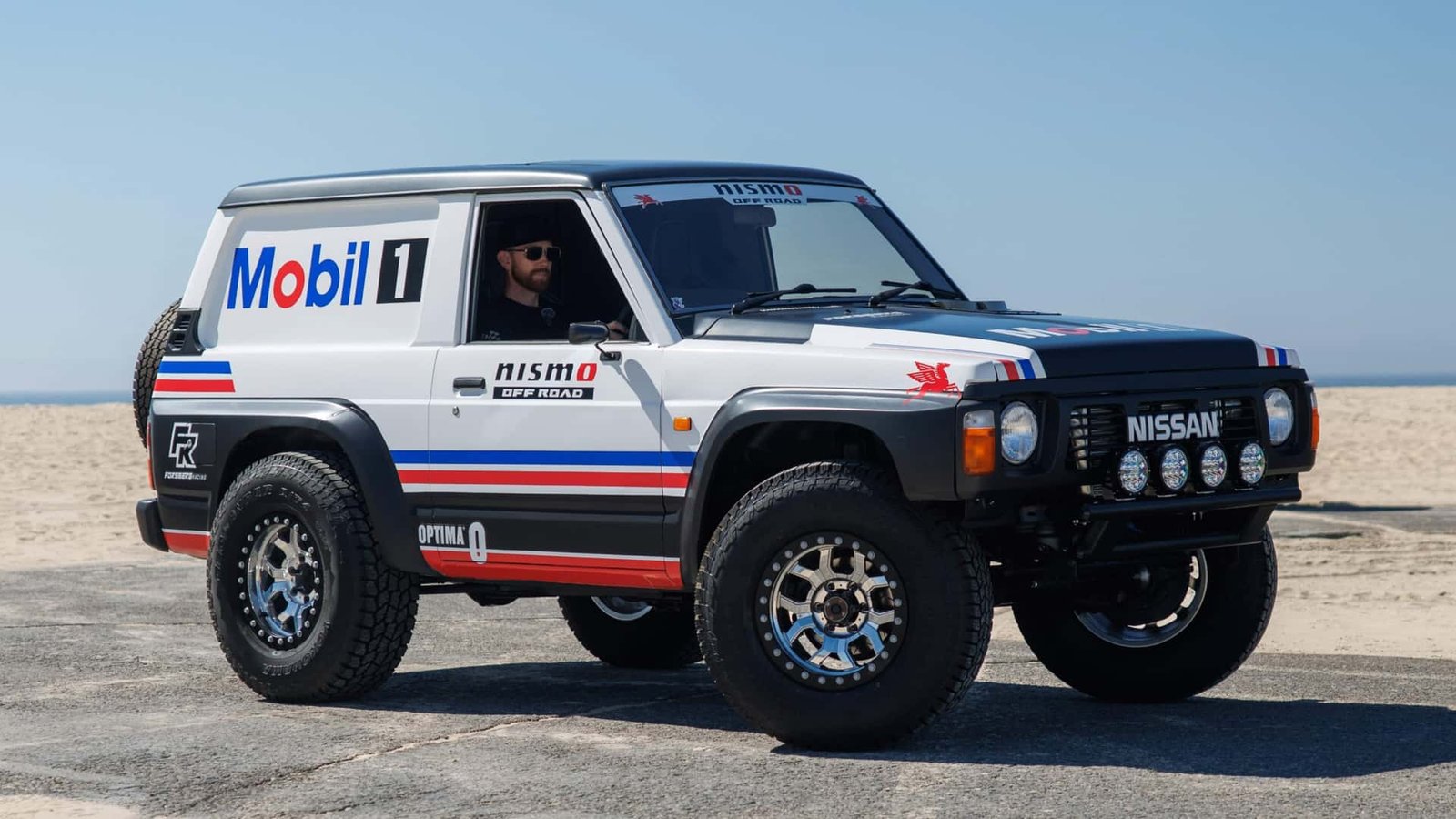
One evening, I recall speaking with Omar, a veteran tuner from Dubai, whose workshop specializes in pushing the boundaries of Japanese SUVs. He leaned back, a faint scent of oil and high-octane fuel clinging to his clothes. “People think we’re crazy,” he chuckled, wiping a smudge from his brow. “Taking a Nissan Patrol, an already heavy car, and trying to hit four-digit horsepower? It’s like trying to make a brick fly.” He paused, a glint in his eye. “But we found a way to make that brick not just fly, but rocket.” The process, he explained, is far more intricate than simply bolting on a bigger turbo. It’s a symphony of engineering, a delicate balance of brutal power and unwavering reliability, where every component must be meticulously chosen and integrated.
The Heart of the Beast: Unlocking the VK56DE’s Potential
At the core of this monumental transformation lies Nissan’s venerable VK56DE V8 engine. In its factory guise, this 5.6-liter powerhouse is no slouch, offering a respectable 400 horsepower and ample torque, perfect for hauling, towing, and conquering dunes. But 1,000 horsepower? That’s an entirely different league. To achieve such figures, the engine undergoes a radical metamorphosis.
“You can’t just throw boost at a stock engine and expect it to live,” Omar continued, gesturing animatedly. “The factory internals simply aren’t designed for that kind of pressure. They’d turn into shrapnel faster than you can say ‘boost’.”
Here’s where the real magic happens. The journey to 1,000 horsepower typically involves:
- Forced Induction: This is the game-changer. Most builds opt for a twin-turbocharger setup, though some brave souls go the supercharger route. Twin turbos allow for a more balanced power delivery, reducing lag and providing a relentless surge of acceleration. Each turbocharger needs to be perfectly sized to work in harmony with the engine’s displacement and intended power output.
- Forged Internals: This is non-negotiable. The stock pistons and connecting rods are replaced with forged, heavy-duty components made from aerospace-grade alloys. These parts are designed to withstand extreme cylinder pressures and temperatures without deforming or failing. Think of it as giving the engine an ironclad skeleton.
- Upgraded Fuel System: More air (from turbos) demands more fuel. This means high-flow fuel injectors, often several per cylinder, a high-capacity fuel pump, and sometimes an entire auxiliary fuel system to ensure the engine never starves for its precious liquid gold. Running lean at these power levels is a recipe for catastrophic engine failure.
- Enhanced Cooling: Generating 1,000 horsepower creates an incredible amount of heat. A larger, more efficient intercooler is critical for cooling the compressed air entering the engine. Additionally, upgraded radiators, oil coolers, and even transmission coolers are vital to maintain optimal operating temperatures, especially in demanding environments like the desert.
- Custom Exhaust System: A free-flowing exhaust system is essential to allow the engine to breathe properly and efficiently expel exhaust gases. Many high-performance Patrols feature custom-fabricated systems with larger diameter piping and minimal restrictions, letting that V8 roar its true potential.
- Engine Management System (ECU): The brain of the operation. A standalone ECU or a highly sophisticated custom tune for the factory ECU is paramount. This allows tuners to meticulously control fuel delivery, ignition timing, boost pressure, and numerous other parameters to extract maximum power safely and reliably.
“It’s like building a high-performance athlete from the inside out,” Omar explained. “You need the strongest bones, the most efficient lungs, and a brain that knows exactly how to coordinate everything under immense stress.”
Beyond the Engine: Drivetrain and Chassis Upgrades
Achieving 1,000 horsepower is one thing; getting that power reliably to the wheels and keeping the vehicle stable is another entirely. The stock drivetrain, while robust, isn’t engineered for forces of this magnitude.

“We’ve seen stock transmissions disintegrate under half this power,” said another engineer, who preferred to remain anonymous, working for a rival tuner. “It’s not if it breaks, it’s when. And when it breaks, it’s usually spectacular.” This necessitates significant upgrades:
Reinforced Transmission
The factory automatic transmission (often a 7-speed unit) is typically fortified with stronger clutches, upgraded torque converters, and sometimes even custom gear sets. Some extreme builds might even opt for a fully built, heavy-duty racing transmission. The transmission cooler, as mentioned, is also absolutely vital to prevent overheating.
Driveshafts and Axles
The sheer torque generated by a 1,000 horsepower Nissan Patrol can twist stock driveshafts like pretzels and snap axles. Custom, heavy-duty driveshafts made from chromoly steel and reinforced axles are essential to transfer power efficiently and reliably to all four wheels. Differential internals often see upgrades too, with stronger limited-slip or locking differentials to handle the strain.
Suspension and Brakes
While the Patrol’s independent suspension is capable, a 1,000 HP version demands more. Performance coilovers, reinforced control arms, and upgraded bushings are common to improve handling, reduce body roll, and ensure stability at high speeds. And what about stopping this behemoth? The stock brakes, while adequate for a standard Patrol, are completely outmatched. Large, multi-piston big brake kits from brands like Brembo or AP Racing, with larger rotors and performance pads, are critical for bringing the vehicle safely to a halt. Imagine trying to stop a freight train with bicycle brakes; that’s the feeling if you don’t upgrade.
“When you’re doing 0-100 km/h in under 4 seconds in an SUV that weighs almost 3 tons, you need brakes that inspire confidence,” Omar emphasized, shaking his head slightly at the thought of insufficient stopping power. “It’s not just about going fast, it’s about being able to control that speed.”
The Driving Experience: What It’s Like Behind the Wheel
So, what does it feel like to command such a machine? Imagine turning the key in a vehicle that looks, feels, and smells like a comfortable, luxurious SUV, but then pressing the accelerator and feeling an immediate, violent shove that pins you to the seat. The roar of the exhaust, the whine of the turbos spooling up, and the relentless acceleration are nothing short of addictive.
“It’s an absolute adrenaline rush,” recounts a driver who competes with a 1,200 HP Patrol in regional desert races. “The first time you unleash all of it, you almost laugh, just pure disbelief. It’s a surreal experience, having that much power under your right foot in a vehicle that can also crawl over rocks.”
The immense torque means that even at highway speeds, a slight prod of the throttle results in instant, brutal acceleration. Overtaking becomes effortless, almost telepathic. Yet, surprisingly, many of these highly tuned Patrols retain a degree of their original comfort and luxury. They are often daily drivers, albeit very, very fast ones. The challenge for tuners is to balance this raw power with everyday drivability, ensuring the vehicle isn’t a temperamental diva that’s only happy on a race track. This involves sophisticated ECU mapping, often with multiple driving modes, allowing the driver to select anything from a docile “commute” setting to a full-power “race” mode.
A Cultural Phenomenon: Why the Patrol?
The Nissan Patrol, particularly in the Middle East, holds a special place in the automotive landscape. It’s more than just a car; it’s a symbol of capability, status, and adventure. This cultural significance fuels the desire to push its limits, creating a vibrant aftermarket tuning scene. Owners aren’t just looking for speed; they’re looking for exclusivity, for the ultimate expression of what their beloved vehicle can become.
“It’s part of our identity here,” explained Nasser, a Patrol owner from Riyadh, admiring his subtly modified Y62. “The Patrol is iconic. To take something iconic and make it legendary, to give it supercar performance while keeping its SUV soul – that’s something truly special.”
This trend isn’t just about showing off; it’s about proving a point. It demonstrates that with enough ingenuity, engineering, and sheer will, nearly any vehicle can be transformed into a high-performance machine. It’s a testament to the enduring appeal of mechanical prowess and the human desire to constantly innovate and exceed expectations.
The Future of Extreme SUVs
As automotive technology continues to advance, the boundaries of what’s possible with SUVs like the Nissan Patrol will only expand. We’re already seeing electric powertrains pushing similar power figures, but there’s a unique visceral thrill to a monstrously powerful V8. The challenge for tuners will be to continue balancing power with reliability, and to adapt to evolving emissions regulations without sacrificing performance.
One can only imagine what the next generation of these incredible builds will bring. Perhaps 1,500 horsepower? Even higher? What’s certain is that the spirit of innovation and the passion for extreme performance will continue to drive enthusiasts to transform humble workhorses into fire-breathing dragons, keeping the legend of the 1,000 horsepower Nissan Patrol alive and roaring for years to come. It’s more than a car; it’s a statement, a rolling testament to the relentless pursuit of automotive perfection, proving that sometimes, the most unexpected vehicles can deliver the most electrifying thrills. It truly is a potent beast that simply paws at the very limits of what’s imaginable.
Frequently Asked Questions
| What makes a Nissan Patrol capable of 1,000 horsepower? | Achieving 1,000 horsepower in a Nissan Patrol involves extensive modifications to its VK56DE V8 engine, including forced induction (turbochargers or superchargers), forged internal components, upgraded fuel systems, and custom engine management tuning. It’s a comprehensive build designed to handle immense power and torque, transforming the vehicle into a true performance SUV. |
| What are the practical benefits of such extreme power in an SUV like the Patrol? | While primarily for exhilaration, a 1,000 HP Nissan Patrol offers unparalleled acceleration, formidable towing capacity, and effortless high-speed cruising, even with heavy loads. It also demonstrates the engineering prowess and potential of the platform, making it a standout in any off-road or on-road challenge. |
| What are the key modifications required to reach 1,000 HP in a Nissan Patrol? | Key modifications include a twin-turbo or supercharger kit, forged pistons and connecting rods, upgraded cylinder heads, high-flow fuel injectors, a stronger fuel pump, a robust intercooler, a performance exhaust system, and a standalone or highly tuned ECU. Transmission and drivetrain components often require reinforcement to cope with the increased torque. |
| What are the main challenges in building and maintaining a 1,000 HP Nissan Patrol? | Significant challenges include ensuring engine reliability under extreme stress, managing heat dissipation, finding compatible drivetrain components that can withstand the power, and tuning the vehicle for both performance and drivability. Maintenance costs are substantially higher due to specialized parts and more frequent servicing. |
| What does the trend of extreme power SUVs like the 1,000 HP Patrol signify for the automotive industry? | This trend highlights a growing demand for extreme performance in unexpected packages and showcases the versatility of platforms like the Nissan Patrol. It pushes the boundaries of engineering, influencing developments in engine technology, chassis dynamics, and cooling systems, even for more mainstream performance vehicles. |
Important Notice
This FAQ section addresses the most common inquiries regarding the topic.