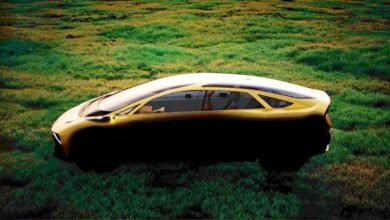
It’s a cold, grey morning in Paris, the kind where the Seine reflects the sky like a sheet of pewter. The air smells of damp stone and strong coffee. I’m standing in front of a nondescript garage, waiting. Waiting to see a car that, for many, represents a forgotten era of French automotive ambition: the Peugeot 605. It’s a car whispered about in enthusiast circles, a vehicle that promised so much but, arguably, delivered less than it could have. What makes it so special? Well, partly it’s the design – sculpted by none other than Pininfarina, the legendary Italian design house. Yes, THAT Pininfarina, the one responsible for some of the most beautiful Ferraris ever conceived. Imagine the surprise, then, that they also penned this elegant, yet largely overlooked, French luxury sedan. “It was always a beautiful car,” a mechanic named Jean-Pierre tells me, puffing on a Gauloises cigarette, “but maybe too subtle for its own good.” (He sighs, a cloud of smoke briefly obscuring his face.) The Peugeot 605 attempted to take on the might of Mercedes-Benz and BMW. A bold move, to say the least.
The story of the Peugeot 605 is a fascinating one, a tale of ambition, design prowess, and perhaps a little bit of unfortunate timing. Launched in 1989, it was intended as a replacement for the aging 604, a car that, while respected, never quite captured the hearts (or wallets) of luxury car buyers. Peugeot needed a hit, a car that would scream “France” while whispering “elegance” and “sophistication.” So, they turned to the best in the business: Pininfarina. The result was a car that, to this day, still turns heads. Its sleek lines, low profile, and understated elegance are a testament to Pininfarina’s mastery. However, despite its stunning looks and impressive pedigree, the Peugeot 605 never quite achieved the sales success Peugeot had hoped for. Why? That’s what we’re here to explore. Did the car have flaws? Was it simply overshadowed by its German rivals? Or was it a case of being just a little too… French? We’ll delve into the history, the design, and the legacy of this beautiful, but ultimately forgotten French luxury sedan.
The air is still damp, the sky still grey, but as the garage door slowly creaks open, the Peugeot 605 within seems to radiate a quiet confidence. It’s a survivor, a testament to a time when French automakers dared to dream big. And, as I run my hand along its smooth, Pininfarina-designed curves, I can’t help but feel a sense of sadness that this beautiful car isn’t more widely celebrated. It deserves to be remembered. I remember my father telling me once, “A car is more than just transportation; it’s a statement.” The Peugeot 605, whether intentionally or not, made a statement, perhaps a statement that was too nuanced for its time. But now, looking back, it’s a statement that resonates with a certain timeless elegance.

The Design: A Pininfarina Masterpiece
The involvement of Pininfarina in the Peugeot 605’s design was a significant coup for Peugeot. The Italian design house had already established itself as a leader in automotive aesthetics, having worked with some of the most prestigious brands in the world, including Ferrari and Alfa Romeo. Their ability to blend elegance with sportiness was unmatched, and Peugeot hoped that they could bring that same magic to the 605. And, in many ways, they did. The French luxury sedan boasted a sleek, aerodynamic silhouette, with a low-slung profile and gently sloping lines. The overall design was understated and sophisticated, eschewing the ostentatious styling of some of its rivals in favor of a more refined and subtle approach. Some critics argued that it was perhaps *too* subtle, lacking the visual punch needed to stand out in a crowded market. However, others praised its timeless elegance and its ability to age gracefully.

“It was a very clean design,” says automotive historian Isabelle Dubois. “Pininfarina understood the French aesthetic perfectly. They created a car that was both elegant and modern, without being overly flashy. It was a car that whispered luxury, rather than shouting it.” The interior of the Peugeot 605 was equally well-designed, with a focus on comfort and functionality. The seats were plush and supportive, and the dashboard layout was clean and intuitive. High-quality materials were used throughout the cabin, creating a sense of luxury and refinement. However, some critics noted that the interior lacked the visual flair of some of its rivals, particularly the German brands.
Under the Hood: Power and Performance
The Peugeot 605 was offered with a range of engines, including both petrol and diesel options. The petrol engines ranged from a 2.0-liter four-cylinder to a 3.0-liter V6, while the diesel engines included a 2.1-liter four-cylinder and a 2.5-liter turbocharged four-cylinder. Performance varied depending on the engine, but even the base models offered adequate power for everyday driving. The V6 models, in particular, were known for their smooth and refined performance. The car handled well, with a comfortable ride and responsive steering. It was not a sports car, by any means, but it was a capable and enjoyable car to drive.
Here’s a breakdown of some of the available engines:
- 2.0L I4 Petrol
- 3.0L V6 Petrol
- 2.1L I4 Diesel
- 2.5L I4 Turbo Diesel
The suspension was designed to provide a comfortable ride, absorbing bumps and imperfections in the road with ease. The Peugeot 605 was also relatively quiet, with good sound insulation that helped to reduce road noise and engine noise. Overall, the French luxury sedan was a well-engineered car that offered a good balance of performance, comfort, and refinement. A former Peugeot engineer, speaking on condition of anonymity, noted, “We put a lot of effort into the engineering of the 605. We wanted to create a car that was not only beautiful but also reliable and enjoyable to drive.”
Why Was It Forgotten? The Market and the Competition
Despite its beautiful design and impressive engineering, the Peugeot 605 never quite achieved the sales success that Peugeot had hoped for. There were several reasons for this. First, the luxury car market was already dominated by well-established brands such as Mercedes-Benz and BMW. These brands had a long history of producing high-quality, luxurious cars, and they had built up a loyal customer base over many years. Peugeot, on the other hand, was a relative newcomer to the luxury car market, and it struggled to compete with these established players. Second, the Peugeot 605 was launched at a time of economic uncertainty. The late 1980s and early 1990s were marked by economic recession in many parts of the world, and this had a negative impact on sales of luxury cars. People were simply less willing to spend large sums of money on expensive cars during this period.
Third, the Peugeot 605 faced stiff competition from other French automakers, such as Renault and Citroën. These brands also offered luxurious and well-equipped cars, and they were often seen as being more innovative and stylish than Peugeot. The French luxury sedan, while undeniably elegant, may have been perceived as being too conservative by some buyers. Finally, some critics argued that the Peugeot 605 was simply not as well-built or as reliable as its German rivals. While the car was generally well-engineered, it was prone to certain mechanical problems, and this may have damaged its reputation. It’s also worth noting that Peugeot’s marketing strategy wasn’t quite as aggressive as its competitors. It focused more on a subtle approach, which, as Jean-Pierre mentioned earlier, may have been “too subtle for its own good.”
Legacy and Collectibility
Despite its lack of commercial success, the Peugeot 605 has gradually gained a cult following among car enthusiasts. Its beautiful design, its Pininfarina pedigree, and its relative rarity have all contributed to its appeal. Today, well-preserved examples of the French luxury sedan are highly sought after by collectors. “People are starting to appreciate the 605 for what it is: a beautiful and well-engineered car that was simply ahead of its time,” says classic car dealer Antoine Leclerc. “It’s a car that deserves to be remembered.” The Peugeot 605 is a reminder that sometimes, the most beautiful things are also the most overlooked. It’s a testament to the power of design and the enduring appeal of French automotive elegance.
Here’s a quick look at its collectibility:
- Increasingly sought after by collectors.
- Rarity adds to its appeal.
- Well-preserved examples command high prices.
The Peugeot 605 may have been a forgotten French luxury sedan in its time, but its legacy lives on. It’s a car that continues to inspire and delight, and it’s a reminder that even the most commercially unsuccessful cars can still be beautiful and important. As I close the garage door behind me, the image of the Peugeot 605 lingers in my mind. It’s a car that deserves to be celebrated, not forgotten. And, hopefully, with time, it will finally receive the recognition that it so richly deserves. Maybe, just maybe, its time is yet to come.
In conclusion, the Peugeot 605 represents a unique intersection of French automotive engineering and Italian design flair. While it may not have achieved the commercial success of its rivals, it remains a beautiful and fascinating car that deserves to be remembered. Its story serves as a reminder that even in the highly competitive world of luxury automobiles, there is always room for elegance, innovation, and a touch of French charm. I believe that as time passes, the Peugeot 605 will continue to gain appreciation, solidifying its place as a true classic. What do you think? Will it ever be fully recognized for its beauty and significance?
Frequently Asked Questions
| What is the Peugeot 605 and why is it considered forgotten? | The Peugeot 605 is a French luxury sedan produced from 1989 to 1999. It’s considered “forgotten” because it didn’t achieve the commercial success of its rivals, such as Mercedes-Benz and BMW, despite its elegant Pininfarina design and advanced features for its time. |
| What are the benefits of owning a Peugeot 605 today? | Owning a Peugeot 605 today offers several benefits for classic car enthusiasts: it’s a relatively rare and unique car, it features a beautiful Pininfarina design, it’s generally affordable to purchase compared to other luxury classics, and it provides a comfortable and refined driving experience. Plus, its increasing collectibility makes it a potential investment. |
| How difficult is it to find parts and maintain a Peugeot 605? | Finding parts for a Peugeot 605 can be challenging but not impossible. Some parts are readily available through specialist suppliers, while others may require sourcing from Europe or through online communities. Maintenance is generally straightforward, but it’s essential to find a mechanic familiar with older European cars. |
| What were the main challenges that the Peugeot 605 faced during its production run? | The Peugeot 605 faced several challenges, including intense competition from established German luxury brands, economic recession in the early 1990s, competition from other French automakers, and some concerns about build quality and reliability compared to its rivals. Its understated design may also have contributed to its lack of widespread appeal. |
| What is the future outlook for the Peugeot 605 in the classic car market? | The future outlook for the Peugeot 605 in the classic car market is positive. As more enthusiasts discover its beauty and rarity, its value and collectibility are likely to increase. Its unique design and French charm make it an appealing alternative to more common classic luxury cars. Expect to see it appearing at more classic car shows and auctions in the coming years. |
Important Notice
This FAQ section addresses the most common inquiries regarding the topic.