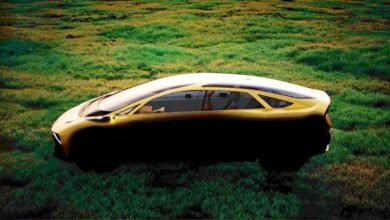
The air inside the massive exhibition hall crackled with an almost palpable anticipation. A hush fell over the gathered crowd, a mix of seasoned automotive journalists, wide-eyed enthusiasts, and industry insiders, as the stage lights intensified. You could practically hear a pin drop, and the low hum of distant machinery seemed to fade into the background. Then, with a dramatic flourish of smoke and a surge of futuristic synth music, the covers were pulled back. What emerged wasn’t just another iteration of a beloved, reliable workhorse; no, this was something else entirely. This was the Toyota Corolla Concept, and frankly, it felt less like an evolution and more like a seismic shift. (I remember seeing the initial photos flash across my screen, and I actually gasped aloud.) It looked like Toyota had finally decided to throw out the playbook, giving the world a bold, almost aggressive vision for what the future of sedans could and should be. For decades, the Corolla has been the epitome of sensible, practical, and undeniably safe transportation, a global bestseller for its unwavering dependability. But this concept? This was a defiant roar, a clear statement that the venerable nameplate was ready to hit reset on the entire compact sedan market, challenging every preconceived notion about what a Corolla — or any sedan, for that matter — could represent in terms of automotive design and desirability. It truly felt like a pivotal moment, a vibrant splash of color on a canvas that many had started to paint in increasingly muted tones.
The Grand Reveal: A Design Revolution Unveiled
That moment of revelation at the auto show was truly unforgettable. It wasn’t just a car on a rotating pedestal; it was a statement, a challenge to the status quo. The collective gasp that rippled through the hall was genuine, a mix of surprise and pure admiration. I could see heads nodding, then tilting, as people tried to reconcile this sleek, almost predatory machine with the badge it proudly wore. This wasn’t the familiar, friendly face of the Corolla many had grown up with; this was a sculpted, athletic beast ready to pounce. “Honestly, I thought my eyes were playing tricks on me,” confessed Sarah Jenkins, a veteran auto journalist standing next to me, her voice a low murmur. “This wasn’t the Corolla I knew. It felt like they brought a concept car from a completely different brand and slapped a Toyota badge on it. It’s absolutely stunning, but also a little disorienting in the best possible way.”
The concept car’s presence was immediate and undeniable. Its silhouette was incredibly dramatic, with sharp, angular lines that seemed to flow effortlessly from the aggressive front fascia to the sharply raked rear. The designers clearly weren’t afraid to push boundaries, embracing a low, wide stance that hinted at exhilarating performance. This wasn’t just about looking good; it was about reimagining the very essence of what a compact sedan could communicate visually. It spoke volumes about intent, about Toyota’s willingness to disrupt its own successful formula, and that, in itself, was a fascinating gamble.
A Radical Design Language That Demands Attention

Let’s dive deeper into the sheer audacity of this design. The front end, for starters, is nothing short of a masterpiece. Gone are the soft curves; in their place are razor-sharp LED headlights that pierce through the darkness, framing a gaping, aggressive lower grille that looks ready to devour the road ahead. It’s a face that screams performance, a far cry from the unassuming practicality we’ve come to associate with the Corolla badge. The sculpted hood features prominent creases that channel airflow, adding to its aerodynamic efficiency and muscular appearance. This isn’t just a styling exercise; it’s a declaration.
The side profile further accentuates its sporting intentions. The roofline slopes dramatically, almost like a coupe, merging seamlessly into the rear decklid. This clever design choice not only enhances its aesthetic appeal but also contributes to a more dynamic, less boxy silhouette that many sedans struggle to achieve. Deep character lines run along the doors, catching the light and creating a sense of motion even when the car is stationary. The wheel arches are aggressively flared, housing large, intricate alloy wheels that fill the space perfectly, grounding the car with a powerful stance. “We wanted to evoke emotion, to challenge the perception that a compact sedan must be bland,” explained Koji Sato, a lead designer on the project, during a brief Q&A. “Every line, every surface, was meticulously crafted to convey energy and sophistication, pushing beyond the conventional boundaries of what a Toyota Corolla could be.” It’s a complete departure from the pragmatic designs of the past, aiming for something that genuinely turns heads and sparks desire.
Beyond Aesthetics: What’s Under the Hood (Conceptually)?
While the visual impact is undeniably the first thing that grabs you, a concept car, especially one from a brand like Toyota, isn’t just about dazzling looks. It’s a canvas for future technologies and powertrain innovations. Though specific details about what’s “under the hood” of this particular Corolla Concept are still largely speculative, the implications are clear. We can reasonably expect it to embrace Toyota’s unwavering commitment to sustainable mobility. This likely means a highly advanced hybrid powertrain, perhaps even a next-generation version of their renowned Hybrid Synergy Drive, offering unparalleled fuel efficiency and reduced emissions.
But what if it goes further? The radical design could also be hinting at a pure electric vehicle (EV) variant. Imagine this sleek form cutting through the air, powered by silent, instant torque. An EV Corolla would truly redefine its legacy, moving from gasoline-sipping efficiency to zero-emission performance. Inside, the concept would undoubtedly showcase a minimalist yet highly intelligent cabin. Picture a large, intuitive infotainment screen seamlessly integrated into the dashboard, controlling everything from navigation to climate. Driver-assist systems would be cutting-edge, offering enhanced safety and convenience features that make everyday driving effortless. We’re talking about augmented reality displays, advanced voice controls, and connectivity that keeps you seamlessly linked to your digital life. The materials inside would likely reflect a focus on sustainability, utilizing recycled plastics or innovative plant-based fabrics, elevating the entire experience to a premium level that belies its compact sedan roots.
Challenging the Sedan Stigma in an SUV-Dominated World

Let’s be honest, the sedan market has been facing an existential crisis for years. SUVs and crossovers have steadily eaten away at their market share, enticing buyers with their perceived versatility, higher driving positions, and rugged appeal. Many auto pundits have even predicted the demise of the traditional sedan. I remember thinking sedans were becoming boring, just four-door boxes struggling for relevance. This is precisely where the Toyota Corolla Concept steps in, not just to survive, but to thrive and redefine. It’s a bold counter-argument to the SUV dominance, asserting that sedans can still be incredibly exciting, stylish, and relevant.
The concept aims to inject much-needed vitality back into a segment that often gets overlooked. By offering a design that’s both aspirational and practical, Toyota is trying to prove that you don’t need a bulky SUV to have presence on the road or to enjoy modern technology. This “reset” isn’t merely about aesthetics; it’s about recalibrating consumer expectations. It’s about demonstrating that a well-designed sedan can offer a more engaging driving experience, better fuel economy due to superior aerodynamics, and a sleek profile that an SUV simply cannot match. It’s an appeal to those who appreciate driving dynamics and elegant design without sacrificing the practicality that a sedan still inherently offers.
The Corolla Legacy: Balancing Tradition with Radical Change
The Corolla nameplate carries an immense weight of history. For over five decades, it has stood for reliability, affordability, and practical transportation for millions globally. It’s the car your grandparents drove, your first college car, or the dependable vehicle that got you to work every day without fuss. This unwavering reputation is both a blessing and a curse for a brand trying to innovate. How do you respect such a profound legacy while simultaneously ripping up the rulebook? The Corolla Concept attempts this delicate balance by keeping the core values – efficiency, reliability (implied through Toyota’s engineering), and accessibility (though perhaps a new kind of accessibility for a premium-feeling compact) – while completely overhauling the aesthetic and technological experience.
This concept isn’t just about a new car; it’s about shifting perceptions of an entire brand icon. Its impact on competitors could be substantial. If Toyota, a company often seen as conservative in its design approach for core models, can produce something this audacious, it might pressure other manufacturers to rethink their own sedan offerings. “It’s a huge gamble for Toyota, but a calculated one,” noted market analyst Dr. Elena Petrova. “They have earned immense trust over the years. Now, they’re leveraging that trust to push boundaries, to show that even the most dependable nameplates can evolve dramatically without losing their essence. It’s a signal to the industry that the fight for the sedan market is far from over.” This concept signifies Toyota’s willingness to lead, not just follow, in evolving the automotive landscape.
Public Reception and the Whispers of the Market
The reveal of the Toyota Corolla Concept sent immediate shockwaves across social media platforms and automotive forums. The internet, as it often does, exploded with a flurry of opinions, debates, and fervent discussions. On one side, there were legions of enthusiasts praising Toyota for its courage. “Finally! Toyota is waking up!” read one widely liked comment on a popular car blog. “This is the car that will make me consider a sedan again.” Others were captivated by the pure aesthetic appeal, eager to see if such a striking design could actually make it to production largely intact.
However, not everyone was immediately convinced, and that’s perfectly natural when such a beloved and historically conservative model takes such a radical turn. My neighbor, a lifelong Corolla owner who swears by the model’s unpretentious dependability, saw the photos and just shook his head. “That’s not MY Corolla!” he exclaimed, a mixture of bewilderment and slight dismay in his voice. “Where’s the sensible, unassuming car I know? This looks like something a movie villain would drive!” There were indeed concerns that the design might be “too aggressive” or “too polarizing” for the traditional Corolla buyer. Some worried that Toyota might alienate its loyal customer base in pursuit of a younger, trendier demographic. It’s a valid concern, and one that Toyota’s product planners are undoubtedly grappling with. The challenge lies in translating this concept’s audacious vision into a production model that retains its excitement while still appealing to a broad spectrum of buyers, including those who appreciate the Corolla’s enduring practicality. The market buzz suggests a clear division, highlighting the fine line between innovation and alienation.
The Road Ahead: A New Dawn for the Sedan?
The Striking Toyota Corolla Concept Hits Reset on the Sedan is more than just a flashy show car; it’s a powerful statement from one of the world’s largest automakers. It represents a bold intent to not just participate in the future of mobility, but to actively shape it, even for a segment that many had written off. This concept is Toyota’s declaration that the sedan, far from being obsolete, can be reinvented as a desirable, technologically advanced, and emotionally engaging vehicle. It challenges us to reconsider what we expect from a compact car and, indeed, from the entire category.
Will the production version retain the concept’s radical edge, or will it be softened for mass appeal? That remains the million-dollar question. But even if only a fraction of this concept’s daring design makes it to showrooms, it will still represent a significant departure for the Corolla. It hints at a future where reliability and practicality are seamlessly blended with passion and performance, where the sensible choice can also be the exciting one. This bold step from Toyota could indeed mark a new dawn for the sedan, pushing the entire automotive industry to reimagine what’s possible, proving that even the most established names can still surprise us and inspire a new generation of drivers. What do YOU think? Is this the future the sedan needs?
Frequently Asked Questions
| What is the main idea behind the Toyota Corolla Concept? | The main idea behind the Toyota Corolla Concept is to radically redefine the compact sedan market by introducing a bold, aggressive, and highly emotive design that breaks away from the Corolla’s traditional image of practicality and conservatism. It aims to inject excitement and desirability back into the sedan segment. |
| What are the key design and technological advancements in the new concept? | Key advancements include a striking, almost coupe-like silhouette with sharp, angular lines, an aggressive front fascia, and prominent character lines. Technologically, it hints at advanced hybrid or pure EV powertrains, cutting-edge infotainment systems, sophisticated driver-assist features, and the potential use of sustainable interior materials. |
| How does this concept plan to redefine the traditional sedan market? | By presenting a visually stunning and technologically advanced sedan, the concept challenges the dominance of SUVs and aims to make sedans exciting and relevant again. It asserts that sedans can offer superior driving dynamics, aerodynamic efficiency, and sophisticated style, thereby attracting a new generation of buyers. |
| What challenges might Toyota face in bringing such a radical concept to production? | Toyota might face challenges in balancing the concept’s radical design with the need for mass market appeal and production feasibility. There’s also the risk of alienating traditional Corolla buyers who value its understated reliability, while simultaneously needing to attract new demographics with its bold styling. |
| What does the Corolla Concept suggest about the future direction of Toyota’s design philosophy? | The Corolla Concept suggests a significant shift towards more adventurous, emotionally charged, and performance-oriented designs for Toyota. It indicates a willingness to push boundaries, blend tradition with innovation, and potentially lead the charge in revitalizing segments that have seen declining interest, signaling a bolder, more dynamic future for the brand. |
Important Notice
This FAQ section addresses the most common inquiries regarding the topic.