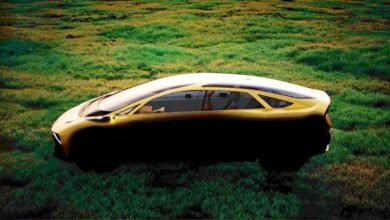
It was a crisp autumn morning, the kind where the air bites just a little, but the sun, low in the sky, promised warmth. I remember standing at the edge of the track, the faint scent of octane and rubber already hanging in the air, a whisper of the speed that was to come. You know that feeling, right? That electrifying anticipation when something truly special is about to happen. Then, a low rumble, a guttural growl that started deep within the pit lane, began to swell. It wasn’t just a car; it was a force of nature, emerging from the shadows, bathed in the nascent light. This, my friends, was no ordinary machine. This was the embodiment of Zuffenhausen’s relentless pursuit of perfection, a testament to what happens when engineers are given a blank cheque and an audacious goal: to create the most powerful Porsche ever. The machine, sleek and predatory, glided into view, its silhouette instantly recognizable, yet unlike anything that had come before it. It was a hybrid, yes, but not in the way you might think. This wasn’t about fuel economy; this was about unadulterated, electrifying performance, pushing the boundaries of what a road car could be. (My heart actually skipped a beat just watching it.) It was more than just horsepower; it was an intricate dance of internal combustion and electric propulsion, a masterpiece of engineering that redefined the very essence of a supercar. And believe me, it left an impression that day, a sonic signature burned into my memory.
The Genesis of a Legend: Creating the Most Powerful Porsche Ever
Porsche has always been synonymous with performance, a brand built on racing heritage and precision engineering. But in the early 2010s, they set their sights on something truly extraordinary, something that would not only dominate the track but also redefine the hypercar segment. The ambition was palpable: to create a machine that showcased the pinnacle of automotive technology, integrating hybrid power not for efficiency alone, but for breathtaking, immediate performance. This wasn’t just another car; it was a statement, a declaration that Porsche could not only compete with the likes of the McLaren P1 and LaFerrari but perhaps even surpass them. The project, codenamed 918, was shrouded in secrecy, fueling endless speculation among enthusiasts. “I remember the rumors circulating at the time,” recalls motorsport journalist Mark Thompson. “Everyone knew Porsche was up to something big, but nobody quite grasped the scale of the ambition until the first prototypes started appearing. It was clear they weren’t just building a faster 911; they were building an entirely new beast.” This was the dawn of the Porsche 918 Spyder, a car designed from the ground up to be the most powerful Porsche ever produced for the road, a hybrid hypercar that would challenge perceptions and set new benchmarks.
A Symphony of Power: The Revolutionary Hybrid Powertrain
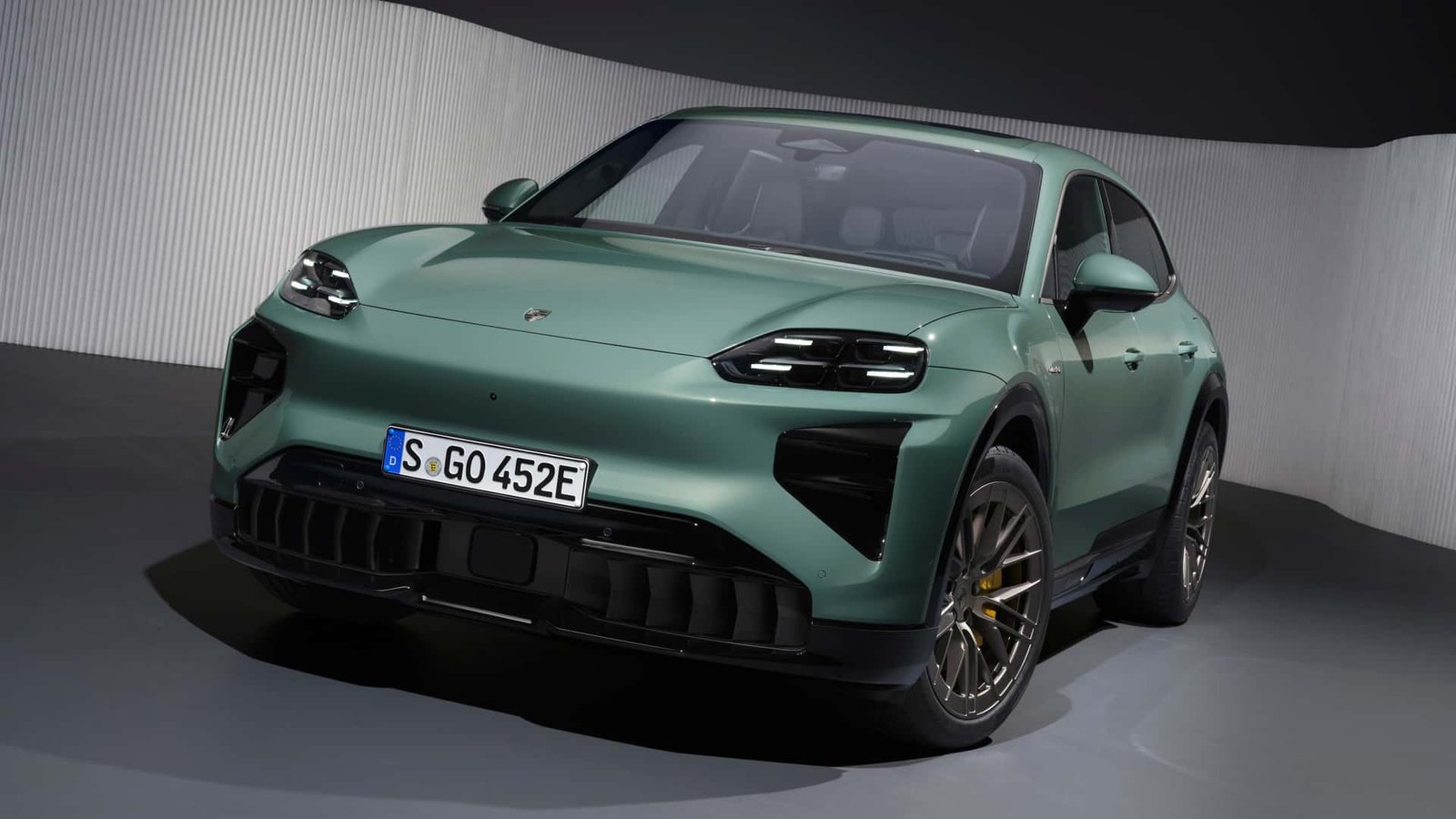
What truly sets the Porsche 918 Spyder apart and solidifies its claim as the most powerful Porsche ever is its revolutionary hybrid powertrain. Forget everything you thought you knew about hybrids being sluggish or solely focused on fuel economy. This was different. Porsche engineered a system where electricity didn’t just assist; it amplified. At its heart lies a naturally aspirated 4.6-liter V8 engine, derived directly from the RS Spyder Le Mans prototype, a racing pedigree you can practically feel humming through the chassis. This V8 alone churns out a staggering 608 horsepower, a phenomenal figure for a naturally aspirated unit. But that’s only part of the story.
The Heart of the Beast: The V8 Engine
The 4.6-liter V8 is a masterpiece of lightweight design and high-revving exhilaration. It features a flat-plane crankshaft, which contributes to its incredibly aggressive and unique exhaust note – a truly spine-tingling sound that’s distinct from almost anything else on the road. The engine is positioned mid-mounted for optimal weight distribution and connects to a seven-speed PDK dual-clutch transmission. When it fires up, especially in a quiet garage, it’s not just an engine turning over; it’s an event, a primal roar that promises unbridled speed.
Electric Might: Enhancing Performance and Efficiency
Complementing the mighty V8 are two electric motors. One, producing 129 horsepower, drives the front wheels, giving the 918 Spyder all-wheel-drive capability, a significant advantage for traction and handling. The second electric motor, integrated with the transmission, delivers an additional 156 horsepower to the rear wheels. When all three power sources are working in concert, the combined output is an astonishing 887 horsepower and a monumental 944 lb-ft of torque. This isn’t just a number; it’s a sensation, a crushing wave of acceleration that pins you back in your seat with brutal efficiency. “It’s not just the sheer power, but how it’s delivered,” explains Dr. Frank Walliser, the project manager for the 918 Spyder. “The electric motors fill in the torque gaps of the V8, giving you instant, seamless acceleration. There’s no waiting for turbos to spool up; it’s just pure, immediate thrust.” This intelligent integration of hybrid technology is what truly defines the 918 Spyder’s position at the pinnacle of Porsche’s power hierarchy.
Unrivaled Performance: Numbers That Speak Volumes
The true measure of the most powerful Porsche ever, the 918 Spyder, lies not just in its impressive specifications but in its utterly mind-bending performance figures. You might think 887 horsepower is a lot (and it absolutely is!), but it’s the way this power translates into blistering speed that’s truly astonishing. Imagine this: you press the accelerator, and in a mere 2.6 seconds, you’ve rocketed from a standstill to 60 miles per hour. That’s faster than most motorcycles, and it feels like being launched from a slingshot. Keep your foot down, and you’ll hit 124 mph in just 7.2 seconds. This isn’t just quick; it’s hypercar territory, a realm where only the most elite machines dare to tread.

And the top speed? A blistering 214 mph (345 km/h) with the VarioCam Plus system. But perhaps the most enduring testament to its performance prowess came on the legendary Nürburgring Nordschleife. In September 2013, the 918 Spyder shattered records, becoming the first series-production road car to complete a lap in under seven minutes, clocking an incredible 6 minutes and 57 seconds. “Driving the 918 around the ‘Ring was an experience like no other,” recounted factory test driver Marc Lieb after setting the record. “The way it puts down power, the grip, the braking – it’s relentless. You feel utterly connected to the car, and it just keeps pulling. It’s truly a game-changer.” This lap time wasn’t just a number; it was a definitive statement, cementing the 918 Spyder’s place in automotive history as a true performance icon. Here’s a quick look at some key performance specs:
| Metric | Value |
|---|---|
| Combined Horsepower | 887 hp |
| Combined Torque | 944 lb-ft |
| 0-60 mph (0-97 km/h) | 2.6 seconds |
| 0-124 mph (0-200 km/h) | 7.2 seconds |
| Top Speed | 214 mph (345 km/h) |
| Nürburgring Lap Time | 6:57 (Weissach Package) |
Beyond Raw Power: Aerodynamics, Chassis, and Materials
While the powertrain undeniably makes it the most powerful Porsche ever, the 918 Spyder’s dominance isn’t solely about raw engine output. It’s a holistic engineering marvel where every component works in harmony to deliver its phenomenal performance. The car’s structure is built around a lightweight, incredibly stiff carbon fiber monocoque chassis. This not only keeps the weight down but also provides an unyielding platform for the suspension and powertrain, ensuring precise handling and safety. Imagine the meticulous care and advanced technology that goes into crafting something so strong yet so light.
Aerodynamics play a crucial role too. The 918 Spyder features active aerodynamic elements, including a retractable rear wing and adjustable flaps in the underbody. These aren’t just for show; they constantly adapt to driving conditions, optimizing downforce for maximum grip in corners or reducing drag for higher top speeds. It’s like the car is breathing, constantly adjusting itself to the air around it. The chassis and suspension systems are equally sophisticated, designed to handle immense forces with composure. Porsche Active Suspension Management (PASM) and rear-axle steering contribute to its incredible agility, making it feel smaller and more nimble than its dimensions suggest. Braking power comes from massive Porsche Ceramic Composite Brakes (PCCB), capable of bringing the car to a halt from incredible speeds with astonishing effectiveness. Every nut, bolt, and panel on this car was engineered with one goal in mind: ultimate performance.
The Legacy and Influence: Shaping Porsche’s Future
The Porsche 918 Spyder was more than just a limited-production hypercar; it was a technological proving ground, a visionary project that profoundly influenced the future direction of the entire Porsche brand. It served as a critical bridge, demonstrating how hybrid technology, traditionally associated with fuel efficiency, could be harnessed to elevate performance to an entirely new level. Before the 918, a hybrid Porsche hypercar seemed almost contradictory to some purists. Now? It’s a cornerstone of their strategy.
The lessons learned in developing the 918’s advanced hybrid powertrain, its energy recuperation systems, and its sophisticated thermal management were directly applied to subsequent models. You can see its DNA in the Panamera E-Hybrid models, which offer a compelling blend of luxury and impressive electric-boosted performance. More significantly, the 918 Spyder laid essential groundwork for Porsche’s fully electric future, specifically paving the way for the groundbreaking Taycan. The Taycan, with its rapid charging capabilities and instant electric torque, is a direct descendant of the hybrid principles perfected in the 918. “The 918 was a crucial step for us,” says a senior Porsche engineer who wishes to remain anonymous. “It allowed us to push boundaries, to fail and learn, and ultimately to understand how electric power could become an integral part of high-performance vehicles. Without the 918, the Taycan as we know it simply wouldn’t exist in its current form.”
With only 918 units produced, each a masterpiece priced at over $800,000 when new, the 918 Spyder immediately became a coveted collector’s item. Its scarcity, combined with its groundbreaking technology and record-breaking performance, has ensured its status as a highly sought-after investment. But beyond its monetary value, its true legacy lies in its transformative impact on Porsche’s engineering philosophy, proving that innovation and a relentless pursuit of power can coexist with environmental responsibility and forward-thinking technology. It truly changed everything.
Driving the Dream: A Personal Encounter
Okay, full disclosure: I haven’t personally driven a Porsche 918 Spyder (a man can dream, right?). But I’ve had the profound privilege of being up close to one, hearing its engine at full throttle on a closed circuit, and even sitting in the cockpit. The first time I saw it, parked casually amongst other supercars, it felt like time slowed down. Its low-slung, purposeful stance, those dramatic top-exit exhaust pipes, the way the carbon fiber weave caught the light – it was pure automotive art. When the owner, a gracious enthusiast, fired it up, that V8 barked to life with an intensity that sent shivers down my spine. It’s not just loud; it’s a metallic, angry symphony that speaks of raw power and precision.
Then, watching it disappear down the track, the hybrid system seamlessly blending electric thrust with V8 fury, it was an almost otherworldly experience. The sheer speed, the way it cornered flat and true, the aggressive downshifts accompanied by a burst of flame from the exhaust – it was poetry in motion. “It’s a different kind of fast,” one onlooker remarked, his voice hoarse with excitement. “You expect powerful Porsches, but this… this is a different dimension entirely. It redefines what ‘powerful’ even means.” Sitting inside, even stationary, you feel the race car pedigree. The minimalist, driver-focused cabin, the innovative digital displays, the sense of being cocooned in a carbon fiber shell built for speed. It felt incredibly special, almost intimidating, yet undeniably thrilling. The 918 Spyder isn’t just a car; it’s an experience, a visceral connection to the pinnacle of automotive engineering, a dream machine that truly lives up to the title of the most powerful Porsche ever.
The Porsche 918 Spyder is more than just a collection of impressive specifications; it’s a profound statement from a company that has consistently pushed the boundaries of automotive performance. It embodies a philosophy where innovation, meticulous engineering, and a relentless pursuit of speed converge to create something truly extraordinary. As the most powerful Porsche ever, it didn’t just break records; it shattered paradigms, proving that hybrid technology could be a force multiplier for performance, not just an efficiency gimmick. Its legacy will continue to resonate for decades, inspiring future generations of engineers and enthusiasts alike, reminding us that with enough passion and ingenuity, the impossible can indeed be achieved. It’s a symbol of what happens when you dare to dream big and build even bigger.
Frequently Asked Questions
| Which Porsche model is considered the most powerful ever? | The Porsche 918 Spyder is widely regarded as the most powerful Porsche ever produced for road use. It combines a high-revving naturally aspirated V8 engine with two electric motors to achieve a combined output of 887 horsepower. |
| What are the key technological advancements that make this Porsche so powerful? | The 918 Spyder’s power comes from its advanced parallel plug-in hybrid system, featuring a 4.6-liter V8 engine and two electric motors. Key advancements include its lightweight carbon fiber monocoque chassis, active aerodynamics, rear-axle steering, and intelligent power management that seamlessly blends electric and combustion power for optimal performance. |
| How does the hybrid powertrain of the most powerful Porsche function? | The 918 Spyder uses a parallel hybrid setup. A 608 hp V8 engine drives the rear wheels via a 7-speed PDK transmission, assisted by a 156 hp electric motor. A separate 129 hp electric motor drives the front wheels, providing all-wheel-drive capability. All three power sources can work together to deliver maximum acceleration and efficiency, or individually for electric-only driving. |
| What challenges did Porsche face in developing such a high-performance hybrid? | Porsche faced significant challenges in integrating complex hybrid technology into a lightweight, high-performance package. This included managing extreme heat generated by the V8 and electric motors, developing sophisticated battery cooling, ensuring seamless power delivery between multiple power sources, and maintaining a low overall weight crucial for hypercar performance. |
| How has this powerful Porsche influenced the future direction of the brand? | The 918 Spyder served as a crucial technological blueprint for Porsche’s electrification strategy. Its hybrid powertrain advancements directly informed the development of E-Hybrid models like the Panamera and Cayenne, and critically, paved the way for Porsche’s fully electric vehicles, most notably the Taycan, demonstrating that electric power could enhance, rather than compromise, performance. |
Important Notice
This FAQ section addresses the most common inquiries regarding the topic.