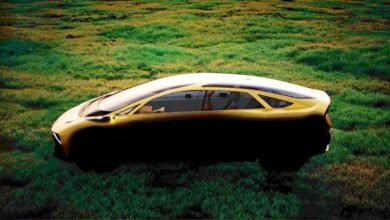
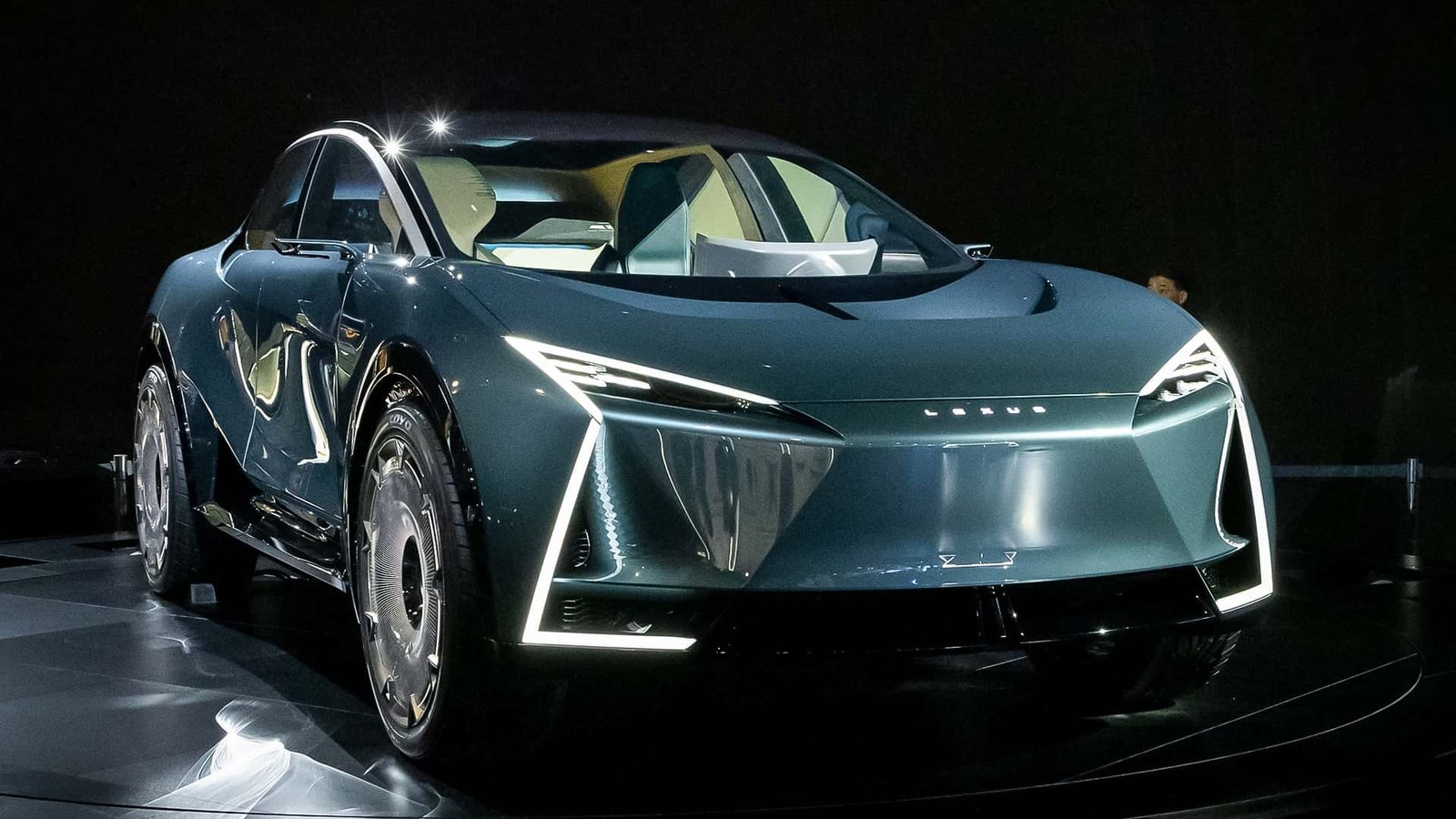
The air in the exhibition hall buzzed with a low murmur, a symphony of hushed conversations and the distant thrum of ambient music. I remember it vividly; a crisp autumn afternoon, the kind where the light filtering through the high windows cast long, dramatic shadows. Then, the covers came off. A collective gasp rippled through the crowd, followed by a confused, almost delighted, chatter. There it was: the Lexus LS Coupe Concept. It was undeniably stunning, a sleek, predatory sculpture of metal and glass, a vision of future luxury. But then, a moment of cognitive dissonance hit me, and probably many others. “Wait,” someone nearby whispered, “isn’t that… four doors?” And indeed, it was. The name declared ‘Coupe Concept,’ yet its profile unmistakably featured a second set of discreetly integrated rear doors. My initial thought, I admit, was a quizzical eyebrow raise. A coupe, by definition, has two doors. This revelation could have been a deal-breaker, a source of immediate criticism for mislabeling. Yet, as I circled the vehicle, taking in its breathtaking lines and impeccable proportions, it became abundantly clear that this wasn’t a mistake or a misnomer in the traditional sense. This was a deliberate, audacious statement. It was Lexus boldly declaring that labels are merely suggestions, and true automotive design should transcend traditional boundaries. And frankly, that’s perfectly okay.
The Semantic Shift: Redefining “Coupe” in the Modern Era
For decades, the definition of a coupe was as rigid as the chassis of the cars themselves: a two-door vehicle, typically with a sporty or luxurious appeal, often featuring a sloping roofline and a distinct lack of rear passenger practicality. Think classic grand tourers or nimble sports cars. It was a clear, unambiguous classification. But then, something shifted in the automotive landscape. Car manufacturers, ever keen to blend desirability with usability, started playing with the concept. Mercedes-Benz arguably kicked off the trend with the CLS in the early 2000s, daring to call a four-door sedan a “four-door coupe.” It was an oxymoron, sure, but it resonated. Consumers loved the sleek, coupe-like aesthetic combined with the undeniable convenience of rear doors.
This paved the way for Audi’s A7, BMW’s Gran Coupe series, and Porsche’s Panamera. The market had spoken: people wanted the best of both worlds. So, when Lexus unveiled the Lexus LS Coupe Concept with four doors, it wasn’t an act of rebellion against established definitions so much as an embrace of an evolving one. “Calling it a ‘coupe concept’ despite the four doors is a masterstroke in marketing and design,” commented Hiroshi Yamada, an independent automotive design consultant. “It immediately grabs attention and forces you to reconsider what you think you know about car categories. Lexus is saying, ‘Look beyond the number of doors; focus on the spirit of the design.'” And that spirit is undeniably coupe-like in its sleekness and dynamism. It’s a sophisticated play on words, yes, but one backed by genuine design prowess.
A Design Language That Commands Attention
Let’s be honest, the visual impact of the Lexus LS Coupe Concept is nothing short of breathtaking. From the moment your eyes land on it, you’re drawn into a world of sharp angles, flowing lines, and a sense of motion even when stationary. The signature Lexus spindle grille, a divisive feature on some earlier models, here feels perfectly integrated, almost organic, stretching wide and low, giving the car an aggressive, grounded stance. It’s not just a grille; it’s a statement, a bold face that promises performance and luxury in equal measure.
The real magic, however, lies in its silhouette. The roofline cascades gracefully towards the rear, mimicking the elegant slope you’d expect from a classic two-door coupe. The windows are slim, giving it a sporty, almost chopped-top appearance. How does Lexus achieve this illusion despite the extra doors? It’s all in the details. The rear doors are often smaller, their handles cleverly integrated or even hidden, making them blend seamlessly into the bodywork. The proportions are stretched, emphasizing length and breadth rather than height, creating that long, lean, athletic look that defines a coupe. “They’ve sculpted the sheet metal with such precision that the four-door aspect almost vanishes into the overall aesthetic,” remarked Sarah Jenkins, a lead designer at a rival luxury brand, during an industry panel. “It’s a testament to their commitment to aesthetic purity, even when adding practicality.”
Inside, the concept is equally captivating. Imagine stepping into a cabin where every surface, every stitch, every material speaks of uncompromising quality and meticulous craftsmanship. Rich, supple leather, perhaps with intricate stitching patterns, would envelop you. Fine wood veneers or advanced metallic accents would adorn the dashboard and door panels, creating a luxurious yet modern ambiance. The dashboard itself would likely feature a minimalist design, dominated by large, intuitive digital displays that seamlessly integrate technology without overwhelming the driver. This is a space designed not just for travel, but for an experience. The seating, both front and rear, would be sculpted for comfort and support, reflecting the car’s dual nature as a luxurious cruiser and a potentially spirited performer. Lexus has always excelled at creating serene, opulent interiors, and this concept would undoubtedly push those boundaries even further.

The Pragmatic Panache: Blending Worlds
So, why would Lexus commit to this seemingly contradictory design choice? It boils down to a fundamental understanding of the modern luxury consumer. While the allure of a traditional two-door coupe is undeniable for its pure, unadulterated sportiness and exclusivity, the reality for many is that a two-door vehicle can be impractical. Getting passengers into the back can be a chore, and daily usability can suffer. The Lexus LS Coupe Concept deftly sidesteps this compromise.
By offering four doors, it provides the effortless access of a luxury sedan, making it far more versatile for families, business executives who ferry clients, or anyone who simply appreciates not having to contort themselves to get in or out of the back seat. Yet, it retains that desirable panache, that distinctive profile that sets it apart from more conventional sedans. “I love the idea of a coupe, but with two kids, it’s just not feasible,” confessed Mark Chen, a prospective luxury car buyer I spoke with at a recent auto show. “If Lexus can give me that sharp, stylish look with the practicality of four doors, they’ve hit a home run. I don’t care what they call it, as long as it looks that good.” This sentiment perfectly encapsulates the pragmatic appeal. It’s about not having to choose between form and function, but rather enjoying both in a harmonious package. The rear doors are often designed to be less prominent, perhaps with a smaller aperture or hidden handles, ensuring they don’t disrupt the overall sleek lines. This careful integration is key to maintaining the “coupe” illusion.
Navigating the Luxury Market: Positioning the LS Coupe Concept
The luxury automotive market is a fiercely competitive arena, with established titans and new contenders constantly vying for attention. Where does the Lexus LS Coupe Concept fit into this complex ecosystem? It’s not directly competing with the two-door Mercedes S-Class Coupe or the BMW 8 Series Coupe, which are pure two-door vehicles. Instead, it carves out its niche among the “four-door coupes” like the Mercedes-AMG GT 4-Door Coupe, the Audi A7 Sportback, and potentially even the Porsche Panamera.
Lexus brings a unique proposition to this segment. While European rivals often emphasize raw power and aggressive sportiness, Lexus traditionally offers a blend of serene comfort, impeccable build quality, and cutting-edge technology, all wrapped in a distinctively Japanese aesthetic. The LS, in particular, is synonymous with flagship luxury and a whisper-quiet ride. The concept, therefore, positions Lexus not just as a competitor, but as an innovator, showing that they can deliver a visually exciting vehicle without sacrificing the brand’s core values of refinement and reliability. It’s a strategic move to attract a younger, more design-conscious demographic who might find traditional luxury sedans a bit too staid, while still appealing to their loyal customer base who appreciate understated elegance and comfort. This design also signals a shift in Lexus’s broader design philosophy, moving away from more conservative lines towards a more expressive, emotional form.
Lexus’s Evolving Identity: A Glimpse into the Future
The introduction of the Lexus LS Coupe Concept is more than just a new design study; it’s a significant indicator of Lexus’s evolving brand identity and future direction. For years, Lexus was lauded for its reliability, comfort, and exceptional build quality, but sometimes criticized for a perceived lack of emotional design or driving excitement compared to its German rivals. Recent years, however, have seen a dramatic transformation. The aggressive spindle grille, first introduced on models like the GS and IS, marked the beginning of a bolder design language.
This concept takes that evolution a significant step further. It signals Lexus’s readiness to challenge conventions, push boundaries, and infuse its vehicles with a strong dose of passion and visual flair. It suggests a future where Lexus cars are not just luxurious and dependable, but also undeniably captivating and emotionally resonant. One can speculate about the powertrain that might lie beneath such a sleek exterior. Given Lexus’s commitment to hybrid technology and increasingly to full electrification, it’s highly probable that a production version of this concept would feature advanced hybrid powertrains, or even an all-electric setup, offering both exhilarating performance and impressive efficiency. This blend of stunning design, practical innovation, and forward-thinking technology perfectly aligns with the global automotive trend towards sustainable luxury. It’s a clear statement that Lexus intends to be at the forefront of this shift, defining what luxury means in the next generation of automobiles. This concept isn’t just about a car; it’s about the very soul of the brand moving forward.
Conclusion: An Acceptance of Modern Luxury
In the grand scheme of automotive evolution, the question of whether the Lexus LS Coupe Concept is “really” a coupe becomes almost moot. What it undeniably is, is a striking piece of automotive innovation. It’s a vehicle that masterfully blends the emotional allure and sleek aesthetics of a traditional coupe with the practicality and spaciousness of a luxury sedan. Lexus has shown a willingness to play with semantics, yes, but more importantly, they’ve demonstrated an impressive command of design and engineering to pull it off convincingly.
For me, after spending time dissecting its lines and contemplating its purpose, any initial skepticism vanished. The presence of four doors does not diminish its coupe-like spirit; rather, it enhances its usability without compromising its visual drama. It represents a mature understanding of what modern luxury consumers truly desire: uncompromising style coupled with unburdened functionality. The Lexus LS Coupe Concept isn’t just “okay” despite not being a traditional coupe; it’s brilliant precisely because it defies that narrow definition. It’s a bold, confident statement from a brand that is clearly not afraid to lead, to innovate, and to redefine categories in its pursuit of automotive excellence. We can only hope that a production version retains every ounce of this concept’s daring vision.
Frequently Asked Questions
| What defines the Lexus LS Coupe Concept, despite its four doors? | The Lexus LS Coupe Concept is defined by its stunning, coupe-like design aesthetic, featuring a dramatically sloping roofline, sleek profile, and aggressive styling cues, all while cleverly integrating four doors for enhanced practicality. Its definition transcends the traditional two-door coupe classification, focusing instead on its visual essence. |
| What are the advantages of a “four-door coupe” design like the LS Concept? | The primary advantage is blending the best of both worlds: the striking, sporty visual appeal and exclusivity of a coupe with the practical benefits of a sedan, such as easier rear passenger access and improved versatility for daily use. It eliminates the compromise between style and functionality. |
| How does Lexus achieve a coupe-like aesthetic with four doors? | Lexus achieves this through meticulous design. Key elements include a significantly sloped roofline, slim window profiles, stretched proportions to emphasize length, and cleverly integrated or hidden rear door handles. The overall body sculpting and careful detailing ensure the four doors blend seamlessly into the car’s dynamic silhouette. |
| What challenges does Lexus face in marketing a “four-door coupe” as a concept? | The main challenge is overcoming traditional definitions and consumer expectations. Some purists might initially object to calling a four-door vehicle a “coupe.” However, the trend of “four-door coupes” is well-established, and Lexus’s strong design can often turn initial confusion into admiration for its bold approach. |
| What does the LS Coupe Concept suggest about the future direction of Lexus design? | The LS Coupe Concept suggests Lexus is committed to a bolder, more emotionally driven design language, moving further away from conservative aesthetics. It indicates a future focus on challenging traditional segment boundaries, combining luxury with enhanced practicality, and embracing innovative styling that captivates and excites consumers. |
Important Notice
This FAQ section addresses the most common inquiries regarding the topic.