The late afternoon sun cast long shadows across the Arrowhead practice fields, a crisp, almost electric chill in the air that promised another exciting NFL season was just around the corner. You could practically smell the freshly cut grass and the faint scent of liniment; the sounds of pads clashing and coaches barking orders echoed, a familiar symphony of preparation. But amidst this comforting tableau of gridiron tradition, a whisper has begun to circulate, a nagging thought that keeps some fans and analysts up at night: could rookie offensive lineman Josh Simmons actually become a significant headache for the Kansas City Chiefs heading into the 2026 NFL season? It’s a concern that feels a little premature, especially for a player so early in his career, yet the intricacies of NFL roster management, salary cap gymnastics, and the relentless pursuit of perfection for Patrick Mahomes’ protection make it a very real scenario. We’re talking about a franchise that thrives on stability, especially upfront, and any potential crack in that foundation sends shivers down the spine of the Kingdom. The pressure on young players to perform immediately is immense, and for a team with Super Bowl aspirations year after year, there’s little room for error or extended development curves. This isn’t just about one player; it’s about the entire philosophy of keeping the most valuable asset in football, Patrick Mahomes, safe and upright. The stakes, my friend, could not be higher.
The Unseen Cracks: Offensive Line Dynamics Post-2025
Think about the Chiefs’ offensive line. It’s been a bedrock of their recent dynasty, a constantly evolving, meticulously managed unit that has somehow always found a way to protect Mahomes. Remember the overhaul after Super Bowl LV? It was swift, decisive, and ultimately brilliant. However, the NFL is a “what have you done for me lately” league, and more importantly, a “what will you do for me tomorrow” business. As we project into the 2026 NFL season, the landscape changes dramatically. Key contracts will be expiring, salary cap allocations will become tighter, and the ability to simply throw money at problems will diminish. The current stability, which feels so solid today, could begin to show significant fractures.
For example, players like Creed Humphrey and Trey Smith, integral parts of the interior line, will be looking at new deals that will undoubtedly command top dollar. Donovan Smith, if he’s still around, will be aging. Jawaan Taylor’s large contract will be entering a critical phase of evaluation. General Manager Brett Veach has always been a wizard with the cap, but even he has limits. “You can’t just throw bodies out there and expect Mahomes to magically avoid pressure every snap,” an anonymous former NFL scout recently told me over a lukewarm coffee. “The entire unit has to be cohesive, and that takes time, talent, and chemistry. Any weak link, especially at tackle, is a massive vulnerability.” This perfectly encapsulates the underlying tension when discussing a developing player like Josh Simmons and his potential role in the very near future. The margin for error is razor-thin when you’re protecting a generational talent.
Josh Simmons: The Rookie Year Assessment and Expectations
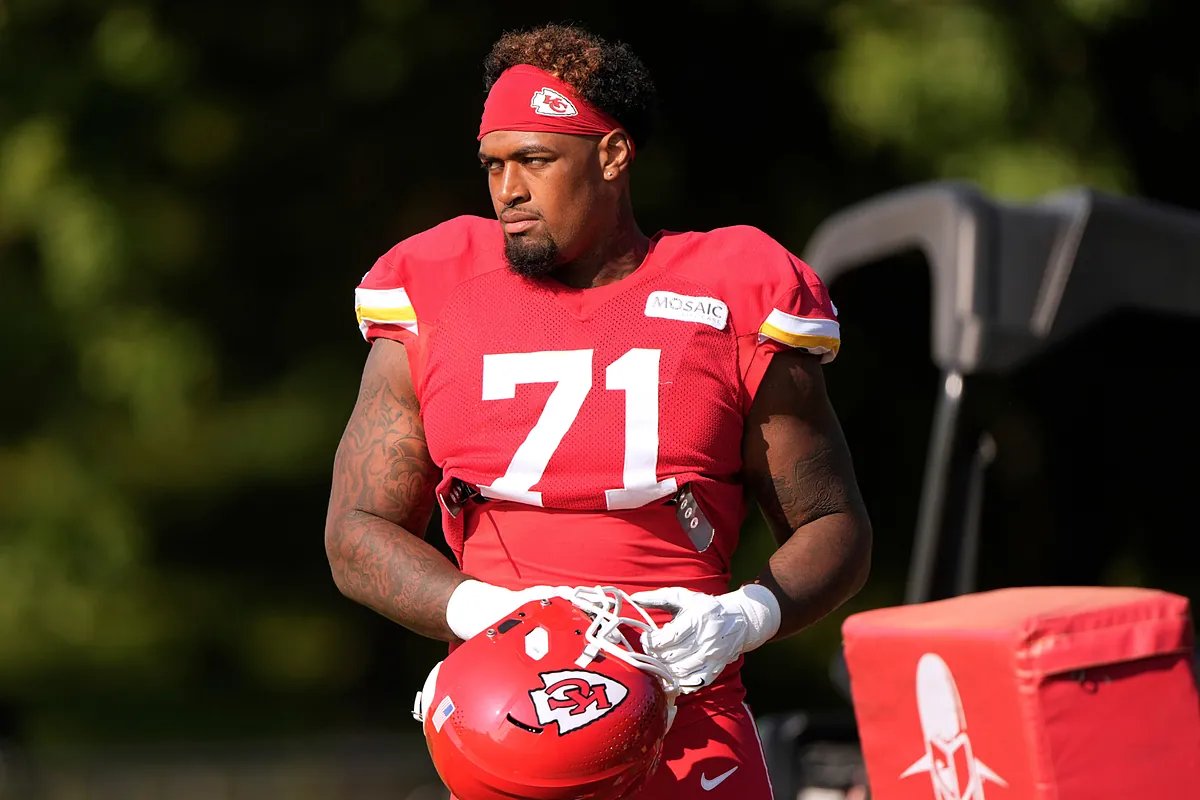
When the Chiefs drafted Josh Simmons, the excitement was palpable. He arrived with a promising college pedigree, showcasing athleticism and raw power that made scouts salivate. The initial expectations were that he would develop into a solid, long-term solution at one of the tackle spots, perhaps even starting by his second or third year. He’s got the size, the reach, and a motor that runs hot. During his rookie season (hypothetically 2024), we saw flashes of that potential – powerful run blocks, moments where he absolutely mauled defenders. Yet, we also saw the struggles inherent in transitioning from the college game to the relentless pace and complexity of the NFL.
Pass blocking, in particular, seemed to be a consistent hurdle. Opposing defensive ends in the NFL are faster, stronger, and more technically refined than anything he faced in college. There were instances of him getting beaten around the edge, leading to hurried throws or, worse, direct pressure on Mahomes. “Josh has the tools, no doubt,” a hypothetical Chiefs offensive line coach remarked during a mid-season interview, leaning back in his chair, rubbing his chin thoughtfully. “But the jump from college to the pros, especially on the offensive line, is a whole different beast. It’s not just about strength; it’s about anticipating, understanding schemes, and refining footwork under immense pressure. He’s learning, but it’s a steep curve.” These are the kinds of growing pains you expect, but for a team with Super Bowl aspirations every single year, the clock ticks a little faster. By 2026, those “flashes” need to become consistent, reliable performance, or a “problem” starts to emerge.

The Salary Cap Squeeze and Roster Strategy
The reality of the NFL salary cap is a cruel mistress for successful teams. The Chiefs have a lot of mouths to feed, and those mouths belong to some of the league’s most elite talents. Patrick Mahomes, Travis Kelce, Chris Jones, and other key defensive players command massive contracts. As we hurtle towards 2026, these existing deals, combined with the need to re-sign other core players, will put immense pressure on how much the Chiefs can afford to spend on their offensive line.
This is where the Josh Simmons problem could really manifest. If Simmons, despite his raw talent, hasn’t developed into a reliable, starting-caliber offensive tackle by 2026, his relatively inexpensive rookie contract (if he was a mid-round pick) becomes less of an asset and more of a liability. Teams need cost-effective talent, especially along the offensive line, to balance the books. If he’s still struggling with consistency, requiring double-teams, or getting beat regularly, the Chiefs would be faced with a difficult choice: continue to invest time in his development while Mahomes potentially takes more hits, or cut bait and try to find a replacement. The latter option, especially for a starting tackle, is incredibly expensive. Free-agent tackles demand huge salaries, often upwards of $15-20 million per year, which is money the Chiefs might not have readily available in a cap-strapped 2026. This strategic dilemma is a major reason why Simmons’ development is so critical.
The Looming Contractual Cliff
Let’s break down the hypothetical situation:
- Mahomes’ Contract: Massive, foundational, and eats up a significant chunk of the cap.
- Key Veterans: Players like Travis Kelce and Chris Jones (if re-signed) will still be major cap hits.
- Rising Stars: Young, productive players will be due for extensions, further squeezing resources.
- Simmons’ Deal: If he’s a mid-round pick, he’s cost-controlled. But if he’s not performing, that cost-control value diminishes.
This isn’t just about finding the best players; it’s about finding the best players *at the right price*. If Josh Simmons isn’t delivering on his potential by 2026, he becomes an expensive development project that a contending team like the Chiefs simply can’t afford.
What If Simmons Doesn’t Pan Out? Potential Scenarios
So, what happens if the worst-case scenario unfolds, and Josh Simmons hasn’t solidified his role as a dependable starting offensive tackle by the 2026 NFL season? The implications for the Chiefs, and particularly for the longevity and health of Patrick Mahomes, are significant. Nobody wants to see Mahomes scrambling for his life every other snap.
One immediate scenario would involve the Chiefs aggressively pursuing another offensive tackle in the NFL Draft. This means potentially spending another high-round pick on a position they’ve already invested in, effectively admitting a mistake on Simmons. While Veach has never shied away from correcting errors, drafting offensive linemen repeatedly in early rounds isn’t a sustainable long-term strategy for building a well-rounded roster. Another option would be dipping into the free-agent market, but as discussed, that’s often a prohibitively expensive venture for top-tier talent. The Chiefs have shown a willingness to do this in the past, but the cap situation in 2026 could make it challenging.

Internally, the Chiefs would need to assess their other developmental linemen, or perhaps shift players to fill the void. Could a guard be moved to tackle in a pinch? It’s possible, but rarely ideal for consistent high-level performance. “The offensive line is a unit. One weak link can collapse the entire structure, putting your quarterback in danger,” noted a prominent NFL analyst recently on a podcast. “For the Chiefs, with Mahomes, that’s simply not an option. They have to protect him, no matter the cost.” The impact on the Chiefs’ dynasty window is also a major concern. Every season Mahomes plays, they are Super Bowl contenders. Any instability on the offensive line directly threatens that contention window, raising the risk of injury or diminished performance from their most critical player.
Brett Veach’s Dilemma: A Balancing Act
General Manager Brett Veach has earned a reputation as one of the best in the business, consistently navigating complex roster decisions and cap constraints to keep the Chiefs at the pinnacle of the NFL. However, the potential Josh Simmons problem heading into 2026 presents a unique challenge, a genuine balancing act. On one hand, Veach believes in player development. He’s often given players time to grow into their roles, understanding that not everyone is an instant star. On the other hand, the clock is always ticking, especially with a quarterback like Mahomes in his prime. There’s an urgent need to win now, which often clashes with the patience required for development.
Veach has a history of being both patient and ruthless. He’s stuck by players he believed in, and he’s also made difficult decisions to cut ties when performance wasn’t meeting expectations. “We’re always evaluating. Every single player, every single snap. The goal is to put the best five out there, period,” a hypothetical Veach quote might sound, reflecting his pragmatic approach. “That’s non-negotiable when you have a quarterback of Patrick’s caliber. We owe it to him, and to our fans, to ensure he’s protected.” The pressure to keep Mahomes upright is paramount, a constant force driving every offensive line decision. If Josh Simmons doesn’t show significant strides by the end of his second year, Veach will face the unenviable task of deciding whether to trust the long-term potential or make a tough call for immediate improvement. This isn’t just about one player; it’s about the entire strategic direction of one of the league’s most successful franchises.
Conclusion: The Road Ahead for Simmons and the Chiefs
As we look ahead to the 2026 NFL season, the discussion around Josh Simmons and his role with the Kansas City Chiefs is far more than just speculation about a young player’s career arc. It’s a microcosm of the intense pressure, strategic foresight, and relentless pursuit of excellence that defines a championship-caliber organization. The Chiefs’ offensive line, a unit that has become almost as iconic as Mahomes himself, faces potential upheaval, and Simmons’ development is a crucial piece of that puzzle.
Will Simmons rise to the occasion, solidifying a starting spot and becoming the cost-effective, high-performing tackle the Chiefs desperately need? Or will his struggles persist, forcing Brett Veach to make another difficult decision, potentially diverting valuable draft capital or salary cap space to address a critical position? Only time will tell, but one thing is certain: every snap, every practice, and every off-season for Josh Simmons between now and 2026 will be under intense scrutiny. For the Chiefs to continue their dynasty, protecting Mahomes is priority number one, and any potential “problem” on that offensive line will be addressed with urgency and precision. It’s a fascinating storyline, one that could shape the future of the Chiefs’ offensive identity for years to come.
Frequently Asked Questions
| Why might Josh Simmons be a problem for the Chiefs in 2026? | By 2026, the Kansas City Chiefs’ offensive line faces potential contractual changes and salary cap limitations. If Josh Simmons, a developing rookie offensive lineman, hasn’t consistently performed at a starting-caliber level by then, his lack of development could force the Chiefs to allocate significant resources (draft picks or expensive free agents) to his position, creating a roster and financial problem. |
| What makes the offensive line so critical for the Chiefs’ future? | The offensive line is paramount for protecting franchise quarterback Patrick Mahomes, ensuring his health and performance. Any instability or weak links upfront directly threaten the Chiefs’ Super Bowl contention window and can increase the risk of injury to their most valuable asset. |
| What are the main challenges for rookie offensive linemen transitioning to the NFL? | Rookie offensive linemen face significant challenges, including adapting to faster, stronger, and more technically refined NFL defenders, mastering complex blocking schemes, and maintaining consistent technique under high pressure. The mental and physical demands are substantially higher than in college. |
| How does the salary cap affect offensive line decisions for a team like the Chiefs? | The salary cap forces teams, especially successful ones with high-paid stars, to make tough financial decisions. If a developmental player like Simmons doesn’t pan out, the team might be forced to pay premium prices for a replacement in free agency, or use valuable high draft picks, both of which can strain the cap and limit spending on other roster needs. |
| What could be Brett Veach’s approach if Simmons doesn’t meet expectations? | General Manager Brett Veach has a history of balancing player development with the urgent need to win. If Simmons doesn’t meet expectations by 2026, Veach might explore options like drafting another high-potential lineman, pursuing a veteran free agent, or shuffling existing personnel. His priority will always be ensuring optimal protection for Patrick Mahomes. |
Important Notice
This FAQ section addresses the most common inquiries regarding the topic.