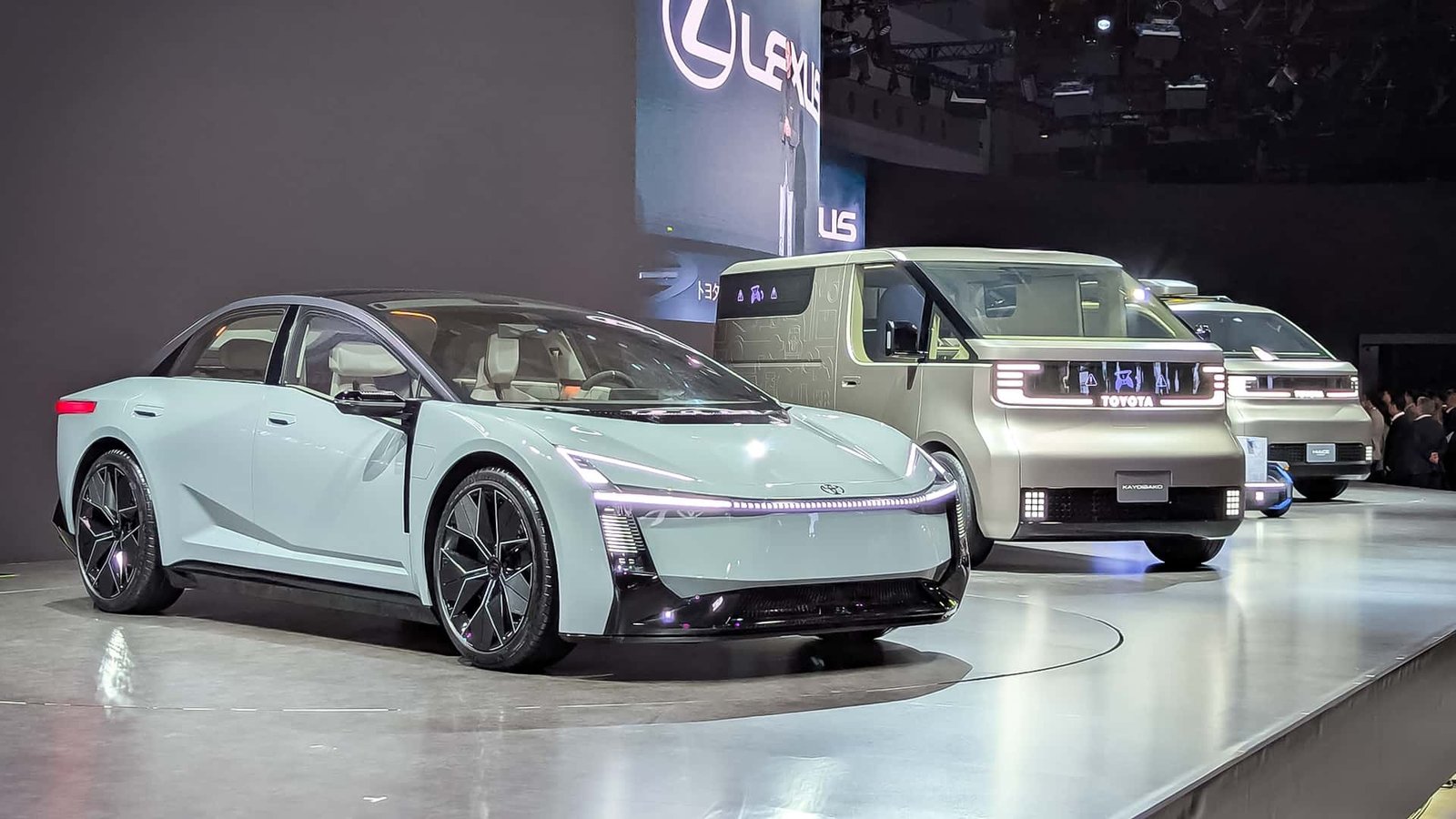
The air inside the vast exhibition hall in Tokyo crackled with an almost palpable energy, a mix of hushed anticipation and the excited murmur of thousands. Bright, futuristic light installations cast an ethereal glow on polished concrete floors, reflecting the sleek, almost alien forms beneath pristine white sheets. Then, with a dramatic flourish, the covers were pulled back, revealing what Japan believes is the absolute pinnacle of automotive innovation, a dazzling vision of the future of transport. Spectators gasped; I certainly did. We were treated to a parade of vehicles that seemed to leap straight out of a science fiction movie: self-driving pods designed for urban serenity, sports cars with lines so fluid they looked sculpted by wind itself, and family vehicles promising unparalleled safety and connectivity. It was clear these weren’t just concept cars; they were statements, declarations of intent from a nation renowned for pushing technological boundaries. Every detail, from the minimalist interiors to the augmented reality dashboards, screamed “tomorrow.” Yet, as the initial awe subsided, a quiet, persistent question began to form in my mind, a subtle discord in the symphony of innovation. (It felt like watching a magic show where the magician forgot to explain how the rabbit vanished, only amplified.) This magnificent display of next-generation vehicles, while undeniably thrilling, felt like it was missing one absolutely crucial piece of the puzzle, a fundamental detail that, frankly, left me a little concerned about the true readiness of this gleaming future.
The Grand Unveiling: What Japan Actually Showed Us
Imagine stepping into a world where your car isn’t just a mode of transport but a seamless extension of your digital life, a personal assistant, and a sanctuary all rolled into one. That’s precisely the experience Japan’s leading automakers aimed to convey at their recent showcase. The centerpiece, for many, was a series of highly modular vehicles, capable of transforming their interiors to suit various needs – from a mobile office during your commute to a cozy lounge for family trips. One particular concept, a sleek urban mobility solution, boasted Level 5 autonomous capabilities. This means it could theoretically navigate any road, in any condition, without human intervention. “It was like stepping into a sci-fi movie, but one you could actually imagine driving,” remarked Ms. Aiko Tanaka, a long-time car enthusiast who travelled from Osaka just for the event. “The way the seats reconfigured themselves, the holographic navigation – it was truly breathtaking.”
The emphasis wasn’t just on automation; it was on personalization and safety. AI systems were showcased that could monitor driver fatigue, anticipate potential hazards with uncanny accuracy, and even learn passenger preferences to adjust everything from ambient lighting to entertainment choices. Connectivity was ubiquitous, with vehicles communicating not just with each other but with city infrastructure, optimizing traffic flow and minimizing congestion. “We’re moving beyond mere driving machines,” explained a lead engineer, Dr. Hiroshi Nakamura, during a press briefing, “to truly integrated living spaces that enhance every aspect of your journey.” The designs themselves were a marvel: aerodynamic, often minimalist, with expansive glass surfaces that blurred the lines between interior and exterior. Sensors were subtly integrated, almost invisible, maintaining the elegant aesthetic. It was a vision of a future where journeys are not just safe and efficient, but genuinely enjoyable, stress-free experiences.
The Elephant in the Room: The Missing Piece
For all the dazzling displays of advanced robotics, intelligent interfaces, and seamless connectivity, a critical question lingered in the minds of many industry observers and environmental advocates: how exactly will these magnificent machines be powered? While there were mentions of “clean energy” and “sustainable solutions” in the overarching narrative, concrete details about the fundamental energy source – the very lifeblood of these next-generation vehicles – were conspicuously absent or, at best, vaguely addressed. It felt like attending a grand culinary exhibition where chefs showcased incredible dishes, but nobody mentioned where the ingredients came from, or how they were grown. This isn’t a minor oversight; it’s a gaping hole in the fabric of a truly sustainable future.
“Everyone was dazzled by the AI and the self-driving capabilities, and rightly so, they were incredible,” mused Dr. Kenjiro Sato, an automotive analyst attending the event, during a quiet conversation over lukewarm coffee. “But I couldn’t help but wonder, ‘How does this thing actually move without massive carbon footprints?’ Are we talking about a breakthrough in solid-state batteries? A hydrogen revolution? Or just more lithium-ion with fancier packaging? The silence was deafening on that front.” His point resonated deeply. We saw the intricate dance of autonomous algorithms, the luxurious comfort of bespoke interiors, but the actual engine of the revolution – the power plant – was largely left to our imagination.
This omission is more than just a technical detail; it speaks to the very heart of the global challenge of climate change and the urgent need for truly sustainable transportation. A future of highly connected, autonomous vehicles, however convenient, will only be genuinely revolutionary if it’s also environmentally responsible. Without a clear, scalable, and sustainable energy strategy, these futuristic cars risk becoming just another iteration of resource-intensive machinery, albeit with a lot more bells and whistles. The industry has a responsibility not just to innovate in comfort and convenience, but to solve the existential question of energy.

The Power Dilemma: What’s Under the Hood (or Not)?
When we talk about the “crucial detail” that was missing, we’re really talking about the fundamental power source that will drive these advanced vehicles. For years, the automotive industry has been grappling with the transition away from fossil fuels. Electric vehicles (EVs) powered by lithium-ion batteries have gained significant traction, but they come with their own set of challenges: range anxiety, charging infrastructure, battery degradation, and the ethical sourcing of raw materials. Hydrogen fuel cells offer an intriguing alternative, promising fast refueling and zero tailpipe emissions, but the infrastructure for hydrogen production, distribution, and storage is still nascent and incredibly expensive to build out globally.
During the showcase, there were vague references to “multi-energy platforms” or “next-generation power units,” but no concrete demonstration or detailed roadmap for any specific breakthrough. This left many feeling that while the car’s exterior and interior had been completely reimagined, the internal combustion engine’s replacement was still very much a work in progress, or perhaps a secret weapon yet to be unveiled. An anonymous industry insider, who wished to remain unnamed given the sensitive nature of future product strategies, confided, “Look, everyone wants to show off the fancy screens and the self-parking. But the real money, the real headache, is in the power. Solid-state batteries are still a decade away from true mass production, and hydrogen is… well, it’s a chicken and egg situation with the infrastructure. We can’t just slap a standard EV battery into these highly complex, energy-demanding future cars and call it a day.”
This dilemma highlights the immense technical and economic hurdles that remain. Developing a power solution that is truly sustainable, scalable, cost-effective, and efficient enough to meet the demands of advanced autonomous and connected vehicles is perhaps the greatest challenge facing the Japanese automotive industry, and indeed, the global one. Without a clear path forward here, the futuristic vision, however compelling, risks being a beautiful but ultimately impractical dream.
Beyond the Glare: Practicality vs. Vision
It’s easy to get swept up in the grandeur of concept cars and visionary showcases. They are, after all, designed to inspire and demonstrate what’s technically possible. However, the journey from a dazzling concept on a rotating platform to a viable product in your driveway is fraught with immense practical challenges. The missing power source detail is just one facet of a larger equation.
Consider the cost. These next-generation vehicles, with their advanced AI, intricate sensor arrays, and bespoke materials, are likely to be astronomically expensive initially. How will such technology become accessible to the average consumer? Affordability is not just a commercial challenge but a social one; the benefits of truly sustainable and safe transport should be available to everyone, not just a privileged few.
Then there’s the infrastructure. Even if a perfect power source were to emerge tomorrow, the global infrastructure needed to support millions, if not billions, of these vehicles is staggering. We’re talking about a massive overhaul of our energy grids, charging networks, and potentially even urban planning. For autonomous vehicles, regulatory frameworks are still evolving, and public trust remains a significant hurdle. People are still hesitant to fully relinquish control to a machine, especially after isolated incidents get widespread media attention. The transition won’t be as simple as swapping out an old car for a new one; it requires a systemic societal shift.
Japan, with its dense urban environments and aging population, has a unique incentive to push for these solutions. But the question remains: are these showcases truly a blueprint for mass production, or more of a strategic play to maintain technological leadership and set a long-term direction for research and development? It’s a delicate balance between dreaming big and grounding those dreams in reality.
Japan’s Strategic Play: A Glimpse, Not a Blueprint
So, why would an industry leader like Japan, known for its meticulous engineering and pragmatic approach, present such an advanced vision without fully addressing the core energy question? It’s likely a multi-faceted strategic play. Firstly, these showcases serve as powerful statements of intent. In the fiercely competitive global automotive landscape, demonstrating cutting-edge capability keeps companies relevant and signals to the world that Japan remains at the forefront of automotive technology. It’s a morale booster for engineers and a beacon for potential talent.
Secondly, concept vehicles often act as a testing ground for public reaction. By unveiling bold designs and advanced features, companies can gauge consumer interest, identify popular trends, and understand potential criticisms long before committing billions to mass production. The subtle omission of the power source might even be deliberate, allowing them to focus the narrative on the user experience and connectivity, areas where they feel confident in their immediate advancements, while silently continuing their intense R&D in battery and fuel cell technology behind closed doors. “It’s a bold statement, a vision board for the industry, but perhaps not a product roadmap for next Tuesday,” an observer from a rival European company commented wryly, reflecting a common sentiment that these shows are as much about marketing as they are about technological readiness.
Furthermore, these visions can influence policy and attract investment. By painting a compelling picture of a smart, connected, and safe urban future, automakers can encourage governments and private investors to support the necessary infrastructure development and regulatory changes that will ultimately pave the way for these vehicles. It’s a long game, played on a global stage, where influence and perception are as crucial as the underlying technology.
The Road Ahead: What We Can Expect
The future of cars, as imagined by Japan, is undeniably exciting. We’re on the cusp of an era where vehicles are more than just transportation; they are intelligent companions, integrated into the very fabric of our lives. The advancements in AI, autonomous driving, and connectivity promise safer roads, more efficient cities, and a level of comfort and convenience previously unimaginable.
However, the journey to this future is not without its significant challenges, particularly regarding the crucial aspect of sustainable power. What we saw was a tantalizing glimpse, a promise, rather than a fully detailed blueprint. We should expect continued, intense research and development in battery technology, hydrogen fuel cells, and perhaps entirely new, yet-to-be-discovered energy solutions. The next few years will likely see incremental improvements in existing electric vehicle technology, alongside significant investments in charging and hydrogen refueling infrastructure. True Level 5 autonomy, while showcased, will probably roll out gradually, starting in controlled environments.
Ultimately, the future of mobility will be a collaborative effort, requiring not just brilliant engineers and visionary designers, but also policymakers, urban planners, and consumers willing to embrace change. Japan has shown us a beautiful, intelligent, and deeply connected future for cars. Now, the real work begins: powering that future in a way that truly benefits everyone and our planet. It’s a race, not just for the smartest car, but for the smartest, most sustainable way to move.
Frequently Asked Questions
| What future car technologies did Japan showcase? | Japan’s recent auto show unveiled a stunning array of advanced automotive concepts, featuring highly autonomous driving systems, AI-powered user interfaces, modular designs, enhanced connectivity, and futuristic aesthetics. These demonstrations painted a vivid picture of personalized, seamless, and safer mobility experiences. |
| What are the potential benefits of these future car designs? | The envisioned future cars promise significant benefits, including drastically reduced traffic accidents due to advanced safety features, enhanced urban efficiency through optimized traffic flow, greater accessibility for diverse populations, and a more enjoyable, connected driving (or riding) experience. |
| What “crucial detail” was largely missing from the showcase? | While the designs were breathtaking, the showcase notably lacked concrete details on the primary sustainable power source or the detailed energy infrastructure required for these vehicles. This omission left many wondering about the practical, large-scale implementation of such advanced, energy-intensive concepts. |
| What challenges remain in bringing these futuristic cars to reality? | Key challenges include developing scalable and sustainable power solutions, building the necessary charging/refueling infrastructure, managing the immense cost of R&D and manufacturing, overcoming regulatory hurdles for autonomous systems, and ensuring widespread public acceptance and affordability. |
| How might Japan address the missing power source detail in the future? | Japan is expected to continue investing heavily in research for advanced battery technologies, hydrogen fuel cells, and perhaps new forms of renewable energy integration. Future showcases will likely increasingly integrate these crucial power solutions as they mature, aiming for a truly comprehensive vision of sustainable mobility. |
Important Notice
This FAQ section addresses the most common inquiries regarding the topic.