Jaelan Phillips: From Trash Talker to Eagle’s Pride
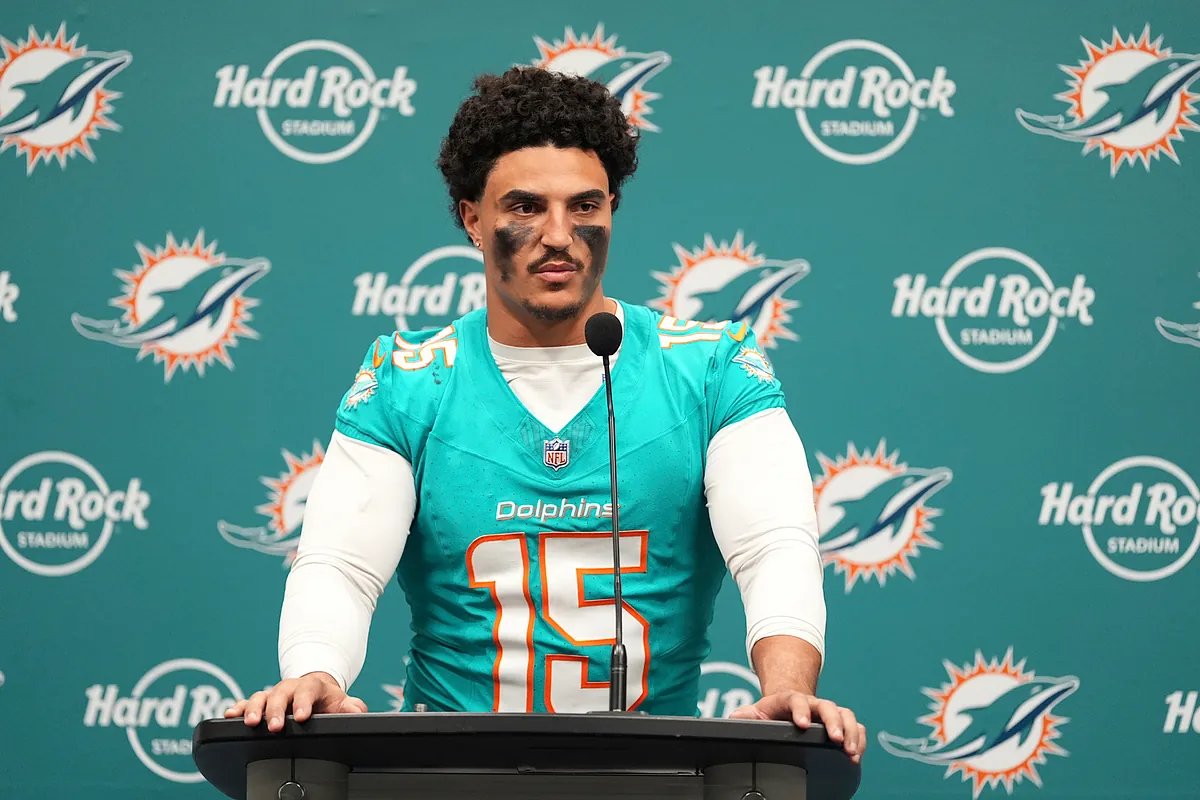
When Jaelan Phillips signed with the Philadelphia Eagles, it wasn’t just about adding another talented edge rusher to the roster. It was also about bringing in a player with a certain… swagger. A guy who isn’t afraid to speak his mind, even if it means taking on a legend like Jason Kelce. And that’s exactly what Phillips did, leaving Kelce momentarily speechless with a perfectly timed jab during a joint practice. Let’s be honest, that’s the kind of boldness Philly fans eat up.
The story, as Kelce tells it, is pretty funny. It was during a joint practice session between the Miami Dolphins (Phillips’s former team) and the Eagles. Kelce was exchanging some words with Dolphins defensive tackle Christian Wilkins, when Phillips decided to jump in to defend his teammate. What followed was a line so savage, it immediately became a viral moment, solidifying Phillips’s place in Philly fans’ hearts, even before he officially donned the midnight green.
The “Eyebrow” Incident: Trash Talk Gold
“Wilkins was talking trash just in the practice,” Kelce recalled, laughing. “So I’m over here yelling and all of a sudden, out of nowhere, Jaelan Phillips says, ‘Shut up, eyebrow. You ain’t even practicing.’ And I was like, ‘Dude, this mother****** just called me eyebrows?’ I can’t even come back from that.” Honestly, you gotta admit, that’s some A+ trash talk. Simple, effective, and brutally honest. It’s the kind of thing that sticks with you.
Phillips himself remembers the moment fondly. “That was probably the best, quickest roast I’ve had,” Phillips said with a grin. “I’m proud of that one.” And he should be! It’s not every day you can silence a guy like Jason Kelce, especially with such a simple yet cutting remark.
Why This Matters: Understanding Philly’s Football Culture
Now, you might be thinking, “Okay, it’s just trash talk. What’s the big deal?” But in Philadelphia, it’s more than that. It’s a sign of a player who gets it. A player who understands the passion, the intensity, and the unapologetic nature of the city’s football culture. Philly fans don’t just want talent; they want players who are willing to bring the fire, the energy, and the personality to the field. Think of guys like Reggie White, Brian Dawkins, or, of course, Kelce himself. These are players who weren’t just great athletes; they were characters, leaders, and embodiments of the city’s spirit. For more insights into the current dynamics, it’s worth exploring if the Kansas City Chiefs are still a playoff lock, as team dynamics and performance benchmarks often influence fan expectations and team strategies.
Trash talk is part of that DNA. It’s a way of showing that you’re not afraid, that you’re confident, and that you’re ready to compete. From Kelce’s emotional speeches to Brandon Graham’s constant chirping on the line, it’s a tradition that’s deeply ingrained in the Eagles’ identity. And Phillips, with his combination of charisma and competitiveness, seems perfectly suited to carry on that tradition.
Phillips’s Potential Impact on the Eagles
So, what does all of this mean for the Eagles on the field? Well, for starters, they’re getting a supremely talented pass rusher. Phillips was a first-round pick for a reason. He’s got the speed, the strength, and the technique to disrupt opposing offenses. But beyond the physical skills, he brings a mental toughness and a competitive fire that can be contagious. When you have a guy who’s not afraid to get in your face, who’s always looking for an edge, it can elevate the play of the entire defense.
Think about it: a relentless pass rush can force quarterbacks into making mistakes, which can lead to turnovers and scoring opportunities for the Eagles’ offense. And when you have a defense that’s playing with confidence and swagger, it can be incredibly difficult to stop. That’s what Jalen Phillips brings to the table.
More Than Just a Pass Rusher: A Leader in the Making
But Phillips’s impact could extend beyond just the defensive line. He has the potential to be a vocal leader on the team, someone who can rally the troops and inspire them to play their best. That’s what Kelce was, and his absence leaves a void the team needs to fill. Now, I’m not saying Phillips is going to be the next Jason Kelce. That’s a pretty high bar to clear. But he has the potential to be a similar type of influential figure in the locker room.
He’s certainly got the confidence. You don’t trash talk a guy like Kelce if you’re lacking in self-belief. And that confidence, combined with his talent and work ethic, could make him a real force for the Eagles for years to come. You know, it’s like that saying: “It’s not the size of the dog in the fight, it’s the size of the fight in the dog.” And Phillips definitely seems to have that fight.
From Dolphin to Eagle: A Change of Scenery
Now, it’s worth remembering that Phillips is coming from a different situation in Miami. He was part of a team that had its share of ups and downs, but he didn’t always get the chance to shine as brightly as he could. In Philadelphia, he’ll be playing in a city that truly appreciates hard work and passion. He’ll be playing for a coaching staff that knows how to get the most out of its players. And he’ll be playing alongside a group of teammates who are hungry for success.
That change of scenery could be just what Phillips needs to take his game to the next level. It’s an opportunity for him to prove that he’s not just a good player; he’s a great one. And if he can bring that same swagger and intensity to the field that he brought to that joint practice with Kelce, he could quickly become a fan favorite in Philadelphia.
The Challenges Ahead: Earning the City’s Trust
Of course, it won’t all be smooth sailing. Phillips will have to earn the trust of his teammates and the city’s fans. He’ll have to prove that he can perform consistently on the field, that he can handle the pressure of playing in a demanding market, and that he’s committed to winning. But if he can do all of those things, the sky’s the limit. And honestly, I think he’s got the potential to do it.
The truth is, Philadelphia fans can be tough. They’re demanding, they’re passionate, and they don’t suffer fools gladly. But they also appreciate genuine effort and talent. And if Phillips shows them that he’s willing to give his all for the team, they’ll embrace him with open arms. It’s a reciprocal relationship. You give them everything you’ve got, and they’ll give you everything they’ve got in return.

Beyond the Field: Phillips’s Personality and Charisma
It’s not just about what Phillips does on the field; it’s also about who he is as a person. He seems to have a genuine charisma and a sense of humor that can be infectious. That’s important, because it helps to build camaraderie and trust within the team. When you have a locker room full of guys who genuinely like each other, it can make a huge difference in terms of performance.
Look, football is a tough sport. It’s physically demanding, it’s mentally challenging, and it requires a lot of sacrifice. So, it’s important to have guys who can lighten the mood, who can make you laugh, and who can remind you that it’s still just a game. And from what I’ve seen and heard, Phillips seems to be one of those guys. In moments of down time, remember the Pokemon Legends Z-A mega dimension news can provide a fun, relatable distraction from the intensity of the sport. His presence definitely has the potential to impact his team in great ways!
Looking Ahead: The Future of the Eagles’ Defense
The addition of Jaelan Phillips is a significant boost to the Eagles’ defense. It gives them another dynamic pass rusher, a potential leader, and a player who understands the city’s football culture. But it’s just one piece of the puzzle. The Eagles will need to continue to build their roster, to develop their young players, and to create a winning environment if they want to compete for championships.
But with guys like Phillips on board, they’re certainly moving in the right direction. He’s a player who can make an immediate impact, and he has the potential to be a cornerstone of the Eagles’ defense for years to come. And who knows, maybe he’ll even come up with a few more memorable trash-talking moments along the way. I, for one, am here for it.
So, buckle up, Eagles fans. The Jaelan Phillips era is officially underway. And it promises to be a fun, exciting, and maybe just a little bit eyebrow-raising ride.
The Jason Kelce Factor: A Lasting Legacy
We can’t talk about Jaelan Phillips and his trash-talking prowess without acknowledging the absence of Jason Kelce. Kelce, a true icon in Philadelphia, retired after a stellar career, leaving a void in leadership and pure Philly grit. His presence on the field and in the locker room was immeasurable.
Phillips stepping into this landscape, even in a different position, carries a weight of expectation. Can he capture the same spirit? Can he inspire the team and the fans in a similar way? Time will tell, but his willingness to engage, his confidence, and his undeniable talent are promising signs. It’s kind of funny, to see the potential torch-passing, even if it’s just in the realm of memorable quotes and fearless attitudes. Thinking about the future and how new stadiums can impact the game, one might reflect on the extraordinary spectacle of experiencing the Wizard of Oz like never before at the Sphere, which shows how innovative venues can enhance experiences and maybe one day redefine how fans engage with sports too.
Adapting to the Eagles’ System: A Seamless Transition?
Phillips’s success in Philadelphia will largely depend on how well he adapts to the Eagles’ defensive system. He’ll need to learn the playbook, understand his role, and develop chemistry with his teammates. Fortunately, he’s joining a team with a strong coaching staff and a history of developing talented players.
The Eagles have a reputation for maximizing the potential of their players, and I expect they’ll do the same with Phillips. They’ll work with him to refine his technique, to improve his understanding of the game, and to help him become the best player he can be. The truth is, the Eagles have a way of bringing out the best in their players, and I’m confident that they’ll do the same for Phillips. If you’re like most people, you’ve probably heard about the ongoing weight loss revolution, and honestly it’s something that can impact any athlete’s health and fitness goals, to ensure players are in top shape to play their best.
Embracing the Philly Mentality: A Match Made in Heaven
Ultimately, Jaelan Phillips’s journey with the Eagles is about more than just football. It’s about embracing the Philly mentality, about becoming part of the city’s fabric, and about connecting with the fans on a personal level. It’s about showing that he’s not just a player; he’s one of them.
And if he can do that, he’ll be a legend in Philadelphia forever. It’s a tough task, but I think he’s up to the challenge. He’s got the talent, he’s got the confidence, and he’s got the personality to make it happen. So, let’s welcome Jaelan Phillips to Philadelphia and see what he can do. I have a feeling it’s going to be something special.
In case you’re wondering about other dynamic pairings, consider the intense dynamic between Maher and O’Reilly in their heated exchange, which highlights the importance of strong personalities and opinions, much like what Phillips brings to the Eagles.