Patrick Mahomes has reportedly made a demand to general manager Brett Veach that the Kansas City Chiefs must address this offseason: acquire a game-changing wide receiver who can restore the explosiveness that defined the franchise’s dynastic run.
- Mahomes’ Demand: Patrick Mahomes has urged GM Brett Veach to prioritize adding a playmaking wide receiver in the 2026 NFL Draft
- Offensive Decline: The Chiefs ranked 21st in points scored per game during the 2025 season—the worst mark of the Mahomes era
- Playoff Miss: Kansas City missed the playoffs for the first time since 2014 and lost the AFC West to the Denver Broncos
- Injury Setback: Mahomes suffered a torn ACL in mid-December and is rehabbing to be ready for Week 1 of the 2026 season
- Draft Position: The Chiefs hold the ninth overall pick, their highest selection since drafting Mahomes in 2017
- Top Targets: Ohio State’s Carnell Tate and Arizona State’s Jordyn Tyson are the leading wide receiver prospects for Kansas City
The Chiefs’ offensive struggles in 2025 were unlike anything seen during the Mahomes era. Kansas City ranked 21st in the NFL in points scored per game—a statistical anomaly for a franchise that had consistently fielded one of the league’s most potent attacks. The team missed the playoffs for the first time since 2014 and failed to win the AFC West for the first time since 2016, as the Denver Broncos captured the division title.
The reality is that the 2025 season exposed underlying issues that had been building for years. Despite reaching a third consecutive Super Bowl, the Chiefs were soundly defeated by the Philadelphia Eagles, and the offense had already been showing signs of stagnation. Last season made those issues impossible to ignore.
According to ESPN’s Adam Schefter, Mahomes has been vocal behind closed doors about the need for additional offensive firepower, particularly a dynamic receiver who can stretch the field. This demand mirrors the quarterback’s previous advocacy for specific offensive additions, including his well-documented push to acquire DeAndre Hopkins during the 2024 trade deadline.
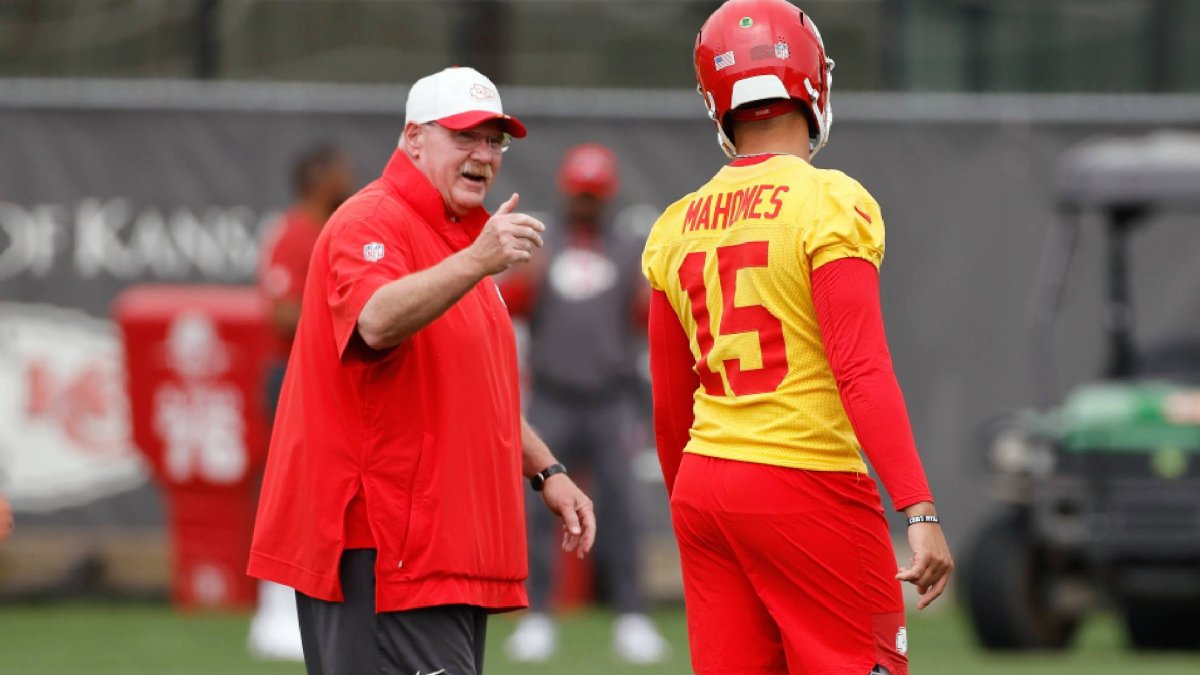
Mahomes’ Demand: A Playmaker Ultimatum
Patrick Mahomes’ ninth season was especially difficult for the three-time Super Bowl champion. Not only did the team struggle collectively and fail to find offensive rhythm, but Mahomes also suffered a torn ACL in mid-December. He is now working through rehabilitation in hopes of being ready for Week 1 of the 2026 season, according to official team injury updates.
The Chiefs must surround Mahomes with playmakers to restore the explosiveness that defined his early years and has declined over the past two seasons. The urgency of this need has placed a spotlight on Mahomes Veach demand as the driving force behind the team’s draft strategy. Holding a high pick in the draft—specifically the ninth overall selection—Kansas City could target wide receiver Jordyn Tyson from Arizona State or Carnell Tate from Ohio State.
NFL Network draft analyst Daniel Jeremiah recently highlighted the Chiefs’ receiver needs: “Kansas City has to get faster and more explosive on the perimeter. You watch Mahomes scramble and extend plays, but there’s nobody getting open downfield. That’s a roster construction issue that Veach has to solve.”
The urgency is amplified by Mahomes’ contract situation. The quarterback signed a 10-year, $504.75 million extension in 2020—the richest deal in NFL history at the time. With the quarterback now accounting for nearly 25% of the team’s salary cap, the Chiefs must maximize every draft pick and value acquisition to maintain contention.
Why the 2025 Season Triggered This Demand
The 2025 campaign represented a perfect storm of dysfunction for the Chiefs’ offense. The absence of a reliable deep threat allowed defenses to compress the field and take away Mahomes’ preferred intermediate routes. The running game failed to compensate, and the offensive line struggled with consistency.
Statistically, the decline was stark. The Chiefs’ scoring output represented a drop of nearly 10 points per game from their peak seasons. Red-zone efficiency cratered, and the team’s explosive play rate—once the league’s gold standard—fell to middle-of-the-pack territory.
Beyond the numbers, the eye test revealed a concerning trend: opposing defenses were no longer afraid of the Chiefs’ vertical passing game. Safety rotations moved closer to the line of scrimmage, and cornerbacks played more aggressively at the catch point. Mahomes, known for his ability to improvise, found fewer windows and tighter throwing lanes.
Brett Veach now has the mission of making Mahomes happy in this year’s draft, and the ideal move would be making a strong push to acquire Carnell Tate. The Ohio State receiver is drawing interest from several teams after posting 875 receiving yards and nine touchdowns. Wide receivers from that program have proven to be reliable NFL prospects—just ask the Seattle Seahawks about Jaxon Smith-Njigba.
Carnell Tate vs. Jordyn Tyson: A Statistical Comparison
The Chiefs’ decision at No. 9 will likely come down to two premier wide receiver prospects. Here’s how Carnell Tate and Jordyn Tyson compare across key metrics:
| Metric | Carnell Tate (Ohio State) | Jordyn Tyson (Arizona State) |
|---|---|---|
| Height | 6’1″ | 6’0″ |
| Weight | 196 lbs | 190 lbs |
| Receiving Yards (2025) | 875 | 901 |
| Touchdowns (2025) | 9 | 8 |
| Yards per Reception | 15.2 | 16.8 |
| 40-Yard Dash (Projected) | 4.38 | 4.42 |
| NFL Comparison | Chris Olave | Garrett Wilson |
Sources: College statistical data and NFL Draft Combine projections
Carnell Tate has emerged as the consensus top target for the Chiefs at No. 9. The Ohio State product possesses a rare combination of size, speed, and route-running precision that translates seamlessly to the NFL level. His production against elite Big Ten competition—including standout performances against Penn State and Michigan—underscores his reliability as a primary target.
Jordyn Tyson offers a different but equally compelling skill set. His explosive playmaking ability and elite yards-after-catch production make him an ideal complement to the Chiefs’ existing offensive weapons. Scouts praise his football IQ and understanding of defensive coverages, traits that would accelerate his transition to the professional level.
Former NFL executive and current analyst Mike Tannenbaum offered his perspective: “If I’m the Chiefs, I’m looking at Carnell Tate. He’s the more complete receiver right now. But Tyson has the higher ceiling—he could be special in Andy Reid’s system with all those screens and crossing routes.”
Beyond Wide Receiver: Other Offensive Needs
While wide receiver is the priority, the Chiefs’ offensive issues extend beyond the perimeter. The offensive line, once a strength, showed cracks in 2025. Veteran guard Joe Thuney is approaching the final years of his prime, and tackle depth remains a concern.
The running game, which ranked 22nd in yards per carry, failed to provide balance. Isiah Pacheco’s injury history and the lack of a reliable complementary back limited the Chiefs’ offensive versatility. Defenses could pin their ears back on passing downs without fear of a punishing ground attack.
Veach must weigh these needs against the urgency of Mahomes’ demand. The ninth pick offers flexibility—the Chiefs could select a receiver, trade back to accumulate more picks, or even move up for a player they covet. Each strategy has implications for the team’s short-term and long-term outlook. This is precisely why addressing the Chiefs playmaker need has become the organization’s foremost priority.
According to Arrowhead Pride, the Chiefs have conducted extensive pre-draft evaluations on both top receiver prospects and offensive line talent, suggesting Veach is keeping his options open.
Mahomes’ Recovery and the Window of Opportunity
Mahomes’ torn ACL in December added urgency to the Chiefs’ offseason priorities. The quarterback is working through rehabilitation with the goal of being ready for Week 1 of the upcoming season. The severity of the injury—and Mahomes’ style of play—raises legitimate questions about the Chiefs’ timeline for contention.
History suggests that quarterbacks can return from ACL injuries effectively, but the recovery window typically spans 9-12 months. Mahomes, who relies heavily on his mobility and improvisational ability, faces a particularly challenging rehabilitation. The Chiefs have invested heavily in his recovery, with team doctors and trainers working around the clock.
General manager Brett Veach understands the stakes. The Chiefs’ window with Mahomes remains open, but it requires proactive roster construction. Adding a young, dynamic playmaker now not only addresses immediate needs but also secures the offense’s long-term future.
However, the window isn’t infinite. Mahomes is entering his 10th season in 2026. While he has defied conventional aging curves for quarterbacks, the toll of 11 postseason runs and countless hits is significant. Veach must balance the urgency of winning now with the prudence of building a sustainable contender.
Brett Veach’s Track Record: Can He Deliver?
Brett Veach has established himself as one of the NFL’s most aggressive general managers. His willingness to make bold moves—trading up for Mahomes in 2017, acquiring Tyrann Mathieu in free agency, and reshaping the offensive line—demonstrates his commitment to building a championship roster.
However, Veach’s track record with wide receivers is mixed. The decision to trade Tyreek Hill in 2022 created a void that the Chiefs have struggled to fill. While the addition of Rashee Rice provided temporary relief, the position group has lacked a true difference-maker. The 2024 draft selection of Xavier Worthy has yet to yield consistent production, and the offense has felt the absence of a dominant perimeter threat.
Veach now faces his most critical test: delivering the playmaker Mahomes has demanded while navigating the complexities of the draft. With the ninth overall pick, the Chiefs are in prime position to select a franchise-altering receiver.
What This Means for the 2026 Season
The Chiefs’ offseason strategy will define their trajectory for years to come. If Veach successfully acquires a dynamic wide receiver—whether Tate, Tyson, or another prospect—the offense could return to its explosive form. If he fails to address the position adequately, the Chiefs risk wasting the prime years of Mahomes’ career.
Mahomes’ demand reflects his understanding of the team’s needs and his desire to win now. The quarterback has never been shy about voicing his preferences, and his relationship with Veach allows for candid conversations about roster construction.
With training camp approaching, all eyes will be on Kansas City’s front office. The message from Mahomes has been sent. The response from Veach will determine whether the Chiefs’ dynasty continues or fades into memory.
Frequently Asked Questions
What demand has Patrick Mahomes made to Brett Veach?
Patrick Mahomes has demanded that general manager Brett Veach acquire a game-changing wide receiver to restore the Chiefs’ offensive explosiveness. This demand follows the team’s offensive struggles during the 2025 season, where they ranked 21st in scoring and missed the playoffs.
What happened to the Chiefs in the 2025 season?
The Chiefs ranked 21st in points scored per game, missed the playoffs for the first time since 2014, and lost the AFC West to the Denver Broncos. Mahomes also suffered a torn ACL in mid-December, compounding the team’s struggles.
Which wide receivers are the Chiefs targeting in the draft?
The Chiefs are targeting Ohio State’s Carnell Tate and Arizona State’s Jordyn Tyson with the ninth overall pick. Both prospects possess the playmaking abilities Mahomes desires to revitalize Kansas City’s offense.
Will Patrick Mahomes be ready for Week 1?
Mahomes is currently rehabilitating from a torn ACL suffered in mid-December. He is working toward being ready for Week 1 of the upcoming season, though his recovery timeline remains a key storyline to monitor.
How does Mahomes’ contract impact the Chiefs’ roster building?
Mahomes’ 10-year, $504.75 million contract accounts for nearly 25% of the team’s salary cap, limiting free agency spending. This makes the draft critical for acquiring cost-controlled talent, and places significant pressure on Veach to hit on premium picks.
Could the Chiefs trade up or down in the draft?
Yes. The Chiefs have the flexibility to trade up for a top prospect, trade down to accumulate more picks, or stay at No. 9. Veach has a history of aggressive draft-day moves, so all options remain on the table.