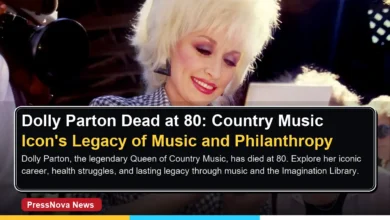
Dolly Parton crossed every divide in American culture, uniting generations, political affiliations, and musical genres like no other figure in modern history. The country music icon, who died Tuesday at age 80 after a brief battle with cancer, left behind a legacy that transcended entertainment to become a rare universal touchstone in an increasingly fractured world.
- Legendary Career: 11 Grammy Awards, 25 No. 1 country hits, 3,000+ songs written, over 100 million records sold across seven decades
- Universal Appeal: Loved across generations—from Boomers to Gen Z—and across political divides, described as “the last universally beloved figure in our scattered, splintered age”
- Philanthropy Pioneer: Imagination Library gifted over 330 million free books to children worldwide; $1 million funded critical early COVID-19 vaccine research at Vanderbilt
- Cultural Bridge-Builder: Influenced Whitney Houston, Beyoncé, Lil Nas X, The White Stripes, and countless artists across genres and racial lines
- Business & Image: Built Dollywood empire and crafted an unforgettable persona on her own terms—”It costs a lot of money to look this cheap”
How Dolly Parton Crossed Every Divide: The Universal Appeal of a Country Legend
In a nation deeply divided along political, racial, and generational lines, Dolly Parton became something remarkable: a consensus. The Atlantic called her “perhaps the only person in the United States who commanded nearly universal affection,” while the BBC suggested she was “the one thing most Americans could agree on”. Her death prompted an outpouring that transcended every boundary—from conservative rural communities to progressive urban centers, from country music purists to hip-hop fans, from the Silent Generation to Gen Z.
How did a self-described “backwoods Barbie” from a one-room cabin in Tennessee’s Great Smoky Mountains achieve what seemed impossible? The answer lies in her extraordinary combination of authentic storytelling, genuine compassion, shrewd business acumen, and an unwavering commitment to being exactly who she was—unapologetically, gloriously Dolly.
Parton’s genius was her ability to be everything to everyone without betraying her core identity. She was a devoted Christian who never judged others’ faith or lack thereof. She was a proud Appalachian who became a global icon. She was a savvy businesswoman who gave millions away with no strings attached. She embodied the American Dream while never forgetting where she came from.
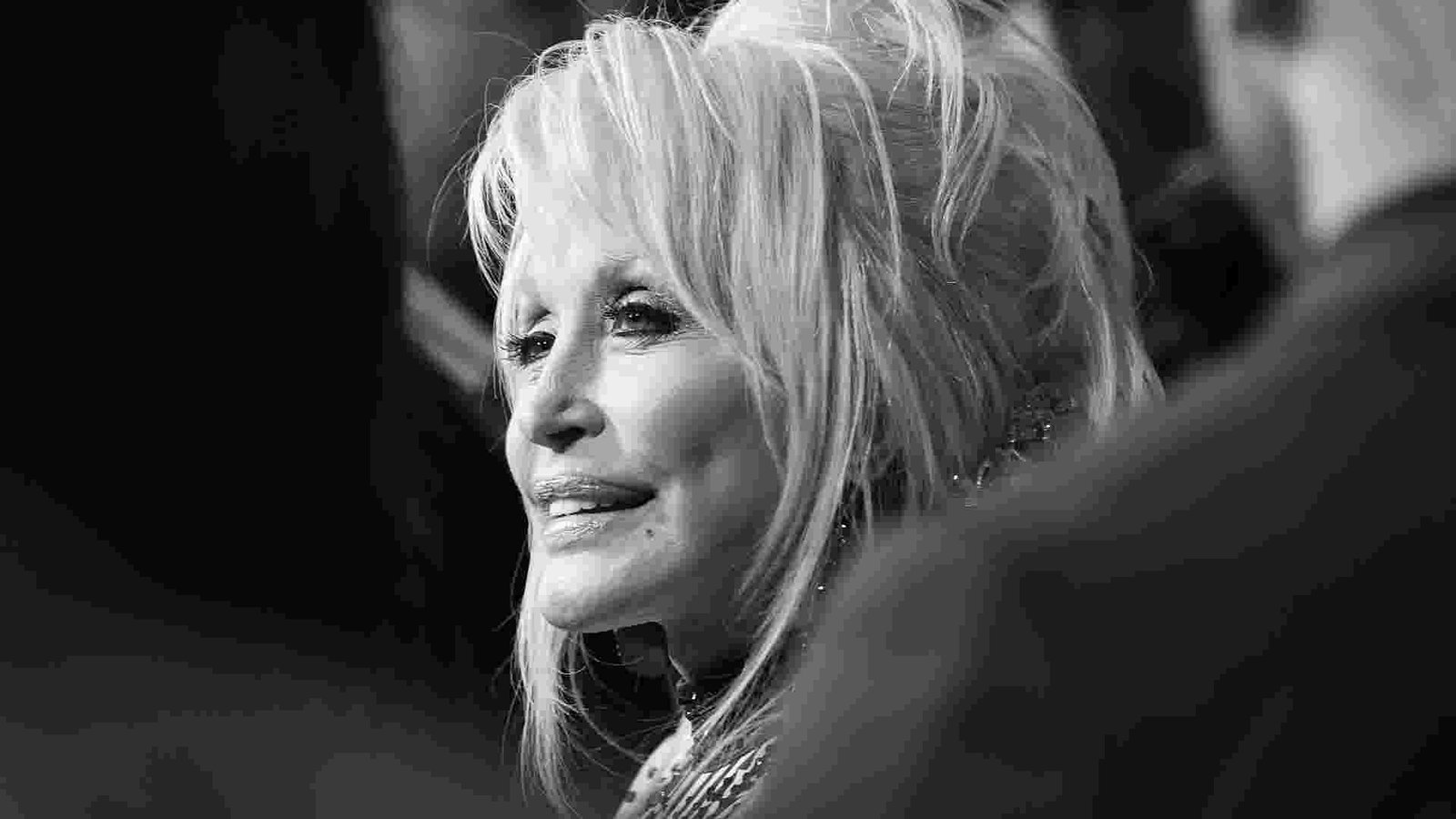
Dolly Parton Crossed Generational Divides: From Boomers to Gen Z
While many artists struggle to remain relevant beyond their peak decades, Dolly Parton spent 70 years actively building bridges between generations. She appeared as “Aunt Dolly” on Disney Channel’s “Hannah Montana,” introducing herself to millions of young fans who would grow up to rediscover her catalog. “Thanks to that show I had a whole new following of people that were turned on to me, these young little kids,” she told Vanity Fair in 2020.
Her embrace of new platforms was equally strategic. When TikTok emerged, Parton’s classic interviews and songs—”Jolene,” “9 to 5,” “Here You Come Again”—found new life soundtracking countless viral moments. She launched a mobile phone app in 2011 and gamely called herself “Digital Dolly” on Australia’s triple j youth network.
Her 2020 “Dolly Parton Challenge” Instagram post, where she shared four photos representing different social media platforms, became a viral sensation with celebrities from Janet Jackson to Will Smith joining in. She understood intuitively that cross-generational appeal required meeting young audiences where they were, not demanding they come to her.
Millennial and Gen Z Connection: Not Just Nostalgia
The affection younger generations held for Parton was not merely nostalgic. According to Irish Times columnist Finn McRedmond, “Millennials, Gen Z and Boomers are united in their valorisation of the most popular woman in the world”. Parton achieved this through genuine openness—she respected every generation’s music without judgment. “Every generation, or every decade or so, everybody has their own music. It’s only right that they should,” she told triple j. “I never criticise or judge other people’s work”.
Her goddaughter Miley Cyrus covered “Jolene,” The White Stripes recorded it for a live album, and Beyoncé reimagined it for her Grammy-winning “Cowboy Carter” album—each interpretation introducing Parton to new audiences while honoring her original vision. “Oh, I love this record,” Parton said of The White Stripes’ punk-infused cover. “I just think that’s so great that they love my song good enough to record it”.
Dolly Parton Crossed Political Divides With Genuine Compassion
Perhaps the most remarkable divide Dolly Parton crossed was political. In an era where public figures are expected to pick sides, Parton floated above partisan battles while quietly doing the work. She was a devoted Christian who spoke in the twangiest Southern accent, yet she was loved by traditional conservatives, progressive leftists, and every constituency between. Her secret? She didn’t preach or perform virtue—she simply acted.
“I never know what I’m going to do or why I’m gonna do it. I just see a need and if I can fill it, then I will,” she said in her 2022 Carnegie Medal of Philanthropy acceptance speech. This philosophy resulted in a philanthropic portfolio that served everyone: rural white children in Appalachia, Black neighborhoods in Nashville, COVID-19 vaccine research benefiting the entire world, and communities devastated by natural disasters regardless of politics.
In 2024, weeks after Hurricane Helene devastated the American South, Parton stood on a stage and announced a $1 million donation, matched by Dollywood and partners, to Appalachian relief. She sang the promise to the tune of “Jolene”: “We’re all here to mend these broken hearts”. The gesture wasn’t performative—it was simply Dolly seeing a need and filling it.
Her refusal to be weaponized by either political side made her uniquely credible. She politely declined a statue in Nashville in 2021, saying: “Given all that’s going on in the world, I don’t think putting me on a pedestal is appropriate at this time”. The humility, combined with action, earned trust across every divide. The bipartisan grief that followed her passing proved just how deeply she had connected with Americans from every corner of the political spectrum.
Dolly Parton Crossed Racial and Cultural Divides Through Music
Parton’s impact on Black culture was profound and enduring. Her songwriting reached across racial lines in ways that transcended genre. When Whitney Houston covered “I Will Always Love You” for “The Bodyguard” in 1992, it became one of the best-selling singles in history. Parton used some of the royalties from Houston’s version to invest in a historically Black Nashville neighborhood, quietly supporting the community.
“She can have the credit, as long as I get my cash,” Parton famously joked about Houston’s version—a perfect encapsulation of her warmth and commercial savvy. But her support went deeper. When Tennessee state Rep. Justin J. Pearson celebrated her legacy, he noted that Parton “was as generous as she was gifted” and “never lost touch with her Tennessee roots”.
Beyoncé’s 2024 album “Cowboy Carter” featured Parton in multiple ways—a reimagined “Jolene,” a spoken-word interlude “Dolly P,” and a cameo on “Tyrant.” The collaboration represented not just musical crossover but cultural bridge-building. Lil Nas X put his own spin on “Jolene” in 2021, and Parton praised him, calling herself “honored and flattered”.
Her influence extended even further: Pras, Ol’ Dirty Bastard, and Mýa’s 1998 smash “Ghetto Supastar (That Is What You Are)” interpolated the melody of Parton and Kenny Rogers’ “Islands in the Stream”. Across hip-hop, R&B, pop, rock, and country, Parton’s songwriting DNA permeated music culture in ways that made her a shared reference point.
The Dolly Parton Divide-Crossing Philanthropy Legacy
Parton’s philanthropy was characterized by its simplicity, trust in people, and refusal to impose conditions. When the 2016 wildfires swept through Sevier County, Tennessee, her My People Fund provided families $1,000 per month for six months—no strings attached.
“The concept of providing unconditional cash was much more ‘taboo’ at the time,” said Stacia West, co-founder of the University of Pennsylvania’s Center for Guaranteed Income Research. “That trust in the fund’s beneficiaries to exercise their own agency is one lesson that philanthropy can take from Parton. The piece that really carries forward is her belief in the goodness of people and her ability to apply that to seemingly difficult problems”.
The Imagination Library, her signature initiative, operated on the same principle. Rather than requiring families to visit libraries, Parton simply mailed books directly to children’s doors. The program has now gifted over 330 million free books to children across the United States, Canada, the United Kingdom, Ireland, and Australia.
Her father, who couldn’t read or write, inspired the program. “He was a very smart man,” she once recalled, “and I often wondered what he could have done had he been able to read and write”. That personal connection—transforming her family’s shame into global good—was quintessential Dolly.
Ohio first lady Fran DeWine called Parton’s “devotion to children and literacy” unparalleled, noting over a million Ohio children had received 28 million books through the program. Parton herself said the Imagination Library “meant as much, if not more to me, than nearly anything that I’ve ever done”.
Dolly Parton Crossed Music Genre Divides and Defied Industry Norms
Parton’s genre-crossing career spanned country, pop, bluegrass, and rock. She wrote 3,000 songs, released 49 studio albums, and topped the country charts 25 times—more than any woman in the genre’s history. But she was never confined to country’s boundaries.
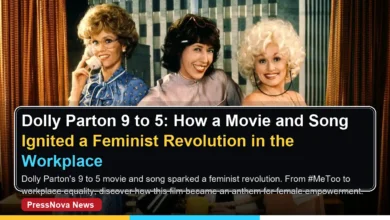
Her pop crossover began with “Here You Come Again” in 1977, which won her first competitive Grammy. The 1980 film “9 to 5” made her a Hollywood star and produced one of the most enduring anthems for working women. She devised the song’s distinctive rhythm by tapping her acrylic fingernails together like typewriter keys—genius born from pure intuition.
“She may lead with the boobs but she has the talent to back it all up,” Rolling Stone editor David Wild once said. Parton herself was clear-eyed about her image, modeling her look after a local woman she called the “town tramp”. “My mother said ‘oh she’s just trash, she’s just a tramp’ and I thought, ‘that’s what I want to be when I grow up!'”
She was inducted into the Country Music Hall of Fame in 1999 and the Rock and Roll Hall of Fame in 2022—a rare honor reflecting her cross-genre significance. Her business ventures, including Dollywood theme park, hotels, and production companies, made her one of the wealthiest performers in American history. Today, Dolly Parton’s legacy as a performing artist and humanitarian stands as a testament to her extraordinary ability to unite people through music and generosity.
Dolly Parton’s Legacy: Why She Was the Last Universal American Icon
The overwhelming consensus is that Dolly Parton represented something increasingly rare in modern culture: the final monoculture figure, the shared reference point everyone could rally around. “The monoculture was a unifying force when politics, race, geographic and generational divides kept threatening to tear us apart,” the Wall Street Journal observed.
Parton didn’t achieve this by being neutral or vague. She achieved it by being utterly, unmistakably herself—and by proving that authenticity, kindness, and talent could transcend every artificial barrier society constructs. She was a feminist who used her sexuality on her own terms. She was a Christian who never weaponized her faith. She was a billionaire who never forgot being dirt-poor.
“I just hope people will just say she was a good ol’ girl, you know? She tried hard, she worked hard and she tried to make the world a better place and try to make people happy. And I will be doing that till I keel over,” Parton said in 2024.
Dolly Parton crossed every divide because she understood that beneath all our differences, we share the same hopes, fears, and dreams. She sang about them, wrote about them, and spent her life lifting others up. Her legacy isn’t just the music—it’s the reminder that unity is possible if we have the courage to be like Dolly: authentic, generous, and utterly ourselves.