The Steep Climb: From Budget-Friendly to Premium Priced
The news that the cheapest Jeep now costs over $30,000 has certainly sent ripples through the automotive community, especially among long-time fans and prospective buyers. For years, models like the Jeep Renegade and the Jeep Compass served as the brand’s accessible gateways. They offered that quintessential Jeep styling and capability, albeit in a more compact package, without demanding a second mortgage. I recall test-driving a Renegade for a friend a few years back, and even with a few desirable options, it comfortably stayed in the low to mid-$20,000 range. It felt like a good deal for the adventure it promised.
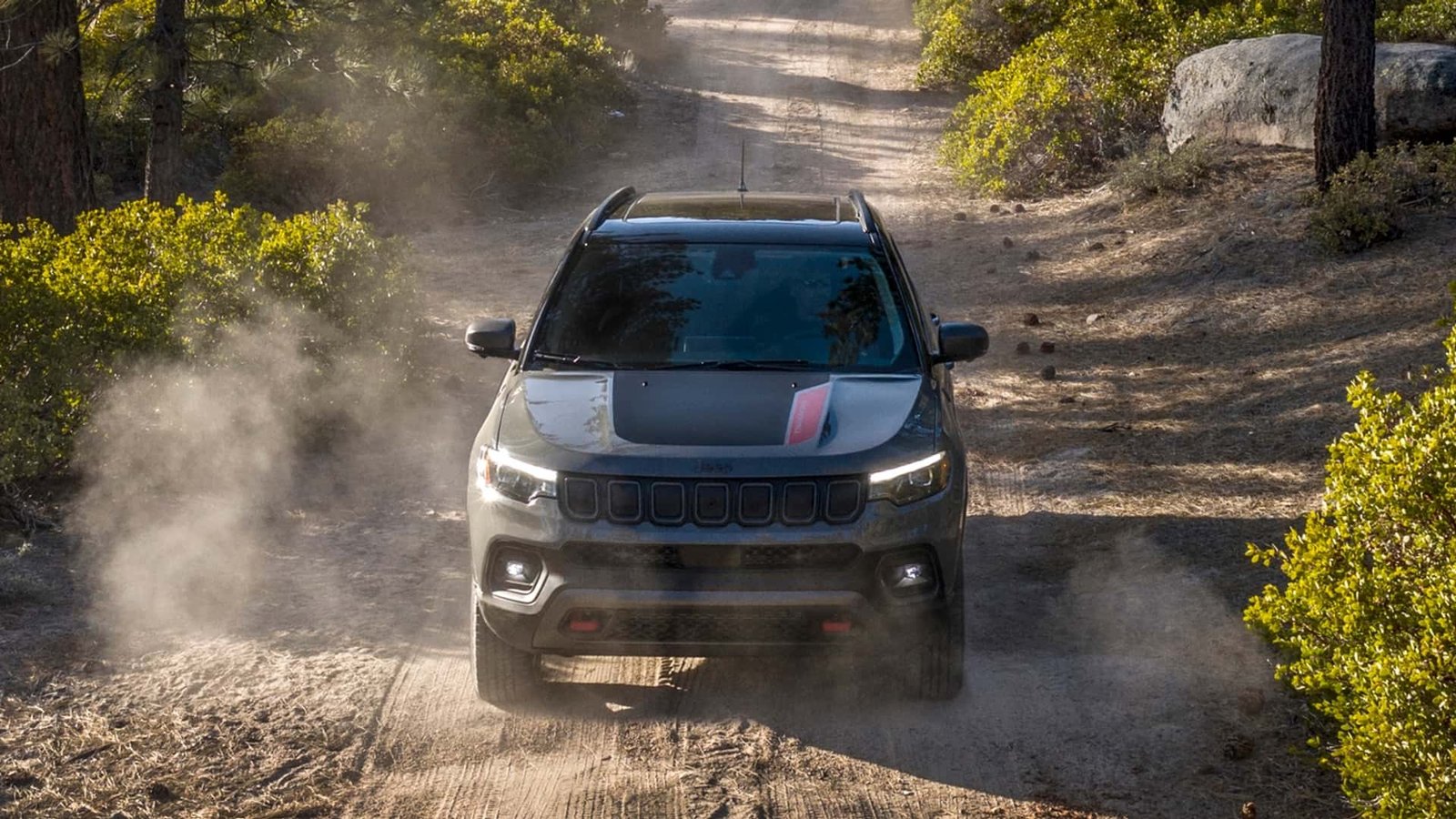
Today, a quick glance at Jeep’s official website confirms the shift. The 2024 Jeep Renegade Sport, the absolute base model, starts at an MSRP of $30,345, including destination charges. The 2024 Jeep Compass Sport isn’t far behind, beginning at $30,095. This isn’t some highly optioned special edition; these are the entry-level variants, stripped down to their most basic form. “It’s a punch to the gut for anyone hoping to get into a new Jeep without breaking the bank,” commented Marcus Thorne, a long-time Jeep enthusiast from Colorado who has owned several models over the decades. “I remember when you could get a Wrangler for less than what a Compass costs now. It just feels… out of reach for a lot of people.” This sentiment is shared by many who once saw Jeep as a brand for everyone, not just those with deeper pockets.
Unpacking the Price Drivers: Why Your Jeep Costs More
So, what exactly is fueling this dramatic increase in Jeep prices? It’s not a single factor but a complex web of economic pressures, technological advancements, and strategic decisions within the automotive industry. Understanding these elements helps shed light on why the sticker price for even the most basic models has soared past the $30,000 mark.
Global Supply Chain Disruptions and Inflation
The automotive world has been grappling with unprecedented challenges over the past few years. The COVID-19 pandemic triggered massive disruptions, particularly affecting the supply of crucial components like semiconductors. These tiny chips are essential for everything from engine management to infotainment systems, and their scarcity has driven up production costs significantly. “The semiconductor shortage wasn’t just a hiccup; it was a systemic shock that forced manufacturers to rethink their entire supply chain,” explained automotive analyst Dr. Lena Petrova. “When you can’t get enough parts, you produce fewer vehicles, and basic economics dictates that scarcity drives up prices.”
Alongside component shortages, rampant inflation across global economies has also played a major role. The cost of raw materials – steel, aluminum, plastics, and even the chemicals for paint – has escalated. Labor costs have also risen as companies compete for skilled workers. These increased input costs are inevitably passed on to the consumer.
Advanced Technology and Standard Features
Modern vehicles, even entry-level ones, are far more sophisticated than their counterparts from a decade ago. Today’s “base” models often come packed with features that were once considered luxuries or expensive add-ons. Think about it:
- Advanced Safety Systems: Features like automatic emergency braking, lane-keeping assist, blind-spot monitoring, and adaptive cruise control are becoming standard, partly due to consumer demand and partly due to evolving safety regulations. These systems rely on complex sensors, cameras, and software, all of which add to the manufacturing cost.
- Infotainment and Connectivity: Large touchscreens, smartphone integration (Apple CarPlay/Android Auto), built-in navigation, and robust connectivity options are now expected. These are not cheap to develop or integrate.
- Improved Powertrains: Engines and transmissions are becoming more efficient and powerful, often incorporating technologies like turbocharging and advanced fuel injection, which are more expensive to produce than older, simpler designs.
“Consumers expect more from their vehicles today, regardless of the price point,” noted Petrova. “They want safety, connectivity, and a comfortable ride. These aren’t optional extras anymore; they’re baseline expectations, and they come at a cost.”

Brand Positioning and Stellantis Strategy
Jeep is part of the Stellantis conglomerate, and like any major automotive group, they have a clear brand strategy. It appears Stellantis is actively positioning Jeep as a more premium, aspirational brand. By raising the entry price point, they might be aiming to:
- Increase Profit Margins: Selling fewer vehicles at higher prices can often be more profitable than selling many vehicles at lower margins. This strategy allows them to focus resources on higher-margin models.
- Enhance Brand Perception: A higher price point can, paradoxically, elevate a brand’s perceived value and exclusivity. It might deter some buyers, but it could also solidify Jeep’s image as a high-quality, adventurous, and capable vehicle manufacturer.
- Pave the Way for Electrification: Jeep is heavily investing in electrification, with models like the Wrangler 4xe and Grand Cherokee 4xe. Electric and hybrid technologies are expensive to develop and integrate. By raising baseline prices, they might be laying the groundwork for a future where even their “entry-level” electrified options will command higher prices.
“The automotive industry is in a massive transition phase,” stated a marketing executive from a competitor, who wished to remain anonymous. “Brands like Jeep are making tough choices about where they want to be in the next decade. For them, it seems to be about moving upmarket and focusing on higher-value products, which inherently means higher prices.”
The Consumer Conundrum: Who Can Still Afford a Jeep?
This dramatic increase in the cost of entry has significant implications for consumers. For many, Jeep ownership has moved from a tangible dream to a distant fantasy. The target demographic for models like the Renegade and Compass—younger buyers, first-time SUV owners, or those looking for a capable vehicle without a huge financial commitment—are now largely priced out.
“I’ve always wanted a Jeep, even just a small one, to get out to the campsites and hiking trails,” lamented Sarah Jenkins, a 28-year-old marketing assistant. “But when I saw the Renegade’s new starting price, my jaw dropped. That’s a huge monthly payment for me, especially with student loans. It just feels like ‘affordable adventure’ is no longer a thing for me.”
This shift forces potential buyers to reconsider their options. Are they willing to stretch their budget significantly for a new Jeep? Or will they turn to:
- The Used Market: Older, pre-owned Jeeps still offer that iconic experience at a more accessible price. However, older vehicles come with their own set of potential maintenance costs and might lack modern safety features.
- Competitor Brands: The compact SUV segment is fiercely competitive. Brands like Subaru, Hyundai, Kia, Mazda, and Honda all offer compelling alternatives that still dip below the $30,000 mark for their entry-level models, often with similar features and impressive warranties. For example, a new Subaru Crosstrek or a Hyundai Kona can still be found well under $30,000, offering good value and capability for many.
The choice becomes a trade-off: brand loyalty and specific off-road prowess versus financial practicality and modern amenities found elsewhere. It’s a tough decision for those who have always admired the Jeep lifestyle.
A Look at the Alternatives (Approximate Starting MSRPs, including destination)
| Vehicle Model | Approx. Starting Price | Key Appeal |
|---|---|---|
| Jeep Renegade Sport | $30,345 | Iconic styling, respectable off-road capability for its class. |
| Jeep Compass Sport | $30,095 | Refined interior, modern tech, comfortable ride. |
| Subaru Crosstrek Base | $26,515 | Standard AWD, strong resale, good for light adventure. |
| Hyundai Kona SE | $25,435 | Stylish, feature-rich, good warranty, agile city driving. |
| Kia Seltos LX | $25,865 | Spacious interior, great value, optional AWD. |
| Mazda CX-30 2.5 S | $26,370 | Premium interior, engaging driving dynamics, standard AWD. |
Note: Prices are approximate and subject to change based on region, dealer markups, and current incentives.
The Future of “Affordable” Adventure: Is There Hope?
The question on everyone’s mind is whether Jeep will ever reintroduce a truly affordable, sub-$30,000 vehicle. Given the current trajectory of the industry and Stellantis’s strategic focus, it seems unlikely in the short to medium term. The push towards electrification, which is inherently more expensive, further complicates matters. While Jeep is developing electric vehicles, it’s probable that these will initially debut at even higher price points.
“I don’t foresee a return to ‘cheap’ in the traditional sense for any major automaker, certainly not for a brand like Jeep that thrives on its rugged, capable image,” opined a veteran car dealer from the Midwest. “The costs of R&D, manufacturing, and compliance with stricter regulations are just too high. What we might see are more creative financing options or perhaps a renewed focus on the used certified pre-owned market by dealerships to keep the brand accessible.”
There’s also the possibility of a completely new, smaller, and simpler Jeep model being introduced down the line, perhaps aimed at emerging markets, which might eventually make its way to North America. However, even if such a vehicle were to materialize, it would likely still be positioned above the psychological $25,000 threshold that many once considered the benchmark for an “affordable” SUV.
The essence of Jeep has always been about freedom and capability, a promise of adventure that felt within reach for a wide demographic. As the prices climb, that promise becomes exclusive to a shrinking pool of buyers. It’s a poignant moment for the brand, symbolizing a broader shift in the automotive world where cutting-edge technology and rising production costs are redefining what “entry-level” truly means. The open road is still there, but the journey to get a new Jeep to drive on it is now considerably more expensive.
Frequently Asked Questions
| Why does the cheapest Jeep now cost over $30,000? | The significant price increase for entry-level Jeep models like the Renegade and Compass is due to a combination of factors. These include global supply chain disruptions (especially semiconductor shortages), high inflation impacting raw material and labor costs, the integration of advanced safety and infotainment technologies as standard features, and Stellantis’s strategic decision to position Jeep as a more premium brand with higher profit margins. |
| What are the implications of this price hike for consumers? | For consumers, this means that the dream of owning a new, affordable Jeep is now out of reach for many first-time buyers and budget-conscious enthusiasts. It forces potential buyers to either stretch their budgets considerably, explore the used car market, or consider entry-level SUVs from competing brands like Subaru, Hyundai, Kia, or Mazda, which still offer options under $30,000. |
| Which specific Jeep models are now priced over $30,000 at their entry-level? | As of recent models, the 2024 Jeep Renegade Sport and the 2024 Jeep Compass Sport are the entry-level options that now start above $30,000, including destination charges. These are the most basic variants of these compact SUV models. |
| Is this price increase unique to Jeep, or is it an industry-wide trend? | While Jeep’s jump is significant, rising vehicle costs are an industry-wide trend. Many automakers are facing similar pressures from supply chain issues, inflation, and the cost of integrating new technologies. The average transaction price for new vehicles has generally increased across the board, making even entry-level models more expensive than in previous years. |
| Will Jeep ever offer a new vehicle below $30,000 again? | It’s unlikely that Jeep will introduce a new vehicle below $30,000 in the near to medium future. The current market dynamics, coupled with Jeep’s strategic move towards more premium offerings and significant investments in electrification (which adds cost), suggest that their entry price point will likely remain elevated. Any future “affordable” option would likely still be above historical budget benchmarks. |
Important Notice
This FAQ section addresses the most common inquiries regarding the topic.