The Enduring Legacy of Everybody Loves Raymond
What is it about Everybody Loves Raymond that keeps us coming back, even decades later? Perhaps it’s the comfort of familiarity, like visiting old friends. Or maybe it’s the sheer genius of its writing, which managed to make everyday squabbles feel epic and deeply funny. The show explored themes that are universal: meddling parents, competitive siblings, the challenges of marriage, and the chaotic joy of raising children. It never shied away from the messy parts of family life, instead embracing them with open arms and a hearty laugh. Critics adored it, and audiences couldn’t get enough. Its nine-season run was a testament to its consistent quality and its ability to connect with viewers on a profoundly human level. “It just felt so real,” a longtime fan, Sarah Jenkins from Ohio, recently told me, “My own family felt like the Barones sometimes, just without the laugh track!” That connection, that feeling of ‘they get it,’ is the true legacy of the show.
Ray Romano: The Man Behind Raymond Barone
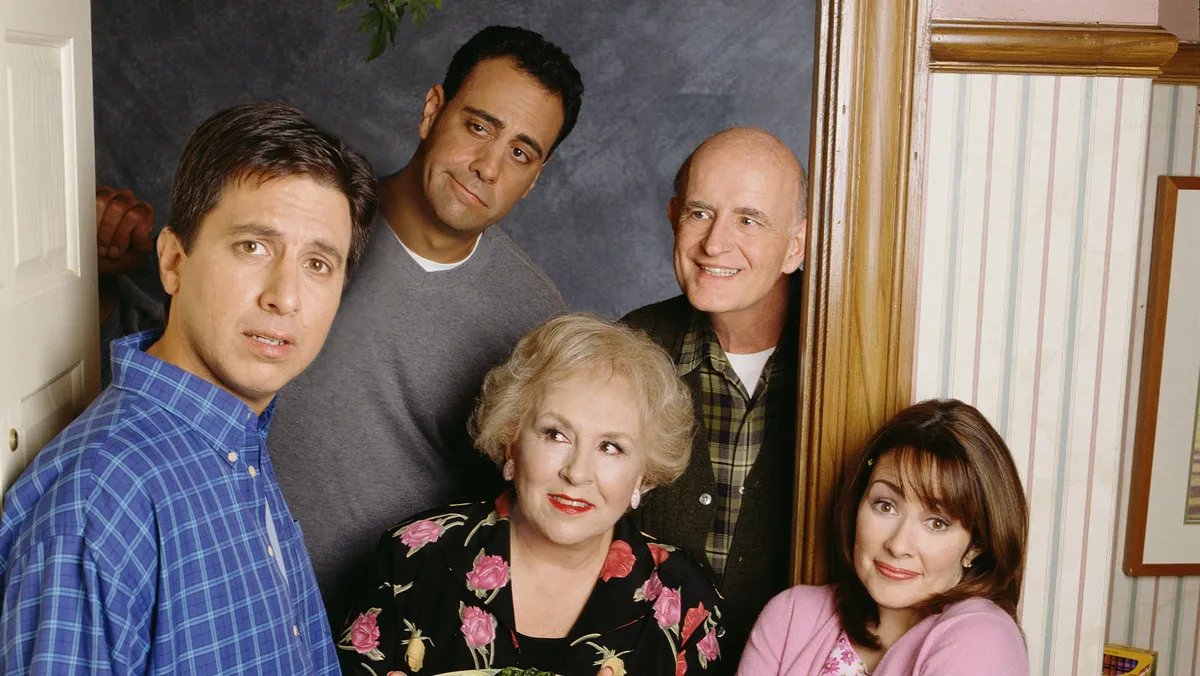
When we think of Everybody Loves Raymond, the first face that comes to mind is often Ray Romano’s. He played Raymond Barone, the sports writer caught between his demanding parents, his exasperated wife, and his envious brother. Raymond’s deadpan delivery and his knack for finding humor in the most mundane situations made him an iconic character. His portrayal was so authentic, so perfectly pitched, that it earned him an Emmy for Outstanding Lead Actor in a Comedy Series.
After the show concluded in 2005, many wondered what was next for Romano. Would he be typecast as the lovable, neurotic dad? Far from it! Ray Romano seamlessly transitioned into a successful career in stand-up comedy, voice acting, and dramatic roles. You might recognize his voice as Manny the woolly mammoth in the incredibly popular Ice Age film franchise (a role he’s inhabited for over two decades now!). He also surprised many with his compelling dramatic performances in shows like Men of a Certain Age, which he co-created and starred in, and more recently, in critically acclaimed films like The Big Sick and the series Get Shorty. He even directed his first feature film, Somewhere in Queens, a heartwarming comedy he also co-wrote and starred in. It’s clear that Romano’s talent extends far beyond the Barone family living room. He’s an artist who continually challenges himself, much to the delight of his loyal fanbase.
Patricia Heaton: The Irreplaceable Debra Barone
Patricia Heaton, as Debra Barone, was the perfect foil to Raymond. Her character was the backbone of the Barone household, often exasperated by her in-laws’ constant intrusion and her husband’s immaturity, yet always holding the family together with a mixture of wit and genuine affection. Debra’s eye-rolls and sarcastic remarks were legendary, earning Heaton two Emmy Awards for Outstanding Lead Actress in a Comedy Series. She brought a realism to the role that truly resonated with anyone who has ever tried to maintain sanity while raising a family.
After Everybody Loves Raymond, Patricia Heaton didn’t slow down one bit. She quickly jumped into another successful sitcom, The Middle, where she played Frankie Heck, a working-class mother navigating the ups and downs of life in Indiana. That show ran for nine seasons, proving Heaton’s incredible staying power and comedic range. It’s rare for an actor to anchor two hugely popular, long-running sitcoms, but Heaton did it with grace and undeniable talent. She has also been involved in various television movies and continued her advocacy work, particularly in support of various charities. Her career has been a masterclass in consistent, high-quality performance, and her fans adore her for her warmth and humor both on and off screen.
Brad Garrett: Robert Barone’s Hilarious Journey
Brad Garrett’s portrayal of Robert Barone, Raymond’s perpetually overshadowed and often unlucky older brother, was pure comedic gold. Robert’s towering height, his nasal voice, his various eccentricities (like touching food to his chin!), and his deep-seated resentment of Raymond made him one of the most beloved characters on the show. Garrett’s nuanced performance earned him three Emmy Awards for Outstanding Supporting Actor in a Comedy Series. He perfectly captured the pathos and humor of a man constantly searching for his place in the world, often in the shadow of his seemingly perfect younger brother.
Garrett, with his distinctive voice and towering presence, has enjoyed a prolific career since the end of Everybody Loves Raymond. He’s been a staple in voice acting, lending his voice to characters in numerous animated films, including Bloat in Finding Nemo and Chug in Planes. On television, he starred in the sitcom ‘Til Death and had recurring roles in popular shows like Fargo. He’s also a celebrated stand-up comedian, often performing in Las Vegas, where his booming voice and observational humor delight audiences. It’s clear that the talent that made Robert Barone so memorable was just one facet of Garrett’s incredible range. He recently opened up about how much he cherished his time on the show, saying, “It was a truly special ensemble, a family on and off screen. You don’t get that kind of magic often.”
Doris Roberts and Peter Boyle: Remembering the Matriarch and Patriarch
No discussion of the Everybody Loves Raymond cast would be complete without honoring the incredible talents of Doris Roberts and Peter Boyle, who played the unforgettable Marie and Frank Barone. They were the heart and often the hilarious headache of the show.
Doris Roberts, as Marie Barone, was the quintessential meddling mother, a master manipulator whose passive-aggressive comments and unwavering devotion to Raymond (at everyone else’s expense) were legendary. She won four Emmy Awards for Outstanding Supporting Actress in a Comedy Series for her role. Her performances were pitch-perfect, balancing sharp comedic timing with a genuine, if misguided, love for her family. After the show, Roberts continued to act in various film and television projects, always bringing her characteristic sparkle. Sadly, she passed away in 2016 at the age of 90, leaving behind a legacy of laughter and unforgettable characters. She was, as Ray Romano once eloquently put it, “a force of nature.”
Peter Boyle, as Frank Barone, was the gruff, often shirtless, and always cantankerous father whose one-liners were legendary. His booming voice and perpetually annoyed expression made him a fan favorite. Boyle’s comedic genius was undeniable, and he won an Emmy for Outstanding Supporting Actor in a Comedy Series. His career spanned decades, from dramatic roles in films like Taxi Driver to his iconic turn as the monster in Young Frankenstein. After Everybody Loves Raymond, Boyle continued acting until his passing in 2006 at the age of 71. His loss was deeply felt by the cast and fans alike. “Peter was a gentle soul, a brilliant actor, and a truly wonderful friend,” Patricia Heaton shared in an interview, reflecting on the bond they all shared. Their contributions to the show were immeasurable, and their presence is profoundly missed, especially as we look forward to this reunion. Their characters, however, live on in our memories, still making us laugh and sometimes groan with recognition.
Monica Horan: Amy MacDougall’s Path
Monica Horan played Amy MacDougall, Robert Barone’s long-suffering girlfriend and later, his wife. Amy was the sweet, sometimes naive, and often overwhelmed counterbalance to the Barone family’s intense dynamics. Horan’s portrayal brought a much-needed warmth and gentleness to the show, making her a beloved character. Her journey from being an outsider to officially becoming a Barone was one of the series’ most endearing arcs.
After the show, Monica Horan, who is married to the show’s creator Philip Rosenthal in real life (how’s that for art imitating life, or rather, inspiring it?), continued to act in various television roles, often making guest appearances. She also embraced a career in theatre, performing in several stage productions. While she might not have been in as many high-profile projects as some of her co-stars, her commitment to her craft and her enduring connection to the show’s legacy remain strong. “That show was a gift,” she shared recently, her voice warm with reflection. “It changed our lives, and the friendships formed are truly priceless.” It’s wonderful to see how the connections made on set extended far beyond the soundstage.
The Younger Barones: Sullivan and Madylin Sweeten
The children on Everybody Loves Raymond, Ally, Michael, and Geoffrey Barone, were played by Madylin Sweeten and her twin brothers, Sullivan and Sawyer Sweeten. They brought an innocent charm and realistic sibling squabbles to the show, providing a glimpse into Raymond and Debra’s parenting challenges.
Madylin Sweeten, who played Ally, the eldest child, continued to act in a few projects after the show. She has also pursued other interests, including working behind the scenes in theatre and exploring her passion for interior design. Sullivan Sweeten, who played Michael, also had a few acting roles post-Raymond.
Tragically, Sawyer Sweeten, who played Geoffrey, passed away in 2015 at the age of 19. His death sent shockwaves through the entertainment industry and deeply saddened the entire Everybody Loves Raymond cast. Ray Romano, Patricia Heaton, and Brad Garrett all released heartfelt statements mourning his loss, remembering him as a “sweet young man.” The loss of Sawyer is a poignant reminder of the fragility of life and adds a somber note to any retrospective on the show. However, his memory, and the joy he brought to millions, endures through his work on the series. The Sweeten siblings were an integral part of the show’s success, and their contributions are cherished by fans.
Anticipating the Reunion: What to Expect
The news of an impending Everybody Loves Raymond cast reunion has ignited a spark of excitement among fans. While details are often kept under wraps until closer to the event, the very idea of seeing the surviving cast members together again is enough to send shivers of anticipation down your spine. Will it be a table read? A retrospective special filled with behind-the-scenes anecdotes? Or perhaps a heartfelt tribute to the beloved actors we’ve lost? Whatever form it takes, one thing is certain: it will be a moment to celebrate one of television’s most iconic families.
Reunions like this aren’t just about nostalgia; they’re about acknowledging the lasting impact a show has had on culture and on the lives of its viewers. It’s a chance for the cast to share stories, to reflect on their time together, and to connect with the audience who supported them for so many years. I imagine the conversations will be filled with laughter, perhaps a few tears, and certainly plenty of “do you remember when…” moments. A source close to the production, who preferred to remain anonymous but hinted at some exciting plans, mentioned, “The energy is already palpable. Everyone involved is genuinely thrilled to revisit this incredible chapter and share it with the fans.” It sounds like it will be a truly special occasion, a chance to rekindle that unique Barone magic, even if just for one unforgettable evening. It’s going to be a must-watch event for anyone who ever loved Raymond, Debra, Robert, Marie, and Frank.
The legacy of Everybody Loves Raymond continues to thrive, not just in reruns but in the hearts of its devoted audience. The upcoming reunion isn’t just an event; it’s a testament to the show’s timeless humor and its ability to capture the complex, often chaotic, but always loving essence of family. As we look back at the Everybody Loves Raymond cast then and now, we’re reminded of the talent and dedication that brought these characters to life. It’s a journey through time, observing how these individuals have grown and evolved, while holding onto the memories of the roles that made them household names. Their enduring careers and personal stories weave a rich tapestry, showcasing the diverse paths they’ve taken since leaving the familiar suburban home of the Barones. We eagerly await the moment when they reunite, ready to celebrate the laughter, the love, and the unforgettable magic that truly made everybody love Raymond.
Frequently Asked Questions
| What is the upcoming “Everybody Loves Raymond” reunion event? | While specific details are still emerging, the upcoming “Everybody Loves Raymond” reunion is anticipated to be a special gathering of the surviving main cast members. It’s expected to feature reflections on the show’s legacy, behind-the-scenes stories, and tributes to the cast members who have passed away, offering fans a unique opportunity to reconnect with their favorite characters and actors. |
| Why is the “Everybody Loves Raymond” cast reunion so important for fans? | For fans, the reunion is a chance to revisit the beloved Barone family, evoking powerful feelings of nostalgia and warmth. It provides an opportunity to see how the actors have evolved, celebrate the show’s enduring humor and relatability, and acknowledge the profound impact the series had on popular culture and their own lives. It’s a moment to collectively honor a television classic. |
| How has the “Everybody Loves Raymond” cast evolved since the show ended? | Since “Everybody Loves Raymond” concluded, cast members like Ray Romano and Patricia Heaton have continued to enjoy highly successful careers in acting, stand-up, and voice work, taking on diverse roles. Brad Garrett has also excelled in voice acting and comedy. While some, like Monica Horan, have focused on theatre and other ventures, others, like Doris Roberts and Peter Boyle, have sadly passed away, leaving behind a cherished legacy of their work on the show. |
| What challenges did the “Everybody Loves Raymond” cast face after the show concluded? | Actors often face the challenge of avoiding typecasting after a long-running, iconic role. While many of the “Everybody Loves Raymond” cast successfully diversified their careers, they also grappled with personal losses, notably the passing of Peter Boyle, Doris Roberts, and Sawyer Sweeten, which deeply impacted the tight-knit cast and fan community. |
| What is the lasting impact of “Everybody Loves Raymond” on television comedy? | “Everybody Loves Raymond” left an indelible mark on television comedy by perfecting the art of family sitcoms. Its smart writing, relatable characters, and willingness to delve into the everyday absurdities and complexities of family life set a high bar. It won numerous awards, resonated globally, and continues to be celebrated for its timeless humor and authentic portrayal of familial love and frustration, influencing subsequent generations of comedy writers and performers. |
Important Notice
This FAQ section addresses the most common inquiries regarding the topic.