The Toyota Celica and MR2 comeback rumors have intensified following reports from Autocar and The Drive, with both legendary nameplates potentially returning under the Gazoo Racing banner and reportedly powered by a new high-performance G20E engine. The Japanese automaker is aggressively expanding its GR performance lineup, transitioning Gazoo Racing into a standalone brand that will sit alongside Lexus and Toyota in the corporate portfolio. This revival comes as Toyota doubles down on enthusiast-focused models, proving that the company’s commitment to “no more boring cars” extends far beyond the flagship GR GT supercar.
- 🚗 Potential Models: Toyota Celica and MR2 reportedly returning as GR-branded sports cars
- ⚡ New Engine: 2.0-liter G20E turbocharged four-cylinder (expected 400+ hp, 600 hp in race spec)
- 🏁 Platform: Mid-engine layout with all-wheel drive, inspired by the GR Yaris M Concept
- 📅 Expected Timeline: MR2 rumored for 2028; Celica to follow with potential WRC return
- 🏷️ Standalone Brand: GR to operate as distinct performance marque, possibly dropping Toyota logos
However, enthusiasts should temper expectations. While multiple reputable automotive publications have reported on the Celica and MR2 revival, Toyota has not issued any official confirmation regarding either model’s return, specific powertrain details, or release timelines. The information currently available comes from industry sources, spy shots, and trademark filings rather than direct announcements from Toyota or Gazoo Racing.
The GR GT supercar, which Toyota candidly admits “makes no financial sense” according to Senior Vice President Andrew Gilleland, serves as the halo model for this transformation. However, it’s the expansion of the GR lineup downward with more accessible sports cars that has enthusiasts most excited. Toyota has confirmed the GR Supra and GR86 will continue with new generations, so any Celica or MR2 revival would complement rather than replace existing models.
The surprising disclosure about the GR GT’s shaky business case came directly from Toyota Senior Vice President of Automotive Operations Andrew Gilleland in an interview with The Drive. He explained that the V8-powered supercar shows what Toyota can achieve when financial constraints are removed, embodying the “no more boring cars” mantra of chairman Akio Toyoda. Despite the financial logic, the company is pressing forward with the GR GT’s development alongside more accessible performance models. However, the Toyota Celica comeback would face a changing sports car landscape, as the Supra’s departure could reshape Toyota’s performance hierarchy in the coming years.
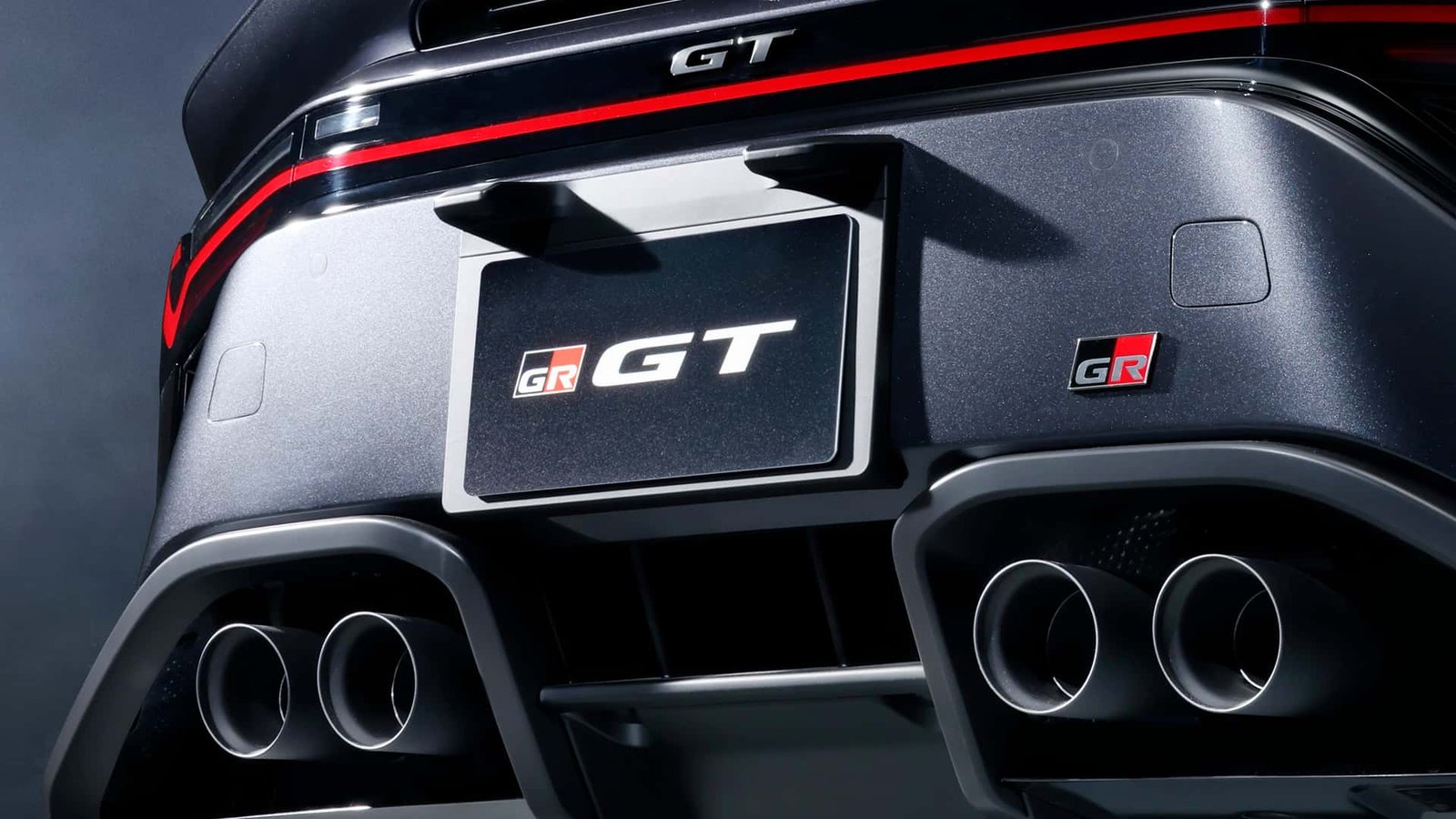
The mid-engine supercar heralds a new positioning for Gazoo Racing as a standalone performance brand, with both the road-going car and its track-only counterpart dropping the Toyota logos entirely in favor of GR badging. This same approach could extend to the Celica and MR2, with Toyota having already trademarked “GR MR2” and “GR Celica” names according to reports from Autocar.
The G20E Engine: Toyota’s New Performance Powerplant
At the heart of both the Celica and MR2 revival rumors is Toyota’s new G20E engine, a 2.0-liter turbocharged four-cylinder that enthusiasts have hailed as a potential spiritual successor to the legendary 2JZ. The engine debuted in the GR Yaris M Concept, where it was mounted behind the rear seats for a mid-engine configuration. Development prototypes have already been entered in Japan’s Super Taikyu endurance racing series, serving as a rigorous test of performance and reliability according to Gazoo Racing’s official competition updates.
According to Autocar and other industry sources, the G20E is physically 10 percent smaller than Toyota’s current 2.4-liter turbo, yet reportedly packs significantly more punch. Unofficial reports suggest road-going versions could produce approximately 400 to 450 horsepower in standard tune, making it one of the most powerful four-cylinder engines ever created. Motorsport applications with a larger turbocharger could potentially push outputs beyond 600 horsepower based on Super Taikyu testing data.
The engineering team reportedly designed the G20E with wide bore spacing, allowing for future displacement increases and substantial modification potential. Toyota engineers have indicated that “with a larger turbocharger, more than 600 hp is easily possible,” though these comments remain unofficial. The engine has also been designed to integrate with hybrid and plug-in hybrid systems, helping Toyota navigate increasingly stringent emissions regulations while maintaining performance credibility as confirmed in Toyota’s technical presentations. However, until Toyota issues a formal press release confirming these specifications, all power figures and technical details remain speculative.
Celica Revival: Rally Heritage and WRC Ambitions
The Toyota Celica holds a special place in automotive history, particularly the GT-Four homologation specials that dominated the World Rally Championship in the 1990s. Drivers like Carlos Sainz and Didier Auriol piloted the Celica GT-Four to multiple manufacturer titles, cementing the model’s legendary status among rally enthusiasts. Reports suggest the new Celica could return with a front-mounted G20E engine and all-wheel drive, potentially reviving the iconic GT-Four badge for a new generation.
Japanese media reports indicate the new Celica could serve as the foundation for Toyota’s next World Rally Championship challenger, marking a return to the brand’s rallying roots. Toyota has already demonstrated its commitment to rallying with the GR Yaris, which was developed specifically for WRC competition. A Celica revival would allow Toyota to compete in the top tier of rallying with a more traditional sports coupe body style.
Recent spy shots captured at Fuji Speedway show a compact sports coupe undergoing testing, bearing a hacked-together body that borrows elements from the GR Yaris and Lexus LC. The prototype features a long hood and short trunk section, suggesting a front-engine layout that aligns with Celica’s heritage. However, some reports indicate the Celica might also adopt a mid-engine configuration, creating potential overlap with the MR2. Without official confirmation from Toyota, the exact layout remains uncertain. The company’s commitment to developing engaging GR sports cars is evident across its entire performance lineup, with engineering teams pushing boundaries on multiple fronts simultaneously.
The testing mule displays aggressive aerodynamic elements including a prominent “swan-neck” rear spoiler, large front air intakes, and distinctive wheel arch flares. The prototype also shows a center-exit exhaust system and what appears to be a revised chassis setup specific to the new performance platform. Toyota has reportedly built at least 20 development prototypes as part of the testing program, though only a handful have been spotted in public according to spy photographer sources.
MR2 Comeback: Mid-Engine Sports Car Heritage
The Toyota MR2 holds a unique position in automotive history as one of the few affordable mid-engine sports cars ever produced. Launched in 1984 and continuing through three generations until 2007, the MR2 earned a devoted following for its exceptional handling, lightweight construction, and accessible performance. The revival of this nameplate has been among the most frequently requested by Toyota enthusiasts worldwide.
According to Autocar and other automotive publications, the new MR2 could arrive around 2028. Unlike previous generations, reports suggest the new MR2 might feature all-wheel drive as standard, with drivers able to adjust torque distribution from rear-biased (0:100) to a 50:50 split using a sophisticated GR-Four system similar to the GR Yaris. However, all-wheel drive would mark a significant departure from the MR2’s traditional rear-wheel-drive configuration, and Toyota has not confirmed any powertrain layout.
The G20E engine would be mounted behind the seats in a traditional mid-engine layout, positioning the new MR2 against competitors like the Lotus Emira, Alpine A110, and Porsche 718 Cayman. The development program has been partially validated through the GR Yaris M Concept, which competed in Japan’s Super Taikyu series, with chairman Akio Toyoda himself driving the prototype to test its capabilities. This hands-on approach from Toyota’s leadership suggests genuine commitment to the performance program.
Design inspiration appears to draw from the FT-Se electric sports car concept shown in 2023, with sharp styling, a futuristic cabin, and performance-focused features adapted to the new petrol powertrain. The new MR2 could also wear GR badging exclusively, similar to the approach being taken with the GR GT supercar. When it arrives, it would be one of the few mid-engine sports cars offered by a mainstream manufacturer, with rivals like Alpine already transitioning to electric powertrains.
GR Standalone Brand Strategy and Electric Future
Toyota’s transformation of Gazoo Racing into a standalone performance brand represents a strategic move similar to BMW’s M division or Mercedes-AMG. The GR GT supercar is the first model to drop Toyota badging entirely, establishing the new identity that could extend across the entire GR lineup, including any reborn Celica and MR2 models. This positioning allows Toyota to market performance vehicles without diluting the core brand’s family-friendly image.
This approach also helps Toyota navigate the challenging business case for niche sports cars. By creating a distinct brand with its own identity, Toyota can justify lower-volume models that serve as halo vehicles for the entire GR ecosystem. The strategy aligns with Akio Toyoda’s vision of “no more boring cars,” ensuring that Toyota’s engineering passion projects receive the green light despite questionable financial returns.
However, Toyota’s performance strategy exists alongside its electric vehicle roadmap. The FT-Se concept demonstrated Toyota’s vision for an electric sports car, suggesting a dual-powertrain strategy where the G20E engine powers enthusiast-focused petrol models while electric platforms handle future performance vehicles. This approach mirrors Toyota’s broader “multi-pathway” strategy that includes hybrid, plug-in hybrid, battery-electric, and hydrogen fuel cell technologies. The G20E’s ability to integrate with hybrid systems positions it well for this transitional period.
GR’s standalone status also opens the door for the brand to expand its motorsport activities, including the development of GT3 and rally programs that directly influence road car development. The Celica revival, in particular, could serve as Toyota’s return to the World Rally Championship, where the GT-Four badge previously achieved legendary status. This motorsport connection would strengthen Toyota’s performance credibility and provide authentic engineering validation for road-going models.
Challenges and Market Positioning
Toyota’s ambitious sports car revival comes with significant challenges. CEO Kenta Kon has noted that the company maintains too many models, making the addition of niche performance cars seem counterintuitive. The meteoric rise of Chinese electric vehicle brands adds pressure on Toyota to rationalize its lineup while maintaining profitability. However, the company appears committed to using its high-volume models like the RAV4 and Camry as profit engines to fund these passion projects.
Both the Celica and MR2 would face limited competition, as many automakers are abandoning internal combustion sports cars for electric vehicles. The Lotus Emira is currently one of the few mid-engine petrol sports cars remaining, while the Alpine A110 is expected to transition to electric power. This creates a unique opportunity for Toyota to capture enthusiasts seeking traditional driving experiences while competitors move to electrification.
Despite the challenges, Toyota’s commitment to the GR brand appears unwavering. Gazoo Racing chief Tomoya Takahashi has confirmed that development teams are continuing to refine performance platforms, with testing programs actively running at Fuji Speedway and other circuits. However, until Toyota issues an official announcement regarding the Celica and MR2, enthusiasts must distinguish between confirmed information and industry speculation.
Author’s Note: This article combines confirmed information from Toyota and Gazoo Racing with industry reports and speculation. Readers should verify all details with official Toyota announcements before making any purchasing decisions. PressNova’s automotive team has covered Toyota’s performance division since its inception, providing expert analysis of the brand’s motorsport and performance vehicle strategies.
Frequently Asked Questions
Is Toyota officially bringing back the Celica?
Toyota has not officially confirmed the Celica’s return. However, multiple reputable automotive publications including Autocar have reported that the Celica is in development as a GR-branded sports car. Toyota has trademarked “GR Celica” names, suggesting the revival is under serious consideration.
Is Toyota officially bringing back the MR2?
Toyota has not officially confirmed the MR2’s return. Industry reports from Autocar suggest the MR2 is expected to return around 2028 with a mid-engine layout and GR badging. Toyota has trademarked “GR MR2,” indicating the revival is being actively considered.
What engine might the new Celica and MR2 use?
Unofficial reports suggest both models could use Toyota’s new G20E 2.0-liter turbocharged four-cylinder engine. The engine has been tested in the GR Yaris M Concept and Super Taikyu racing. However, Toyota has not confirmed any powertrain details for potential Celica or MR2 models.
When could the new Celica and MR2 be released?
Unofficial reports suggest the MR2 could arrive around 2028, with the Celica following shortly after. However, Toyota has not announced any release timelines for either model, and these dates remain speculative until officially confirmed.
Will the Celica have all-wheel drive or hybrid power?
Unofficial reports suggest the new Celica could feature all-wheel drive and potentially revive the GT-Four badge. The G20E engine is reportedly designed to accommodate hybrid integration, but Toyota has not confirmed any powertrain or drivetrain specifications.
Will Toyota’s electric sports cars replace the Celica and MR2?
Toyota appears to be pursuing a dual-powertrain strategy. The FT-Se concept demonstrated an electric sports car, while the G20E engine suggests continued investment in internal combustion performance. Toyota’s “multi-pathway” approach means both powertrains could coexist, but no official confirmation exists.