The autumn air in Cleveland always carries a certain crispness, a hint of anticipation and maybe, just maybe, a whisper of hope for the Browns. But this year, the whispers have turned into a roar, not just about the team’s prospects, but about a truly unexpected take from a former MVP. Imagine the scene: football analysts dissecting every angle, fans passionately debating over their morning coffee, and then, out of nowhere, Cam Newton drops a bombshell that leaves everyone scratching their heads. He’s not just weighing in on the Cleveland Browns’ starting quarterback situation; he’s actively, surprisingly, advocating against a popular choice, Shedeur Sanders, and for what seems like an almost counterintuitive reason. This isn’t your typical former player punditry, oh no. This is Cam Newton’s unique perspective, a viewpoint that dives deep into the psychology of the game and the immense pressure placed on young signal-callers, especially within a franchise desperate for consistent success. It makes you wonder, doesn’t it? What could possibly lead a seasoned quarterback like Newton to such an unconventional stance, especially when it involves a talent like Sanders? It’s a twist no one saw coming, and it forces us to look beyond the obvious stat lines and highlight reels, prompting a deeper conversation about player development and team dynamics.
When the news first broke, it felt like a ripple across the NFL landscape that quickly turned into a tidal wave of discussion. “Wait, did he really say that?” I remember thinking, scrolling through my feed one blustery afternoon, a half-eaten sandwich forgotten on my desk. Newton, known for his bold fashion and even bolder plays on the field, has never been one to shy away from an opinion. But this felt different. It wasn’t just a critique; it was a deeply considered argument that seemed to challenge the very premise of drafting a high-profile quarterback and immediately throwing him into the deep end, especially in a market like Cleveland. Fans, initially buzzing with excitement over the prospect of Shedeur Sanders, the charismatic son of football legend Deion Sanders, potentially donning the brown and orange, were suddenly confronted with a veteran’s cautionary tale. It truly makes you pause and consider the immense weight of expectation that comes with being a first-round pick, let alone inheriting the hopes of a franchise often defined by its historical struggles at the quarterback position.
The immediate reaction, as you might expect, was a mix of confusion and indignation. How could anyone not want a player with Sanders’ pedigree and undeniable talent? He’s got the arm, the poise, and frankly, the star power that could energize a city. But Cam Newton’s reasoning isn’t about Sanders’ talent or lack thereof. It’s about something far more nuanced, something that speaks volumes about the cutthroat nature of the NFL and the delicate balance required for a young player to truly thrive. He’s looking at the big picture, the ecosystem of the team, and the potential pitfalls that could derail even the most promising careers. It’s a perspective born from experience, from navigating the highs of an MVP season and the lows of career-altering injuries. This isn’t just football talk; it’s a deep dive into the human element of the game, a reminder that success isn’t just about throwing a perfect spiral, but about surviving and flourishing under unimaginable pressure.
The Heart of Newton’s Argument: Protecting the Young Quarterback
So, what exactly is this “unusual reason” Cam Newton has for not wanting Shedeur Sanders as the Browns’ starting quarterback right away, and why does he support Kevin Stefanski’s decision-making implicitly? It boils down to a profound belief in protecting young talent from premature exposure to overwhelming pressure. Newton’s stance isn’t a slight against Sanders’ abilities; quite the opposite. He sees a gifted player with immense potential, but he also understands the brutal reality of the NFL, particularly for a quarterback in a franchise like the Cleveland Browns.
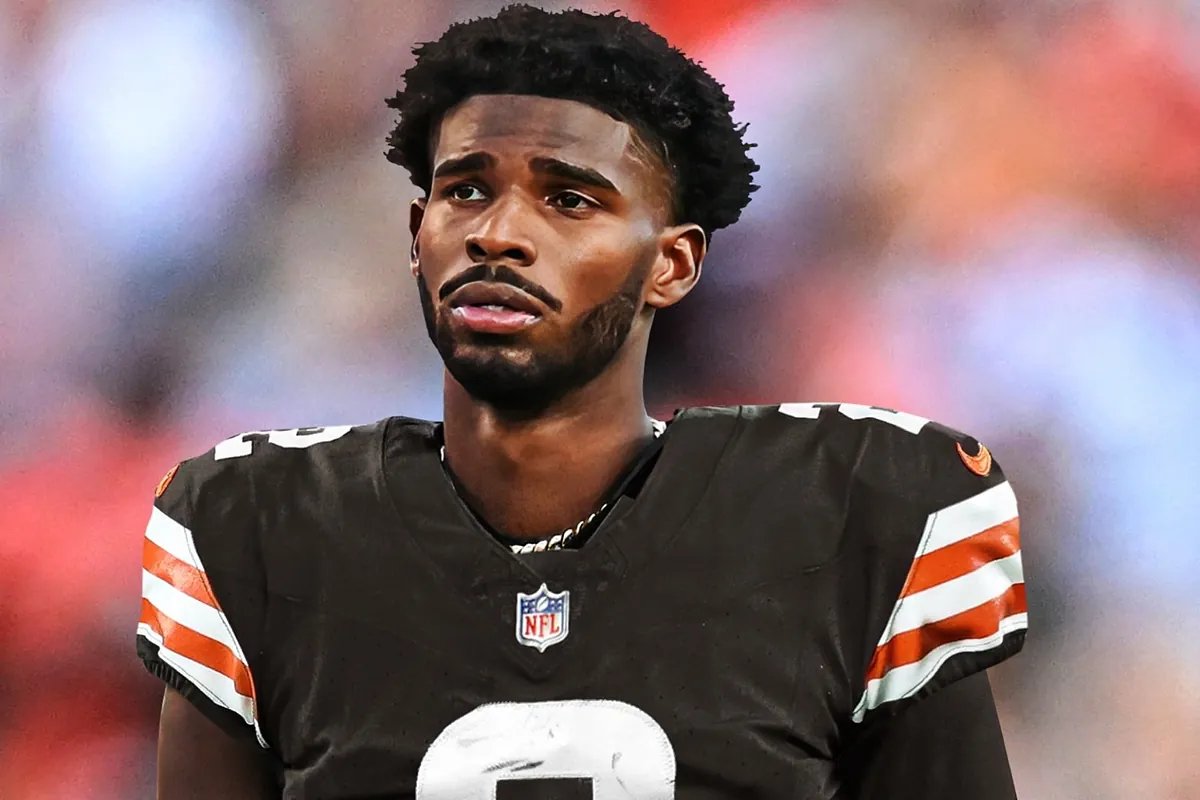
“Look, man, you got a guy like Shedeur, he’s got all the tools,” Newton reportedly said on his podcast, a clip that quickly went viral. “But you throw him into a situation where the team ain’t ready, or the coaching staff ain’t ready to fully commit to his growth over winning right now, you’re setting him up for failure. And that ain’t right.” Newton argues that the Browns, as a team, need to be in a position where they can afford to let a young quarterback develop without the immediate expectation of carrying the entire franchise on his shoulders. This isn’t just about having good players around him; it’s about having a stable, patient organizational structure that prioritizes long-term growth over short-term gratification.
The Cleveland Browns’ Quarterback Conundrum
The Cleveland Browns have, historically, been a graveyard for promising quarterbacks. From the “QB carousel” of the 90s and early 2000s to more recent struggles, the pressure cooker of Cleveland has broken many a signal-caller. This historical context is vital to understanding Newton’s point. A rookie, even one as composed as Shedeur Sanders appears to be, stepping into that environment immediately as “the savior” could easily be overwhelmed.
“Every rookie quarterback needs to be in a situation where they can learn, make mistakes, and not feel like the weight of the world is on their shoulders every single snap,” shared a long-time NFL scout, who preferred to remain anonymous given the sensitive nature of quarterback evaluations. “The Browns, bless their hearts, they’ve struggled with giving their young guys that breathing room. It’s a tough market, man. Fans are passionate, and they want to win yesterday.”
Newton’s support for Kevin Stefanski’s decisions implicitly suggests that the current coaching staff and front office might understand this delicate balance. Stefanski, known for his methodical approach, has often emphasized player development and creating a supportive environment. Perhaps Newton sees Stefanski’s cautious approach to quarterback transitions as a sign of wisdom rather than hesitation. It’s about building a foundation, not just slapping a new coat of paint on a crumbling structure.
The Deion Sanders Factor: A Double-Edged Sword?
The presence of Deion Sanders as Shedeur’s father and coach at Colorado adds another layer of complexity. While “Prime Time” has undeniably cultivated a confident, NFL-ready demeanor in his son, Cam Newton might also see it as an added dimension of pressure. The media spotlight on Shedeur Sanders is already brighter than most because of his famous lineage. Being the son of a legend is a tremendous advantage, but it also means every move, every fumble, every interception will be magnified tenfold.
“Being Deion’s son, that’s a gift and a curse, right?” a former teammate of Newton’s mused recently during a casual chat. “The kid’s got confidence, no doubt. But the minute things go south, everyone’s gonna be screaming ‘daddy’s boy’ or ‘Prime Time’s got him in a bubble.’ The NFL ain’t no bubble, especially not in Cleveland.”
Newton’s philosophy suggests that even the most talented individuals need to be shielded from external noise and undue scrutiny in their formative professional years. This isn’t about coddling; it’s about strategic development. Allowing Shedeur Sanders to learn from the sidelines, or even as a backup for a season or two, could be the difference between a long, successful career and a flash-in-the-pan flameout. It allows him to absorb the playbook, understand the speed of the pro game, and build chemistry with his teammates without the immediate pressure of being “the guy.”
A Look at Successful QB Development Models
Historically, many successful NFL quarterbacks didn’t start Week 1 of their rookie seasons. Aaron Rodgers sat behind Brett Favre. Patrick Mahomes learned from Alex Smith. Even Peyton Manning, who started immediately, played on a very bad Colts team his rookie year and threw a league-leading 28 interceptions, a learning curve that few modern franchises would tolerate.
“You look at the blueprint for success, and it often involves a period of incubation,” commented a veteran offensive coordinator from another NFL team. “It’s not always flashy, and it doesn’t always sell jerseys immediately, but it works. It allows the player to digest the enormity of the game without breaking them.”
Newton, having experienced the full spectrum of NFL stardom and adversity, understands this deeply. He started immediately for the Panthers, achieved great success, but also faced incredible pressure and physical toll. His perspective is rooted in a desire to see players like Sanders thrive long-term, not just make a splash for a single season. It’s a paternalistic view, almost, of wanting to guide the next generation away from pitfalls he either experienced or witnessed firsthand.
The Nuance of Stefanski’s Strategy and the Browns’ Current Roster
One of the implied reasons Cam Newton supports Kevin Stefanski’s decision is the understanding that the Browns might already have a plan for their quarterback room that doesn’t involve thrusting a rookie into the starting role immediately. Perhaps they view their current roster, particularly on defense and the run game, as strong enough to contend, meaning they need a steady hand at quarterback, not necessarily a high-variance rookie.
Consider the Browns’ current situation: a talented defense, a robust running attack, and a solid offensive line. This is a team built to win now, not necessarily to endure the growing pains of a rookie quarterback. If they were to bring in Shedeur Sanders, the expectation would be immediate impact. But what if the team’s strategy is to win with existing pieces, using a game manager or a bridge quarterback, while a younger player develops? This is where Newton’s insight becomes particularly sharp. He’s saying, don’t sacrifice the long-term health of a potential franchise quarterback for immediate, perhaps fleeting, gains.
“The Browns have invested a lot in their defense and their ground game,” remarked a local sports radio host in Cleveland. “They’re built to minimize quarterback mistakes. Throwing a rookie, even a promising one, into that mix, shifts the entire dynamic. It’s a calculated risk, and Cam thinks it’s a risk not worth taking with Shedeur.”
The Weight of Expectations in Cleveland
Cleveland fans are famously passionate and, let’s be honest, often long-suffering. The city craves a winner, a consistent presence in the playoffs. This creates an environment where patience for a struggling rookie quarterback can wear thin very quickly. A few bad games, a couple of costly turnovers, and the narrative can quickly shift from “future star” to “bust.”
This intensity, this palpable yearning for success, is what Cam Newton is trying to address. He’s saying that the Browns, and potentially Shedeur Sanders, deserve a better setup. He wants Sanders to have every chance to succeed, and that means not throwing him to the wolves in a market where every snap is scrutinized and every loss feels like a personal affront to generations of fans. It’s about managing the human element of the game, a factor often overlooked in the rush for immediate gratification.
I recall a conversation with a die-hard Browns fan, Jim, down at the local pub. He’s seen it all, from the glory days to the infamous 0-16 season. “Look, I love the idea of Sanders,” Jim said, nursing his beer, “but I’ve seen too many young guys come here and get chewed up and spit out. We need a steady hand. Let the kid learn, man. Don’t rush it. We want him to be the next legend, not the next ‘what if?'” Jim’s sentiment mirrors Newton’s surprisingly well, demonstrating that this isn’t just an elite athlete’s opinion, but a shared concern among those who truly understand the game and its emotional toll.
Conclusion: A Call for Patience and Strategic Development
Cam Newton’s surprising stance on Shedeur Sanders and the Cleveland Browns’ starting quarterback position isn’t a dismissal of talent. Far from it. It’s a deeply considered, almost philosophical argument for patience, strategic development, and protecting young players from the immense pressures of the NFL. He believes that throwing Shedeur Sanders into the starting role immediately in Cleveland would be a disservice to the player and a potentially risky move for the franchise, even if it might appease the immediate desires of the fanbase.
His support for Kevin Stefanski’s decisions suggests an endorsement of a more measured, thoughtful approach to integrating new talent. It’s a call for the Browns to create an environment where a quarterback like Sanders can truly flourish, learning the ropes without the crushing weight of instant stardom or immediate failure. In a league increasingly focused on instant impact and highlight reels, Newton’s perspective is a refreshing, albeit challenging, reminder that some things, especially the development of a potential franchise quarterback, simply cannot be rushed. It makes you think, doesn’t it? Perhaps the wisest path forward for Cleveland and for Sanders isn’t the most obvious or the most exciting, but the one paved with patience and a genuine commitment to long-term success. And that, in itself, is a truly compelling argument.
Frequently Asked Questions
| Why does Cam Newton not want Shedeur Sanders as the Browns’ starting quarterback? | Cam Newton believes that immediately starting Shedeur Sanders in a high-pressure market like Cleveland could hinder his long-term development. He advocates for protecting young talent from premature exposure to overwhelming expectations, emphasizing the need for a stable and patient organizational structure that prioritizes growth over immediate wins. |
| What is the “unusual reason” Cam Newton supports Kevin Stefanski’s decision? | Newton’s support stems from his belief that Kevin Stefanski’s approach, likely a more measured one regarding quarterback transitions, reflects a wise understanding of player development. He sees Stefanski prioritizing long-term success and creating a supportive environment for a young quarterback, rather than rushing him into a starting role where he might be set up for failure. |
| How does the Cleveland Browns’ historical context play into Newton’s argument? | The Browns have a notorious history of struggling with quarterback development, often earning the moniker “QB carousel.” Newton’s argument acknowledges this challenging environment, suggesting that a rookie quarterback stepping into such a highly scrutinized and historically difficult market needs more protection and a slower integration process to avoid being overwhelmed. |
| What role does Shedeur Sanders’ lineage play in this discussion? | While his father Deion Sanders has helped cultivate Shedeur’s talent and confidence, his famous lineage also brings an amplified media spotlight and increased pressure. Newton’s perspective suggests that this added layer of scrutiny could be detrimental if Sanders is rushed into a starting role without adequate preparation and shielding from external noise. |
| What is the overarching message of Cam Newton’s perspective on quarterback development? | Newton’s overarching message is a call for patience and strategic development in the NFL. He believes that for a young, talented quarterback like Shedeur Sanders to truly thrive and have a successful, long-term career, the organization must prioritize a supportive learning environment over immediate gratification, allowing the player to grow without being crushed by premature expectations. |
Important Notice
This FAQ section addresses the most common inquiries regarding the topic.