The Armada’s Untapped Potential: A Foundation for Greatness
The current generation Nissan Armada represents a significant upgrade over its predecessor. It’s more refined, more powerful, and, crucially, boasts a robust body-on-frame construction that’s inherently suitable for off-road modifications. Here’s the thing: many SUVs these days are built with comfort and fuel efficiency in mind, sacrificing the ruggedness needed for serious off-roading. The Armada, however, retains that old-school charm, providing a solid base upon which to build an exceptional off-road machine. Think of it as a blank canvas, just waiting for an artist to unleash its potential.
Nissan seems to understand this potential, and the Dune Patrol concept is a clear indication of their interest in exploring the Armada’s off-road capabilities. It’s not just about slapping on some bigger tires and a lift kit; it’s about engineering a comprehensive off-road package that enhances the vehicle’s performance and durability.
Dune Patrol: A Showcase of Prototype Nismo Goodies

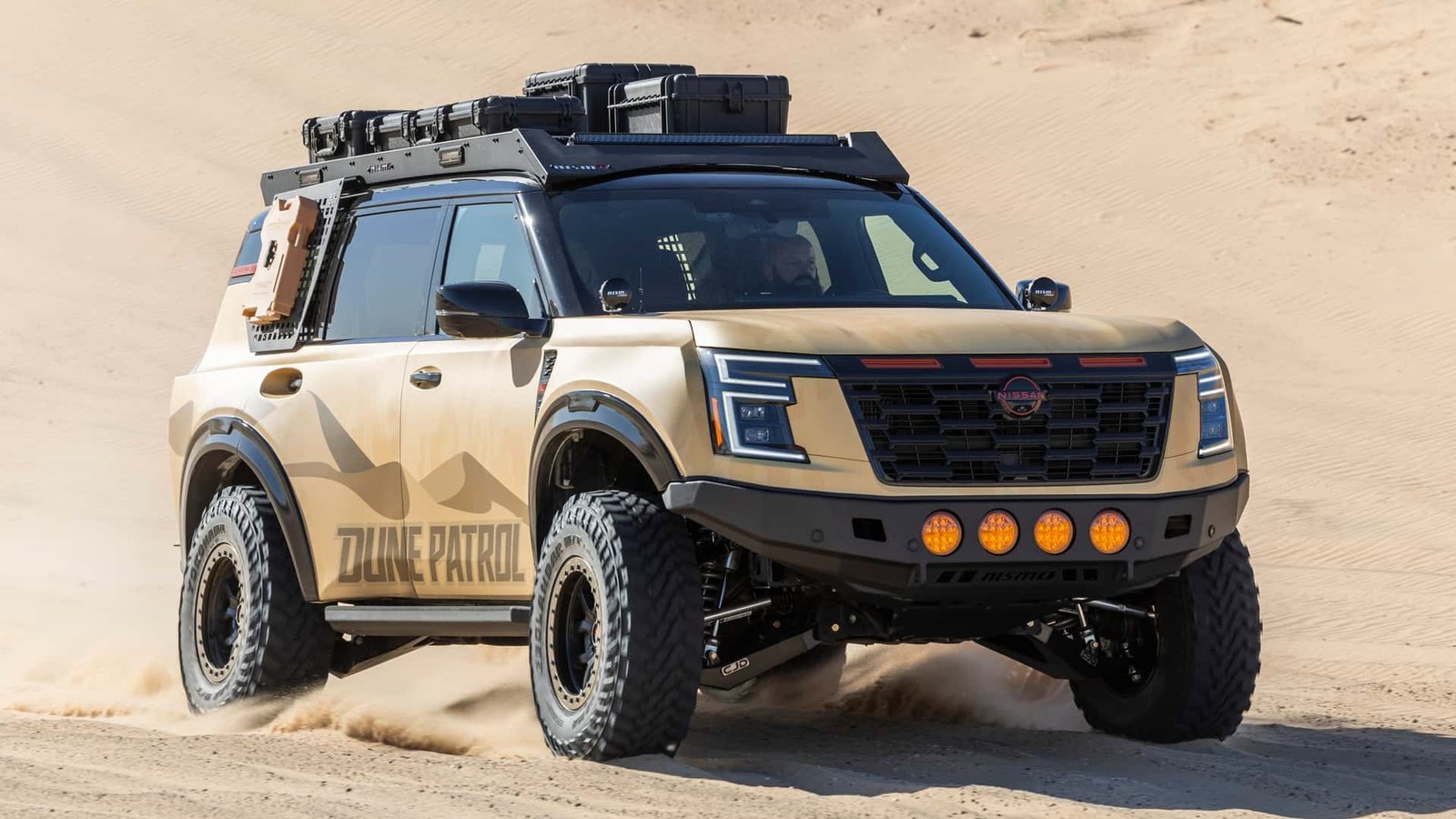
Let’s delve into the specifics of the Dune Patrol concept. The centerpiece is undoubtedly the heavily modified custom suspension. We’re talking about unique front and rear 10.0-inch 2.5 Bilstein M 9200 coilovers, upper and lower control arms, drive axles, front spindles, trailing arms, and tie rods, complete with extended brake lines. This isn’t your average aftermarket lift kit; this is a serious, purpose-built suspension system designed for extreme off-road conditions. The Custom CJD Racing long-travel suspension boasts a staggering 16.0 inches of articulation. To put that in perspective, that’s enough travel to navigate incredibly uneven terrain, keeping all four wheels firmly planted on the ground for maximum traction.
But the upgrades don’t stop there. The Dune Patrol also features an assortment of “prototype Nismo” parts, and these are the components that really get enthusiasts excited. Consider the 18-inch bronze AXIS beadlock wheels, wrapped in massive 37-inch Yokohama Geolander MT tires. Beadlock wheels are essential for serious off-roading because they allow you to run very low tire pressures without the risk of the tire debeading from the rim. This, in turn, provides a much larger contact patch, significantly improving traction on loose surfaces like sand, mud, and rocks.
The exterior of the Dune Patrol is equally impressive. A prototype high-clearance off-road bumper with an integrated front skid plate, front recovery tow shackles, and four six-inch amber Nismo off-road lights not only looks aggressive but also provides crucial protection and functionality when tackling challenging trails. The rear bumper is similarly designed for high clearance and includes a spare tire carrier and an accessory mount for MaxTrac traction boards. These traction boards are invaluable for getting unstuck in sand or mud, acting as temporary bridges to provide grip.
Other notable upgrades include rock sliders to protect the vehicle’s rocker panels from damage, A-pillar lights for enhanced visibility at night, and a custom vehicle wrap for a unique and eye-catching appearance. A low-profile prototype roof rack provides additional storage space, while 40.0-inch front and 30.0-inch rear LED light bars illuminate the trail ahead. Custom MOLLE panels offer a versatile system for attaching gear and accessories.
Under the Hood: Power and Potential
Interestingly, Nissan remains silent about any powertrain upgrades. This leads us to believe that the Dune Patrol is powered by the standard twin-turbocharged 3.5-liter V-6, which already produces a healthy 425 horsepower and 516 pound-feet of torque. That’s plenty of power for most off-road situations, but a little extra never hurts, right? The SUV does feature a prototype Nismo cat-back exhaust, which likely improves exhaust flow and adds a more aggressive sound. Whether Nissan plans to offer powertrain upgrades in the future remains to be seen, but the potential is certainly there. Perhaps they are waiting to see how Toyota will respond to the new Sequoia, as Toyota wants software to make cars safer, but it is not there yet.
Beyond the Prototype: Genuine Accessories
It’s not all prototype parts, though. The Dune Patrol also includes genuine Nissan accessories, such as high-wall floor mats, seatback organizers, and door scuff protectors. These may seem like minor details, but they demonstrate Nissan’s attention to detail and their commitment to providing a complete and functional off-road package.
Why This Matters: The Growing Demand for Off-Road SUVs
So, why is all this important? Well, the market for off-road-capable SUVs is booming. Consumers are increasingly seeking vehicles that can handle both daily commutes and weekend adventures. They want the comfort and convenience of an SUV, but they also want the capability to explore off the beaten path.
The Nissan Armada, with its robust construction and available four-wheel drive, is already a decent off-roader in its stock form. But the Dune Patrol concept takes things to a whole new level. It showcases the Armada’s untapped potential and demonstrates what’s possible with a little bit of engineering and a lot of imagination.
From Concept to Reality: Will Nismo Off-Road Parts Become a Reality?
The big question, of course, is whether Nissan will actually offer these prototype Nismo parts to the public. Will the Dune Patrol remain a one-off concept, or will it pave the way for a new line of Nismo off-road accessories for the Armada?
Only time will tell, but there are several reasons to be optimistic. First, as mentioned earlier, the demand for off-road SUVs is strong. Second, Nissan has a history of offering performance-enhancing Nismo parts for other models, such as the 370Z and the GT-R. Third, the Dune Patrol concept has generated a significant amount of buzz, indicating that there’s definitely interest in a more capable off-road Armada.
Challenges and Considerations: The Road Ahead
Of course, there are also challenges to consider. Developing and manufacturing off-road parts can be expensive, and Nissan would need to ensure that there’s sufficient demand to justify the investment. They would also need to address potential warranty concerns, as off-road modifications can sometimes void the factory warranty. But that is not to say that Nissan will not meet the challenge. Nissan has revived the Skyline, a performance sedan reimagined, so anything is possible.
Another consideration is the potential impact on fuel economy. Larger tires, a lifted suspension, and additional weight can all negatively affect fuel efficiency. This is a trade-off that many off-road enthusiasts are willing to make, but it’s something that Nissan would need to address in their marketing and product development.
The Bottom Line: A Promising Glimpse into the Future
At the end of the day, the Nissan Armada Dune Patrol concept is more than just a show vehicle; it’s a statement of intent. It demonstrates that Nissan is serious about exploring the Armada’s off-road capabilities and that they’re willing to invest in developing innovative and high-performance parts.
Whether these prototype Nismo parts will eventually make their way into a production model or an aftermarket catalog remains to be seen. But one thing is clear: the Nissan Armada has the potential to be a serious contender in the off-road SUV market, and the Dune Patrol concept is a tantalizing glimpse into that future. The need for Zero fatalities, zero accidents: Toyota wants software to make cars safer, but it’s not there yet, but the Armada Dune Patrol is a step in the right direction.
The Nismo Edge: Adding Performance and Style
Nismo, Nissan’s performance division, has a long and storied history of producing high-performance vehicles and aftermarket parts. The inclusion of “prototype Nismo” parts on the Dune Patrol concept is a significant indicator that Nissan is considering a more serious foray into the off-road performance market. Think about it: Nismo has already proven its ability to enhance the performance and aesthetics of Nissan’s sports cars and sedans. Why not apply that same expertise to the Armada, transforming it into a true off-road beast?
The Nismo brand carries a certain cachet, representing quality, performance, and innovation. By offering Nismo-branded off-road parts for the Armada, Nissan could tap into a dedicated market of enthusiasts who are willing to pay a premium for top-of-the-line components.
Customization is Key: Tailoring the Armada to Your Needs
One of the appeals of the off-road community is the ability to customize your vehicle to suit your specific needs and preferences. The Dune Patrol concept highlights the vast array of customization options available for the Armada. From suspension upgrades and wheel and tire packages to bumpers, lighting, and roof racks, the possibilities are virtually endless.
Nissan could capitalize on this trend by offering a wide range of Nismo off-road parts, allowing Armada owners to build their own personalized off-road machines. They could even offer pre-configured packages, catering to different levels of off-road experience and budget.
Beyond the Hard Parts: Technology and Innovation
While the physical upgrades are undoubtedly impressive, it’s also important to consider the role of technology in enhancing the Armada’s off-road capabilities. Modern off-road vehicles often feature advanced traction control systems, electronic locking differentials, and terrain management systems that optimize performance in various conditions.
Nissan could further enhance the Armada’s off-road prowess by incorporating new technologies, such as a forward-facing camera system that provides a clear view of the terrain ahead, or a GPS navigation system that’s specifically designed for off-road use. These features could significantly improve the driver’s confidence and control, making the Armada even more capable in challenging environments.
The Competition: Setting the Armada Apart
The off-road SUV market is becoming increasingly competitive, with manufacturers like Jeep, Ford, and Toyota all vying for market share. To stand out from the crowd, Nissan needs to offer something unique and compelling. The Dune Patrol concept, with its prototype Nismo parts and aggressive styling, is a step in the right direction.
But to truly compete, Nissan needs to offer a comprehensive off-road package that combines performance, capability, and value. They need to demonstrate that the Armada is not just a capable off-roader, but also a comfortable and reliable daily driver.
The Global Perspective: Expanding the Armada’s Reach
The demand for off-road vehicles is not limited to North America. In many parts of the world, SUVs are essential for navigating challenging terrain and accessing remote areas. Nissan could potentially expand the Armada’s reach by offering off-road versions in international markets.
This could involve adapting the Dune Patrol concept to meet the specific needs and regulations of different regions. For example, they could offer different engine options, suspension configurations, and accessory packages to cater to local preferences.
The Electric Future: Off-Roading in Silence?
While the Dune Patrol concept is based on a gasoline-powered Armada, it’s important to consider the future of electric vehicles. As battery technology continues to improve, electric SUVs are becoming increasingly viable for off-road use.
Nissan could potentially develop an all-electric off-road Armada, combining the ruggedness and capability of the traditional model with the efficiency and sustainability of electric power. This could involve incorporating features like a high-capacity battery pack, multiple electric motors for enhanced torque, and a regenerative braking system that recovers energy during downhill descents.
Addressing Concerns: Reliability and Durability
One of the biggest concerns among off-road enthusiasts is the reliability and durability of their vehicles. Off-roading can be incredibly demanding, putting a lot of stress on the vehicle’s components. Nissan needs to address these concerns by ensuring that any Nismo off-road parts are rigorously tested and engineered to withstand the rigors of off-road use.
This could involve using high-quality materials, incorporating reinforced components, and conducting extensive testing in a variety of challenging environments. They could also offer extended warranties on Nismo off-road parts, providing customers with added peace of mind.
The Fan Factor: Building a Community
The off-road community is passionate and engaged. Nissan can foster a stronger connection with Armada owners by building a community around the vehicle and its off-road capabilities. This could involve creating online forums, organizing off-road events, and partnering with aftermarket companies to offer exclusive discounts and promotions.
By actively engaging with the off-road community, Nissan can gain valuable feedback, build brand loyalty, and create a stronger sense of ownership among Armada owners. This, in turn, can help drive sales and solidify the Armada’s position as a serious contender in the off-road SUV market.
The Unexpected Twist: Could the Titan Play a Role?
It’s surprising that there is not a mention of the Nissan Titan in this conversation. The Titan is Nissan’s full-size pickup truck, and it shares many of the same components as the Armada. Could Nissan leverage the Titan’s off-road capabilities to further enhance the Armada’s potential?
Perhaps Nissan could offer a “Titan-inspired” off-road package for the Armada, incorporating some of the same suspension, drivetrain, and styling elements found on the Titan. This could be a cost-effective way to improve the Armada’s off-road performance and appeal to a wider range of customers.
The Final Verdict: A Promising Future for the Off-Road Armada
The Nissan Armada Dune Patrol concept is a bold and exciting vision of what the future holds for the full-size SUV. It demonstrates that Nissan is serious about exploring the Armada’s off-road capabilities and that they’re willing to invest in developing innovative and high-performance parts.
Whether these prototype Nismo parts will eventually make their way into a production model or an aftermarket catalog remains to be seen. But one thing is clear: the Nissan Armada has the potential to be a serious contender in the off-road SUV market, and the Dune Patrol concept is a tantalizing glimpse into that future. Will Nissan capitalize on this opportunity and transform the Armada into a true off-road icon? Only time will tell.

Word Count: 2071