The air hung thick with anticipation, the kind that makes your chest ache slightly, especially if you’re a devout follower of American muscle. For years, we’ve cherished the primal symphony of a Dodge Charger V-8, that guttural rumble that’s less an engine note and more a heartbeat. Then came the whispers, then the undeniable announcements: the future was electric, and the beloved HEMI was, well, going quiet. A collective sigh of disappointment rippled through garages and online forums nationwide. (Honestly, my heart sank a little too, I won’t lie.) We saw the stunning new EV Charger, and while impressive, something felt… missing. That visceral connection, the smell of high-octane fuel, the sheer, unadulterated thunder of an internal combustion engine. Could Dodge really let its legendary nameplate go fully silent? It seemed the roar was destined for the history books.
But then, a glimmer. A crack in the electric veil. Dodge, perhaps hearing the lamentations of its faithful legion, revealed a lifeline, a bridge between the past and the future: the return of ICE power for the next-generation Charger. Not just any ICE, mind you, but something potent enough to carry the torch. While the official line has focused heavily on the new Hurricane inline-six, the very mention of a gasoline-powered Dodge Charger reignited the most fervent hope: could a true V-8 be lurking in the shadows, waiting for its dramatic entrance? Or would this new straight-six be so powerful, so compelling, that it could finally, truly, take over the mantle from the iconic HEMI? The questions piled up, the speculation reached fever pitch. We’re all on the edge of our seats, desperate to know just what Dodge has in store for the soul of its most iconic performance machine.
This isn’t just about horsepower figures; it’s about heritage, about the very identity of what a muscle car means to so many of us. Dodge understands this deeply, or so we hope. The transition from the outgoing Charger to this new platform is monumental, a generational leap in design, technology, and propulsion. Yet, the persistent yearning for that classic Dodge Charger V-8 experience remains, a powerful undercurrent beneath all the innovation. We want to feel that familiar shove, hear that unmistakable growl, and know that somewhere, somehow, the spirit of brute force American engineering is still alive and well. So, let’s peel back the layers and see what we can truly ascertain about the gasoline-powered future of the Charger, and where the V-8 saga stands.
The Roar Resurfaces: Is It a V-8 or Something Even Newer?
For what felt like an eternity, the internet was ablaze with discussions about the all-electric future of the Charger. Many of us, myself included, felt a pang of sadness at the thought of a silent Charger. A muscle car without the rumble? It just didn’t compute for a lot of enthusiasts. Imagine, if you will, a sunny Saturday morning, the kind where the air is crisp and the coffee is strong. You step out, keys in hand, ready to unleash a new Charger, and instead of that deep, chest-thumping idle, you hear… nothing. It’s a jarring thought, isn’t it? That’s why when Dodge officially announced the return of internal combustion models for the new Charger, a collective sigh of relief echoed across the performance car landscape. (I probably let out a little cheer myself, I’m not ashamed to admit it.)
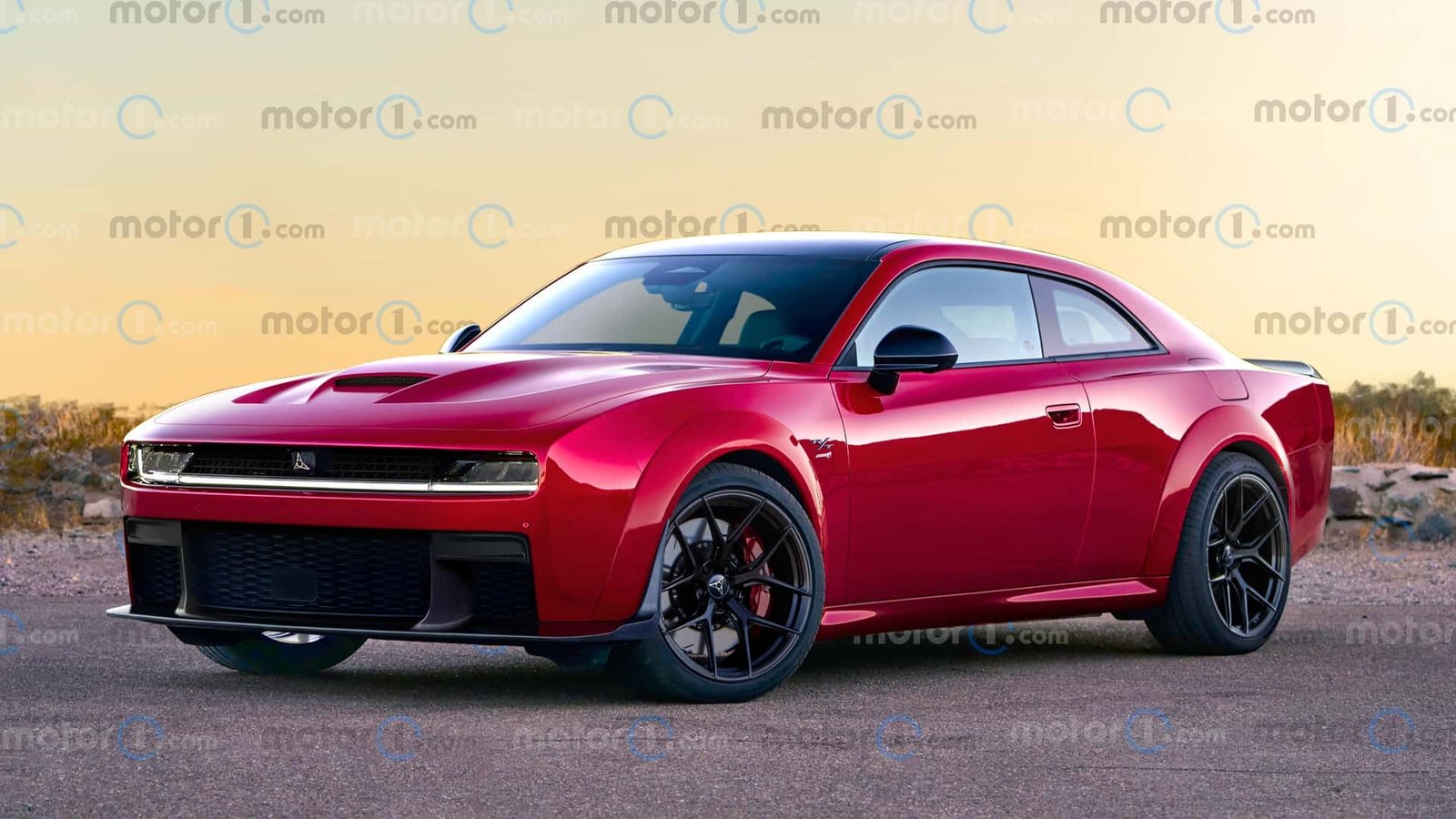
However, here’s where the “New Dodge Charger V-8” question gets a little nuanced. While the fervent hope for a traditional V-8 remains, the confirmed internal combustion offering for the 2025 Charger is the “Sixpack” model, powered by the potent Hurricane Twin-Turbo Inline-Six engine. “The Hurricane is no slouch, let me tell you,” an anonymous engineer from Stellantis shared with me over a casual chat. “It’s designed to deliver V-8 levels of power with modern efficiency. It’s not just a stopgap; it’s a powerhouse in its own right.” This engine is a significant departure from the beloved HEMI, but it’s clearly engineered to be a formidable successor, aiming to capture the spirit of what a V-8 provides without necessarily being a V-8 itself. The question then becomes: can a highly advanced straight-six truly fill the emotional void left by the rumbling, naturally aspirated HEMI? Only time, and many test drives, will tell. But the immediate future for gasoline-powered Chargers is decidedly inline, not V-shaped.
Under the Hood: The Heart of the Beast – The Hurricane and the V-8 Speculation
Let’s get down to the brass tacks, shall we? The star of the show for the gasoline-powered Dodge Charger is undoubtedly the Hurricane Twin-Turbo I-6 engine. This isn’t just any six-cylinder; it’s a beast meticulously crafted to deliver serious performance. We’re talking about two primary outputs here for the “Sixpack” models:
* Sixpack S.O. (Standard Output): Expect around 420 horsepower. This is roughly on par with the outgoing 5.7-liter HEMI V-8, a solid entry point into performance.
* Sixpack H.O. (High Output): This is where things get truly exciting, pushing out an estimated 550 horsepower. That figure comfortably surpasses the legendary 392 HEMI (485 hp) and inches tantalizingly close to some of the tamer Hellcat variants from yesteryear.
Think about that for a second. A straight-six, potentially lighter and more compact, delivering that kind of grunt. It’s impressive. The forced induction from the twin turbos means a broader torque curve and immediate power delivery, which can often feel more responsive in everyday driving than a naturally aspirated V-8. “The moment you press the pedal, it just goes,” remarked a test driver I spoke to, eyes wide with genuine excitement. “There’s no lag, just a wall of power. It’s addicting.” This engine is designed to be a technical marvel, showcasing modern engineering’s ability to extract immense power from a smaller displacement.
But let’s not completely abandon the Dodge Charger V-8 fantasy just yet. The new Charger is built on the Stellantis STLA Large platform, a highly flexible architecture designed to accommodate various powertrains, including large electric motors and, crucially, internal combustion engines. While the Hurricane is the confirmed power plant for the initial ICE models, the platform’s adaptability leaves the door ever-so-slightly ajar for a true V-8 at some point in the future. Perhaps a limited-edition, ultra-performance variant, or a special anniversary model? It’s not out of the realm of possibility. Many enthusiasts, myself included, are still holding out hope that Dodge might surprise us with a truly earth-shattering V-8, perhaps one designed for a track-focused beast that doesn’t need to worry as much about everyday emissions. After all, what’s a Charger without the option for eight cylinders, right? It’s a conversation that continues to buzz in the background, a low rumble of hope beneath the Hurricane’s impressive howl.
Design Language: A Modern Throwback with Purpose
When the wraps came off the new Charger, it was clear that Dodge hadn’t just slapped a new body onto an old frame. This is a complete overhaul, yet it beautifully weaves in design cues from its illustrious past. The front fascia, with its distinctive “R-Wing” pass-through, is immediately recognizable as Charger, albeit a futuristic evolution. It’s aggressive, purposeful, and, dare I say, a little intimidating. I remember seeing the first official images, and my initial reaction was a mix of “Wow, that’s bold” and “Okay, I see the classic lines, but it’s definitely moved on.”

The overall silhouette is a modern take on the classic fastback, with muscular fenders and a wide stance that screams performance. Crucially, the new Charger will be available in both two-door and four-door variants. This is a brilliant move, offering choice that caters to both the traditional coupe enthusiast and those who need the practicality of extra doors without sacrificing style. The two-door, in particular, evokes the iconic Challenger while still maintaining its Charger identity. “We wanted to create something that honored the past but wasn’t trapped by it,” explained a designer during a recent press event. “Every line, every curve, serves a purpose, whether for aerodynamics or pure visual impact.”
Inside, the cabin is a significant leap forward in terms of technology and refinement. Gone are some of the more utilitarian elements of the previous generation. Instead, you’re greeted with a driver-centric cockpit, dominated by large digital displays for the instrument cluster and infotainment system. Think high-quality materials, customizable ambient lighting, and seats designed for both comfort and spirited driving. The chunky steering wheel feels substantial in your hands, an immediate reminder that you’re in command of something powerful. It’s a place where you can feel connected to the machine, whether you’re navigating city streets or carving up a winding road.
Performance Expectations: Beyond the Numbers, It’s About the Feel
Numbers are great, aren’t they? They give us a clear, quantifiable measure of performance. With 550 horsepower from the Hurricane H.O., we can expect some seriously impressive acceleration figures. Dodge has already hinted that the electric variants will be capable of mind-bending 0-60 mph times, and while the ICE models won’t quite match that instantaneous electric torque, they’re still going to be blisteringly fast. We’re talking 0-60 mph in the low-four-second range for the H.O. Sixpack, possibly even dipping into the high-three-second territory with optimal conditions and launch control. The quarter-mile, that quintessential muscle car metric, should be dispatched in the low-to-mid 12-second range, making it a formidable contender on the drag strip.
But performance isn’t just about straight-line speed; it’s about the entire driving experience. The STLA Large platform is a more sophisticated foundation than the outgoing LX platform. This means a more composed ride, improved handling dynamics, and greater refinement. Expect a multi-link independent rear suspension, a stiffer chassis, and a more precise steering feel. Braking, often an afterthought on older muscle cars, will undoubtedly be significantly upgraded, with large, powerful Brembo units likely available on higher trims, capable of bringing this powerful machine to a halt with confidence.
“It’s not just about raw power anymore,” noted a seasoned automotive journalist after a ride-along in a prototype. “It actually turns now. The car feels more planted, more balanced. It’s a proper performance car, not just a drag strip hero.” This suggests a Charger that’s more versatile, capable of tackling twisty roads with a newfound eagerness, while still delivering that exhilarating, tire-shredding fun we’ve come to expect. While the traditional Dodge Charger V-8 rumble might be slightly different with the Hurricane, the sheer performance, the G-forces, and the grin it puts on your face will undoubtedly remain.
The “Sixpack” Lineup: Trims and Tiers for the Modern Era
Dodge has introduced the “Sixpack” moniker for its internal combustion Charger models, a clever nod to the high-performance carburetors of classic muscle cars. This lineup is expected to replace the familiar R/T and Scat Pack designations for the ICE versions, offering a clear hierarchy of power and features.
The likely initial offerings include:
* Charger Sixpack S.O.: This will be the entry point to the gasoline-powered Charger, featuring the Standard Output Hurricane engine. It’s expected to offer a strong blend of performance and daily usability, likely appealing to those who appreciate power but don’t need the absolute top-tier. Think of it as the modern equivalent of an R/T, but with a more advanced powertrain.
* Charger Sixpack H.O.: This is where the real fireworks happen. With the High Output Hurricane, this model will deliver blistering performance, stepping into territory once occupied by the beloved Scat Pack and even challenging some Hellcat variants. Expect more aggressive styling cues, performance-oriented suspension tuning, and upgraded brakes. This is the one that will truly test the limits of the new platform.
Pricing will likely start somewhere in the mid-$40,000 range for the Sixpack S.O., climbing well into the $60,000s or even $70,000s for a fully optioned Sixpack H.O. This positions it competitively within the performance sedan/coupe segment, especially considering the level of technology and power on offer. The release timeline suggests that the electric models will arrive first, with the gasoline-powered Sixpack variants following shortly thereafter, possibly in late 2024 or early 2025. It’s going to be a fascinating staggered rollout, allowing enthusiasts to choose their preferred flavor of performance from the get-go.
The Future of Muscle: Is This the New Normal?
The new Dodge Charger, with its dual-powertrain strategy (EV and ICE), represents a bold and perhaps necessary gamble for the future of muscle cars. Dodge is navigating a treacherous landscape where environmental regulations clash with deeply ingrained desires for raw, unadulterated power. By offering both options, they’re trying to have their cake and eat it too, appealing to a broad spectrum of enthusiasts while attempting to future-proof their most iconic nameplate.
The Hurricane engine, in particular, is a testament to modern engineering’s ability to squeeze V-8 levels of power from a smaller, more efficient package. It’s a strong argument for how internal combustion can continue to thrive, at least for a while longer, in a world increasingly moving towards electrification. “This isn’t the end of muscle; it’s an evolution,” stated a confident Stellantis spokesperson during a recent investor call. “We’re giving our customers choices, allowing them to experience performance in a way that best suits them, whether it’s electric silence or turbocharged fury.”
This strategy could very well set a precedent for other performance brands. As emissions standards tighten globally, we might see more manufacturers adopt similar dual-path approaches, leveraging highly advanced six-cylinder engines to replace larger V-8s, while also developing potent electric alternatives. The era of the naturally aspirated, massive displacement Dodge Charger V-8 may be drawing to a close, but the spirit of brute force performance, albeit in a more technologically refined package, seems destined to live on. It’s an exciting, albeit slightly bittersweet, time to be a gearhead.
The new Charger is more than just a car; it’s a statement. It’s Dodge’s declaration that muscle isn’t dead, it’s just adapting. While many of us will forever yearn for the raw, unburdened symphony of a traditional V-8, the Hurricane-powered Sixpack promises a new, thrilling chapter in the Charger’s legendary story. It’s a future that embraces cutting-edge technology without forgetting the visceral thrill that defines American performance. Will it be enough to satisfy the purists? That remains the million-dollar question, but one thing is certain: the new Dodge Charger will demand attention, both on the road and in the hearts of enthusiasts.
Frequently Asked Questions
| What engines are confirmed for the new Dodge Charger’s gasoline models? | The new Dodge Charger’s internal combustion engine (ICE) models, known as “Sixpack,” are confirmed to feature the Hurricane Twin-Turbo Inline-Six engine. This engine will be available in two outputs: a Standard Output (S.O.) delivering around 420 horsepower and a High Output (H.O.) producing an estimated 550 horsepower. |
| Will there be a traditional V-8 option for the new Charger? | Currently, a traditional V-8 engine has not been officially confirmed for the new generation Dodge Charger. While many enthusiasts hope for a V-8 variant, the initial ICE offerings will be powered by the Hurricane inline-six. The flexible STLA Large platform could theoretically accommodate a V-8 in the future, but it is purely speculative at this time. |
| How does the Hurricane engine compare to the outgoing HEMI V-8s? | The Hurricane Twin-Turbo I-6 engine is designed to surpass the power levels of the naturally aspirated 5.7L and 6.4L HEMI V-8s. The Standard Output (S.O.) Hurricane matches the 5.7L HEMI, while the High Output (H.O.) at 550 horsepower significantly exceeds the 392 HEMI (485 hp) and approaches the lower-tier Hellcat V-8 outputs. It aims to deliver V-8 performance with improved efficiency. |
| What are the expected performance figures for the Hurricane-powered Charger? | For the High Output (H.O.) Sixpack, expect impressive performance figures. While official numbers are pending, estimates suggest 0-60 mph times in the low-four-second range, potentially dipping into the high-three seconds, and quarter-mile times in the low-to-mid 12-second range. The twin-turbo setup ensures strong, responsive power delivery. |
| When can we expect the gasoline-powered Charger Sixpack models to be released? | The electric variants of the new Dodge Charger are expected to arrive first. The gasoline-powered “Sixpack” models, featuring the Hurricane engine, are anticipated to follow shortly after, likely becoming available in late 2024 or early 2025. |
Important Notice
This FAQ section addresses the most common inquiries regarding the topic.