Okay, here we go! The theatre lights dim, the orchestra swells, and a hush falls over the audience. Tonight, we’re not just watching a show, we’re embarking on a journey – a journey that winds its way through the vibrant land of Oz, a place we think we know so well. But what if everything we thought we knew was just the tip of the iceberg? What if the story we grew up with, the one with Dorothy and Toto and the ruby slippers, was only half the story? Enter Wicked, the smash-hit musical that dares to ask: what really happened before Dorothy dropped in? You might think you know the Wizard of Oz, but *Wicked* throws a emerald-green curveball that recontextualizes everything. We’re talking about Elphaba, the misunderstood “Wicked Witch of the West,” and Glinda, the seemingly perfect “Good Witch.” Their relationship, their struggles, their choices – they all paint a vastly different picture of Oz than the one we’re used to. Get ready, because we are about to pull back the curtain and delve into the fascinating intersections between Wicked and The Wizard of Oz. This isn’t just about catchy tunes and dazzling costumes; it’s about exploring themes of prejudice, propaganda, and the power of perspective. Honestly, the first time I saw it, I was floored. (My jaw literally dropped during “Defying Gravity.”)
The air crackles with anticipation as Elphaba belts out another soaring note. Even now, years later, the emotional impact of Wicked’s narrative still resonates. But how exactly does this seemingly independent story tie into the classic tale of Dorothy and her companions? That’s the million-dollar question, isn’t it? Think about it: we’re introduced to Oz through Dorothy’s eyes, a wide-eyed innocent swept away by a tornado. But what if Dorothy’s arrival wasn’t so random? What if there were forces already at play, shaping the political landscape of Oz and setting the stage for her unexpected entrance? I mean, *Wicked* doesn’t just give us backstory; it completely reframes the entire narrative of the Wizard of Oz. It compels us to question everything we thought we knew about these iconic characters and the world they inhabit. Consider the “Wicked Witch.” Is she truly evil, or is she simply a victim of circumstance, a revolutionary fighting against an oppressive regime? This is not just theater; it’s an exercise in empathy.
One of the most compelling aspects of Wicked is its exploration of the complex relationship between Elphaba and Glinda. From reluctant roommates to unlikely friends, their bond forms the emotional core of the musical. But their paths diverge as they grapple with different ideologies and make choices that ultimately define their destinies. This divergence directly influences the events of the Wizard of Oz. Glinda’s carefully cultivated image of “goodness” and Elphaba’s demonization as “wicked” are not accidental. They are the result of deliberate manipulation by the Wizard and his propaganda machine. This revelation forces us to reconsider Glinda’s role in the original story. Is she truly benevolent, or is she complicit in the Wizard’s deception? These are the kinds of questions that make *Wicked* such a thought-provoking and enduring piece of art. And believe me, when the curtain falls, you’ll be discussing these questions for days!
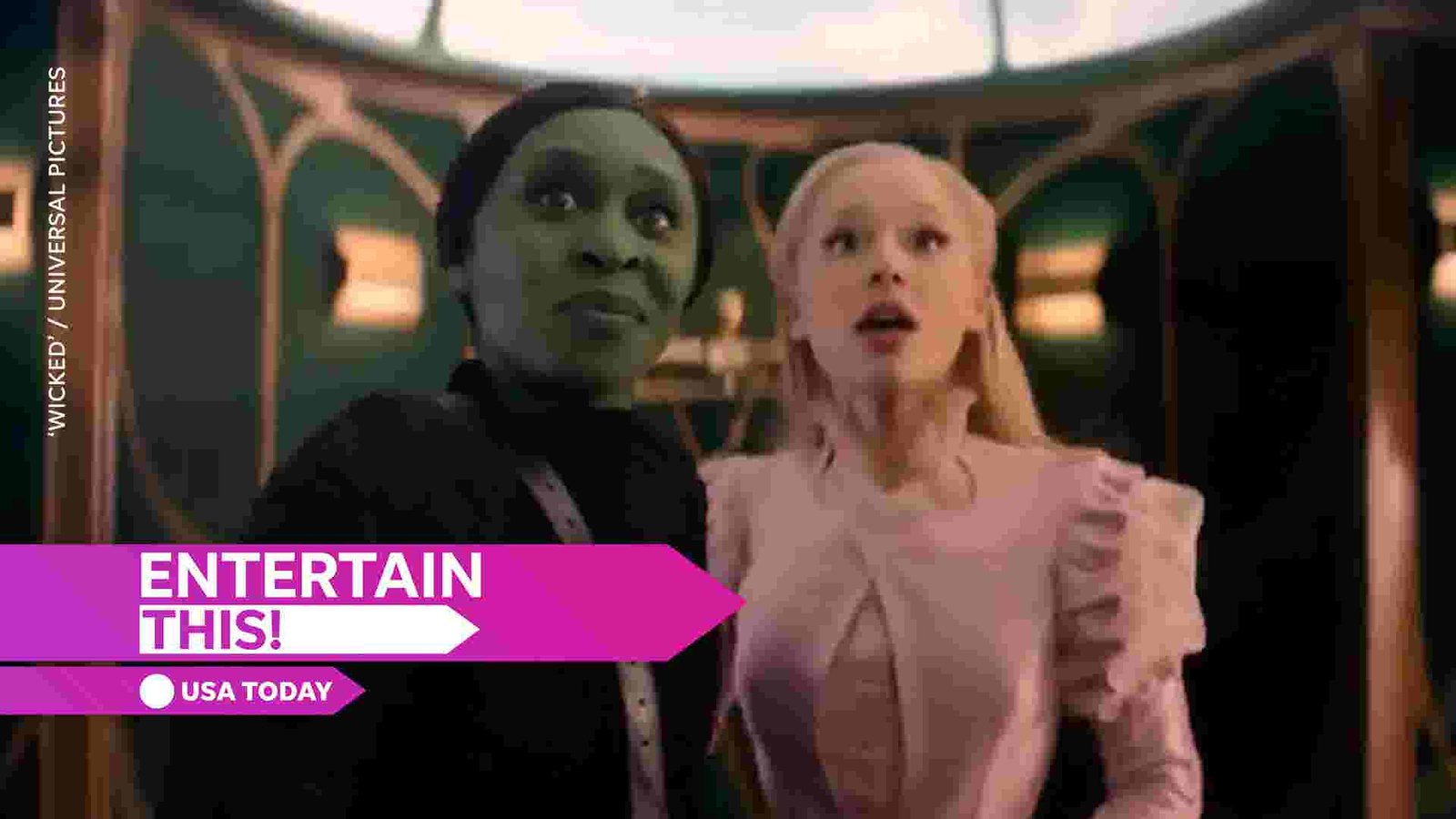
The Genesis of Oz: From Page to Stage
The journey from L. Frank Baum’s “The Wonderful Wizard of Oz” to Gregory Maguire’s novel “Wicked: The Life and Times of the Wicked Witch of the West” and finally to the Broadway stage is a fascinating one. Baum’s original story, published in 1900, was a simple fairytale, a charming adventure filled with memorable characters and a timeless message about the importance of home. Maguire’s novel, however, takes a much darker and more cynical approach, reimagining Oz as a complex and politically charged society. And then, Stephen Schwartz, with his masterful lyrics and music, breathed life into this complex narrative, transforming it into the theatrical phenomenon we know today. It is, in my opinion, a phenomenal example of taking source material and building it into a truly creative retelling.
Baum’s Foundation
L. Frank Baum’s original story laid the groundwork for all that followed. He created the land of Oz, populated it with iconic characters like Dorothy, the Scarecrow, the Tin Man, and the Cowardly Lion, and established the basic premise of the journey to the Emerald City.
* Dorothy’s innocent perspective
* The Yellow Brick Road
* The Wizard as a figure of authority
These elements are all crucial to both the Wizard of Oz and Wicked, providing the foundation upon which Maguire and Schwartz built their more complex and nuanced narratives. Thinking about it, Dorothy’s perspective is so limited in the original book. That’s where *Wicked* really shines – it broadens that view considerably.
Maguire’s Reimagining
Gregory Maguire’s novel, “Wicked,” takes Baum’s fairytale and turns it on its head. He explores the political and social complexities of Oz, introducing us to Elphaba, a brilliant and passionate green-skinned girl who challenges the established order. Maguire’s Oz is a place of prejudice, corruption, and propaganda, where the line between good and evil is blurred.
> “It’s not easy being green,” Elphaba laments in the musical, a sentiment that encapsulates her lifelong struggle against prejudice and misunderstanding.
Maguire’s genius lies in his ability to take familiar characters and give them depth and complexity. He humanizes Elphaba, revealing her motivations and her vulnerabilities. He also challenges our assumptions about Glinda, the “Good Witch,” suggesting that her actions may not always be as altruistic as they seem. Honestly, after reading Maguire’s book, I couldn’t watch the original movie the same way again. The layers of meaning just deepened.
Schwartz’s Theatrical Vision
Stephen Schwartz’s musical adaptation of “Wicked” is a masterpiece of theatrical storytelling. He captures the emotional depth and political complexity of Maguire’s novel while adding his own unique stamp to the narrative. Schwartz’s lyrics are both witty and poignant, and his music is both catchy and emotionally resonant.
The songs in Wicked serve not only to advance the plot but also to explore the characters’ inner lives and motivations. “Defying Gravity,” for example, is not just a show-stopping number; it’s a powerful anthem about embracing individuality and challenging the status quo. And “For Good” is a touching ballad about the enduring power of friendship. It’s a total tearjerker, I confess.

Elphaba and Glinda: A Friendship Forged in Oz
At the heart of Wicked lies the complex and evolving relationship between Elphaba and Glinda. Their story is one of friendship, rivalry, betrayal, and ultimately, redemption. They are two very different women, but their shared experiences at Shiz University forge a bond that will shape their destinies and the fate of Oz. Their story highlights the power of perspective and how easily narratives can be manipulated.
Opposites Attract (and Sometimes Repel)
Elphaba is a passionate and fiercely independent young woman who is deeply concerned about social justice. She is ostracized because of her green skin and her unconventional views. Glinda, on the other hand, is popular, beautiful, and ambitious. She is initially concerned with fitting in and maintaining her social status.
Despite their differences, Elphaba and Glinda find themselves drawn to each other. They challenge each other, support each other, and ultimately, help each other grow. Their friendship is tested, however, by their differing ideologies and the choices they make.
> “I think people are really fascinated by the relationship between Elphaba and Glinda because it’s so complex and relatable,” says one anonymous theatergoer after seeing *Wicked* for the fifth time. “It’s about two women who are very different, but who find a deep connection with each other. It’s about the challenges of friendship, and the choices we make in life.”
It is a testament to both characters that their bond resonates so deeply even with so many challenges.
The Price of Popularity
As Glinda rises in popularity and influence, she becomes increasingly concerned with maintaining her image as the “Good Witch.” She is willing to compromise her principles and even betray Elphaba in order to achieve her goals. Elphaba, on the other hand, refuses to compromise her beliefs, even if it means being ostracized and demonized. She becomes a rebel, fighting against the oppressive regime of the Wizard of Oz. This is where the cracks start to show, and the seeds of the Wizard of Oz as we know it are sown.
Reinterpreting the Narrative
Wicked forces us to reconsider Glinda’s role in the Wizard of Oz. Is she truly good, or is she simply complicit in the Wizard’s deception? The musical suggests that Glinda is a complex character with both strengths and weaknesses. She is not simply a one-dimensional “Good Witch.” She is a flawed human being who is trying to do her best in a difficult situation.
The ending of Wicked is bittersweet. Elphaba fakes her death and goes into hiding with Fiyero, while Glinda remains in Oz, burdened by her knowledge of the truth. The musical leaves us with a sense of ambiguity, suggesting that there are no easy answers and that the line between good and evil is often blurred. Talk about a cliffhanger! Even though we “know” what happens in *The Wizard of Oz*, *Wicked* makes you question everything you thought you knew.

The Wizard’s Deception: Propaganda and Power in Oz
One of the most powerful themes explored in Wicked is the manipulation of truth and the abuse of power. The Wizard of Oz is revealed to be not a benevolent ruler, but a manipulative dictator who uses propaganda and fear to control the citizens of Oz. This element really elevates the story beyond just a simple “good vs. evil” narrative. It becomes a commentary on society itself.
Manufacturing Fear
The Wizard uses propaganda to demonize Elphaba and portray her as the “Wicked Witch of the West.” He spreads lies and misinformation about her, turning the people of Oz against her. He uses fear to justify his own power and to suppress dissent.
> “The Wizard is a master of manipulation,” says Professor Emily Carter, a professor of media studies at a local university. “He understands how to control the narrative and to use fear to his advantage. This is a timeless theme that resonates with audiences today.”
This is a scary, but unfortunately true, commentary on real-world power dynamics.
The Power of Perspective
Wicked highlights the importance of perspective. The story is told from Elphaba’s point of view, allowing us to see the world through her eyes. We understand her motivations and her struggles, and we empathize with her even when she makes difficult choices. We realize that the “Wicked Witch” is not simply evil; she is a complex character who is fighting for what she believes in.
Challenging Authority
Elphaba’s defiance of the Wizard is a powerful act of resistance. She refuses to be silenced or controlled, and she challenges the established order. Her story is an inspiration to those who are fighting for justice and equality. It’s this act of resistance that makes Elphaba such a compelling character. She shows everyone that power does not have to be absolute.
The Enduring Appeal of Oz: Why Wicked Still Matters
Decades after “The Wonderful Wizard of Oz” first captured the hearts of readers, the world of Oz continues to fascinate and inspire. Wicked has played a significant role in keeping the story alive, reimagining it for a new generation and exploring its deeper themes. Its popularity demonstrates the timeless appeal of Oz and its enduring relevance to contemporary society.
Themes That Resonate
Wicked explores themes that are as relevant today as they were when the story was first written. The musical addresses issues of prejudice, discrimination, propaganda, and the abuse of power. It also celebrates the importance of friendship, courage, and standing up for what you believe in.
A Celebration of Individuality
Wicked is a celebration of individuality. Elphaba is a unique and unconventional character who refuses to conform to societal expectations. Her story encourages us to embrace our own differences and to be true to ourselves. It’s a message that everyone can take to heart.
A Legacy of Imagination
The world of Oz is a testament to the power of imagination. It is a place where anything is possible, where dreams can come true, and where good can triumph over evil. Wicked has added to this legacy, expanding the world of Oz and enriching its mythology.
Ultimately, Wicked’s enduring appeal lies in its ability to entertain, provoke thought, and inspire hope. It is a story that reminds us that even in the darkest of times, there is always the possibility of change and that even the most unlikely of heroes can make a difference. So, next time you see a poster for *Wicked*, remember it is more than just a show. It’s a portal to a reimagined world of Oz.
Frequently Asked Questions
| What are the key intersections between ‘Wicked’ and ‘The Wizard of Oz’? | ‘Wicked’ provides an origin story for the characters in ‘The Wizard of Oz’, specifically focusing on Elphaba (the Wicked Witch) and Glinda (the Good Witch). It recontextualizes the events of the original story by showing the political machinations and propaganda that led to Elphaba’s demonization and Dorothy’s arrival. |
| What are the benefits of exploring the ‘Wicked’ narrative? | Exploring ‘Wicked’ offers a deeper understanding of the characters and themes in ‘The Wizard of Oz’. It challenges viewers to consider different perspectives, question authority, and recognize the complexities of good and evil. It also provides a richer emotional experience by humanizing characters who were previously portrayed as one-dimensional. |
| How does ‘Wicked’ implement its reimagining of Oz? | ‘Wicked’ utilizes character development, plot twists, and musical numbers to reimagine Oz. It introduces political intrigue, social commentary, and explores the backgrounds of key characters. The songs and dialogue reveal the motivations and complexities of Elphaba and Glinda, while the plot demonstrates how the Wizard manipulates information to maintain power. |
| What are the challenges in accepting ‘Wicked’ as part of the Oz canon? | Some audiences might struggle with the darker tone and political themes in ‘Wicked’ compared to the more innocent fairytale of ‘The Wizard of Oz’. Accepting ‘Wicked’ requires reevaluating established perceptions of characters and accepting that the world of Oz has a more complex and nuanced history than initially portrayed. |
| What is the future of Oz stories influenced by ‘Wicked’? | The success of ‘Wicked’ has opened doors for more complex and nuanced interpretations of classic stories. Future Oz-related narratives are likely to continue exploring political themes, character backstories, and challenging traditional notions of good and evil. Adaptations may also delve deeper into other unexplored areas of Oz. |
Important Notice
This FAQ section addresses the most common inquiries regarding the topic.