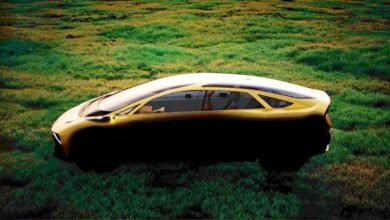
The hum of excitement in the automotive world is palpable, almost like the low rumble of a high-performance engine just before it roars to life. You hear whispers, then murmurs, and suddenly, a full-blown declaration that makes every gearhead sit bolt upright. Steve Saleen, a name synonymous with American muscle pushed to its absolute limits and beyond, a man whose legacy includes the legendary Saleen S7, is once again preparing to shake the foundations of the supercar segment. This isn’t just news; it’s an earthquake in the automotive landscape. We’re not talking about a subtle refresh or a new trim level; we’re talking about an entirely new, ground-up Saleen supercar. (Can you feel the adrenaline already?) But here’s the kicker, the truly astonishing part that sets this venture apart from almost anything we’ve seen before: you, yes you, the enthusiast, the dreamer, the armchair designer, have a chance to directly influence its creation. Saleen is building a new supercar, and in an unprecedented move, they are inviting the public—their most passionate fans—to help design it. This isn’t just about building a car; it’s about building a dream, a collective vision forged by thousands of eager minds, promising a machine that truly embodies the spirit of its future drivers.
A Legacy Reborn: Saleen’s Bold Return to Supercar Dominance
To truly appreciate the magnitude of this announcement, we need to rewind a bit and understand the sheer force that is Saleen. For decades, Steve Saleen has been a titan in the automotive world, first by enhancing Ford Mustangs into track-devouring monsters, then by creating his own bespoke vehicles that redefined American performance. His name alone conjures images of raw power, distinctive styling, and blistering speed. When you think of a Saleen supercar, one model immediately leaps to mind: the Saleen S7. Launched in the early 2000s, the S7 wasn’t just fast; it was otherworldly. A mid-engine, carbon-fiber marvel that looked like it flew straight off a futuristic movie set, it packed a punch with its V8 engine, later twin-turbocharged, delivering over 750 horsepower. “I remember seeing an S7 at a car show once; it looked like it was going 200 mph standing still, even parked under a cloudy sky,” remarked Mark Jenkins, a long-time automotive journalist. “It had this predatory presence, a true exotic, but with that unmistakable American muscle undertone.”

While the Saleen S1 was a more recent, nimble sports car that offered a different kind of driving thrill, the shadow of the S7 has always loomed large, a testament to Saleen’s ambition and capability. Now, the company is not just stepping back into that arena; they’re inviting everyone into the design studio with them. This isn’t merely a business strategy; it feels like a passion project, a way to connect with the very soul of their brand—the enthusiasts. “Steve Saleen has always been about pushing boundaries,” explained Emily Rodriguez, an automotive historian. “To open up the design process for a new Saleen supercar to the public? That’s not just a boundary push; it’s a complete demolition of the wall between manufacturer and consumer.” This bold move signifies a commitment to not just build another great car, but to craft a legend with the fingerprints of its future admirers all over it.
The Unprecedented Invitation: Your Chance to Shape Automotive History
So, you’re probably wondering, how exactly does one “help design” a supercar? Are we talking about picking paint swatches, or something far more substantial? From what we understand, Saleen is looking for significant input, diving deep into both aesthetics and functionality. Imagine submitting your sketch for a rear wing that you believe optimizes downforce and looks incredible, or proposing an innovative interior layout that prioritizes driver engagement. This isn’t a mere suggestion box; it’s an open call for genuine creativity and expertise, albeit filtered through Saleen’s engineering and design teams.
The scope of potential input is vast and exciting. We could be looking at opportunities to influence:
- Exterior Styling Cues: Headlight designs, grille treatments, aerodynamic elements (spoilers, diffusers), body lines, and overall silhouette.
- Interior Layout and Features: Dashboard design, seat ergonomics, material choices, digital interface concepts, and storage solutions.
- Performance-Oriented Details: Suggestions for suspension tuning preferences, brake caliper designs, or even innovative cooling solutions.
- Color and Trim Packages: Unique paint finishes, interior stitching patterns, and wheel designs that could truly make a statement.
This level of co-creation blurs the lines between manufacturer and enthusiast in a way that’s truly revolutionary for the supercar segment. Historically, these magnificent machines have been the exclusive domain of a select few designers and engineers, their visions sculpted in secret. Now, the curtain is being pulled back, inviting a global community to contribute. “We’ve always built cars for enthusiasts, so who better to ask than the enthusiasts themselves?” Steve Saleen himself is quoted as saying, emphasizing the genuine intent behind this initiative. This isn’t a gimmick; it’s a heartfelt invitation to participate in automotive history. Just think about it: your idea, your vision, could be incorporated into the next iconic American supercar. That’s a powerful thought, enough to get anyone’s creative juices flowing.
What Kind of Supercar Are We Talking About?
While the design aspects are open for discussion, Saleen has hinted at a few foundational ideas. We expect a mid-engine layout, which is practically a prerequisite for optimal balance and performance in a true supercar. Will it be an evolution of the S7’s raw, mechanical ethos, or will it embrace more modern electrification? The smart money is on a hybrid approach, or at least an incredibly potent internal combustion engine that might leave room for electrification later. Imagine a V8, perhaps twin-turbocharged, producing north of 800 horsepower, mated to a chassis that’s both supremely rigid and remarkably light. The target audience? Those who crave exclusivity, unparalleled performance, and a driving experience that’s visceral and engaging.

Just imagine the raw power, the unmistakable Saleen roar echoing through a canyon road, the precision handling on a track day. This isn’t just about speed; it’s about the entire sensory experience. What does the interior feel like? What materials would you want? What kind of connectivity, if any, would you desire in a machine built for pure driving pleasure? These are the questions Saleen wants us to ponder. The price point is likely to be in the exclusive seven-figure range, positioning it firmly against established European giants, but with a uniquely American soul—a soul that you, the community, will help forge.
Beyond the Drawing Board: The Practicalities of Co-Creation
Of course, the idea of thousands of people submitting design concepts raises a very real question: how will Saleen manage this? It’s one thing to ask for ideas; it’s another entirely to sift through them, identify viable concepts, and integrate them into a coherent, functional, and beautiful machine that meets all engineering and safety standards. This is where the rubber meets the road, or perhaps, the pen meets the digital tablet.
Saleen will undoubtedly have a robust system in place. We can expect a multi-stage process, perhaps starting with broad conceptual submissions, then moving to more refined details once a general direction is established. They might employ online portals for submissions, social media polls for public sentiment, and a dedicated team of designers and engineers to meticulously review and categorize the influx of ideas. “It’s a huge undertaking, no doubt,” an anonymous source close to Saleen’s R&D team confided, “but the passion from our fans is infectious. We’re developing robust processes to ensure every valuable suggestion gets seen and considered. We know what it means to our community.”
The benefits for Saleen are clear: unparalleled engagement, a deeper connection with their fan base, and a supercar that, by its very nature, will have a compelling story of collective creation. This method could significantly boost brand loyalty and create a vehicle that genuinely reflects the desires of its future owners, rather than just the vision of a single design director. The challenge lies in harmonizing potentially disparate ideas into a cohesive whole, ensuring the final product still embodies the quintessential Saleen DNA of performance and aggressive elegance. This isn’t just a car; it’s a massive collaborative art project with very high stakes.
The Legacy of Collaboration: A New Era for Automotive Design?
Could this bold experiment from Saleen set a precedent for the entire automotive industry? It’s certainly possible. In an era where customization and personalization are paramount, inviting the community into the very genesis of a vehicle’s design feels like the ultimate expression of bespoke luxury and enthusiast-driven development. While some manufacturers offer limited customization programs, and others use fan polls for minor features, Saleen is taking a monumental leap by opening up fundamental design elements. This isn’t about choosing your trim level; it’s about influencing the very shape and feel of the car.
It’s a sunny afternoon as I write this, birds chirping outside my window, but inside, my mind is racing with possibilities for this car. The democratization of design, empowered by digital platforms, allows for a level of collective genius that was unimaginable just a few decades ago. If Saleen successfully navigates the complexities of this co-creation model, it could inspire other boutique manufacturers, and perhaps even larger brands, to explore similar avenues. Imagine if the next iconic sports car from Italy or Germany had elements designed by enthusiasts worldwide. It would fundamentally change the relationship between car companies and their customers, fostering a new era of collaborative innovation. This isn’t just about one car; it’s about a potential paradigm shift in how we conceive, design, and ultimately drive the vehicles of the future. The sheer audacity of it is thrilling.
Conclusion
The announcement that Saleen is building a new supercar and, more astonishingly, inviting the public to help design it, is a landmark moment in automotive history. It’s a testament to Steve Saleen’s enduring vision and his commitment to the enthusiasts who have championed his brand for decades. This isn’t just an opportunity to contribute; it’s an invitation to become a part of something truly special, a chance to leave your mark on a machine that will undoubtedly stand alongside the legendary S7. The challenges are immense, but the potential rewards—a truly community-driven, passionately crafted supercar—are even greater. I, for one, can’t wait to see what brilliance emerges when thousands of minds converge on a single, incredible vision. Keep an eye on Saleen’s channels; your sketch, your idea, could be the next crucial element of automotive greatness.
Frequently Asked Questions
| What is Saleen doing with its new supercar project? | Saleen is embarking on the development of an all-new supercar, and in an unprecedented move, they are inviting automotive enthusiasts and the general public to submit their design ideas and feedback to help shape the vehicle’s final look and features. |
| What are the benefits of this community-driven design approach? | This approach fosters immense brand loyalty and engagement, allowing Saleen to tap into a vast pool of creative ideas. It also ensures the final product truly resonates with the desires of its target audience, making the supercar a collective masterpiece born from passion. |
| How can enthusiasts submit their design ideas? | Saleen plans to utilize various platforms, including dedicated sections on their official website, social media channels, and potentially specific design contests. Details on submission guidelines and criteria are expected to be released soon, encouraging a wide range of input from sketches to detailed concepts. |
| What challenges might Saleen face with this open design process? | Integrating diverse public feedback into a cohesive, functional, and production-ready design presents significant challenges. Filtering through a large volume of submissions, maintaining brand identity, ensuring engineering feasibility, and managing intellectual property rights will be crucial hurdles to overcome. |
| Could this initiative set a precedent for future car design? | Absolutely. If successful, Saleen’s co-creation model could revolutionize how high-performance vehicles are developed, potentially inspiring other manufacturers to adopt more open, community-driven design processes. It represents a bold step towards democratizing automotive design and innovation. |
Important Notice
This FAQ section addresses the most common inquiries regarding the topic.