The buzz surrounding these upcoming auctions feels like a huge reunion, a gathering of legends where every gleaming chrome bumper and every meticulously crafted detail tells a tale. We’re talking about vehicles that transcend their mechanical origins, becoming symbols of an era, a genre, or even a specific character’s journey. For many of us who grew up watching these films, these cars are more than just props; they are aspirational objects, dream machines that fueled our imaginations. It’s a rare opportunity to literally own a slice of pop culture, and frankly, it’s a bit mind-blowing when you think about it. What kind of stories will these cars tell to their new owners? What kind of bids will echo through the auction hall as enthusiasts vie for these automotive masterpieces?
The Undeniable Pull of Paul Walker’s Evo
There’s something inherently magnetic about Paul Walker’s Evo. It’s not just a car; it’s a legend, plain and simple. When you think of “2 Fast 2 Furious,” that striking green Mitsubishi Lancer Evolution VII immediately springs to mind, doesn’t it? Driven by Brian O’Conner, played by the late, great Paul Walker, this car wasn’t just transport; it was an extension of his character’s cool, capable, and street-savvy persona. The scene where he first races in it, lights flashing under the Miami night sky, the engine screaming – it’s burned into the memories of a generation. “I remember seeing that Evo on screen for the first time,” reminisced Sarah Jenkins, a lifelong fan of the franchise from San Diego. “It just looked so aggressive, so purposeful. And with Paul behind the wheel, it was pure magic. To think it’s actually going up for sale? It’s surreal.”
The particular Evo heading to auction is one of several used during the film’s production, but its significance is immense. It boasts the very modifications seen on screen, from its distinctive body kit to the performance enhancements that made it a formidable competitor in the cinematic street races. Paul Walker himself was a true car enthusiast, owning a substantial collection of high-performance vehicles, and his genuine passion for driving lent an authentic edge to his on-screen performances. This car, then, isn’t just a movie prop; it’s a testament to his legacy and his profound influence on automotive culture. The idea that someone could actually park this piece of his on-screen life in their garage is, frankly, thrilling and a little bittersweet.
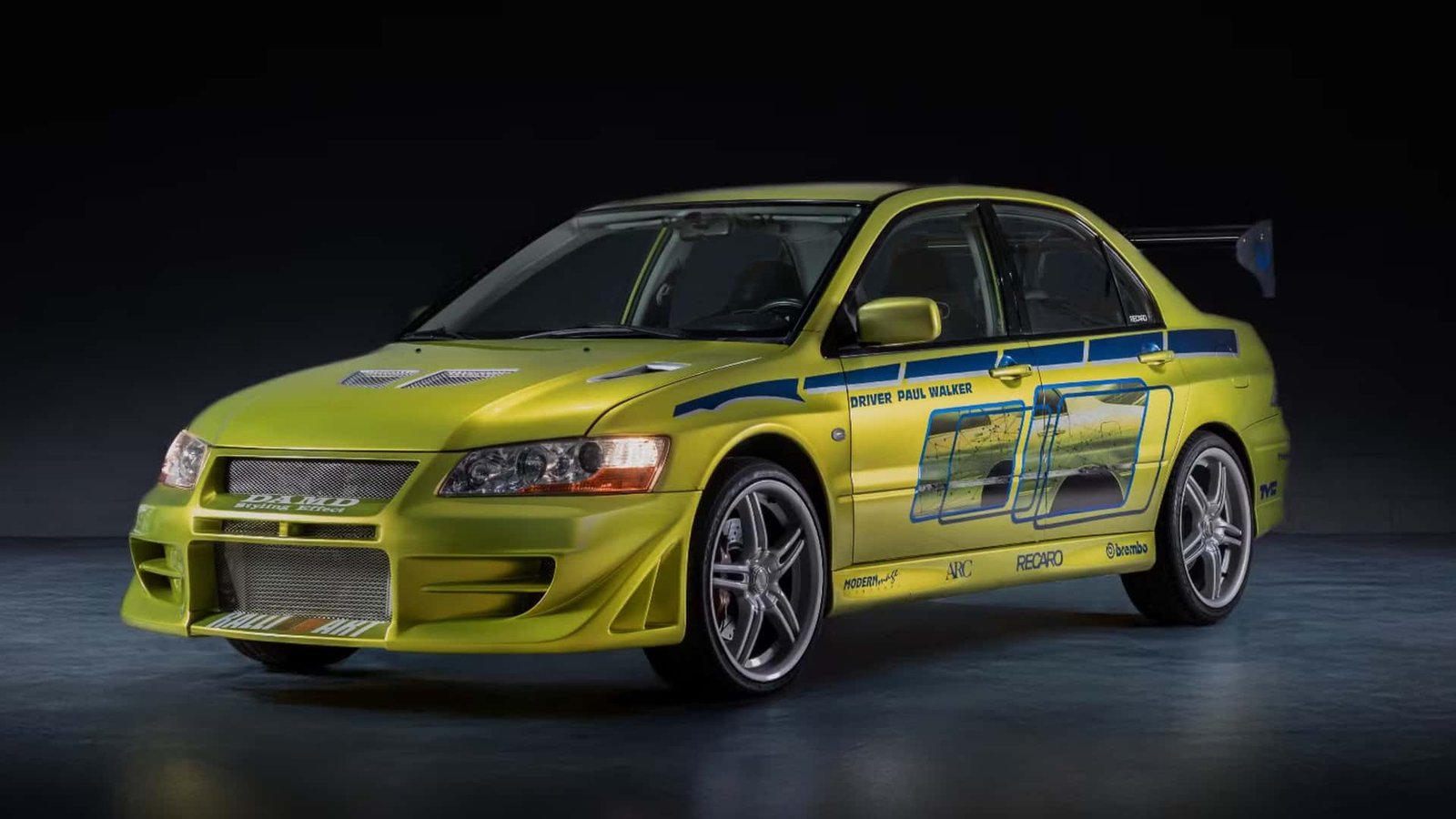
What makes this specific Evo so appealing to collectors? It’s the provenance, the direct link to a beloved film and a cherished actor. These aren’t just cars; they are artifacts. Think about it: every scratch, every faded decal could tell a story from the set. It’s a piece of history, an investment in nostalgia, and a very cool piece of machinery all rolled into one. Experts predict fierce bidding, with estimates soaring well into the six figures, potentially even higher, given the emotional connection and the enduring popularity of the film series. “This Evo represents a pivotal moment in the Fast and Furious saga,” explained automotive historian, Dr. Arthur Vance. “It solidified the franchise’s identity and, tragically, became even more poignant after Paul Walker’s passing. Its value transcends mere mechanics; it’s cultural currency.”
Beyond the Evo: A Parade of Cinematic Legends
While the Evo holds a special place, the upcoming auctions are set to feature an incredible array of other iconic movie cars. Imagine the scene at the preview: a quiet hum of excited whispers, the glint of studio lights reflecting off polished chrome, and the intoxicating scent of leather and automotive history. It’s like walking through a museum where every exhibit could suddenly roar to life. We’re talking about vehicles that have become household names, sometimes even overshadowing the human characters they shared the screen with.
From Gotham to Hill Valley: Diverse Cinematic Icons
Consider the sheer variety! While specific details are still emerging, whispers suggest everything from the sleek, gadget-laden machines of James Bond to the time-traveling wonders of Hill Valley. Could we see another DeLorean DMC-12 from “Back to the Future,” perhaps one of the actual stunt cars, complete with flux capacitor? Or maybe a truly monstrous Batmobile, an imposing symbol of justice from Gotham City? These are the vehicles that don’t just transport characters; they define them, becoming central to the very fabric of their stories. “I’ve always dreamed of seeing a real Batmobile up close,” admitted Michael Chen, a collector specializing in film memorabilia. “The engineering, the artistry, it’s just incredible. To own one? That’s a whole different level of fandom.”
Other rumored entries include vehicles from classic action films, perhaps a muscle car that tore up the streets in a 70s chase scene, or a sleek spy car packed with ingenious contraptions. Each car, regardless of its primary role, brings with it a fascinating backstory: the challenges of filming, the modifications made for specific stunts, and the journey from a designer’s sketch to a global icon. These are not just cars that were on screen; many are “hero cars,” the actual principal vehicles used for close-ups and key scenes, making them immensely valuable.

The Allure of the Auction Block: Why We Crave These Cars
So, what is it about these iconic movie cars heading to auction that whips enthusiasts into such a frenzy? It’s more than just the metal and the engine. It’s the story, the connection to a moment in time, a character, a feeling. When you see a car like Paul Walker’s Evo, you don’t just see a Mitsubishi; you see Brian O’Conner, you hear the screech of tires, you feel the rush of the race. It’s an emotional investment, a piece of your own history intertwined with pop culture. These vehicles tap into our collective memory, becoming totems of our favorite cinematic experiences.
For serious collectors, it’s also about rarity and provenance. A car used in a major film, especially a hero car, is inherently rare. Its history is meticulously documented, often down to the exact scenes it appeared in. This level of verifiable authenticity elevates it far beyond a standard classic car. “The provenance is everything,” states Clara Hansen, an auction specialist from RM Sotheby’s. “Knowing that a specific vehicle was driven by a star, or central to a pivotal scene, adds an immeasurable layer of value. It’s not just a car; it’s a piece of art with a verifiable exhibition history.” This isn’t just a hobby; for many, it’s an investment, a passion, and a way to preserve cultural heritage.
The Thrill of the Chase: Bidding for History
The auction itself becomes a spectacle. Imagine the hushed reverence in the room, punctuated by the sharp, decisive calls of the auctioneer. Every bid represents not just money, but desire, passion, and the fierce competitive spirit of collectors. It’s a high-stakes game where the prize is a slice of cinematic history. The atmosphere is electric, charged with anticipation. You can almost feel the tension in the air as the numbers climb, each increment pushing the car further into legendary status. It’s a testament to the enduring power of film and the universal language of speed and design.
From Set to Sale: The Journey of a Movie Car
How do these cinematic treasures transition from the big screen to an auction catalog? It’s a fascinating process, often spanning decades. Many production companies retain “hero cars” for promotional purposes or keep them in storage. Over time, these vehicles may be sold off, sometimes to private collectors, sometimes to museums, or eventually making their way to the auction circuit. The journey isn’t always smooth; some cars are used hard during filming, requiring extensive restoration before they can command top dollar. Others, like Paul Walker’s Evo, might have been kept in relatively pristine condition, adding to their appeal.
The authentication process is rigorous. Auction houses work tirelessly to verify the vehicle’s history, often collaborating with studios, production crew members, and even actors if possible. This involves examining production records, comparing VINs, and cross-referencing on-screen appearances with physical characteristics. Without solid provenance, a movie car, no matter how iconic, loses a significant chunk of its value. “It’s detective work, really,” explains a lead restorer for a Hollywood vehicle prop company, who wished to remain anonymous. “We painstakingly match details from film stills, check build sheets, even look for specific scuff marks that might be visible in a famous scene. Every detail matters.”
The Art of Restoration and Preservation
For cars that have seen a lot of action on set, a substantial restoration effort might be necessary. This isn’t just about making them look pretty; it’s about preserving their integrity as historical artifacts. Restorers often go to great lengths to ensure accuracy, using period-correct parts and techniques, sometimes even replicating specific wear and tear to match the car’s on-screen appearance. This commitment to authenticity ensures that when these cars roll onto the auction stage, they are not just stunning, but historically accurate representations of their cinematic counterparts. It’s an expensive and time-consuming process, but absolutely essential for maintaining their value and appeal.
The Ever-Evolving Market for Automotive Memorabilia
The market for iconic movie cars and automotive memorabilia is a vibrant, dynamic space. It’s driven by a potent mix of nostalgia, investment potential, and pure, unadulterated passion. We’ve seen prices for classic cars soar in recent decades, and vehicles with direct links to pop culture, especially beloved films, are at the pinnacle of this trend. Collectors aren’t just buying a mode of transport; they’re acquiring a piece of shared cultural narrative, something that resonates deeply with their personal experiences and memories.
Is it a good investment? For the right car, with impeccable provenance and enduring cultural relevance, absolutely. These aren’t depreciating assets; they’re appreciating art pieces. However, it’s a niche market, demanding a discerning eye and a deep understanding of both automotive history and cinematic impact. Not every car from a movie will become a multi-million-dollar legend, but those that capture the public imagination, like Paul Walker’s Evo, have a unique trajectory. It’s a fascinating confluence of art, engineering, and storytelling that continues to captivate and command incredible attention.
As these legendary vehicles prepare to find new homes, it’s a reminder of the powerful, lasting impact that cinema has on our lives. These aren’t just cars that performed stunts or ferried stars; they are characters themselves, etched into our collective memory. Their journey from the silver screen to the auction block is a testament to their enduring appeal, their iconic status, and the incredible human connection we forge with stories and the objects that bring them to life. It truly is a remarkable time for anyone who appreciates the roar of an engine and the magic of movies.
Frequently Asked Questions
| What makes Paul Walker’s Evo and other movie cars so valuable at auction? | The primary value comes from their unique provenance and connection to popular culture. A car driven by a beloved actor like Paul Walker, or one central to iconic film scenes, becomes a tangible piece of cinematic history. This rarity, combined with nostalgic appeal and verifiable authenticity, elevates their value far beyond that of a standard classic car. |
| Who typically buys these iconic movie vehicles? | Buyers are typically affluent collectors, automotive enthusiasts, and film memorabilia aficionados. Some may be private individuals looking for a unique centerpiece for their collection, while others might be investors, museums, or even corporate entities seeking unique display pieces with significant cultural value. |
| How are iconic movie cars authenticated before being sold at auction? | Authentication is a rigorous process involving extensive research. Auction houses work with studios, production companies, and experts to verify the car’s history. This includes examining production records, cross-referencing VINs, matching physical details to on-screen appearances, and obtaining documentation of its use during filming. Solid provenance is crucial for its value. |
| What are some challenges in owning and maintaining a movie car? | Challenges can include the high cost of acquisition, specialized maintenance due to unique modifications or historical parts, and insurance. Many movie cars, especially “hero cars” used for stunts, may have been heavily modified or might not be street-legal without further work. Preservation of their historical integrity is also a significant consideration. |
| Do movie cars represent a good investment for collectors? | For the right vehicle with strong provenance and enduring cultural relevance, movie cars can be excellent investments, often appreciating significantly over time. However, it’s a specialized market. Factors like the film’s popularity, the actor’s legacy, the car’s condition, and its authenticity all play a role in its long-term investment potential. It requires careful research and a deep understanding of the market. |
Important Notice
This FAQ section addresses the most common inquiries regarding the topic.