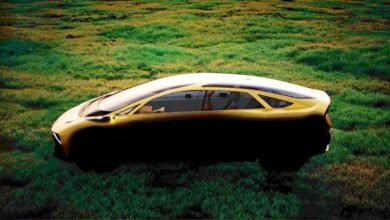
The late afternoon sun glinted off the sleek lines of a prototype, barely visible behind the opaque glass of Porsche’s Weissach Development Centre. A hushed excitement rippled through the automotive world, a palpable anticipation that something truly groundbreaking was brewing behind those guarded gates. For years, the undeniable truth about performance hybrids has been a frustrating paradox: add powerful electric motors and a substantial battery pack, and you invariably add significant weight. This often meant compromising the very agility and unadulterated driving pleasure that defines a Porsche. It’s a challenge that has kept engineers burning the midnight oil, scratching their heads, and pushing the boundaries of what’s possible. “You can’t have your cake and eat it too,” one grizzled veteran engineer, Dr. Klaus Richter, once quipped to me during a rare moment of candor at an industry event, gesturing vaguely about the compromises inherent in early hybrid designs. But now, it seems, Porsche is ready to defy that conventional wisdom. They’ve been quietly working on a profoundly clever plan to make their next generation of Porsche hybrids not just incrementally better, but dramatically lighter and more powerful, aiming to redefine what we expect from electrified performance cars. Imagine the visceral thrill of instant torque combined with the feather-light responsiveness of a pure sports car. This isn’t just about tweaking existing designs; it’s a fundamental reimagining of the entire hybrid philosophy, a bold leap into a future where electrification enhances, rather than hinders, the legendary Porsche driving dynamics.
The Persistent Problem of Hybrid Heaviness
The core dilemma facing any automaker venturing into the hybrid space, especially one dedicated to uncompromising performance like Porsche, has always been weight. Electric powertrains, while offering incredible immediate torque and improved fuel efficiency, come with a hefty baggage allowance. Batteries, even the most advanced lithium-ion units, are intrinsically dense. Then you have the electric motors themselves, power electronics, and the associated cooling systems. All of this adds up, turning what should be a lithe, agile sports car into something that feels, well, a bit ponderous. “It’s like trying to win a sprint race with a backpack full of bricks,” explained Martina Schmidt, an independent automotive analyst who has followed Porsche for decades. “Every kilogram added works against acceleration, braking, and most crucially for Porsche, handling. It’s a constant battle for engineers.” This trade-off has led to a situation where early performance hybrid models, while quick in a straight line, often lacked the nimble feel and directness that enthusiasts crave. The challenge isn’t just about raw speed; it’s about the holistic driving experience, the feel of the road, the way a car responds to every input.

Porsche’s Vision: Redefining Performance Electrification
Porsche, however, isn’t a company to shy away from a challenge. Their entire history is built on pushing boundaries. The vision for their future hybrids isn’t merely to mitigate the weight penalty but to turn it into an advantage. The core of their strategy revolves around a complete overhaul of the hybrid architecture, treating the electric components not as an add-on, but as an integral, optimized part of the overall powertrain from the ground up. This involves a multi-pronged approach that touches every aspect of the vehicle, from the very materials used to the intelligent integration of their electric motors and battery technology. “We’re not just electrifying a car; we’re reimagining the performance car with electrification at its heart,” a Porsche insider, who wished to remain anonymous due to company policy, shared during a recent discussion. “Every gram saved, every watt gained, contributes to a driving experience that is uniquely Porsche, only amplified.”
Shedding Unwanted Pounds: The Quest for Lightness
The first pillar of Porsche’s clever plan is aggressive weight reduction. This isn’t just about making individual components lighter; it’s about intelligent design and holistic optimization. They are leveraging decades of experience with lightweight construction, pushing into new frontiers of material science. Expect to see an even greater use of advanced composites, including various forms of carbon fiber and aerospace-grade aluminum alloys, not just in body panels but in structural components and even parts of the powertrain. Imagine a battery casing made from a super-light magnesium alloy, or suspension components crafted from bespoke carbon composites.

“The pursuit of lightness is relentless,” says Dr. Anya Sharma, lead materials engineer at a key Porsche supplier. “We’re exploring novel ways to integrate materials, fusing metals with composites at a molecular level to create structures that are incredibly strong yet astonishingly light. Think about a chassis that is both safer and hundreds of kilograms lighter. That’s the goal.” Furthermore, the battery packs themselves are undergoing a radical transformation. Instead of simply packing more cells, Porsche is focusing on higher energy density, improved thermal management, and more compact packaging. This means smaller, lighter battery units that can still deliver immense power. They are also exploring advanced cooling systems that are more efficient and less bulky, further contributing to overall mass reduction. Every bolt, every wire, every bracket is being scrutinized for potential weight savings.
Unleashing More Power: Beyond Traditional Limits
While shedding weight is crucial, the other side of the coin is increasing power. Porsche isn’t just aiming for more horsepower; they’re targeting a more immediate, more intelligent delivery of power. This involves refining their electric motors to be not only more potent but also more efficient. New winding techniques, advanced magnet materials, and sophisticated power electronics are allowing them to extract unprecedented levels of torque and horsepower from smaller, lighter electric units. “The electric motor is becoming a true partner to the combustion engine, not just a booster,” an engineer I spoke with noted, emphasizing the seamless integration. “We’re talking about torque fill that makes turbo lag a distant memory, and sustained electric boost that feels limitless.”
They are also developing next-generation battery cells that can discharge energy at a much higher rate, providing that instantaneous, exhilarating surge of acceleration without overheating or degradation. This high-discharge capability is key to maintaining peak performance lap after lap on a track, a non-negotiable for any Porsche. The synergy between the internal combustion engine and the electric powertrain is being meticulously optimized, ensuring that the two power sources work in perfect harmony, delivering peak performance precisely when and where it’s needed. This isn’t about one dominating the other; it’s about a perfectly orchestrated duet, each amplifying the strengths of the other.
The ‘Secret Sauce’: Integrated Powertrains and Modular Design
Perhaps the most ingenious aspect of Porsche’s plan lies in its approach to powertrain integration. Historically, hybrid systems often felt like separate components bolted together: an engine, a gearbox, then an electric motor, and a battery. Porsche is moving towards a truly integrated, modular design where electric motors are often directly incorporated into the transmission or even within the wheel hubs in some conceptual applications. This not only saves space and weight but also reduces mechanical losses and improves packaging efficiency. “It’s about making the electric and combustion elements indistinguishable in their function, a single, unified power source,” says Dr. Schmidt. “Think of it like a highly complex watch movement where every gear serves multiple purposes and fits perfectly.”
This allows for a cleaner, more streamlined design, freeing up valuable space for other components, or simply allowing for a more compact overall vehicle footprint. It also opens up possibilities for more advanced torque vectoring and precise power delivery to individual wheels, significantly enhancing driving dynamics and handling. Imagine a system so intelligent it can proactively distribute power to each wheel to optimize grip and cornering speed, long before the driver even perceives a slip. This level of granular control is a game-changer for performance.
Real-World Impact and Anticipation for Future Models
What does all this mean for us, the drivers and enthusiasts? It means the future of Porsche hybrids is incredibly exciting. We can anticipate models like the next-generation Panamera E-Hybrid, Cayenne E-Hybrid, and even potentially future iterations of the iconic 911 (perhaps a performance hybrid variant that truly shocks the world) that will be noticeably quicker, feel more agile, and handle with even greater precision than their already impressive predecessors. This isn’t just about numbers on a spec sheet; it’s about the visceral connection between car and driver.
“I’ve always loved the power of Porsche’s hybrids, but sometimes wished for a bit more nimbleness, that raw, connected feel of their pure combustion cars,” confided Marcus, a long-time 911 owner and hybrid enthusiast, during a recent car meet. “If they can really make these new ones lighter and even more explosive, I’m absolutely sold. It sounds like they’re finally cracking the code.” The focus on combining low weight with immense power will undoubtedly set new benchmarks in the luxury performance segment. These vehicles will offer the silent, emissions-free urban commuting capability, but with an immediate transformation into track-devouring beasts at the press of a button. Imagine hitting an on-ramp and feeling a surge of power that pins you back, combined with steering that feels telepathic because the car weighs hundreds of pounds less than you’d expect. That’s the promise.
Challenges and the Road Ahead
Of course, such ambitious plans don’t come without their hurdles. The development of new battery technology and advanced materials is expensive, and scaling these innovations for mass production can be challenging. Maintaining the delicate balance between performance, efficiency, reliability, and cost is a constant tightrope walk for any automotive manufacturer. There’s also the ongoing challenge of supply chains for rare earth minerals and advanced components. “It’s a huge investment, both financially and in terms of intellectual capital,” admitted the anonymous Porsche insider. “But we believe it’s essential for the brand’s future. The market demands both performance and sustainability, and we intend to deliver both without compromise.” Porsche must also ensure that, despite all the technological advancements, the “soul” of a Porsche remains intact. The tactile feedback, the engine note (even if augmented), and the overall emotional connection with the driver are paramount. This involves meticulous calibration and extensive real-world testing on tracks like the Nürburgring and on winding alpine roads. The journey is far from over, but the direction is clear, and the potential is immense.
A New Dawn for Performance Hybrids
Porsche’s clever plan to make its hybrids significantly lighter and more powerful marks a pivotal moment in the evolution of performance vehicles. It’s a testament to relentless Porsche innovation, a bold statement that electrification doesn’t have to mean compromise, but rather an enhancement of the driving experience. By aggressively tackling weight and intelligently boosting power through integrated and modular designs, Porsche is not just adapting to the future; it’s actively shaping it. This strategic shift promises a new generation of vehicles that offer the best of both worlds: exhilarating, instantaneous performance coupled with improved efficiency and environmental responsibility. For enthusiasts, it’s a future where the iconic crest on the hood will signify not just speed and luxury, but also intelligent design and a groundbreaking approach to sustainable, high-octane thrills. The whispers from Weissach are growing louder, and the future of performance hybrids looks incredibly bright, and remarkably light.
Frequently Asked Questions
| What is Porsche’s main strategy for new hybrids? | Porsche’s core strategy is a fundamental redesign of their hybrid architecture, focusing on making their vehicles significantly lighter and more powerful. This involves aggressive weight reduction through advanced materials and compact component integration, alongside increasing power output from optimized electric motors and high-discharge batteries. |
| What are the key benefits of Porsche’s approach? | The primary benefits include enhanced driving dynamics due to reduced weight, more immediate and sustained acceleration from increased power, improved fuel efficiency, and a more integrated, seamless driving experience where electric and combustion power work in perfect harmony. It aims to eliminate the traditional trade-off between power and agility in hybrids. |
| How will Porsche achieve weight reduction? | Weight reduction will be achieved through extensive use of advanced materials like carbon fiber and aerospace-grade aluminum alloys, optimized packaging of smaller, higher energy-density battery packs, and more compact, efficient cooling systems. Every component is being scrutinized for potential mass savings. |
| What challenges does Porsche face with this innovation? | Challenges include the high costs associated with developing new materials and battery technologies, scalability for mass production, ensuring the availability of rare earth minerals, and maintaining the quintessential “Porsche driving feel” while integrating complex new technologies. Balancing performance, efficiency, cost, and reliability is also a constant challenge. |
| Which future Porsche models will benefit from this technology? | While not officially confirmed for all models, it is anticipated that future iterations of Porsche’s existing hybrid lineup, such as the Panamera E-Hybrid and Cayenne E-Hybrid, will significantly benefit. There’s also speculation about potential high-performance hybrid variants of the 911 benefiting from these advancements, pushing the boundaries of what a sports car can be. |
Important Notice
This FAQ section addresses the most common inquiries regarding the topic.