The Looming Shadow: Why North Carolina?
Why North Carolina, you might ask? It’s a fair question, and one that many residents are grappling with right now. The Old North State, with its unique blend of agricultural heartland, burgeoning tech scene, and increasingly diverse urban centers, presents a complex tableau for federal immigration policy. Historically, North Carolina has seen significant growth in its immigrant population, becoming home to one of the fastest-growing Latino communities in the nation. This demographic shift has, in turn, fueled crucial sectors of the state’s economy, from farming and construction to hospitality. When we talk about a Trump immigration crackdown, it’s not a random pick; it’s a strategic choice, targeting states perceived as having robust undocumented populations and a political landscape that might be receptive to, or at least divided on, stricter enforcement.
Consider the political climate here: North Carolina is a swing state, often seen as a bellwether in national elections. Immigration policy is a hot-button issue, capable of galvanizing different segments of the electorate. For former President Trump, a renewed focus on border security and interior enforcement has always been a cornerstone of his political identity. “He’s always believed that strong borders and strict enforcement are what the American people want,” explained a former campaign aide, speaking anonymously. “North Carolina offers a platform to demonstrate that commitment, to show supporters that he’s serious about his promises.” This isn’t just about rhetoric; it’s about action, and the state’s demographics and political leanings make it a prime target for demonstrating that resolve.
Echoes of the Past: What Could This Crackdown Entail?
The prospect of a new crackdown immediately brings to mind the intense immigration enforcement actions seen during Trump’s previous administration. These often involved widespread ICE operations, workplace raids, and increased collaboration between federal immigration authorities and local law enforcement. For those who lived through it, the memories are vivid and unsettling. “I remember the fear,” said Maria Rodriguez, a community organizer in Charlotte. “People were afraid to go to work, afraid to send their kids to school. Every knock on the door, every unfamiliar van, felt like a threat.” That’s the kind of atmosphere such an announcement can instantly rekindle.
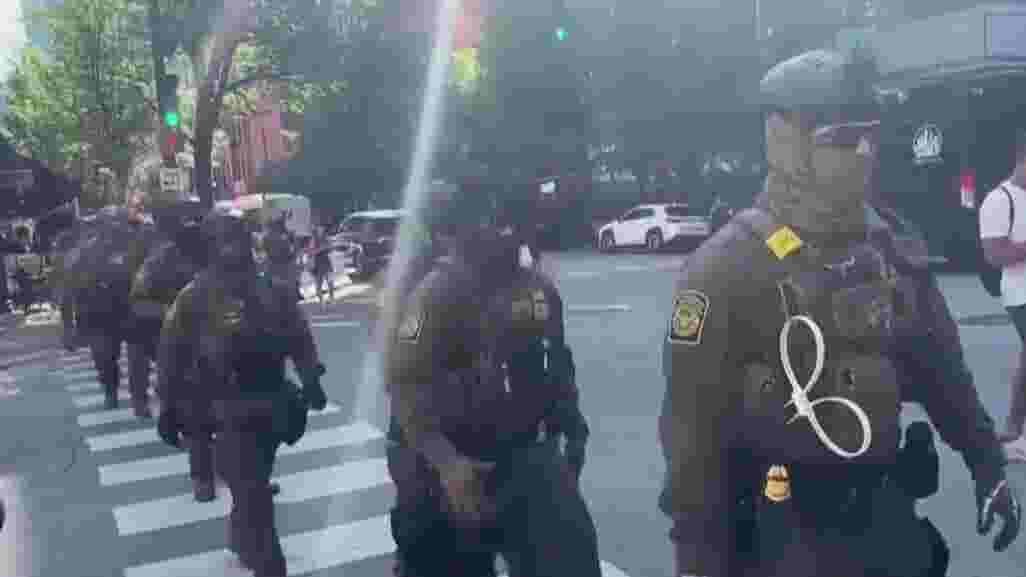
The specifics of any potential new initiative remain somewhat speculative, but experts suggest it could involve several key components. Firstly, an expansion of federal-state partnerships, such as the 287(g) program, which deputizes local law enforcement to perform certain immigration functions. While some counties in North Carolina already participate, an increased push could see more joining. Secondly, heightened enforcement in workplaces. This would mean more audits of employment records and potential raids on businesses suspected of employing undocumented workers. Finally, and perhaps most visibly, more targeted operations by Immigration and Customs Enforcement (ICE) in communities, leading to arrests and deportations. “We’ve seen this playbook before,” stated immigration attorney Michael Chen. “It’s about creating a deterrent effect, and unfortunately, that often comes at the cost of community trust and stability.” The implications are far-reaching, touching everything from the stability of families to the availability of labor in critical industries.
The 287(g) Program: A Local Enforcement Hotbed
The 287(g) program is often a flashpoint in the debate over immigration enforcement. It allows designated local law enforcement officers to identify and process individuals who are in the country illegally, essentially blurring the lines between local policing and federal immigration enforcement. In North Carolina, several counties have active 287(g) agreements. Advocates argue it enhances public safety by removing dangerous individuals, while opponents contend it fosters distrust between immigrant communities and local police, making residents less likely to report crimes.
“When people fear their local police might also be acting as immigration agents, they stop calling for help,” explained Sarah Jenkins, a local resident and mother of three. “My neighbor’s car was broken into, but they didn’t want to call the police because they’re undocumented. That’s not making anyone safer, is it?” This sentiment is echoed by many who believe that such programs, while intended to be a tool for law and order, can inadvertently undermine it by creating a shadow of fear over entire communities. The expansion of 287(g) would undoubtedly be a central feature of any stepped-up enforcement effort, transforming routine traffic stops or minor infractions into potential deportation proceedings.
Economic Ripple Effects on North Carolina’s Workforce
North Carolina’s economy, particularly its agricultural sector, relies heavily on immigrant labor. From sweet potatoes to tobacco, the hands that harvest the state’s bounty often belong to individuals who are undocumented. A significant crackdown could lead to a massive labor shortage, impacting supply chains, increasing food prices, and potentially devastating small and large farms alike. “Without these workers, we simply couldn’t get our crops out of the ground,” lamented John Miller, a third-generation farmer in Eastern North Carolina. “It’s not just about cheap labor; it’s about a workforce willing to do incredibly demanding jobs that many others won’t.”
The construction industry, too, would feel the squeeze. Anecdotal evidence suggests that a substantial portion of the construction workforce in many parts of the state is comprised of immigrants. A sudden exodus or widespread arrests would stall projects, raise costs, and potentially lead to a slowdown in economic development. “We’re already facing labor shortages,” said a frustrated construction foreman in Raleigh. “This would just throw gasoline on the fire.” The economic impact isn’t just theoretical; it’s a very real concern for business owners and consumers alike, reminding us that immigration is deeply intertwined with our daily lives and livelihoods.
Human Stories Behind the Headlines: Families and Communities
Beyond the economic figures and policy debates are the very human stories of families, neighbors, and communities that would be directly affected. Imagine a parent dropping their child off at school, wondering if they’ll be there to pick them up. Imagine the anxiety that permeates homes, the constant fear of a knock on the door. These are the realities that accompany intensified immigration enforcement. Children, many of whom are U.S. citizens, would face the trauma of parental separation, with profound long-term psychological effects. Schools would see their student bodies disrupted, and social services would be strained as families cope with sudden changes in their circumstances.
“My biggest fear is for my kids,” confessed Elena, a mother of two living in Durham, whose husband is undocumented. “They are American citizens, but if something happens to my husband, our lives would be shattered. We are not criminals; we are just trying to make a living, to contribute.” Her voice was soft, laced with a palpable worry that many in her situation share. These are not abstract concepts; these are the heart-wrenching scenarios that play out in real time when such policies are implemented. The fabric of communities, woven together by diverse threads, faces immense stress under these conditions, with trust eroding and a sense of collective vulnerability taking hold.
Responses from Advocacy Groups and Local Leadership
Predictably, the potential for a renewed crackdown has galvanized immigration advocacy groups across North Carolina. Organizations like Siembra NC and El Pueblo are already preparing for the worst, offering “know your rights” workshops, legal aid, and community support networks. “We’ve been here before, and we will stand with our communities again,” declared Andrew Koppel, an activist with a local human rights group. “Our message is clear: we will fight for justice and dignity for everyone, regardless of their immigration status.”
Local leadership, particularly in more progressive cities, faces a dilemma. While federal law requires cooperation, many city councils and mayors have voiced concerns about the humanitarian impact and the erosion of community trust. Some have adopted “sanctuary city” policies or resolutions limiting their cooperation with federal immigration authorities, though the legal boundaries of such policies are often contested. “Our job is to protect all our residents,” stated a city council member in a major North Carolina city, who preferred to remain unnamed due to the sensitive nature of the topic. “We need to find a balance between following the law and upholding the values of our community.” This tension between federal mandates and local autonomy will undoubtedly be a defining feature of any future enforcement efforts, creating a patchwork of responses across the state.
The Political Chessboard: 2024 and Beyond
The discussion around a Trump immigration crackdown in North Carolina isn’t just about enforcement; it’s deeply embedded in the national political chessboard, especially with the 2024 election cycle already dominating headlines. For former President Trump and his supporters, taking a hardline stance on immigration is a clear signal of his commitment to his base, a promise to restore what they view as law and order at the border and within the country’s interior. It’s a message that resonates strongly with a significant portion of the electorate, particularly in rural and conservative areas of North Carolina.
Conversely, for Democrats and immigration advocates, such a move would be seen as an aggressive and inhumane policy that targets vulnerable populations and undermines the state’s economic and social stability. It would likely mobilize opposition voters and could become a significant wedge issue in state and national elections. “This isn’t just about immigration; it’s about the kind of state, the kind of country, we want to be,” remarked a political analyst based in the Triangle area. “North Carolina’s response, the intensity of the debate, could very well influence how other states react, and ultimately, how the entire nation views this issue in the lead-up to the election.” The stakes are incredibly high, not just for the individuals directly affected, but for the political future of North Carolina and indeed, the entire nation.
Looking Ahead: Navigating Uncertainty
As the discussions continue and the political landscape shifts, North Carolina finds itself at a crossroads. The prospect of intensified immigration enforcement under a potential Trump administration raises profound questions about the state’s identity, its economy, and its commitment to all its residents. It’s a challenging situation, filled with uncertainty and strong emotions on all sides. For those who fear the crackdown, it’s a daily source of anxiety and a call to action. For those who support stricter enforcement, it’s a hope for a more secure future.
What is clear is that North Carolina is poised to be a key battleground in this national conversation. The resilience of its communities, the dedication of its advocates, and the choices of its leaders will all play a crucial role in shaping what comes next. It’s a stark reminder that policy decisions, especially those as impactful as immigration reform, are never just about lines on a map or numbers on a spreadsheet; they are about people, about families, and about the very soul of a state. It truly makes you think about the ripple effect of such grand pronouncements on the most ordinary of lives.
Frequently Asked Questions
| What is the proposed Trump immigration crackdown in North Carolina? | The proposed Trump immigration crackdown in North Carolina refers to potential intensified federal immigration enforcement efforts, possibly including increased ICE raids, expanded 287(g) programs, and workplace enforcement, targeting undocumented immigrants within the state. This is part of a broader strategy to enforce stricter immigration policies. |
| What are the stated goals of such a crackdown? | From a pro-enforcement perspective, the stated goals typically include enhancing national security, reducing the number of undocumented immigrants, deterring illegal immigration, and ensuring compliance with federal immigration laws. Proponents believe these actions reinforce the rule of law and protect American jobs. |
| How might this crackdown be implemented in North Carolina? | Implementation could involve several measures: expanding the 287(g) program to deputize more local law enforcement officers for immigration duties, increasing ICE presence for targeted arrests and deportations, conducting workplace audits and raids, and potentially increasing checkpoints or surveillance in areas with high immigrant populations. |
| What challenges might North Carolina face due to this crackdown? | North Carolina could face significant challenges, including severe labor shortages in agriculture and construction, economic disruption, social unrest, increased strain on social services, and humanitarian concerns such as family separations and psychological trauma for affected individuals and communities. It could also create distrust between immigrant communities and local authorities. |
| What are the potential long-term impacts of this immigration policy on North Carolina? | Long-term impacts could include significant shifts in the state’s demographics, a potentially diminished workforce, altered political landscapes, and lasting effects on community cohesion. There could be a decline in economic growth due to labor shortages and a potential exodus of immigrant populations, fundamentally changing the state’s social and economic fabric. |
Important Notice
This FAQ section addresses the most common inquiries regarding the topic.