The air hangs heavy with worry in the small town of Jangebe, Nigeria. It’s been three weeks since the gates of the Government Girls Secondary School were breached, three weeks since the terrified screams of young girls pierced the morning calm, and three weeks since hundreds of families were plunged into a living nightmare. The nightmare of abducted schoolchildren. But the real horror, many parents claim, isn’t just the abduction itself, but the deafening silence that has followed. The Nigerian parents are saying they are being kept completely in the dark. Imagine the gut-wrenching feeling of not knowing whether your child is safe, scared, hungry, or even alive. That’s the daily reality for these families. (It’s a situation no parent should ever face.)
The frustration is palpable, a thick cloud of anger and despair that blankets the community. Mothers huddle together, their faces etched with worry, whispering prayers and sharing rumors gleaned from unreliable sources. Fathers, their voices tight with suppressed rage, pace anxiously, demanding answers from authorities who seem either unwilling or unable to provide them. The security situation in the region has been deteriorating for years, with banditry and the threat of groups like Boko Haram casting a long shadow over everyday life. This latest incident has brought the simmering tension to a boiling point, exposing a deep-seated distrust between the people and the government response. The lack of clear, consistent information is not just a bureaucratic failing; it’s a betrayal of trust, a slap in the face to families already reeling from unimaginable trauma. What are they supposed to believe? What are they supposed to do?
The pain is compounded by the feeling of helplessness. They entrusted their children to the care of the state, believing that the school offered a pathway to a better future, a chance to escape the cycle of poverty and insecurity that plagues their communities. Now, that trust has been shattered, replaced by a gnawing fear that their daughters have been sacrificed on the altar of political expediency. The silence from official channels is deafening, fueling speculation and fostering a climate of fear and mistrust. The information blackout only serves to amplify the trauma, leaving families to grapple with their anxieties in isolation and despair. You would think, in the age of instant communication, there would be more transparency.
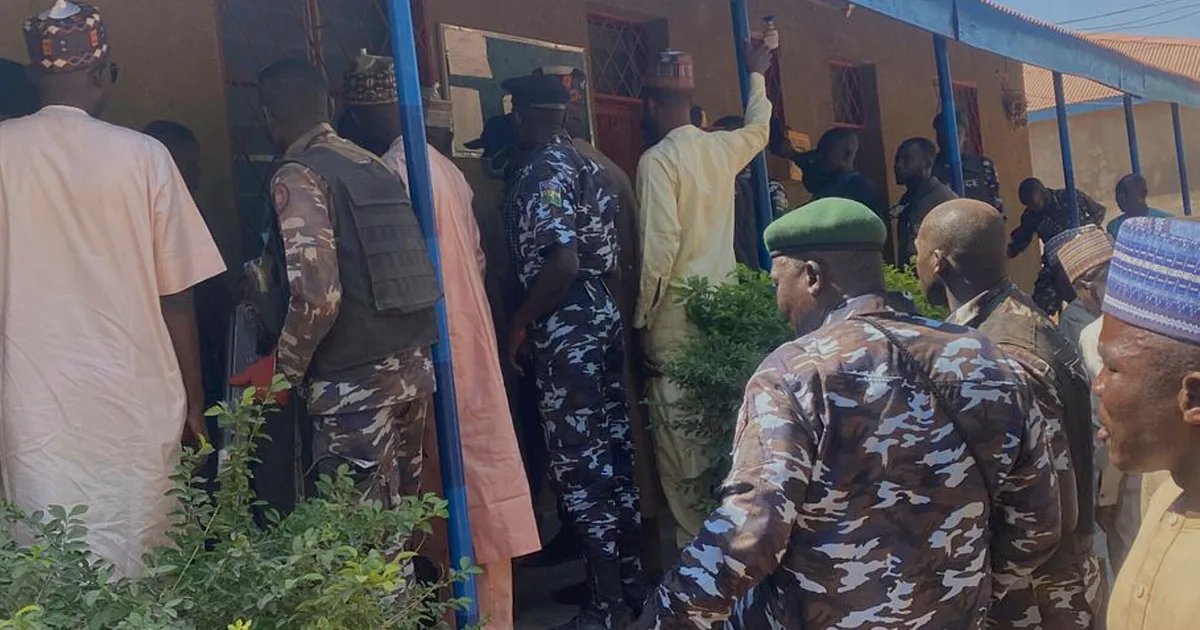
The Anguish of Waiting: A Chronicle of Despair
The story of the abducted schoolchildren is not just a news headline; it’s a collection of personal tragedies, each one a searing indictment of the systemic failures that have allowed such horrors to become commonplace. One mother, Fatima, whose 15-year-old daughter Aisha was among those taken, recounted her experience: “They told us they were working on it. That’s all they ever say. ‘Working on it.’ My daughter has been gone for weeks! What are they working on? Are they even looking for her?” Her voice cracked with emotion. “I sent her to school to get an education, not to be kidnapped! Is this the future of our children in Nigeria?”
Another parent, a farmer named Musa, shared his frustration: “We hear rumors, whispers… some say they’re in the forest, others say they’ve been taken across the border. But nobody tells us anything official. We’re left to rely on gossip and speculation. It’s driving us mad!” He added that the community had organized search parties, but they were quickly discouraged by the authorities, who claimed it was too dangerous. “They tell us to stay home and wait. But how can we wait when our daughters are out there, suffering?” It’s a heartbreaking situation.

The Government’s Response: A Critique
The government’s response to the abduction has been widely criticized as inadequate and opaque. While officials have issued statements condemning the attack and vowing to rescue the girls, concrete information about the progress of the rescue operation has been scarce. The lack of transparency has fueled suspicion and eroded public trust.
Some critics accuse the government of deliberately withholding information, fearing that public scrutiny might expose their own failures to adequately protect schools and communities. Others suggest that the government is simply overwhelmed by the scale of the problem and lacks the resources and expertise to effectively combat the growing threat of banditry and kidnapping. Whatever the reason, the lack of communication is unacceptable. The silence is almost as deafening as the initial cries for help.
Here is a table outlining the timeline of events and the official responses:
| Date | Event | Official Response |
|---|---|---|
| October 26, 2025 | Attack on Government Girls Secondary School, Jangebe. Hundreds of students abducted. | Statement condemning the attack and vowing to rescue the girls. |
| October 27, 2025 | Military deployment to the area to search for the abductees. | Minimal updates on the progress of the search. |
| November 2, 2025 | Parents organize protest demanding information. | Meeting with government officials, promises of increased transparency. |
| November 16, 2025 | No significant updates or rescue efforts reported. | Continuation of “ongoing investigation” narrative. |
The Wider Context: Insecurity and Impunity
The abduction of the Jangebe schoolgirls is not an isolated incident. It is part of a larger pattern of violence and insecurity that has plagued northern Nigeria for years. Armed groups, often referred to as “bandits,” have been terrorizing communities, kidnapping people for ransom, and disrupting economic activity. The problem is multifaceted, involving a complex interplay of factors, including poverty, unemployment, and the proliferation of illegal weapons.
The failure of the government to address the root causes of insecurity has created a climate of impunity, where criminals operate with little fear of being held accountable. The lack of effective law enforcement and the widespread corruption within the security forces have further exacerbated the problem. The consequences are devastating for the people of northern Nigeria, who are forced to live in constant fear for their lives and livelihoods.
Some analysts argue that the rise of banditry is linked to the activities of Boko Haram, the Islamist militant group that has been waging a brutal insurgency in northeastern Nigeria for over a decade. While the bandits may not share the same ideological goals as Boko Haram, they often exploit the same grievances and operate in the same ungoverned spaces. This creates a complex and dangerous security environment, where it is difficult to distinguish between different armed groups and to effectively target them.
The Role of Education: A Target of Violence
Schools have become a particularly vulnerable target in the conflict. Armed groups often attack schools to disrupt education, kidnap students for ransom, or recruit them into their ranks. The attacks on schools have had a devastating impact on the education system, forcing many schools to close and deterring parents from sending their children to school.
The targeting of schools is a deliberate attempt to undermine the future of northern Nigeria. By denying children access to education, the armed groups are perpetuating a cycle of poverty and ignorance, making it easier to recruit them into their ranks. The attacks on schools are also a violation of international law, which recognizes the right to education as a fundamental human right.
The international community has condemned the attacks on schools and called on the Nigerian government to take urgent steps to protect students and teachers. However, more needs to be done to address the root causes of insecurity and to create a safe and secure environment for education.
What Can Be Done? A Call to Action
The situation in northern Nigeria is dire, but it is not hopeless. There are steps that can be taken to address the crisis and to protect the lives and futures of the people. First and foremost, the government must prioritize the security of schools and communities. This requires a comprehensive strategy that includes increased military presence, improved intelligence gathering, and enhanced community policing.
Secondly, the government must address the root causes of insecurity, including poverty, unemployment, and the proliferation of illegal weapons. This requires a long-term investment in education, job creation, and social development.
Thirdly, the government must strengthen the rule of law and combat corruption within the security forces. This requires a commitment to transparency, accountability, and the prosecution of those who commit crimes with impunity.
Finally, the international community must provide assistance to the Nigerian government in its efforts to address the crisis. This includes financial support, technical assistance, and intelligence sharing.
The abducted schoolchildren are not just victims of violence; they are symbols of hope and resilience. Their story should serve as a call to action, urging us to do everything in our power to protect the lives and futures of all children in Nigeria. The Nigerian parents deserve answers, and their children deserve to be safe.
The sun sets, casting long shadows across the dusty streets of Jangebe. The air is still thick with worry, but there is also a flicker of hope. The parents continue to pray, to protest, and to demand action. They refuse to give up on their daughters, and they refuse to let the world forget about them. Their voices, though strained with grief, are a testament to the enduring power of parental love. It’s a sad reality, but a reality nonetheless.
Frequently Asked Questions
| Why are Nigerian parents saying they are being kept in the dark about abducted schoolchildren? | Nigerian parents feel they are being kept in the dark due to the government’s lack of transparent and timely communication regarding rescue efforts, the whereabouts of the children, and the overall security situation, leading to increased anxiety and mistrust. |
| What are the potential benefits of improved communication between the government and parents in these situations? | Improved communication could foster trust between the government and the community, reduce the spread of misinformation, provide psychological support to affected families, and potentially facilitate the rescue efforts by leveraging information from the local population. |
| How can the Nigerian government implement a more effective communication strategy during such crises? | The government can establish a dedicated communication task force, provide regular press briefings with verified information, utilize local community leaders as intermediaries, and offer a helpline for parents to receive updates and support. |
| What are some of the challenges the Nigerian government faces in providing information to parents during abductions? | Challenges include the sensitivity of the information, the risk of jeopardizing rescue operations, the potential for misinformation to spread, logistical difficulties in reaching all affected families, and the complexity of coordinating communication across different government agencies. |
| What is the future outlook for addressing the issue of abducted schoolchildren and improving communication with their parents in Nigeria? | The future requires a multi-faceted approach including strengthening security measures in schools, addressing the root causes of insecurity, fostering community-government collaboration, improving communication strategies, and seeking international support. It will also rely on political will and sustained commitment to protecting the lives and futures of Nigerian children. |
Important Notice
This FAQ section addresses the most common inquiries regarding the topic.