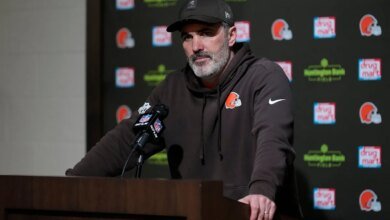
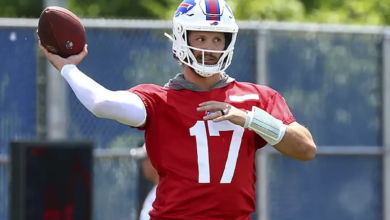
You know, there are moments in sports that just make you scratch your head, and this recent situation involving Detroit Lions wide receiver Jameson Williams is definitely one of them. Picture the scene: a pivotal moment, a crucial touchdown, and the electric energy of a stadium erupting. Williams, caught up in the pure, unadulterated joy of the score, unleashes a celebration. It was a moment of raw emotion, a common sight in the high-stakes world of professional football. But then came the league’s hammer, the dreaded NFL fine notification. Now, here’s where the story takes a fascinating and frankly, perplexing turn that has ignited a firestorm of debate across the league’s fervent fanbase. His penalty for this very public display of exuberance was notably, significantly, *lower* than the fine levied against Pittsburgh Steelers receiver George Pickens for what many, myself included, saw as an eerily similar celebration earlier in the season. We’re talking about alleged NFL fining inconsistencies that have left fans and pundits alike bewildered, questioning the very foundation of fairness and consistency in the league’s disciplinary process. It’s not just about the money; it’s about the underlying principles, the perceived arbitrariness that seems to govern these decisions, and the loud, collective “why?” echoing from every corner of the football world. This particular incident involving Jameson Williams and George Pickens has really brought to light a simmering frustration regarding how the NFL applies its rules, especially when it comes to player expression and post-play antics. Fans are demanding answers, and frankly, so am I. The comparison is stark, immediate, and utterly unavoidable for anyone paying attention to the league’s disciplinary actions this season.
The Echoes of Celebration: Williams and Pickens’ Striking Similarities
Let’s rewind a bit and examine the two incidents that have everybody talking. First, there was George Pickens, the dynamic wideout for the Pittsburgh Steelers. During a significant game, after a big play, Pickens engaged in a celebration that involved a somewhat explicit gesture. It was quickly flagged, and the NFL, known for its swift action on anything deemed unsportsmanlike or taunting, hit him with a hefty fine. The amount, to many, felt steep, but it aligned with the league’s general stance on such displays. It was a clear message: the league wasn’t going to tolerate overt taunting or provocative gestures, regardless of the heat of the moment. We saw the replays countless times, heard the analysts dissect it, and generally accepted it as a part of the NFL’s ongoing campaign to “clean up” the game, or at least its optics.
Then, more recently, came Jameson Williams of the Detroit Lions. Williams, known for his blazing speed and potential, scored a crucial touchdown, a moment of pure elation for him and the raucous Ford Field crowd. In his excitement, Williams performed a celebration that, to the naked eye and upon review of multiple angles, bore an undeniable resemblance to Pickens’ earlier act. The gesture was similar, the context – a touchdown celebration – was identical. “When I saw Jamo do it, my first thought was, ‘Oh no, he’s getting the Pickens fine for sure!'” exclaimed Marcus, a lifelong Lions fan from Royal Oak, Michigan. “It looked exactly like it!” The immediate expectation across social media and fan forums was that Williams would face the same, if not a harsher, penalty. The precedent, after all, had been set just weeks prior.

The Astonishing Discrepancy in Penalties
Here’s where the plot thickens and the confusion truly sets in. When the fines were announced, the football world collectively gasped. George Pickens was reportedly hit with a fine exceeding $33,000 for his celebration. A hefty sum, indeed. But Jameson Williams? His fine came in at a comparatively modest $10,927. Yes, you read that right. A difference of over $22,000 for what appeared to be the same offense. This isn’t just a slight variation; it’s a monumental gap that immediately raised eyebrows and sparked a furious debate about the NFL’s fining inconsistencies. You can almost hear the collective groan from fans who feel like they’re constantly trying to decipher an ever-changing rulebook, or worse, a set of rules applied with a blindfold on.
“It just doesn’t make sense,” voiced Sarah, a sports journalist who covers the league extensively. “How can two identical gestures result in such wildly different penalties? Are they judging the intensity of the celebration? The phase of the moon? It undermines the credibility of their disciplinary process.” And she’s absolutely right. When the league issues such disparate penalties for similar actions, it chips away at the trust players and fans have in the system. It creates an environment where players might feel targeted or where specific teams are treated differently, whether intentional or not.
Breaking Down the Fines: A Quick Comparison
| Player | Team | Celebration Type | Fine Amount |
|---|---|---|---|
| George Pickens | Pittsburgh Steelers | Explicit Gesture (Taunting) | ~$33,000 |
| Jameson Williams | Detroit Lions | Explicit Gesture (Taunting) | $10,927 |
This table lays it out bare, doesn’t it? The difference is undeniable. So, what could possibly explain such a significant gap in disciplinary action? It’s the question that’s been rattling around the minds of every fan and pundit.
The NFL’s Unspoken Criteria: Why the Disparity?
The immediate and most obvious answer for such a variance would be that the celebrations, despite appearing similar to us, had some subtle but critical difference in the eyes of the league. Perhaps one was deemed more aggressive, more direct towards an opponent, or held a more explicit connotation. However, without clear communication from the NFL itself, this remains pure speculation. And that’s precisely the problem – the lack of transparency breeds confusion and frustration.
An anonymous source within a team’s coaching staff, who wished to remain unnamed to avoid league repercussions, offered a potential insight: “Sometimes these things come down to how the gesture is interpreted by the officials on the field, and then how it’s reviewed by the league office. Was it aimed directly at an opponent? Was it sustained? Was it deemed ‘more offensive’?” He paused, then added, “It’s all very subjective, and that’s where the problems start. One week it’s one thing, the next it’s another.” This subjectivity is a constant thorn in the side of anyone trying to understand NFL fining decisions. Is it about perceived intent? The player’s history? The specific context of the game?
Another factor that sometimes plays into the severity of fines is a player’s previous disciplinary record. Could Pickens have a history that led to a higher fine, while Williams, relatively new to significant league attention, might have benefited from a clean slate? While Pickens has certainly had his share of passionate moments, there hasn’t been any widely publicized record of prior similar offenses that would automatically escalate a fine to that degree. It’s not like he’s a repeat offender for *this specific type* of celebration. So, that explanation, while plausible in other contexts, feels less convincing here.
The Outcry: Fans Demand Fairness and Transparency
The reaction from the fanbase has been swift and, frankly, quite loud. Social media platforms are awash with comparisons, side-by-side videos, and passionate arguments dissecting the perceived unfairness. “It’s a joke! The NFL picks and chooses who to punish harder,” tweeted one exasperated fan. “Just tell us the rule, clearly, and apply it equally!” This sentiment encapsulates the core frustration. Fans crave clarity. They want to believe that the league operates on a level playing field, that the rules are applied consistently to every player, regardless of their team, their star power, or frankly, the current whims of the disciplinary committee.
This isn’t just about a few thousand dollars; it’s about the very integrity of the game. When disciplinary actions appear arbitrary, it fuels narratives of bias, preferential treatment, or simply, incompetence. For a league that prides itself on parity and fair competition, allowing such glaring inconsistencies in penalties for what are, to all appearances, identical infractions is a significant misstep. It erodes trust, and trust, once lost, is incredibly hard to regain. It makes you wonder if there’s a secret handbook of unspoken rules that only a select few are privy to.
Impact on Players and the Future of Celebrations
This kind of inconsistency inevitably has an impact on the players themselves. Imagine being a player, trying to navigate the complex landscape of NFL rules regarding celebrations. You see one player fined heavily, another lightly, for what you perceive as the same action. It creates confusion and anxiety. Are players supposed to second-guess every moment of spontaneous joy? Should they dial back their enthusiasm, fearing an unpredictable fine that could be thousands of dollars?
“It makes you hesitant, honestly,” admitted a veteran defensive back from another team, speaking anonymously. “You want to celebrate with your guys, you’re pumped, but then you think, ‘Is this going to cost me a week’s pay?’ We just want to know what the line is, and know that it’s the same for everyone.” This sentiment highlights a critical issue: these fines, while seemingly minor in the grand scheme of NFL salaries, still represent a significant chunk of change for many players, especially those on rookie contracts or practice squad deals. The uncertainty can chill genuine emotion, which ultimately detracts from the entertainment value of the game. Fans love to see players express themselves, within reasonable bounds, and this ambiguity makes that harder.
The NFL has long grappled with the fine line between allowing player expression and maintaining an image of sportsmanship. We’ve seen periods of strict enforcement, followed by loosening, and then tightening again. The current trend seems to lean towards a more sanitized product, but when the application of those rules is inconsistent, it creates more problems than it solves. It suggests a lack of clear guidelines or, perhaps more troubling, an arbitrary decision-making process that lacks accountability.
Calls for Clarity and a Consistent Standard
So, what’s the solution? The overwhelming consensus, from fans to players to media, is a desperate need for more clarity and a truly consistent standard. The NFL needs to articulate, in no uncertain terms, what specific gestures or actions cross the line, and what the baseline penalty for such infractions will be. If there are mitigating or aggravating factors that can alter a fine, those also need to be clearly outlined and explained when discrepancies arise.
One way to achieve this could be a more structured review process with publicly accessible guidelines. Perhaps a tiered system for “unsportsmanlike conduct” fines, where specific gestures fall into pre-defined categories with corresponding fine ranges. This would remove much of the subjectivity and provide a framework that players and fans can understand and, crucially, trust. Without this, these debates will continue to rage, and the perception of the NFL as a fair and consistent arbiter of its own rules will continue to suffer. It’s time for the league to step up, provide explanations, and commit to a transparent and equitable disciplinary process. The integrity of the game, and the league’s relationship with its passionate fanbase, depends on it. Because right now, for many, it just doesn’t add up, and that’s a problem that needs to be fixed.
Frequently Asked Questions
| What is the main controversy surrounding Jameson Williams’ fine? | The primary controversy stems from the significant disparity in the NFL fine issued to Detroit Lions’ Jameson Williams ($10,927) compared to Pittsburgh Steelers’ George Pickens (~$33,000) for seemingly identical explicit celebration gestures, leading to widespread questions about the league’s consistency and fairness in disciplinary actions. |
| How do these fines impact player behavior and fan engagement? | Inconsistent fines can make players hesitant to celebrate spontaneously, fearing unpredictable and potentially large penalties. For fans, it erodes trust in the league’s fairness, fueling perceptions of bias or arbitrary rule enforcement, which can detract from overall engagement and the perceived integrity of the game. |
| How does the NFL typically determine the severity of fines for celebrations? | While the NFL has rules against unsportsmanlike conduct and taunting, the exact criteria for fine severity are often subjective. Factors can include the perceived explicitness of the gesture, whether it was directed at an opponent, the duration of the celebration, and potentially a player’s disciplinary history, though specific guidelines are not always transparent. |
| What are the main challenges the NFL faces in ensuring consistent fining? | The main challenges include the subjective interpretation of “unsportsmanlike conduct,” the difficulty in standardizing penalties for unique gestures, and communicating the rationale behind decisions transparently. Balancing player expression with maintaining a professional image also adds complexity. |
| What changes might the NFL implement to address concerns about fining consistency? | To address concerns, the NFL could implement more transparent and structured guidelines, potentially a tiered system for fines based on specific types of infractions. Clearer communication on the reasoning behind specific penalties and a commitment to equitable application across all players would also help rebuild trust and ensure greater consistency. |
Important Notice
This FAQ section addresses the most common inquiries regarding the topic.