Imagine a quiet Sunday evening, the kind where the soft glow of the television is the only light in the living room, and the familiar ticking of a clock signals the start of 60 Minutes. There’s a particular hush that falls when Lesley Stahl appears on screen, her gaze steady, her questions renowned for their surgical precision. Recently, that esteemed journalist found herself across from Congresswoman Marjorie Taylor Greene, a figure who has become synonymous with a certain brand of fiery, often contentious, political discourse. What unfolded was not just another interview; it was a masterclass in journalistic accountability, a moment where a politician’s complaint about a “toxic” environment was met with a stark, undeniable reflection of reality. It felt almost palpable, the tension, as Stahl, with her characteristic calm yet unwavering resolve, delivered what many are calling a damning dose of the truth, directly challenging the very premise of Greene’s grievances. This was more than just a clash of personalities; it was a potent demonstration of how media scrutiny remains vital in our increasingly polarized political landscape, reminding us all that words, especially from those in power, carry immense weight and demand accountability. (You could almost hear a collective sigh of both relief and apprehension across the nation, couldn’t you?) It brought into sharp focus the complex dance between free speech and the responsibility that comes with wielding a public platform, especially when discussing the very nature of political engagement itself.
The Anatomy of ‘Toxic’ Rhetoric in Modern Politics
In today’s political climate, the word “toxic” gets thrown around quite a bit, doesn’t it? It’s often used to describe everything from heated debates to outright personal attacks, creating a linguistic fog that can obscure genuine issues. When Congresswoman Marjorie Taylor Greene voiced her complaints about a “toxic” environment, it wasn’t an isolated incident; it resonated with a segment of the electorate feeling increasingly embattled by what they perceive as unfair criticism or relentless media scrutiny. However, what constitutes toxic rhetoric is often subjective, depending heavily on one’s political leanings and personal experiences. For some, it’s the personal insults hurled across the aisle; for others, it’s the spread of misinformation or the questioning of democratic processes. This makes it incredibly difficult to have a constructive dialogue, as both sides often feel they are victims of the very toxicity they decry.
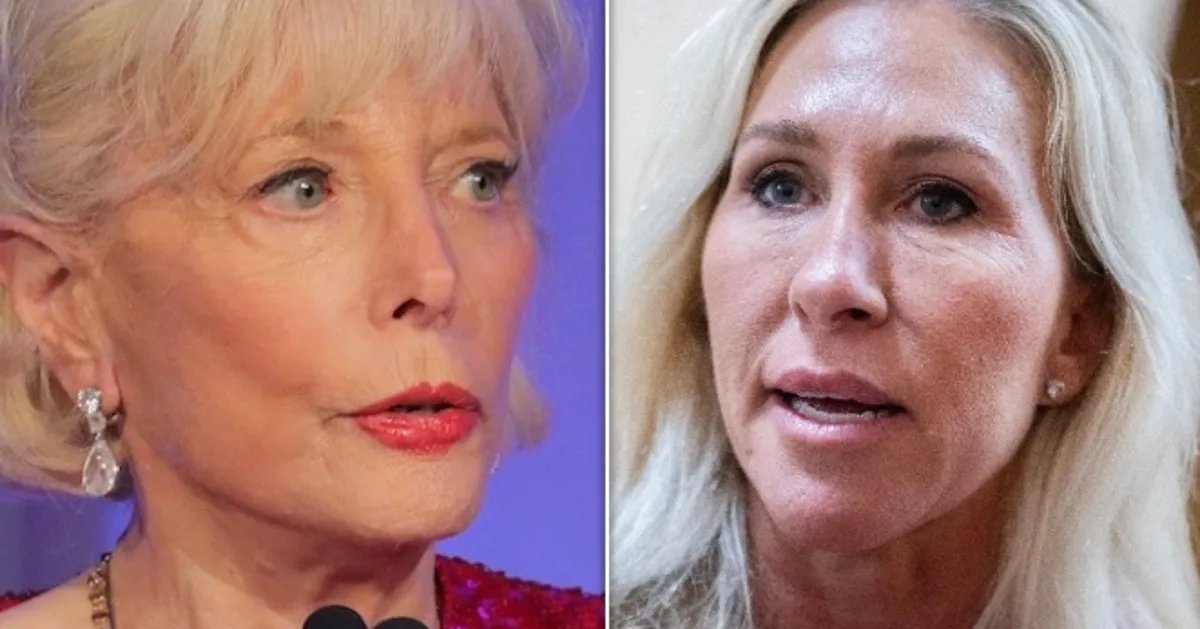
One can’t discuss Marjorie Taylor Greene’s complaints without acknowledging her own significant contribution to the very discourse she sometimes labels as toxic. The Georgia Congresswoman has gained notoriety for her provocative statements, her embrace of conspiracy theories, and her often combative interactions with political opponents and media alike. Remember those moments when her social media posts went viral, sparking outrage and debate? Or the times her comments on school shootings or past political events drew widespread condemnation? (It certainly feels like a constant headline, doesn’t it?) Critics frequently point to these instances as prime examples of rhetoric that exacerbates political divisions and contributes to an environment of hostility rather than healthy debate. It’s a challenging paradox: how does one complain about the tenor of public discourse while simultaneously participating in, and even amplifying, its more extreme elements? This is precisely the kind of question that seasoned journalists like Lesley Stahl are uniquely positioned to explore, pushing for an uncomfortable but necessary examination of self-awareness and public responsibility.
The 60 Minutes Interview: A Clash of Perspectives
The highly anticipated 60 Minutes interview was, for many, a moment of reckoning. Lesley Stahl, with her long and distinguished career, has a reputation for cutting through political spin and getting to the heart of the matter. She’s not one to shy away from difficult questions, nor does she suffer platitudes gladly. When Stahl sat down with Marjorie Taylor Greene, the stage was set for a fascinating confrontation. Greene, in her public statements, has frequently framed herself as a victim of a biased media and a politically motivated establishment, often alleging that her words are twisted or taken out of context. This narrative, while powerful for her base, naturally invites rigorous examination from journalists committed to uncovering the full picture.
The moment that truly captivated viewers, however, was when Stahl didn’t just passively listen to Greene’s complaints about toxicity. Instead, she pivoted, deftly turning the mirror back on the Congresswoman. “You complain about toxicity,” one might imagine Stahl saying, her voice calm but firm, “but what about the things you yourself have said?” It wasn’t an accusation; it was an invitation to reflect. Stahl reportedly brought up specific examples of Greene’s past remarks—remarks that had themselves been widely condemned as inflammatory, divisive, or even dangerous. Think about the feeling in that room; the silence, the subtle shift in power dynamics. It’s the kind of moment that reminds you why investigative journalism is so crucial. A political analyst watching the segment later remarked, “Stahl didn’t just ask ‘what,’ she asked ‘why,’ and more importantly, ‘what about you?'” This wasn’t just an interview; it was a living demonstration of journalistic integrity in action, holding a powerful figure accountable for her words and actions, even when those actions contradict her own expressed grievances.
Holding the Mirror: Stahl’s Damning Dose of Truth
What makes Stahl’s approach so effective, and arguably so “damning,” is her unwavering commitment to facts and consistency. When Marjorie Taylor Greene lamented the “toxic” nature of politics, Stahl didn’t just nod sympathetically. She presented evidence. She brought up instances where Greene had propagated conspiracy theories, made controversial statements about political violence, or engaged in highly personal attacks against her colleagues. (It felt almost like a lawyer presenting exhibits in court, but for public opinion.) This wasn’t about scoring political points; it was about highlighting a clear contradiction. How can one decry a toxic environment if they are actively contributing to its very creation?

One particular exchange that stood out, according to those who have analyzed the segment, involved Stahl pushing Greene to reconcile her complaints with specific instances of her own inflammatory rhetoric. Imagine the scene: Stahl, leaning forward slightly, her expression unreadable, asking directly, “Congresswoman, you’ve said X, Y, and Z. How does that square with your concern about toxicity?” The silence that followed, however brief, was deafening. It forced a moment of introspection, or at least the appearance of it, for Greene. This isn’t just about catching someone in a gotcha moment; it’s about establishing a baseline of consistency and integrity, especially for those who seek to influence public opinion. The “dose of truth” wasn’t a personal attack; it was a factual recontextualization, reminding viewers that actions have consequences and that words, particularly from elected officials, carry an ethical weight. It’s a powerful lesson in accountability for all public figures.
The Public’s Reaction and the Role of Media Scrutiny
The public’s reaction to this interview was, predictably, split down partisan lines, yet it sparked a much-needed conversation about consistency and responsibility in leadership. Supporters of Marjorie Taylor Greene often viewed the interview as another example of mainstream media bias, accusing Stahl of being unfair or having an agenda. They might argue that Greene is simply speaking her mind and that her directness is refreshing, not toxic. (It’s fascinating how the same actions can be interpreted so differently, isn’t it?) On the other hand, many others lauded Stahl for her courage and sharp questioning, seeing it as a vital act of media scrutiny. They felt that it was crucial for a prominent journalist to highlight the apparent hypocrisy of complaining about a problem while actively contributing to it.

This interview underscores the indispensable role of a free and vigilant press. In an era rife with misinformation and highly partisan media ecosystems, programs like 60 Minutes serve as crucial platforms for cross-examination and fact-checking. A retired journalism professor, Dr. Evelyn Reed, commented, “Stahl didn’t just challenge Greene; she challenged the narrative that politicians can complain about standards they themselves routinely violate. That’s the essence of robust journalism.” It’s a powerful reminder that journalists aren’t merely stenographers; they are critical interrogators, tasked with pressing powerful individuals on their statements and holding them to account for the impact of their words. Without this kind of intense media scrutiny, the lines between truth, opinion, and outright fabrication can become dangerously blurred, further eroding trust and exacerbating political polarization.
The Broader Implications for Political Discourse and Accountability
The exchange between Lesley Stahl and Marjorie Taylor Greene on 60 Minutes goes far beyond a single interview; it touches upon the very fabric of our national political discourse. It forces us to confront the question of accountability for public figures. In a world where social media allows for instantaneous, unfiltered communication, and where outrage can be weaponized for political gain, the responsibility of those in power to consider the ramifications of their words has never been greater. When a Congresswoman complains about a “toxic” environment, yet her own history is replete with examples that contribute to that very toxicity, it highlights a profound disconnect. This isn’t just about hypocrisy; it’s about leadership, or the lack thereof, in fostering a more constructive and respectful public sphere.
This incident also serves as a potent reminder of the impact of political polarization. Both sides often feel justified in their rhetoric, convinced that the other side is the sole perpetrator of “toxicity.” This creates an echo chamber effect, where genuine dialogue becomes nearly impossible. Stahl’s questioning, in its directness, attempts to break through that echo chamber, pushing for a moment of self-reflection. It asks us, as citizens, to critically evaluate not just what our leaders say, but how their actions align with their complaints. Are we demanding enough consistency from our elected officials? Are we, the audience, equally culpable if we applaud inflammatory rhetoric from our preferred candidates while condemning it from others? These are not easy questions, but they are essential ones if we hope to navigate the choppy waters of modern politics with any semblance of reason and civility. The interview, therefore, wasn’t just a moment of television; it was a societal mirror.
Why Journalistic Integrity Matters More Than Ever
In an age often characterized by “fake news” accusations and deep distrust in institutions, the unwavering commitment to journalistic integrity exemplified by figures like Lesley Stahl is more crucial than ever. Her refusal to simply accept a narrative at face value, and her dedication to presenting facts back to the interviewee, reinforces the vital role of independent media. Imagine a world where journalists merely transcribe what politicians say, without challenge or context. (It’d be a much scarier, less informed place, wouldn’t it?) The result would be a public sphere utterly devoid of critical thought, where propaganda could flourish unchecked.
The 60 Minutes interview demonstrated that true journalistic integrity involves a willingness to ask uncomfortable questions, to challenge powerful individuals, and to provide the public with the necessary context to make informed judgments. It’s about ensuring that those who complain about the “rules of the game” are themselves playing by them. This kind of reporting doesn’t just inform; it also acts as a crucial check on power, fostering a sense of accountability that is fundamental to a healthy democracy. It encourages all of us to look beyond soundbites and headlines, to dig deeper, and to demand truth and consistency from our representatives. The “damning dose of truth” delivered by Stahl wasn’t just for Marjorie Taylor Greene; it was a potent message to every public figure and, indeed, to every citizen, about the enduring importance of honesty and integrity in our shared political life.
Conclusion: The Enduring Power of Truth in a Polarized World
The powerful exchange between Lesley Stahl and Marjorie Taylor Greene on 60 Minutes serves as a stark reminder that in the clamorous arena of modern politics, the simple, unvarnished truth remains one of our most potent tools. When a politician bemoans a “toxic” environment, only to have their own contributions to that very toxicity laid bare, it creates a crucial moment of reflection—not just for the interviewee, but for the viewing public. It underscores the profound responsibility that comes with holding public office and the enduring necessity of a vigilant, fact-driven press.
What we witnessed was more than just an interview; it was a masterclass in journalistic integrity and a powerful affirmation of the media’s role in holding power to account. It highlighted the often-uncomfortable truth that complaining about the symptoms of political toxicity while actively engaging in its cause is a contradiction that cannot stand unchallenged. As we continue to navigate an increasingly polarized political landscape, where rhetoric often trumps reason, the unflinching pursuit of truth, as demonstrated by Stahl, becomes an indispensable compass. It prompts us to demand greater consistency from our leaders and to critically examine the narratives we consume. Ultimately, the lasting impact of this confrontation lies in its clear message: if you’re going to complain about toxicity, be prepared to face the mirror.
Frequently Asked Questions
| What was the core issue addressed in the Lesley Stahl and MTG interview? | The interview centered on Marjorie Taylor Greene’s complaints about a “toxic” political environment, which Lesley Stahl countered by presenting instances of Greene’s own controversial and often inflammatory rhetoric, highlighting an apparent contradiction. |
| Why is media scrutiny important in such situations? | Media scrutiny, especially from seasoned journalists like Lesley Stahl, is crucial for holding public figures accountable, challenging inconsistencies, and providing the public with a balanced perspective, preventing unchecked narratives and misinformation. |
| How did Stahl’s approach exemplify journalistic integrity? | Stahl demonstrated journalistic integrity by not merely accepting Greene’s statements but by presenting factual evidence and direct questions that forced Greene to confront the implications of her own past words and actions, thereby upholding accountability. |
| What is “toxic rhetoric” in the context of this discussion? | “Toxic rhetoric” refers to political language characterized by personal attacks, misinformation, inflammatory statements, or divisive content that creates a hostile and unproductive environment for public discourse, often escalating political polarization. |
| What are the broader implications of this interview for political discourse? | The interview highlights the urgent need for consistency and accountability from public figures, challenges the normalization of hypocrisy in politics, and reinforces the vital role of robust journalism in fostering more truthful and responsible public dialogue amidst increasing polarization. |
Important Notice
This FAQ section addresses the most common inquiries regarding the topic.