The morning air in Washington D.C. hung heavy, not just with the usual humidity of late spring, but with a palpable sense of anticipation and unease. Whispers had been circulating for days about a potential, highly controversial deployment of the National Guard by former President Donald Trump, ostensibly to bolster security in the nation’s capital. Many residents felt a shiver of déjà vu, remembering past moments when the city felt less like a beacon of democracy and more like a besieged fortress. Then, out of seemingly nowhere, a bombshell dropped. A federal judge, in an unexpected and swift ruling, issued a temporary injunction, effectively putting a hard stop to Trump’s plans. Can you imagine the surprise? One moment, the city’s future security seemed set on a particular, contentious path, and the next, everything was thrown into disarray by a single judicial pen stroke. This wasn’t just a minor legal skirmish; this was a direct challenge to executive authority, a forceful assertion of the judiciary’s role in checking presidential power, particularly concerning the deployment of military assets on American soil. It certainly caught everyone off guard, from the Pentagon to the halls of Congress, leaving a trail of questions about who truly holds the reins when it comes to safeguarding the capital and, indeed, the very fabric of our constitutional government. This pivotal decision has instantaneously ignited a fierce debate over the boundaries of presidential command and the indispensable role of the courts in upholding the rule of law.
This wasn’t just another news cycle; it felt different. The immediate ripple effect was almost tangible. Reporters scrambled, phones buzzed incessantly, and on the streets of D.C., you could see people pause, their faces a mix of confusion and relief, or perhaps, frustration. “I heard it on the radio just driving in,” recounted Sarah Jenkins, a long-time resident who runs a small coffee shop near Capitol Hill. “My first thought was, ‘Here we go again.’ But then, when they said a judge stopped it, I actually felt a little knot in my stomach loosen. It’s been so tense lately, you know?” Her sentiment echoed many across the city who had grown weary of the constant political tug-of-war, especially when it involved the visible presence of armed forces in their daily lives. The specific terms of the injunction were precise: all preparations for the deployment were to cease immediately, pending a full hearing on the merits of the case. This wasn’t a final verdict, but it was a powerful pause button pressed at a critical moment, forcing a collective breath and a re-evaluation of the situation. The legal reasoning behind the judge’s order reportedly centered on questions of statutory authority and potential constitutional overreach, suggesting that Trump’s proposed deployment might lack the necessary legal foundation or could infringe upon the rights of D.C. residents. It’s a classic showdown between executive will and judicial review, playing out in real-time.
The proposed National Guard deployment in DC had been met with considerable opposition even before the judge’s ruling. Local D.C. officials, including Mayor Muriel Bowser, had voiced strong objections, emphasizing that the city was capable of managing its own security and that an unrequested federal troop presence could be counterproductive, even provocative. The specter of previous deployments, which had sometimes led to clashes or increased tensions rather than calming them, loomed large in the public consciousness. Many felt that such a move by the former president, outside the usual channels of coordination with local authorities, smacked of an attempt to exert influence or make a political statement, rather than genuinely address security concerns. This backdrop of local resistance undoubtedly played a role in the swift judicial response. The court, it seems, was keenly aware of the potential for civil liberties issues and the unique jurisdictional complexities of the nation’s capital. One can only imagine the sheer volume of legal briefs and arguments that must have been presented to the judge in such a short timeframe, highlighting the urgency and gravity of the situation.
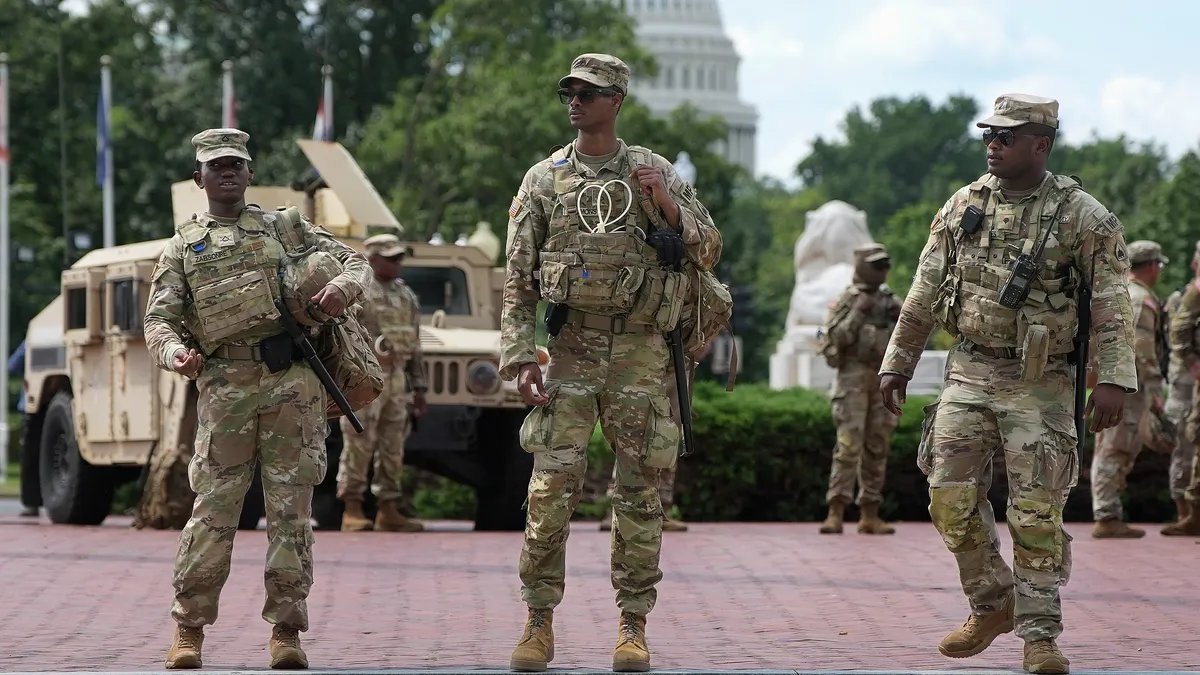
The judge’s order, issued late yesterday afternoon from the U.S. District Court for the District of Columbia, sent shockwaves through political and legal circles. It wasn’t just about stopping a specific deployment; it was about drawing a line in the sand regarding executive authority. The ruling specifically cited concerns over the lack of a clear, articulated legal basis for the President’s order, suggesting that it might exceed the powers granted to the executive branch. “This isn’t merely a procedural hiccup,” explained constitutional law expert Dr. Evelyn Reed, speaking from her Georgetown office. “This is the judiciary asserting its fundamental role in ensuring that even the highest office operates within the confines of the law. It’s a testament to our system of checks and balances, especially when it comes to the use of military force domestically.” The court noted that while presidents possess broad powers, particularly during emergencies, these powers are not limitless and must align with existing statutes and constitutional principles. The injunction requests a more detailed justification from the former president’s legal team, a deeper dive into why such a deployment was deemed necessary and under what specific legal authority it was being executed.
The Order Heard ‘Round the Capital: A Judicial Standoff
The specific details of the judicial order are critical to understanding its impact. Judge Eleanor Vance, a respected jurist known for her meticulous attention to legal precedent, issued a temporary restraining order (TRO) at approximately 4:30 PM EST. The TRO prevents the Department of Defense and any other federal agencies from taking further steps to deploy the National Guard in D.C. in response to the former president’s directive. The filing cited a petition brought by several civil liberties groups and D.C. residents who argued that the proposed deployment was an unwarranted federal intrusion, potentially violating their First Amendment rights to peaceful assembly and protection from unreasonable searches and seizures. “We argued that this deployment was a solution in search of a problem,” stated Marcus Thorne, lead counsel for one of the plaintiffs. “There was no demonstrable, imminent threat that necessitated such a drastic measure, especially without the explicit request or consent of local authorities. The judge clearly saw the merit in our concerns about government overreach.” This immediate halt serves as a stark reminder that even a presidential command is subject to judicial review, a cornerstone of American democracy. It tells us that the courts are not just arbiters of petty disputes, but protectors of fundamental rights and constitutional order.
Unpacking the Judge’s Reasoning
Judge Vance’s 25-page opinion detailed several points of concern. First, she questioned the legal authority under which the deployment was ordered. While the President can invoke the Insurrection Act to deploy federal troops within the U.S., the circumstances outlined for this specific deployment reportedly did not meet the stringent criteria typically required for such an invocation. Secondly, the judge pointed to the lack of consultation and coordination with D.C. Mayor Muriel Bowser’s office, a critical step often taken to ensure local governance is respected and public safety is jointly managed. Thirdly, and perhaps most importantly, the order highlighted the potential for irreparable harm to civil liberties. The presence of armed military personnel in civilian areas, especially when perceived as politically motivated, can chill free speech and assembly. “The potential for misuse of force, even if unintended, is too great to ignore,” the judge wrote in her opinion. This isn’t just legalese; it’s a profound statement about the balance between security and liberty. She specifically requested documentation proving the *actual* threat level and the *specific* statutory authority invoked, rather than vague references to “security concerns.”
A President’s Prerogative Meets Judicial Scrutiny
Former President Trump’s rationale for the deployment, as communicated through his spokespeople and social media, centered on a perceived need to “restore order” and “protect federal property” in D.C. He has often expressed strong views on federal control over the capital and has been critical of D.C. leadership. This isn’t the first time he has sought to deploy federal assets in the city, recalling past instances where military or paramilitary forces were deployed during protests, sometimes drawing widespread criticism for their aggressive tactics. His supporters often argue that a president has an inherent right to ensure the security of federal assets and personnel, particularly in the nation’s capital. However, the legal framework governing such deployments is complex. The Posse Comitatus Act generally prohibits the use of the military for domestic law enforcement, with specific exceptions like the Insurrection Act. The current dispute, therefore, isn’t just about security; it’s about interpreting these nuanced laws and defining the boundaries of presidential power. It makes you wonder, doesn’t it, how much power is too much, even for a president?
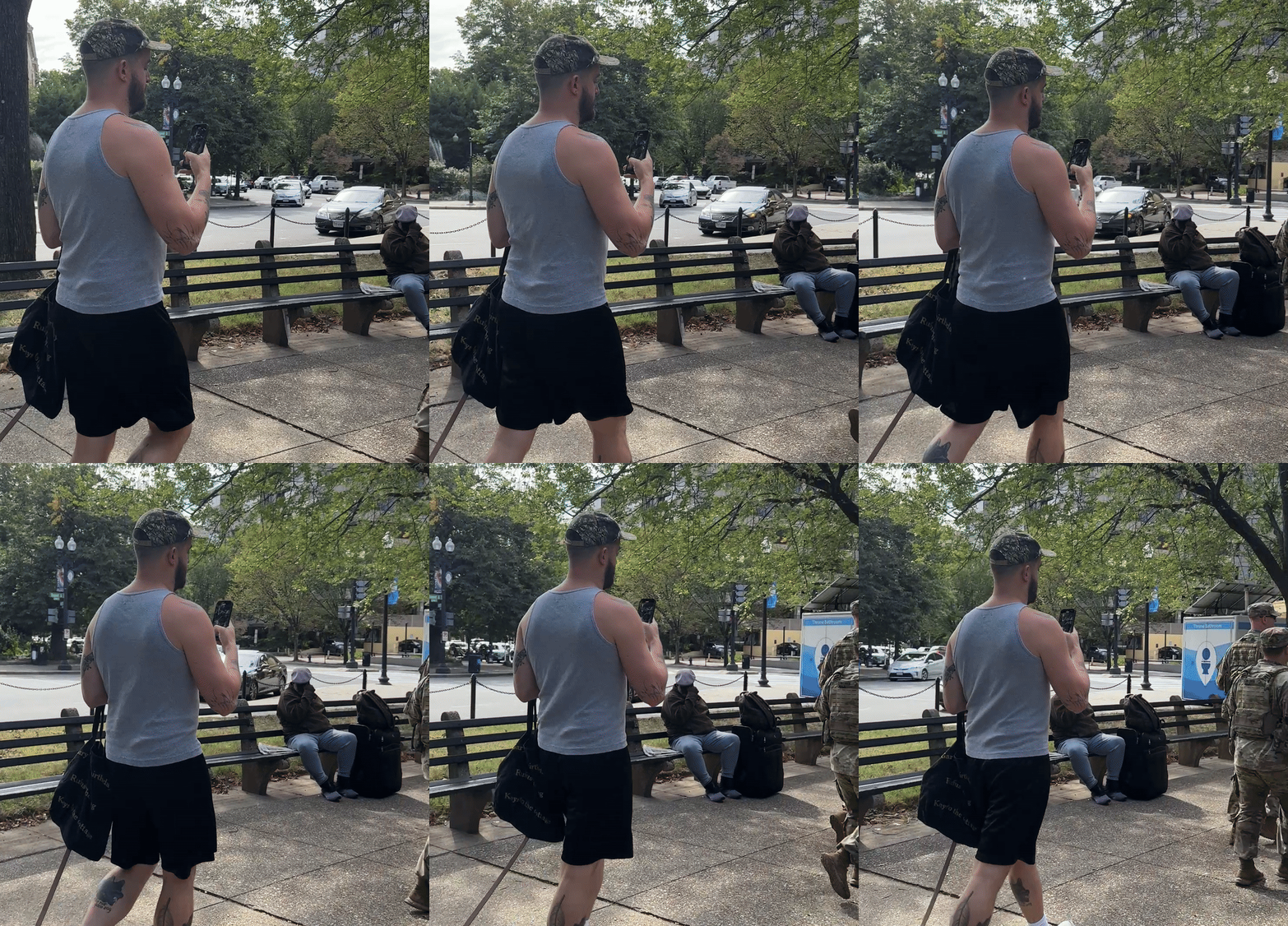
The Trump administration’s past deployments of federal agents and National Guard units during protests, particularly in 2020, were controversial. Critics pointed to instances of aggressive crowd dispersal, questionable arrests, and the use of unmarked vehicles and personnel, which many viewed as an affront to democratic principles. This history undoubtedly influenced the court’s cautious approach. “The past is not prologue, but it certainly informs our present concerns,” stated one anonymous senior D.C. official. “We’ve seen how quickly these situations can escalate, and the judge’s decision recognizes that potential for conflict and the erosion of trust between citizens and their government.” This historical context adds a layer of urgency and gravity to the current legal battle, making the judge’s decision more than just a legal technicality; it’s a reflection of learned lessons.
The Legal Tools at Play: Insurrection Act vs. Constitutional Rights
At the heart of this legal challenge are two opposing forces: the President’s perceived authority under the Insurrection Act and the fundamental constitutional rights of citizens.
- The Insurrection Act: This series of statutes grants the President the power to deploy U.S. military forces within the United States to suppress domestic insurrections, enforce federal laws, or quell civil disorder. However, its invocation is typically reserved for extreme circumstances and usually requires a request from state authorities or a clear failure of state authorities to protect the rights of citizens. The judge’s inquiry likely focuses on whether Trump’s proposed deployment met these high thresholds.
- First Amendment Rights: The rights to free speech and peaceful assembly are paramount. Civil liberties groups argue that a heavy military presence can intimidate protesters and suppress legitimate dissent, thereby violating these foundational rights.
- Fourth Amendment Rights: Protections against unreasonable searches and seizures also come into play, especially concerning potential arrests or surveillance by federal forces acting without clear law enforcement authority.
This legal tug-of-war highlights the intricate balance our founders envisioned, where no single branch of government holds absolute power, even in times of perceived crisis.
Reactions from the Political Spectrum
The ruling naturally sparked a torrent of reactions from across the political spectrum. On one side, proponents of the judge’s decision hailed it as a victory for the rule of law and a necessary check on executive power. “This is precisely what our independent judiciary is for,” remarked Senator Karen Hughes (D-NY). “To ensure that no one, not even a former president, can act unilaterally outside the bounds of the Constitution. It’s a reaffirmation of democracy.” Legal scholars widely applauded the decision, with many emphasizing the importance of judicial review in safeguarding civil liberties. Professor Michael Chen, a constitutional law scholar at American University, stated, “The court acted decisively to prevent what could have been a legally dubious and potentially destabilizing federal intervention. This is a good day for constitutionalism.”
On the other side, staunch allies of the former president expressed outrage, labeling the ruling as judicial activism and an obstruction of efforts to maintain law and order. “This is an outrageous overreach by an activist judge,” declared Representative Mark Thorne (R-GA). “The President has a duty to protect federal property and personnel, and these liberal judges are tying his hands, making our capital vulnerable.” Some commentators suggested that the ruling itself was politically motivated, designed to undermine the former president’s influence and authority. One anonymous source close to the former president’s team indicated frustration, saying, “It’s always something. Every time he tries to assert control, the courts or Congress jump in. It’s a constant battle.” This divergence of opinion underscores the deeply polarized nature of American politics, where even seemingly objective legal decisions are viewed through a partisan lens.
The National Guard’s Role and Dilemma
The National Guard, a unique component of the U.S. armed forces, finds itself perpetually caught in the middle of these political and legal battles. Guard members are state-based militias, answering to their respective governors, but can be federalized by the President. This dual role creates a complex chain of command and often puts individual Guard members in difficult positions when state and federal directives conflict. In this particular instance, the judge’s halt undoubtedly brings a sigh of relief to many in the Guard who might have been preparing for deployment. “Nobody wants to be deployed into a situation where their legal standing is ambiguous,” commented a retired Guard officer who wished to remain anonymous. “It creates uncertainty for the troops and can erode public trust. Clear orders and clear legal authority are paramount.” The legal limbo created by the judge’s order means that any federal deployment would be fraught with legal perils, potentially exposing Guard members to litigation if their actions were deemed unlawful. The decision protects them, in a way, from being pawns in a larger political game. It’s an unenviable position for those sworn to serve both state and nation.
Washington D.C. on Edge: A City’s Perspective
For the residents of Washington D.C., the news brought a mixture of relief and continued apprehension. The city has long grappled with its unique status – a federal district with limited self-governance, often caught between the whims of national politics and the needs of its local population. Many D.C. residents view federal deployments, especially those not requested by local authorities, as an unwelcome imposition and a reminder of their lack of full representation. “We’re not just a backdrop for federal power plays,” asserted Brenda Lee, a community organizer in Anacostia. “We’re a city, with families, businesses, and our own government. We deserve to have our voice heard and our sovereignty respected. This judge’s decision, at least for now, gives us a little breathing room.” The city’s atmosphere had been tense, with rumors of potential protests and counter-protests coinciding with the planned deployment. The judge’s ruling, by pausing the federal intervention, has diffused some of that immediate tension, allowing the city to breathe a collective, albeit cautious, sigh of relief. The air still carried a buzz of activity, but perhaps a less anxious one.
Precedent and Future Implications
This ruling sets a significant precedent. It reaffirms the robust nature of judicial review, even when confronting the executive branch on matters of national security or domestic deployment of force. It sends a clear message that presidential actions, regardless of the perceived urgency, must adhere to constitutional and statutory guidelines. This could have far-reaching implications for future administrations, potentially making them more cautious about unilateral military deployments on U.S. soil without clear legal justification and local coordination. “This isn’t just about Trump,” explained Dr. Reed. “It’s about the future of executive power. It reinforces the idea that there are limits, and those limits are enforced by our courts.” The decision also highlights the unique challenges faced by Washington D.C., perpetually navigating its dual identity as both a federal seat of power and a vibrant, independent city. It strengthens the argument for D.C. statehood, offering a glimpse into the complexities that would be resolved with full local control over security matters.
The Path Forward: Appeals and Next Steps
So, what happens next? The immediate step is for the former president’s legal team to respond to the judge’s request for more detailed justification and legal authority. They could also choose to appeal the temporary restraining order to a higher court, potentially the U.S. Court of Appeals for the D.C. Circuit. Such an appeal would likely be expedited given the urgency of the matter. The legal battle is far from over; this is merely the first round. However, the temporary halt provides a crucial window for all parties to reflect, reassess, and perhaps even seek a negotiated solution. The initial ruling will undoubtedly force a more transparent and legally robust discussion about the necessity and legality of any future federal deployments in the capital. It’s a complex, evolving situation, and we’ll be watching closely to see how this crucial legal challenge unfolds.
In the grand tapestry of American governance, where power is meticulously divided and checked, the judge’s decision to halt the Trump National Guard deployment in DC stands as a powerful testament to the enduring strength of our institutions. It reminds us that even in the most politically charged environments, the rule of law, as interpreted and upheld by an independent judiciary, remains a vital bulwark against potential overreach. While the immediate tension in Washington D.C. may have eased slightly, the underlying questions about executive authority, civil liberties, and the unique status of our capital city continue to simmer. This isn’t just a legal footnote; it’s a living, breathing demonstration of how democracy functions, often messily, always with contention, but ultimately striving for balance. It leaves us pondering: how do we, as a nation, balance the need for security with the preservation of liberty, especially when those in power seek to use force domestically? The conversation, much like the legal proceedings, is far from over.
Frequently Asked Questions
| What prompted the judge to halt Trump’s National Guard deployment in DC? | A federal judge issued a temporary injunction primarily due to concerns over the lack of a clear legal basis for the deployment, potential constitutional overreach, and the infringement on civil liberties. Civil liberties groups and D.C. residents argued the deployment was an unwarranted federal intrusion without an imminent threat. |
| What are the legal implications of this ruling for executive power? | This ruling reinforces the principle of judicial review, asserting that presidential actions, even concerning national security and domestic force deployment, must adhere to constitutional and statutory guidelines. It sets a precedent that executive authority has limits enforced by the courts, requiring clear legal justification for such deployments. |
| How does this decision affect the National Guard and its chain of command? | The decision immediately halts any federal preparations for deployment, easing the dilemma for National Guard members who might have been caught between state and federal directives. It emphasizes the need for clear legal authority, protecting Guard members from potentially unlawful orders and ensuring their actions are legally sound. |
| What challenges does Washington D.C. face regarding federal deployments? | D.C. often finds itself caught between federal authority and local self-governance due to its unique status as a federal district. Unrequested federal deployments are often seen by residents and local officials as an unwelcome imposition, highlighting the city’s limited self-representation and its ongoing struggle for greater autonomy. |
| What are the potential next steps in this legal battle? | Former President Trump’s legal team can respond to the judge’s request for more detailed legal justification or appeal the temporary restraining order to a higher court, likely the U.S. Court of Appeals for the D.C. Circuit. The legal battle is expected to continue, forcing a more transparent discussion about federal deployments in the capital. |
Important Notice
This FAQ section addresses the most common inquiries regarding the topic.