Jason Whitlock, the often-controversial sports commentator, has once again ignited a firestorm, this time setting his sights on Shedeur Sanders, the quarterback sensation, and his inner circle. It all started last Tuesday. I was brewing my morning coffee, the local news droning in the background, when Whitlock’s name popped up. Not again, I thought! This time, he wasn’t dissecting LeBron James’ legacy or Colin Kaepernick’s activism. No, this time, he was questioning the very foundation of Shedeur Sanders’ success, suggesting that the young athlete’s entourage is merely a reflection of his father, Deion “Prime Time” Sanders. The accusation? That Shedeur’s close associates are mimicking Deion’s sometimes flamboyant and, according to Whitlock, problematic behavior.
The air crackled with the anticipation of another Whitlock monologue, a verbal sparring match that promises to be as insightful as it is inflammatory. Whitlock’s arguments often center around the concept of accountability and the potential pitfalls of surrounding oneself with “yes men,” people who are hesitant to offer critical feedback for fear of reprisal. He paints a picture of a gilded cage, where talent is nurtured but genuine growth is stifled by a lack of honest counsel. The implication is clear: Shedeur, despite his obvious talent on the football field, risks becoming a caricature of his father, repeating perceived mistakes and ultimately hindering his own potential. Is this a fair assessment? That’s the question everyone is asking (and arguing about) right now.
This isn’t just about football; it’s about legacy, mentorship, and the delicate balance between confidence and hubris. Whitlock’s commentary delves into the complex dynamics of family, fame, and the pressures faced by young athletes thrust into the spotlight. He often uses historical examples, drawing parallels between the Sanders family and other prominent figures whose careers were allegedly derailed by poor advice and inflated egos. Whether you agree with Whitlock’s assessment or not, it’s hard to deny that his words carry weight. He forces us to confront uncomfortable truths about the culture of celebrity and the sacrifices often made in the pursuit of greatness. So, let’s dive deeper into this controversy and see what Whitlock is actually saying.
Whitlock’s Central Argument: Echoes of Prime Time
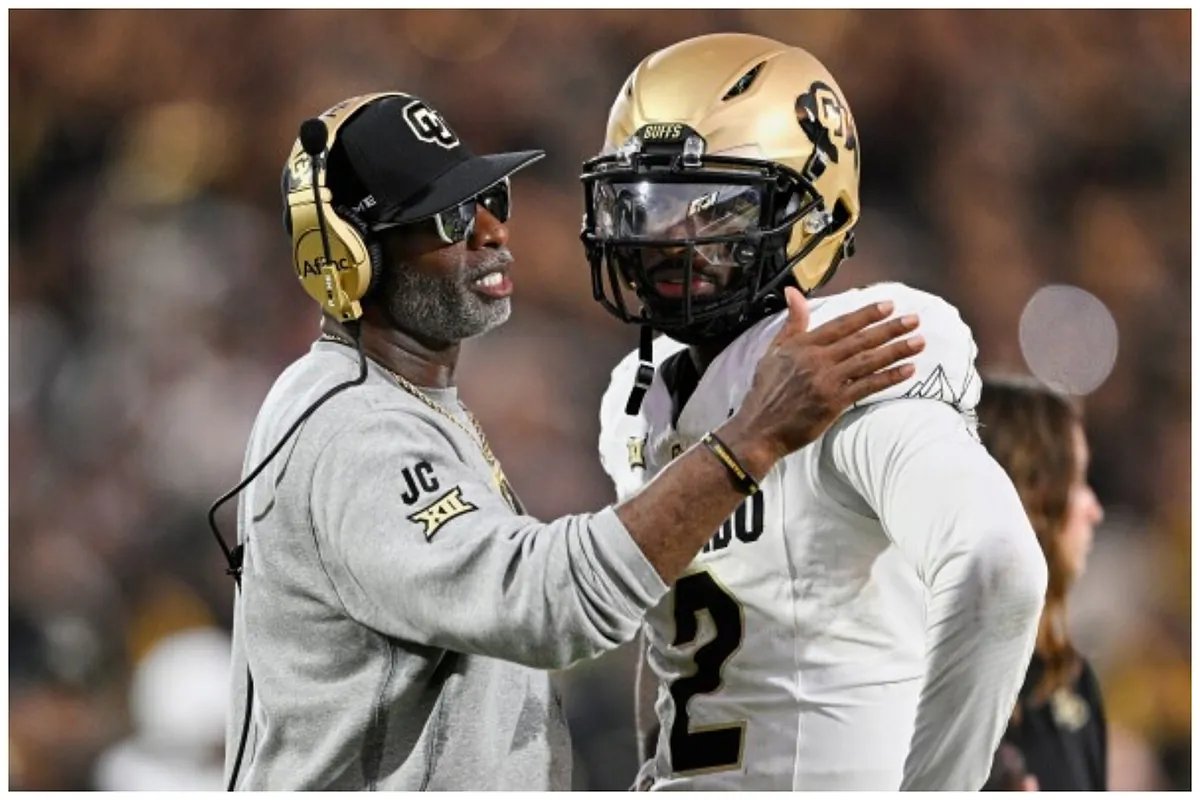
Whitlock’s critique isn’t just a casual observation; it’s a meticulously constructed argument based on his perception of Deion Sanders’ past behavior and the potential for history to repeat itself. He argues that Shedeur’s inner circle, comprised of family members, close friends, and business associates, is mirroring Deion’s tendency to surround himself with people who are unlikely to challenge his decisions or offer dissenting opinions. This, according to Whitlock, creates an environment where constructive criticism is stifled, and Shedeur’s growth as both a football player and a person is potentially compromised.
Whitlock often points to Deion’s past controversies, including his high-profile divorces, business ventures, and media appearances, as examples of decisions that may have been influenced by a lack of objective counsel. He suggests that Deion’s strong personality and unwavering belief in himself sometimes led him down paths that were not necessarily in his best interest. (Remember the Prime Prep Academy debacle? That’s exactly the kind of situation Whitlock is talking about.) Now, he sees similar patterns emerging in Shedeur’s orbit, raising concerns about whether the young quarterback is receiving the guidance he needs to navigate the complex world of college football and beyond.
He also highlights the pervasive influence of social media in shaping Shedeur’s image and brand. Whitlock argues that the constant barrage of positive reinforcement on platforms like Instagram and Twitter can create an echo chamber, where Shedeur is shielded from negative feedback and encouraged to embrace a persona that may not be entirely authentic. This, he believes, can lead to a distorted sense of self and a lack of genuine self-awareness.

The Role of Nepotism and Entourage Culture
A significant aspect of Whitlock’s argument revolves around the role of nepotism and the pervasive “entourage culture” that often surrounds young athletes. He suggests that Shedeur’s reliance on family members and close friends in key advisory positions creates a potential conflict of interest. These individuals, while undoubtedly well-intentioned, may be hesitant to challenge Shedeur’s decisions or offer critical feedback for fear of jeopardizing their personal relationships or financial interests.
“It’s human nature,” Whitlock explained during a recent podcast appearance. “When your livelihood depends on someone else’s success, you’re less likely to tell them what they don’t want to hear.” (That’s pretty blunt, even for Whitlock, right?)
This dynamic, according to Whitlock, can lead to a situation where Shedeur is surrounded by “yes men,” individuals who are more concerned with preserving their access to him than with providing honest and objective counsel. This, in turn, can hinder his growth as a player and a person, preventing him from learning from his mistakes and developing the resilience necessary to succeed at the highest levels of football. He also questions the qualifications of some members of Shedeur’s inner circle, suggesting that their expertise may be limited and that their primary function is to serve as cheerleaders rather than strategic advisors.
The Impact on Shedeur’s Development
Whitlock’s concerns extend beyond the immediate impact on Shedeur’s football career. He worries that the lack of critical feedback and the constant reinforcement of a positive image can have a detrimental effect on Shedeur’s personal development. He argues that young athletes need to be challenged and held accountable in order to grow into mature and well-rounded individuals.
By shielding Shedeur from criticism, Whitlock believes that his entourage is preventing him from developing the self-awareness and emotional intelligence necessary to navigate the challenges of fame and fortune. He suggests that this can lead to a sense of entitlement and a lack of empathy for others.
Furthermore, Whitlock argues that the constant pressure to maintain a perfect image on social media can be exhausting and ultimately unsustainable. He believes that young athletes need to be allowed to make mistakes and learn from them without fear of public scrutiny. The pressure to always be “on” can lead to burnout and mental health issues, he cautions.

The Counterarguments and Defenses
Of course, Whitlock’s commentary has not gone unchallenged. Many have defended Shedeur and his inner circle, arguing that he has the right to surround himself with people he trusts and that his success on the football field speaks for itself. Some have accused Whitlock of being overly critical and of unfairly targeting Shedeur because of his association with Deion Sanders.
Supporters argue that Shedeur is a mature and intelligent young man who is capable of making his own decisions. They point to his academic achievements and his philanthropic endeavors as evidence of his character. They also argue that his family and friends have his best interests at heart and are providing him with the support he needs to succeed.
Others have criticized Whitlock’s focus on nepotism, arguing that it is common for athletes to rely on family members and close friends for advice and support. They point out that many successful athletes have built their careers with the help of their families and that there is nothing inherently wrong with this.
Furthermore, some have argued that Whitlock’s criticism is rooted in racial bias, suggesting that he is unfairly scrutinizing Shedeur because he is a young, black athlete. They accuse Whitlock of perpetuating harmful stereotypes about black families and of undermining Shedeur’s accomplishments.
Deion Sanders’ Response (or Lack Thereof)
Interestingly, Deion Sanders has remained largely silent in the face of Whitlock’s criticism. While he has occasionally defended his son on social media, he has generally avoided engaging directly with Whitlock or addressing his specific concerns. This silence has been interpreted in various ways. Some believe that Deion is taking the high road and refusing to dignify Whitlock’s comments with a response. Others speculate that he may be privately concerned about the issues raised by Whitlock but is unwilling to publicly acknowledge them.
An anonymous source close to the Sanders family told me, “Deion is fiercely protective of his children. He’s not going to let anyone publicly tear them down, even if he has some reservations privately.” (That makes sense, right? Who wouldn’t protect their kids?)
Regardless of Deion’s motivations, his silence has only fueled the controversy, leaving many to wonder whether he shares Whitlock’s concerns or whether he believes that his son is capable of navigating the challenges of fame and fortune on his own.
/cdn.vox-cdn.com/uploads/chorus_image/image/72768436/1694761977.0.jpg)
The Broader Implications for College Athletes
Whitlock’s commentary raises broader questions about the pressures faced by college athletes and the role of their families and advisors in shaping their careers. In an era of NIL (Name, Image, Likeness) deals and increased commercialization of college sports, young athletes are often thrust into the spotlight at a very young age, facing unprecedented levels of scrutiny and pressure.
This creates a challenging environment for athletes who are still developing both as players and as people. They need to be able to balance the demands of their sport with the responsibilities of their academic work and their personal lives. They also need to be able to navigate the complex world of endorsements, sponsorships, and media appearances.
In this context, the role of families and advisors becomes even more crucial. They need to be able to provide athletes with the support, guidance, and constructive criticism they need to succeed. They also need to be able to protect athletes from exploitation and ensure that their best interests are always being served.
Finding the Right Balance
Ultimately, the key to success for college athletes lies in finding the right balance between independence and support. They need to be able to make their own decisions and take responsibility for their actions, but they also need to have a strong support system in place to help them navigate the challenges they face.
This requires athletes to be self-aware and to be able to identify their own strengths and weaknesses. It also requires them to be willing to listen to advice from trusted sources and to be open to constructive criticism.
Families and advisors, in turn, need to be able to provide athletes with honest and objective counsel, even when it is difficult. They also need to be willing to step back and allow athletes to make their own mistakes, as long as those mistakes are not harmful or destructive.
Conclusion: A Word of Caution or Sound Advice?
Whether Jason Whitlock’s critique of Shedeur Sanders and his inner circle is ultimately proven correct remains to be seen. However, his commentary serves as a valuable reminder of the importance of accountability, constructive criticism, and the potential pitfalls of surrounding oneself with “yes men.” It’s a cautionary tale about the pressures faced by young athletes and the crucial role of families and advisors in shaping their careers.
Perhaps Whitlock is simply being Whitlock, stirring the pot and generating controversy for the sake of it. Or maybe, just maybe, he’s offering a valuable insight that could help Shedeur Sanders avoid repeating the mistakes of the past and reach his full potential, both on and off the field. Only time will tell. One thing is for sure: this is a conversation that will continue to resonate throughout the college football world and beyond.
Frequently Asked Questions
| What is Jason Whitlock’s main criticism of Shedeur Sanders? | Jason Whitlock’s main criticism is that Shedeur Sanders’ inner circle mirrors Deion Sanders’ behavior, potentially hindering Shedeur’s growth due to a lack of constructive criticism. |
| What are the potential benefits of Shedeur having a strong support system? | A strong support system can provide Shedeur with guidance, encouragement, and protection from exploitation, helping him navigate the challenges of fame and fortune. |
| How can Shedeur implement strategies to ensure he receives constructive criticism? | Shedeur can seek out mentors outside his immediate circle, actively solicit feedback from coaches and teammates, and cultivate a culture of open communication within his team. |
| What are the potential challenges of being the son of a famous athlete like Deion Sanders? | Potential challenges include living in his father’s shadow, dealing with heightened expectations, and facing constant comparisons to his father’s achievements. |
| What does the future hold for Shedeur Sanders’ football career and personal development? | The future depends on Shedeur’s ability to balance his talent with humility, embrace constructive criticism, and cultivate genuine relationships that support his growth as both a player and a person. |
Important Notice
This FAQ section addresses the most common inquiries regarding the topic.