The morning air still carried the faint scent of yesterday’s rain as I settled down with my coffee, scrolling through the latest auto news. You know, the usual buzz about soaring gas prices and the distant promise of electric vehicles. But then, a headline stopped me cold: “It’s Not Just The Bolt. A ‘Family’ Of Low-Cost EVs Is Coming, GM President Says.” My jaw practically hit the table. For years, the conversation around electric vehicles has felt a bit exclusive, mostly focused on premium models or the beloved but solitary Chevrolet Bolt. It’s like watching a high-stakes poker game where only the big players are at the table. Now, it seems GM is ready to reshuffle the deck entirely, not with just one more affordable option, but with an entire EV family. This isn’t just about offering another car; it’s about making the dream of owning an affordable EV a tangible reality for millions, shifting the entire paradigm of the EV market. Think about it: a diversified lineup designed to cater to different needs and budgets, all built on a foundation of accessible electric propulsion. It’s a monumental strategic pivot that frankly, has been a long time coming for those of us eager to embrace a greener future without breaking the bank. This news feels like a breath of fresh air, a real game-changer for the future of transportation and, dare I say, our wallets too.
This announcement from GM President Mark Reuss isn’t just a casual remark; it’s a clear declaration of intent, a bold move that signals a significant turning point in the automotive industry. It suggests that the era of electric cars being perceived solely as luxury items or niche choices is rapidly drawing to a close. We’re on the cusp of a mainstream electric revolution, and General Motors seems determined to lead the charge, offering genuinely low-cost EVs that promise to be both practical and desirable. It’s a vision that extends far beyond the singular success of the Bolt, aiming to weave electric mobility into the fabric of everyday life for a much broader audience.
The Shifting Tides: Why Now for Affordable EVs?
It’s no secret that the automotive landscape is undergoing a seismic shift, driven by a confluence of factors that make this the opportune moment for a surge in affordable electric vehicles. Walk down any street, chat with your neighbors, or simply glance at the gas station prices, and you’ll immediately grasp the driving force behind this demand. “I’ve been wanting to switch to an EV for ages,” confessed Sarah Chen, a busy mother of two from Detroit, during a recent community picnic. “But every time I look, they’re either too expensive or don’t fit my family’s needs. I need space, reliability, and most importantly, a price tag that doesn’t make my eyes water.” Sarah’s sentiment echoes that of countless potential buyers who are tired of fluctuating fuel costs and genuinely concerned about their environmental footprint, yet feel priced out of the current EV market.
GM’s strategic pivot isn’t just a response to consumer demand; it’s a proactive move to secure a dominant position in what will undoubtedly become the largest segment of the EV market. The early days of EVs were characterized by either luxury models or compliance cars, but the next wave is all about accessibility. Mark Reuss himself alluded to this shift, emphasizing that for EVs to truly make an impact, they can’t just be for a select few. They need to be for everyone. This means building a diverse portfolio of vehicles that can appeal to a wide array of customers, from city commuters to suburban families, all while keeping the cost down. It’s a delicate balancing act, but one that could redefine GM’s legacy.
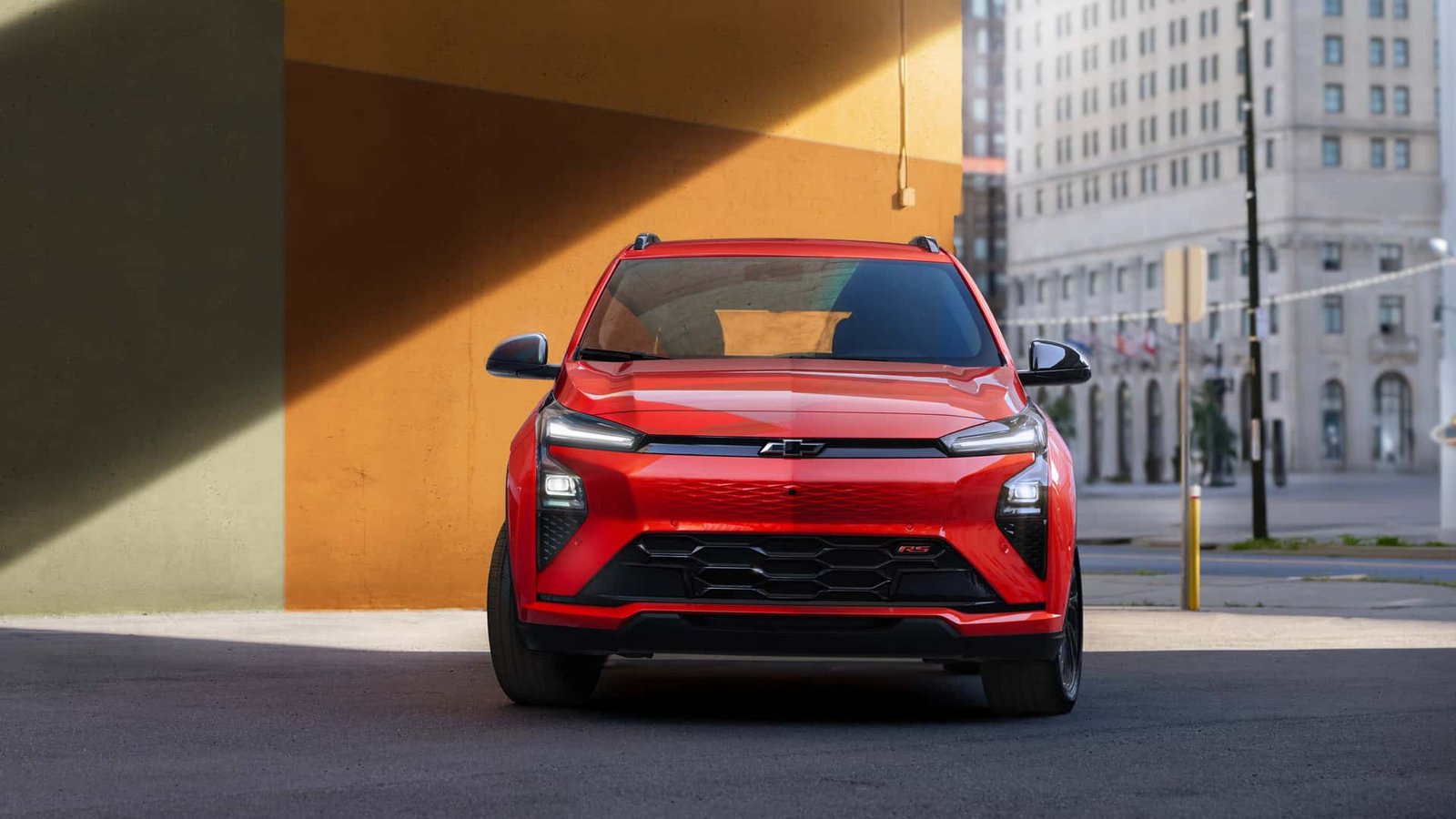
Beyond the Bolt: What Does a ‘Family’ Mean?
When Mark Reuss talks about a “family” of low-cost EVs, he’s painting a picture far grander than merely updating the existing Chevrolet Bolt. Imagine an entire lineup, much like a traditional internal combustion engine (ICE) portfolio, but entirely electric and designed from the ground up to be affordable. This isn’t just about a hatchback; it’s about a range of body styles that meet the diverse needs of today’s drivers. We could be looking at compact urban cars perfect for navigating bustling city streets, perhaps a small, versatile crossover ideal for young families, or even a modest utility vehicle for small businesses. The possibilities are genuinely exciting and signal a maturation of the EV market.
“The Bolt was an incredible first step, a pioneer in its own right,” remarked industry analyst David Miller, who has been tracking GM for decades. “But to truly capture the mainstream, you need variety. You need options. A single model, no matter how good, will always be limited in its appeal. A ‘family’ means GM is thinking holistically about the consumer journey, offering a relevant EV for almost every life stage and budget.” This multi-pronged approach allows GM to tap into different demographic segments, providing tailored electric solutions rather than a one-size-fits-all offering. It’s a smart play, especially when you consider how fiercely loyal some consumers are to specific vehicle types, like SUVs or trucks.
The Ultium Advantage: Making Affordability Possible
The secret sauce, the technological backbone enabling this grand vision of an EV family, lies squarely with GM’s Ultium battery platform. This isn’t just a new battery; it’s a modular, highly flexible architecture designed to power everything from compact cars to heavy-duty trucks. Its scalability and commonality across different vehicle types are key to driving down costs. By using standardized battery cells and modules, GM can achieve significant economies of scale in manufacturing, something that was simply not possible with earlier, more bespoke EV designs.
Think of Ultium as a sophisticated Lego set for electric vehicles. Engineers can stack battery cells vertically or horizontally, configure different battery pack sizes, and integrate them into various vehicle platforms with relative ease. This flexibility translates directly into cost savings both in design and production. “Ultium is more than just a battery; it’s our blueprint for mass electrification,” stated Dr. Anya Sharma, a lead battery engineer at GM, during a recent industry forum. “It allows us to use common components across a vast array of vehicles, significantly reducing development time and manufacturing complexity. That’s how you bring down the price point without sacrificing performance or range.” This vertical integration, from battery chemistry to vehicle assembly, gives GM an unparalleled advantage in controlling costs and innovating rapidly. It’s a fundamental shift from relying on external suppliers for core EV components to bringing that expertise in-house, ensuring a more robust and cost-effective supply chain.

The Price Point: What Can We Expect?
This is the million-dollar question, isn’t it? Or rather, the sub-$30,000 question. While GM hasn’t released specific figures for every model in this upcoming EV family, the consistent emphasis on “low-cost” suggests a concerted effort to hit price points that make these vehicles competitive with popular gasoline-powered cars. We’re talking about targeting the sweet spot where mainstream buyers typically shop, potentially starting in the high $20,000s before any federal or state incentives. The current Chevrolet Bolt EV, for instance, already starts in that ballpark, demonstrating GM’s capability in this segment. The challenge now is to replicate that affordability across a wider range of body styles and feature sets.
“If GM can consistently deliver EVs in the $25,000 to $35,000 range, especially with reasonable range and features, they will absolutely flood the market,” predicted automotive journalist Maya Singh, writing for an online EV enthusiast blog. “That’s where the real volume is. That’s where you convert the hesitant buyer who’s been on the fence, watching gas prices creep up and feeling the pinch.” Imagine a future where picking up a new electric crossover is just as financially viable as buying a Honda CR-V or a Toyota RAV4. That’s the vision GM is chasing, and it’s a powerful one. Government incentives, like the federal EV tax credit, will also play a crucial role in making these vehicles even more attractive, effectively lowering the out-of-pocket cost for consumers and making the transition to electric mobility even smoother.
Competitors and the Market Landscape
GM isn’t operating in a vacuum, of course. The race for mainstream EV dominance is heating up, with formidable competitors already making their moves. Tesla, while still largely focused on premium segments, has hinted at a more affordable model. Ford is rapidly expanding its EV offerings, though its current models tend to be higher-priced. Hyundai and Kia have been particularly aggressive in the mid-range, offering compelling options like the Ioniq 5 and EV6. But perhaps the most significant challenge, and inspiration, comes from Chinese manufacturers, who have already mastered the art of producing incredibly low-cost EVs for their domestic market.
Companies like BYD and Nio in China are already proving that affordable, feature-rich EVs are not just possible, but highly desirable. GM’s experience in the Chinese market, where it already sells a highly successful joint-venture EV called the Wuling Hongguang Mini EV (a car that sells for under $5,000), gives it invaluable insight into this segment. This global perspective is crucial. The insights gained from developing and selling hyper-affordable EVs abroad will undoubtedly inform GM’s strategy for its upcoming EV family in North America and other markets. It’s a truly global chess game, and GM is positioning itself to be a major player on every continent.

The Road Ahead: Challenges and Opportunities
Despite the immense excitement, the path to mass-market EV adoption with an entire family of low-cost EVs is not without its speed bumps. Production ramp-up is a huge hurdle. Building millions of new EVs requires robust supply chains, especially for critical components like batteries and semiconductors, which have seen their fair share of disruptions recently. “Getting the factories humming at that scale is a monumental undertaking,” an anonymous source close to GM’s manufacturing operations confided. “It’s not just about building cars; it’s about retooling, retraining, and securing a consistent flow of materials that are in global demand.”
Then there’s the charging infrastructure. While public charging networks are expanding, they need to keep pace with the influx of new EVs. Consumer education is also vital; many still harbor range anxiety or misconceptions about EV ownership. However, these challenges are dwarfed by the sheer scale of the opportunity. By democratizing EV ownership, GM isn’t just selling cars; it’s selling a future. A future with cleaner air, quieter streets, and potentially significant savings for consumers. It’s a bold gamble, but one that could pay off handsomely, not just for GM, but for society as a whole. Imagine a world where the majority of new cars sold are electric, quiet, and emission-free. That’s the transformative power of affordable EVs, and GM is clearly aiming to be at the forefront of that transformation.
The global impact of such a strategy could be profound. As major manufacturers like GM commit to low-cost EVs, it forces the entire industry to follow suit, accelerating the transition away from fossil fuels. This isn’t just good for business; it’s good for the planet. The ripple effect could be felt in energy markets, urban planning, and even public health. For many, the idea of owning an EV has always been a distant aspiration, something for the early adopters or the affluent. But with GM’s commitment to an entire family of low-cost electric vehicles, that aspiration is quickly becoming an achievable reality for the everyday driver. It’s a future that suddenly feels much closer, much more inclusive, and undeniably exciting.
Conclusion
The revelation from GM President Mark Reuss that an entire “family” of low-cost EVs is on its way, moving far beyond the venerable Chevrolet Bolt, is nothing short of a watershed moment for the automotive industry. It signals a profound commitment from one of the world’s largest automakers to democratize electric mobility, making it accessible to the masses rather than confining it to a niche market. This isn’t merely about incremental improvements; it’s about a complete re-imagining of how we perceive and acquire electric vehicles.
Driven by the innovative Ultium platform and a keen understanding of global market demands, GM is poised to fundamentally reshape the landscape of personal transportation. The shift towards a diverse lineup of affordable electric vehicles will not only provide consumers with much-needed choice but also intensify competition, ultimately benefiting everyone through lower prices and more advanced technology. While challenges remain, from scaling production to expanding charging infrastructure, the opportunities are immense. This strategic move by GM isn’t just good for their bottom line; it’s a significant leap forward for environmental sustainability and economic empowerment for countless households. I genuinely believe we are witnessing the dawn of a new era, one where an EV isn’t a luxury item, but a standard, sensible choice for families everywhere. The future of driving, it seems, is electric, diverse, and refreshingly affordable.
Frequently Asked Questions
| What is GM’s strategy for low-cost EVs? | GM’s strategy involves expanding beyond the Chevrolet Bolt to introduce an entire “family” of diverse, affordable electric vehicles. This approach aims to cater to a broader range of consumer needs and budgets, making EV ownership accessible to the mainstream market, primarily leveraging the flexible Ultium battery platform. |
| How will a family of low-cost EVs benefit consumers? | A family of low-cost EVs will offer consumers more choices in terms of vehicle type (compacts, crossovers, etc.) and price points, making electric mobility more affordable and practical. This will reduce reliance on gasoline, offer potential savings on fuel and maintenance, and contribute to cleaner air and a more sustainable environment. |
| What technology enables GM to produce affordable EVs? | The key technology enabling GM’s low-cost EV strategy is the Ultium battery platform. This modular and scalable architecture allows for standardized battery cells and modules to be used across various vehicle types, driving down manufacturing costs through economies of scale and increased production efficiency. |
| What are the main hurdles for GM in this strategy? | Main hurdles include rapidly scaling up production to meet anticipated demand, securing robust supply chains for critical EV components (like batteries and semiconductors), expanding charging infrastructure to support widespread adoption, and educating consumers about the benefits and practicalities of EV ownership. |
| How might this impact the broader EV market? | GM’s push for a family of low-cost EVs is expected to significantly accelerate mainstream EV adoption, intensifying competition among automakers. This will likely lead to further price reductions, greater innovation, and a faster transition away from fossil-fuel-powered vehicles across the global automotive industry. |
Important Notice
This FAQ section addresses the most common inquiries regarding the topic.