The rain hammered down on the corrugated tin roof of Frank’s Autos, a sound that usually lulled Frank into a contemplative mood, but today it only amplified the thumping headache behind his eyes. He stood, hands on hips, staring at the latest acquisition squatting forlornly in the corner of his workshop – a rather sad-looking, midnight-blue Saab 9-5. It wasn’t just any car; it was a ghost from Sweden’s automotive past, a relic from a brand that had stubbornly refused to die a quiet death. Frank, a seasoned used car dealer with over thirty years of grease under his fingernails and a keen eye for a bargain (or a money pit, as this one might prove to be), found himself in an unfamiliar predicament. “I honestly can’t decide,” he muttered to Maria, his head mechanic, who was wiping oil from her hands with a rag. “Part of me wants to just call the crusher and be done with it. It’s a business, right? But then I look at it… and it’s a Saab. You know?” His voice trailed off, a mix of frustration and a surprising glimmer of affection for the beleaguered sedan. This wasn’t just another trade-in; this was an existential crisis for the car, and for Frank, a battle between cold, hard business logic and a strange, burgeoning sense of automotive stewardship. The decision ahead would not only determine the fate of this particular Saab 9-5 but also challenge Frank’s fundamental approach to the used car trade: when does a car stop being a commodity and start becoming a cause?
The Unlikely Acquisition: A Saab’s Last Stand?
Frank had picked up the Saab 9-5 at a municipal impound auction, almost on a whim. It was listed as a non-runner, a forgotten casualty of an unpaid parking ticket, left to rot in the sun and rain for months. “Nobody else even bid on it,” Frank recalled, shaking his head. “Just me. Got it for a song, literally pennies on the dollar.” He’d bought it more out of curiosity than genuine business strategy. The Saab mystique, even in its dying days, still held a certain allure for car people. He’d seen plenty of vehicles in worse shape, sure, but there was something about this one – its distinctive lines, the faded turbo badge, the very idea of a Saab – that struck a chord.
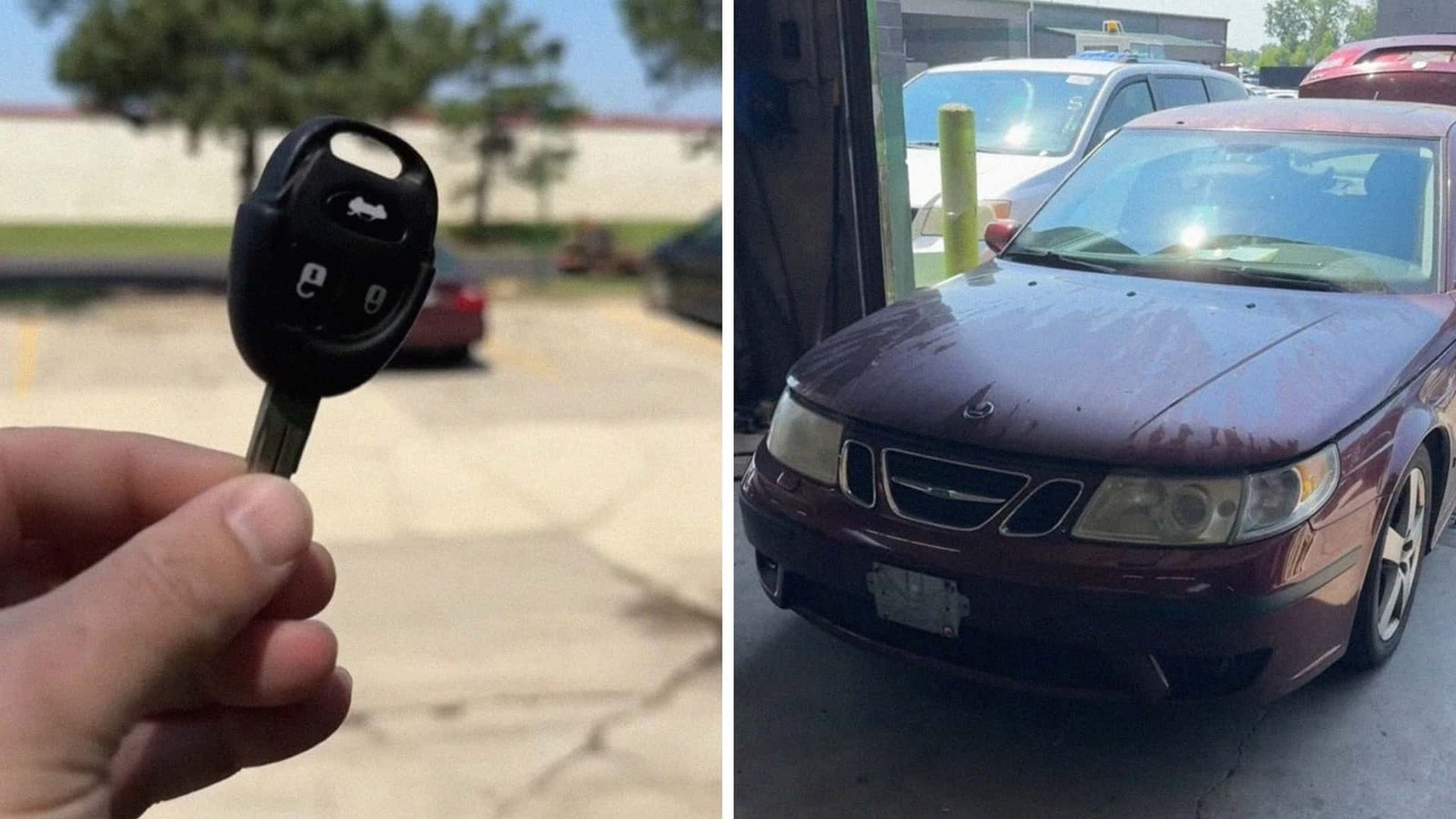
Upon its arrival at Frank’s sprawling lot, nestled between a fleet of sensible sedans and robust SUVs, the Saab 9-5 looked utterly out of place, like a lone wolf among sheep. Initial assessment, however, quickly dampened any romantic notions. Maria, usually stoic, grimaced as she delivered her verdict. “Engine’s seized, Frank. Looks like it ran dry on oil. Transmission fluid smells burnt, too. We’ve got significant rust under the sills, and the electrical system… well, it’s a Saab. It’s complicated.” She shrugged, running a hand through her short, greasy hair. “It’s not just a quick fix, boss. This is a full-blown project, or it’s parts.”
The “Crush It” Imperative: Business vs. Sentiment
For any used car dealer, the bottom line is paramount. Frank’s Auto wasn’t a charity; it was a business built on smart decisions and profitable turnovers. The logical, pragmatic part of Frank’s brain screamed “crush it.”
“Think about it, Frank,” said David Chen, his business advisor, over a lukewarm coffee. “You paid almost nothing for it, true. But a new engine alone? You’re looking at five grand, minimum, if you can even find one. Then the transmission, rust repair, electrics, interior… you’ll sink ten, fifteen thousand into it, easy. What’s a fully restored Saab 9-5 worth? Maybe eight grand on a good day, to the right person? You’d be losing money hand over fist.”
The argument was compelling. The challenges of restoring an orphaned brand like Saab are formidable. Parts availability is notoriously difficult, often requiring extensive searches through specialist forums, international suppliers, or even cannibalizing other Saabs. “It’s not like ordering a Ford part from the local dealership,” Maria had pointed out, exasperated after an hour spent online chasing down a specific sensor. “Everything is bespoke, everything is a hunt.”
Consider the time investment too. Maria and her team were busy with profitable jobs – oil changes, brake replacements, selling well-maintained Hondas and Toyotas. Dedicating weeks or months to a single, financially dubious project like the Saab 9-5 would divert resources and potentially lead to lost revenue from more straightforward repairs. “Every hour we spend on that Saab is an hour we’re not billing for something else,” Frank acknowledged, tapping his pen against his desk, the sound echoing the internal debate. The environmental aspect, while not Frank’s primary driver, also weighed in. Scrapping a car responsibly involves recycling, but the entire process still has an impact. Yet, giving it a new engine and transmission also requires resources. It’s a complex ethical web, isn’t it?
The “Second Chance” Seduction: A Niche, a Legacy, a Story
But then there’s the other side of the coin, the one that makes Frank pause, chew his lip, and stare at the Saab through the office window, rain streaking down the glass. The Saab 9-5, particularly the first generation, isn’t just a car; it’s an icon for a dedicated cult following. These aren’t just cars; they’re quirky, robust, and uniquely Swedish in their design philosophy – focused on safety, ergonomics, and aeronautical heritage.
“You know, Frank, there’s a real market for these,” offered a regular customer, a retired engineer named Mr. Henderson, who stopped by the lot weekly just to chat about cars. He had owned three Saabs in his lifetime. “They don’t make ’em like that anymore. Solid cars, beautiful lines. Someone out there would pay good money for a well-restored one, especially if it had a story.”
The satisfaction of saving a classic, breathing new life into a machine that was destined for oblivion, is a powerful motivator for many in the automotive world. It’s not just about profit; it’s about passion. For Frank, who started his career wrenching on muscle cars in his father’s garage, that passion still flickered. A restored Saab 9-5 would be more than just a car for sale; it would be a statement. It would showcase Frank’s Auto’s capabilities, attract a different kind of customer, and maybe even generate some positive buzz in the local car community. Imagine the headlines: “Local Dealer Saves Saab!” It’s good for the brand, right?
“We could document the whole restoration,” Maria suggested, catching Frank’s eye. “Photos, videos… turn it into a social media thing. People love seeing a car brought back from the brink.” This idea intrigued Frank. In an increasingly digital world, a good story could be worth more than a quick buck. The unique appeal of the Saab 9-5, its very underdog status, could be its greatest asset.
The Dealer’s Internal Struggle: Heart Versus Head
Frank walked out into the yard, the rain having finally softened to a drizzle, and stood next to the Saab. He ran a hand over the cool, slightly dented fender. He imagined the pride of rolling it onto the showroom floor, gleaming, engine purring. He also imagined the mounting stack of invoices, the late nights, the frustration of hunting for parts.
“It’s a tough one, isn’t it?” he mumbled to himself, adjusting his baseball cap. “You want to do the right thing, but what *is* the right thing when business is involved?”
Here’s a simplified breakdown Frank had scribbled on a napkin, trying to quantify the dilemma:
| Option | Pros | Cons | Estimated Financial Impact |
|---|---|---|---|
| Crush It | Quick, clean, minimal further investment, frees up workshop space. | No potential for profit beyond scrap value, misses opportunity for unique marketing. | Break even (after initial purchase & scrap value), opportunity cost. |
| Restore It | Potential for high resale value to niche market, strong marketing story, personal satisfaction. | High repair costs, parts scarcity, significant time investment, uncertain profit. | Potential significant loss or moderate profit, depending on final cost and market. |
| Sell “As-Is” | Recoup some cost, pass project to enthusiast, no shop time. | Very low selling price, limited market. | Small profit, but no major investment. |
Frank’s reputation as an honest dealer was built on reliability, not risky passion projects. Yet, his personal judgment, honed over decades of dealing with all sorts of vehicles, whispered that this Saab 9-5 had something special. He remembered fixing up an old vintage VW Bus years ago, a project that took months but ultimately sold for a tidy sum and earned him a loyal following. Could this Saab be similar? He pondered analogies: a stray dog at the shelter, a forgotten painting in an attic. Some things just deserve a second chance, don’t they? Especially if you’re the one who found them.
Weighing the Options and the Path Forward
The clock was ticking. The Saab 9-5 couldn’t sit in the workshop indefinitely. Frank considered several paths.
First, he could indeed sell it “as-is.” Advertise it on Saab enthusiast forums, list it for a nominal fee, and let someone else take on the headache. He’d recoup his initial investment, maybe a tiny bit more, and move on. No fuss, no drama. This seemed like the most financially sensible option, the one David Chen would undoubtedly champion.
Second, the crush. A phone call, a final tow, and the Saab 9-5 would be reduced to a cube of metal, its legacy dissolved into raw materials. Environmentally, it’s not ideal, but it’s quick and ensures no further financial drain. It’s the ultimate business decision, devoid of emotion.
Third, the restoration. This is where Frank’s internal debate truly raged. He’d need to commit fully. This would mean:
- Sourcing a replacement engine and transmission, likely used, which introduces its own risks.
- Dedicated mechanic hours, possibly outside of normal operations or by bringing in a specialist.
- Investing in bodywork and rust remediation.
- Overhauling the electrical system, a known Saab Achilles’ heel.
- A detailed plan for interior reconditioning.
“I’ve got a guy in Sweden who sometimes ships parts,” Maria offered, sensing Frank’s indecision. “It’ll take time, but it’s not impossible.” Her words were a small spark, igniting a flicker of hope in the gloom of pragmatism. Frank knew that if he went this route, it would be a labor of love as much as a business venture. The story of this Saab 9-5, saved from the brink by a dealer who saw past the rust and the seized engine, could become part of Frank’s Auto’s own legend.
Conclusion: The Undecided Fate
As the sun began to set, casting long shadows across the lot, Frank found himself back inside, sipping a cold cup of coffee. The Saab 9-5 sat silently, almost patiently, in the bay. Its fate hung precariously in the balance, a poignant symbol of the choices we face – between expediency and effort, between profit and passion. For Frank, this wasn’t just about a car; it was about his own philosophy as a used car dealer. Was he merely a purveyor of practical transport, or did he have a role in preserving automotive heritage, even if it meant taking a calculated risk? “I guess I need to sleep on it,” he told Maria, who simply nodded, knowing full well that this kind of decision often came from the gut, not just the ledger. Whatever Frank decides, the tale of this particular Saab 9-5, whether it ends as scrap metal or a gleaming testament to resilience, will certainly be one worth telling.
Frequently Asked Questions
| What is the core dilemma facing the used car dealer regarding the Saab 9-5? | The core dilemma involves balancing the emotional appeal and potential niche market value of a unique Saab 9-5 against the significant financial and logistical challenges of repairing an older, orphaned brand vehicle. It’s a classic heart-versus-head battle for any used car dealer. |
| What are the potential benefits of restoring a classic car like the Saab 9-5? | Restoring a classic can yield several benefits: it can be a passion project, create goodwill within the automotive community, potentially attract a specific type of buyer willing to pay a premium for a well-restored model, and showcase the dealer’s mechanical expertise. For a Saab 9-5, it preserves a piece of automotive history. |
| What factors must a dealer consider when deciding whether to restore or scrap a vehicle? | A dealer must weigh the vehicle’s current condition, estimated repair costs, availability and price of parts, market demand for the specific model, potential resale value, and the time commitment involved. Sometimes, the emotional connection to a particular car, like a Saab, can also play a role. |
| What challenges are typically associated with restoring an orphaned brand car like a Saab? | Challenges include sourcing rare or specialized parts for a brand no longer in production, higher labor costs due to specialized knowledge required, unexpected underlying issues discovered during restoration, and the risk of over-investing in a vehicle whose market value might not justify the expense. |
| How might the decision on this Saab 9-5 impact the dealer’s business or reputation? | Deciding to restore a challenging car like a Saab 9-5 could enhance the dealer’s reputation as someone who appreciates and saves unique vehicles, potentially attracting a loyal customer base. Conversely, a failed restoration could lead to financial losses. Scrapping it, while practical, might be seen as a missed opportunity by enthusiasts. |
Important Notice
This FAQ section addresses the most common inquiries regarding the topic.