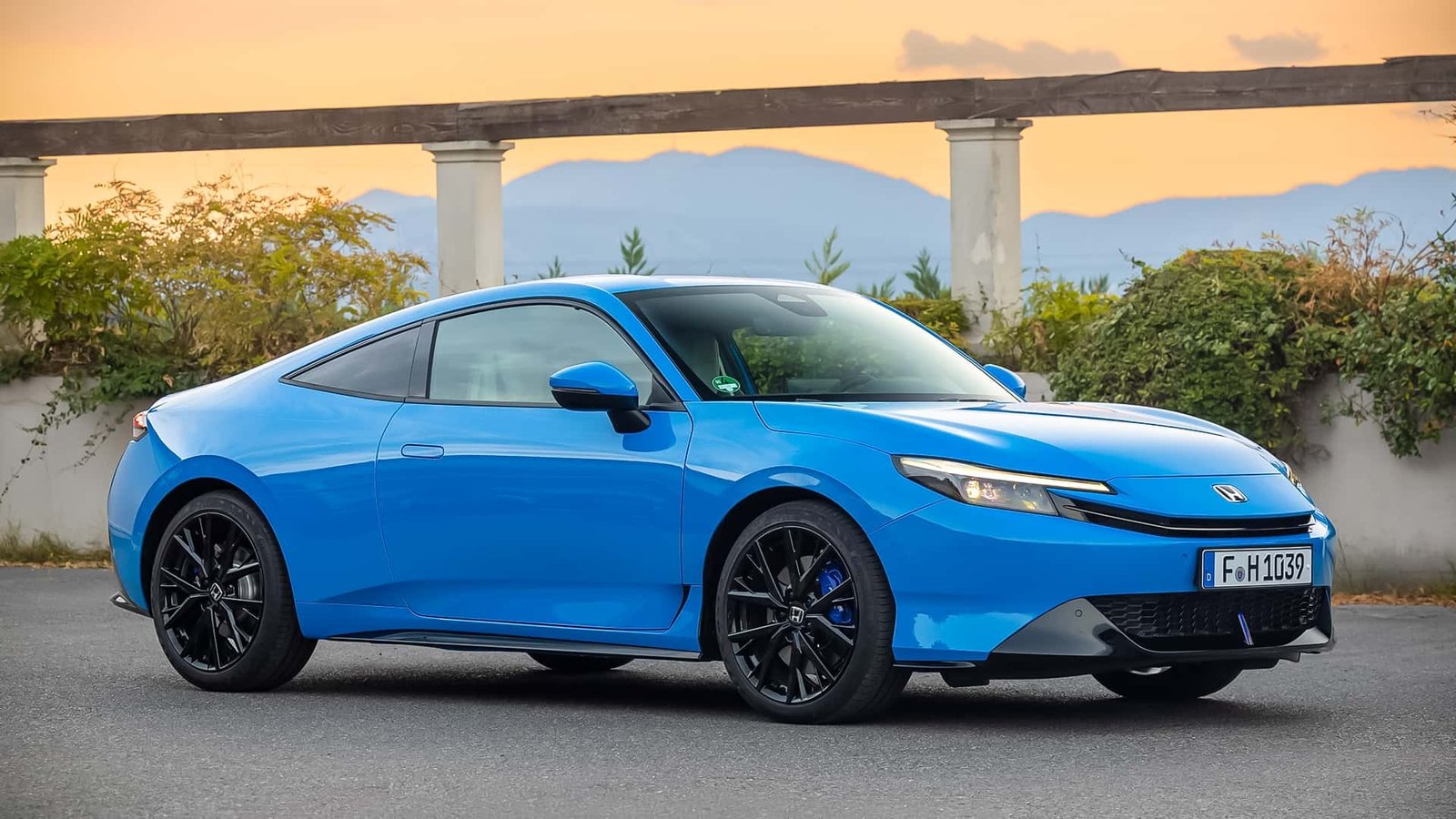
The autumn air had a crisp bite to it, carrying the faint scent of fallen leaves and, if you listened closely, the distant rumble of traffic from the highway. I was standing in my garage, running a microfiber cloth over the gleaming hood of my own aging sports coupe, a car from an era when shifting gears yourself was simply part of the joy. My phone buzzed on the workbench, and a quick glance at a news alert made my stomach drop faster than a poorly executed downshift: “Honda Rules Out Manual Gearbox for New Prelude.” Just like that, the quiet hum of nostalgia in the garage was replaced by a sharp pang of disappointment. For weeks, whispers and rumors had swirled around the highly anticipated return of the Honda Prelude, a nameplate synonymous with accessible Japanese sportiness and, crucially, engaging driving. Enthusiasts, myself included, had been dreaming of what this reborn coupe could be, envisioning a perfect blend of modern tech and old-school driver involvement. We pictured ourselves carving corners, heel-toeing with precision, feeling that satisfying mechanical connection. But Honda, it seems, had other plans, pulling the rug out from under those very dreams. This isn’t just a technical specification; it’s a statement, a clear signpost marking a significant shift in the automotive landscape and, dare I say, a blow to the heart of traditional driving purists. The announcement wasn’t just news; it felt like a cultural earthquake in the world of car enthusiasts.
The Announcement That Shook the Driving World
The news, initially a trickle through industry insiders, solidified into an official confirmation from Honda itself, delivered with a quiet resolve that did little to soften the blow for those who cherish the art of driving. “We understand the passion our customers have for manual transmissions,” stated Taro Nakamura, Chief Engineer for the new Prelude project, during a recent press briefing, his voice calm amidst the murmurs of assembled journalists. “However, for the reborn Prelude, our focus is squarely on creating a compelling sports hybrid experience that combines exhilarating performance with environmental responsibility. Integrating a manual gearbox into our advanced hybrid powertrain presented significant engineering challenges and, ultimately, did not align with the broader market appeal or our strategic vision for this vehicle.”
The immediate fallout was, predictably, a cacophony of digital dismay. Social media platforms exploded with frustrated memes and impassioned pleas. Forums, usually bustling with discussions about engine mods and track times, became virtual battlegrounds. “NO MANUAL?! WHAT WERE THEY THINKING?! This isn’t a Prelude, it’s just another appliance!” one user, ‘VTEC_Lover92,’ fumed on a popular car forum. Another, ‘ShiftyPete,’ lamented, “Honda, the company that practically *invented* the perfect manual shifter, is now abandoning its roots. My heart is broken.” It’s a gut punch for many, a feeling of betrayal even, because for so long, Honda was the bastion of engaging, affordable sports cars where the manual gearbox wasn’t just an option, it was part of the car’s very identity. This wasn’t just about a gear selector; it was about the diminishing space for true driver engagement.
Why the Shift? Honda’s Strategic Vision and Market Realities
So, why this decision? It’s easy to point fingers, but the reality is often more complex than enthusiast outrage suggests. Honda’s rationale stems from a confluence of factors, primarily market trends, engineering complexities, and the company’s overarching electrification strategy. Let’s be brutally honest: the number of people who can, or even want to, drive a manual transmission has been steadily declining for years. Globally, automatic transmissions dominate sales figures, even in traditionally manual-heavy markets. Developing, testing, and then manufacturing a separate manual gearbox option for what will likely be a relatively low-volume sports coupe adds significant cost and complexity, a cost that becomes harder and harder to justify for shrinking sales numbers.
“From a business perspective, it’s a no-brainer for Honda,” explains Sarah Chen, an automotive industry analyst with GlobalDrive Research. “The investment required for a manual option, especially one integrated with a sophisticated hybrid system, simply doesn’t yield the return when less than 10% of buyers, if that, would opt for it. They’re prioritizing mass appeal and future-proofing.”
Furthermore, the new Prelude is confirmed to be a hybrid. Integrating a manual gearbox with a hybrid powertrain is far from straightforward. Hybrid systems are designed to seamlessly switch between electric and gasoline power, often using complex electronically controlled transmissions (like e-CVTs or specialized automatics) to optimize efficiency and power delivery. A manual would require significant engineering to manage this intricate dance, potentially sacrificing the very efficiency and smoothness that define a modern hybrid. One anonymous engineer I spoke with, who wishes to remain unnamed given the sensitivity of the topic, hinted that integrating a manual with their current hybrid architecture was “a monumental engineering challenge with diminishing returns for market appeal, almost like trying to fit a square peg in a round hole when the round hole is already perfectly optimized.”
The Prelude’s Legacy: A History of Driver Engagement
The Honda Prelude holds a special place in automotive history. Launched in 1978, it quickly established itself as Honda’s sophisticated, sporty coupe, often showcasing advanced technology for its time. From the innovative 4-wheel steering of the third generation to the high-revving VTEC engines of the fourth and fifth generations, the Prelude was always about driver involvement and cutting-edge engineering. And for much of its life, a slick, precise manual gearbox was an integral part of that experience.

This history is precisely why the decision stings so much. Honda has long been revered for producing some of the finest manual transmissions in the business. Think of the Honda S2000, with its sublime, bolt-action shifter that felt like an extension of your arm. Or the Civic Type R, a modern benchmark for front-wheel-drive performance, still proudly offering a manual. The Integra Type R, the original Prelude, even many generations of the humble Civic – they all offered manual options that were praised for their precision, short throws, and satisfying mechanical feel. For a company that gave us some of the *best* manual shifters in history, this move for the new Prelude feels, to some, like a betrayal of its enthusiast heritage. It forces us to ask: Is Honda abandoning the very drivers who built its sporting reputation?
The Broader Industry Trend: The Slow Demise of the Manual?
Honda’s decision for the Prelude isn’t happening in a vacuum; it’s part of a much larger industry trend. The manual gearbox has been on life support for years across most segments. Porsche, known for its driver-focused machines, has progressively reduced its manual offerings, often reserving them for the most hardcore, limited-production models. Ferrari, Lamborghini, McLaren – all have entirely abandoned manuals in favor of lightning-fast dual-clutch transmissions. Even stalwart American muscle cars, once synonymous with rowing your own gears, are seeing a decline in manual take rates, with performance automatics often outperforming their stick-shift counterparts.
Modern automatic transmissions are astonishingly good. They shift faster, smoother, and more efficiently than a human can, contributing to better acceleration times and improved fuel economy figures. Dual-clutch transmissions (DCTs) offer near-instantaneous gear changes, making them the preferred choice for maximizing performance on a track. For everyday driving, the convenience of an automatic is undeniable, especially in congested urban environments.
I overheard a group at a local car meet last Saturday night, under the glow of neon lights and the rumble of modified exhausts, debating this very topic. “It’s a cruiser now,” one guy, leaning against his modified Civic Si, sighed, “not a driver’s car in the traditional sense. These automatics are great, but they disconnect you.” Another chimed in, “Yeah, but try explaining that to someone stuck in rush hour traffic. My wife loves her automatic, and that’s most of the market these days.” This sums up the dilemma perfectly. While the purists mourn, the broader market has moved on, seeking convenience and efficiency.
The Hybrid Factor: The Future is Electrified, Not Shifted
The core of the new Prelude’s identity lies in its hybrid powertrain. Honda has positioned it as a “sports hybrid,” emphasizing a blend of engaging performance and eco-consciousness. This focus on electrification is a critical piece of the puzzle. Hybrid systems, by their nature, are complex beasts designed for optimal efficiency and performance through seamless transitions between electric motor, internal combustion engine, and regenerative braking. Most are paired with continuously variable transmissions (CVTs) or specialized multi-mode automatics that are precisely tuned to extract the most out of the combined power sources.
Trying to shoehorn a manual transmission into such a system would introduce immense complexity. It would likely require significant modifications to the hybrid control unit, potentially compromising the system’s efficiency, adding weight, and increasing manufacturing costs. Furthermore, for a hybrid to truly shine in terms of fuel economy, it often relies on intelligent gear selection that a manual driver might not consistently replicate, especially in urban stop-and-go scenarios. This isn’t just about making it work; it’s about making it work *optimally* for its intended purpose. The decision to go automatic-only is thus a strong indicator of Honda’s vision for the Prelude: a showcase of modern, electrified performance, not a throwback to purely mechanical engagement. This suggests that future sports cars from Honda, especially those with hybrid or fully electric powertrains, will likely follow a similar path.
Enthusiast Reaction: Acceptance, Resignation, or Rebellion?
The reaction from the enthusiast community is, predictably, a mixed bag. There’s a segment that expresses deep disappointment and vows to never consider the new Prelude. They feel that a car bearing such a legendary nameplate *must* offer a manual to be worthy. For them, the absence of a clutch pedal fundamentally changes the car’s character, transforming it from a “driver’s car” into just another “commuter coupe,” albeit a sporty one. “It’s a great looking car, I’ll give them that,” remarked Mark, a seasoned track day participant I spoke with after a recent session, “but without a manual, it’s just not for me. I need that connection, that control.”
Then there’s the more pragmatic crowd, those who, while perhaps lamenting the loss, understand the market realities and the technical challenges. They might still appreciate the car for its design, its hybrid performance, and its potential as a daily driver. They might argue that the performance capabilities of modern automatics, combined with paddle shifters, can still deliver a highly engaging experience, even if it’s different from the tactile satisfaction of a manual. “Look, I love manuals,” offered Jen, a fellow car lover, as we grabbed coffee. “But if it means we get a new Prelude at all, and it’s fast and looks great, I’m willing to adapt. The driving experience is evolving, whether we like it or not.”
Ultimately, this decision forces a reflection on what defines a “driver’s car” in the 21st century. Is it solely about the transmission, or is it a broader symphony of steering feel, chassis balance, engine response, and overall dynamics? While the loss of the manual is undeniably a blow to traditionalists, the new Prelude will still need to prove its worth on the road, delivering a compelling and engaging experience regardless of how many pedals it has.
Conclusion: The End of an Era, or Just a New Chapter?
The confirmation that the new Honda Prelude will not offer a manual gearbox marks a significant moment in the automotive world. It’s more than just a specification; it’s a tangible symbol of the changing tides, a testament to evolving market demands, technological advancements, and the relentless march towards electrification. For many driving purists, it feels like the closing of a beloved chapter, a bittersweet farewell to an era where the mechanical ballet of clutch and shifter was central to the joy of driving. The weight of Honda’s legacy, a company celebrated for some of the best manual transmissions ever made, only amplifies this feeling.
Yet, this decision also forces us to confront the future head-on. As automotive technology progresses and environmental concerns become paramount, manufacturers like Honda are faced with tough choices. The new Prelude represents Honda’s vision for a “sports hybrid” – a performance car adapted for a new age. While it may not satisfy every traditionalist, it aims to deliver an exciting driving experience within the framework of modern efficiency and accessibility. Whether this new chapter will resonate with enough enthusiasts, or if the absence of a manual will forever cast a shadow over its return, remains to be seen. One thing is certain: the conversation about what truly defines a “driver’s car” is far from over.
Frequently Asked Questions
| Why has Honda decided against a manual gearbox for the new Prelude? | Honda has cited several factors, including market demand, the complexity of integrating a manual with the new hybrid powertrain, and their strategic shift towards electrification. The new Prelude is designed as a sports hybrid, where an automatic or CVT often better optimizes efficiency and performance. |
| What are the benefits of an automatic or hybrid-optimized transmission in the new Prelude? | Modern automatics offer faster, smoother shifts than most humans can achieve, contributing to quicker acceleration and improved fuel economy, especially when paired with a hybrid system. They also make the car more accessible to a wider audience, as fewer drivers are proficient with manual transmissions today. |
| How does this decision reflect Honda’s broader strategy for its sports cars? | This move signals Honda’s commitment to hybrid and electric technology, even in its performance-oriented models. While the Civic Type R still offers a manual, the Prelude’s direction suggests that future sports cars from Honda might prioritize advanced hybrid systems and automatic transmissions to meet evolving emissions standards and market preferences. |
| What challenges did Honda face in potentially offering a manual transmission for the new Prelude? | Integrating a manual transmission with a complex hybrid powertrain can be technically challenging and costly. It often requires significant engineering to ensure seamless operation between the electric motor, internal combustion engine, and gearbox, potentially compromising the hybrid system’s efficiency or adding unnecessary weight and complexity for a niche market. |
| Does this mean the manual gearbox is disappearing entirely from Honda’s lineup? | Not entirely, at least not yet. Honda still offers manual transmissions in enthusiast-focused models like the Civic Type R. However, the decision for the Prelude indicates a strategic shift for new models, particularly those featuring advanced hybrid technology, where the focus will likely be on optimized automatic or CVT systems. |
Important Notice
This FAQ section addresses the most common inquiries regarding the topic.