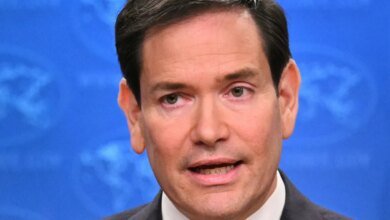
‘They’re Not Screwing Around’: Gavin Newsom Shares Dire Warning On Trump
California Governor Expresses Deep Concern Over Former President’s 2028 Ambitions and Constitutional Boundaries
California Gov. Gavin Newsom (D) has publicly voiced profound concern regarding the possibility of former U.S. President Donald Trump seeking to retain or regain power beyond the constitutional limits set by the 22nd Amendment. While the Constitution explicitly prohibits a third term, Newsom views Trump’s continuous rhetorical testing of those boundaries—and the actions of his inner circle—as a severe threat to democratic stability.
Speaking to ABC’s Jonathan Karl, Newsom dissected Trump’s behavior, suggesting there is a deliberate strategy behind the persistent chatter about a 2028 or even a non-consecutive third term. Although the former president recently conceded that “it’s pretty clear” the 22nd Amendment limits him, he simultaneously keeps the conversation alive by selling 2028 merchandise and refusing to explicitly rule it out, creating significant anxiety among Democrats striving for a Democrats’ strategy for a rebuilding year.
For Newsom, this ambiguity is a calculated maneuver designed to stretch the public imagination and challenge established norms. This is why his warning is so pointed: ‘they’re not screwing around’: when it comes to long-term power projection.
Newsom informed Karl, “I don’t think [Trump] takes himself seriously, but he iterates. He thinks things out. And he plays with it, and he sees how people reacted, and it manifests. Meaning, once a mind is stretched, it never goes back to its original form. And that’s my concern.” This belief underpins the governor’s decision to relentlessly critique the former administration, emphasizing that even seemingly frivolous comments about seizing more power are part of a larger political strategy.
The Constitutional Wall: Understanding the 22nd Amendment
The core of the controversy lies in the 22nd Amendment, ratified in 1951, which strictly limits a person to two terms as president. This amendment was a direct response to Franklin D. Roosevelt’s unprecedented four terms, establishing a clear line that no modern president has publicly tried to cross until now. Trump’s consistent suggestion that he might be able to find a loophole or secure a third term is therefore perceived not just as political bluster but as a potential constitutional crisis in waiting.

For constitutionalists on both sides of the aisle, the language is unambiguous. However, the political reality is that if the idea of constitutional flexibility is introduced repeatedly, it can erode public confidence in the established rules. Newsom is highlighting this danger, arguing that the talk itself is a weapon. The underlying message from the former president’s camp, according to Newsom, is ‘they’re not screwing around’:, they are actively laying the groundwork for challenging norms.
The Strategy of Iteration: Trump’s Testing the Waters
Newsom’s concern stems from the observation that Trump often uses provocative, often outlandish, statements to gauge public and institutional response. By “playing with it,” he normalizes the idea of extending presidential power beyond accepted boundaries. This strategy is essential for understanding his political appeal and how his team operates. When Trump mused, “Am I not judicial move it out? I mean, you’ll have to tell me,” he was not seriously asking for legal advice; he was injecting doubt into the system.
Furthermore, his willingness to engage in aggressive executive actions and structural changes during his first term—such as when Trump’s executive actions dismantled a Biden-appointed agency—demonstrates a strong appetite for reorganizing the government apparatus to suit his goals. This pattern of behavior is what leads Newsom to conclude that the third-term talk is not merely posturing.
The constant stream of ambiguity serves multiple purposes: it keeps the opposition distracted, it galvanizes his base by presenting him as a revolutionary figure above petty rules, and, most importantly, it tests the limits of the judiciary and the legislature. Newsom believes that ignoring this theater would be a critical mistake, as the ultimate goal of key figures around Trump is genuinely to challenge the status quo, and that ‘they’re not screwing around’: with those objectives.
The Shadow of Steve Bannon and Insiders
A major catalyst for Newsom’s warning is the role of long-time Trump insider Steve Bannon. Bannon recently told The Economist that “there’s a plan” for Trump to be the national leader again in 2028. This statement is what triggered Newsom’s most dire response. It shifts the threat from one man’s ego to a concerted effort by an organizational structure dedicated to political disruption.
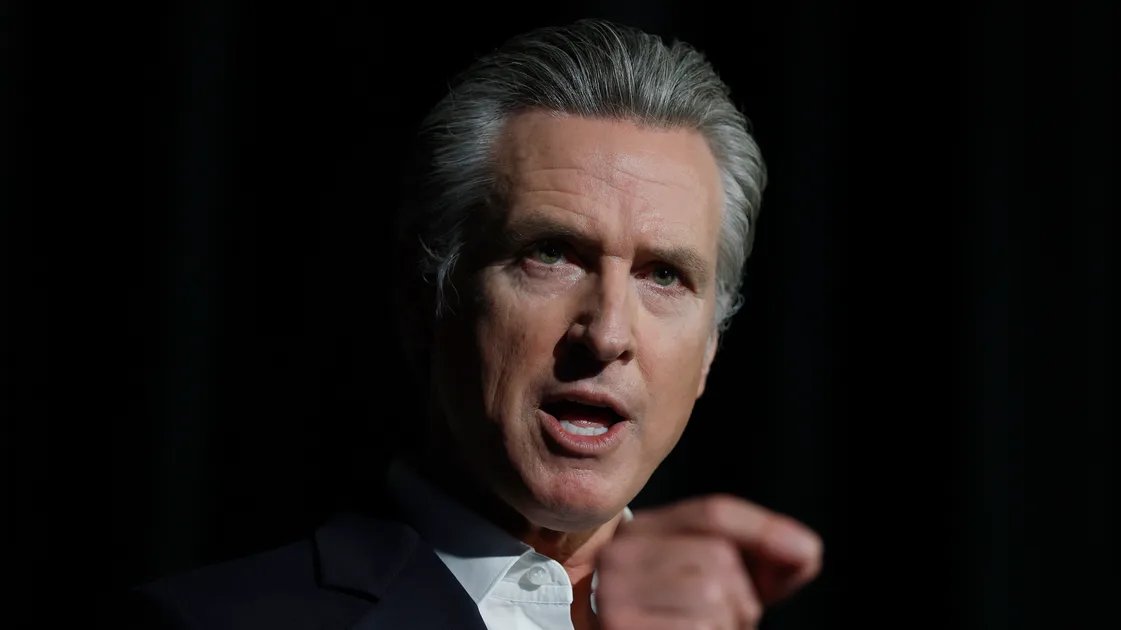
Bannon, known for his “Deconstruction of the Administrative State” philosophy, represents a faction deeply committed to fundamentally reshaping the U.S. government. When Newsom specifically called out Bannon, saying, “I’m deeply concerned about it, and guys like Bannon, ‘they’re not screwing around’:,” he was signaling that the danger is procedural and operational, not just electoral. These individuals are reportedly strategizing ways to stack the government with loyalists, challenge election processes, and utilize executive power to an unprecedented degree.
For Democrats, the prospect of Bannon and similar figures gaining further institutional control justifies the most aggressive political defense possible. Newsom’s commentary serves as a rallying cry, urging the Democratic party to acknowledge the severity of the threat rather than dismiss it as bombast.
Why Newsom Sees a Clear and Present Danger
Newsom is not simply engaging in partisan attacks; his warnings reflect a genuine fear that the guardrails of American democracy are becoming dangerously flexible. The “mind stretched” quote is pivotal here—it suggests that once the public accepts a constitutional limit might be negotiable, that idea gains a momentum that is difficult to reverse. This erosion of political norms creates space for actions that were previously unthinkable.
The risk extends beyond just the 22nd Amendment. It concerns the integrity of the electoral process, the independence of the Justice Department, and the traditional separation of powers. When political factions feel confident enough to Democrats fume over GOP exclusion from briefings, it signals a deeper contempt for standard governance and bipartisan cooperation.
“Power tends to corrupt, and absolute power corrupts absolutely. Great men are almost always bad men.”
Lord Acton
By sounding the alarm now, Newsom attempts to frame the stakes of the upcoming elections not just around policy, but around institutional survival. The urgency in his voice reflects the belief that the opposition is operating under a strategy built on destabilization, and that ‘they’re not screwing around’: in executing that strategy. This serious tone compels the public to consider the long-term implications of these political maneuvers.
Analyzing the 2028 Merchandise and Ambiguity
While selling 2028 merchandise might seem like standard political fundraising, in the context of the third-term discussions, it becomes a powerful symbolic statement. It transforms a legal impossibility into a marketing opportunity, reinforcing the idea among supporters that the constitutional limits can and should be ignored. The ambiguity surrounding Trump’s commitment to respecting the 22nd Amendment can be analyzed through several potential scenarios:
- **Scenario 1: Fundraising and Engagement.** The simplest explanation is that 2028 talk is highly effective clickbait and fundraising fodder. It generates media attention and keeps the base energized, making them forget about any gaffes or Trump’s unfiltered reaction to stressful events.
- **Scenario 2: Delegitimizing the System.** By repeatedly suggesting the rules don’t apply, Trump delegitimizes the constraints placed upon the presidency. This is the heart of Newsom’s anxiety about the “mind stretched” effect.
- **Scenario 3: Genuine Legal Exploration.** Though highly improbable, Bannon’s talk about a “plan” suggests that legal advisers might genuinely be exploring pathways, perhaps focusing on interpretations involving non-consecutive terms or unique circumstances, even if such efforts are likely to fail in court.
Newsom’s response is rooted in caution: assuming the worst intent is the safest political course when facing what he perceives as a movement determined to achieve its ends. He asserts that when political operatives like Bannon discuss fundamental changes to the structure of government, people must understand that ‘they’re not screwing around’:—they are setting expectations for radical action.
| Feature | Constitutional Law (22nd Amendment) | Political Ambition (Trump/Bannon) |
|---|---|---|
| Term Limit | Two full terms maximum. | Seeking creative interpretations or exceptions. |
| Legality | Clear, codified restriction. | Testing boundaries of public opinion and judicial challenge. |
| Newsom’s View | Must be rigorously defended. | ‘They’re not screwing around’:, a serious threat. |
Newsom’s Own Presidential Shadow
It is important to note the political context of Newsom’s strong statements. As he prepares to step down from the governor’s mansion in 2027 due to term limits, his ambitions clearly extend beyond California. Newsom has acknowledged he is mulling a 2028 presidential bid, meaning his attacks on Trump serve two purposes: protecting democratic institutions and simultaneously raising his national profile as the leading Democratic challenger against the former president or his ideological successor.
His highly visible cross-country campaign against Republican policies and his willingness to engage in direct conflict with Trump and his allies establish him as a fighter, a characteristic highly valued in modern Democratic primaries. When he emphasizes the existential nature of the political fight, and argues ‘they’re not screwing around’:, he underscores his own role as a necessary national guardian.
Newsom is positioning himself as the leader who takes the threat seriously, contrasting himself with those who might dismiss Trump’s rhetoric as mere grandstanding. He is betting that the electorate will recognize the profound danger in normalizing anti-constitutional rhetoric and will reward a candidate who warns, clearly and consistently, that ‘they’re not screwing around’:. This is about high-stakes strategy, and Newsom clearly intends to be a central player in the resistance to what he views as authoritarian drift.
The persistent warning from Governor Newsom demands attention. When he states ‘they’re not screwing around’: concerning the political project aimed at reshaping American governance, he urges vigilance against both the overt actions and the subtle, rhetorical games being played on the constitutional stage. His insistence that the opposition is dead serious highlights a critical moment in American political discourse, where constitutional limits are treated not as inviolable laws, but as obstacles to be creatively circumvented.
What do you think of Governor Newsom’s stark warning? Are the ambitions of Trump insiders a genuine constitutional threat, or is this political hyperbole aimed at galvanizing the opposition? Share your thoughts and engage with this crucial discussion in the comments below, and share this article to ensure a wide audience understands the context behind the governor’s fear that ‘they’re not screwing around’:.
Frequently Asked Questions (FAQ)