The morning mist still clung to the rugged cliffs overlooking the pristine beaches of La Jolla, a familiar serenity that belied the unfolding horror just offshore. It was a scene no one ever wants to witness, a stark reminder of the desperate gambles people take for a chance at a new life. On what began as a typically cool, overcast San Diego day, the tranquility was shattered by reports of a vessel in distress, setting off a frantic, heartbreaking rescue operation. As news filtered through, a chilling realization gripped the community: a boat, believed to be overloaded with migrants, had capsized in the treacherous Pacific waters, leaving behind a trail of unimaginable sorrow. Four individuals, fathers, mothers, sons, or daughters, had tragically lost their lives. (My heart just aches thinking about it, imagining the fear in those final moments). This isn’t just a news headline; it’s a profound human tragedy unfolding right on our doorstep, highlighting the immense risks associated with illicit maritime crossings near the San Diego coast. The sheer desperation that drives people to undertake such perilous journeys in often unseaworthy vessels is a sobering thought, a testament to the complex and often brutal realities of human migration.
A Grim Discovery Near Black’s Beach
The distress call came in early, just as the first hints of sunrise were piercing the marine layer, around 6:30 AM. Imagine the scene: the vast expanse of the Pacific, usually a playground for surfers and tourists, suddenly transformed into a chaotic tableau of debris and struggle. Authorities were alerted to an overturned vessel, described as a panga-style boat, struggling in the choppy waters off the coast of La Jolla, specifically near the challenging stretch of coastline known as Black’s Beach. This area, famous for its powerful waves and secluded nature, is notoriously difficult to navigate even for experienced mariners, let alone a vessel likely ill-equipped for such conditions. “When we got the call, the urgency was immediate,” explained a U.S. Coast Guard official, who asked not to be named given the ongoing investigation. “We knew right away this was serious. The conditions, the type of boat… it just screamed danger.”
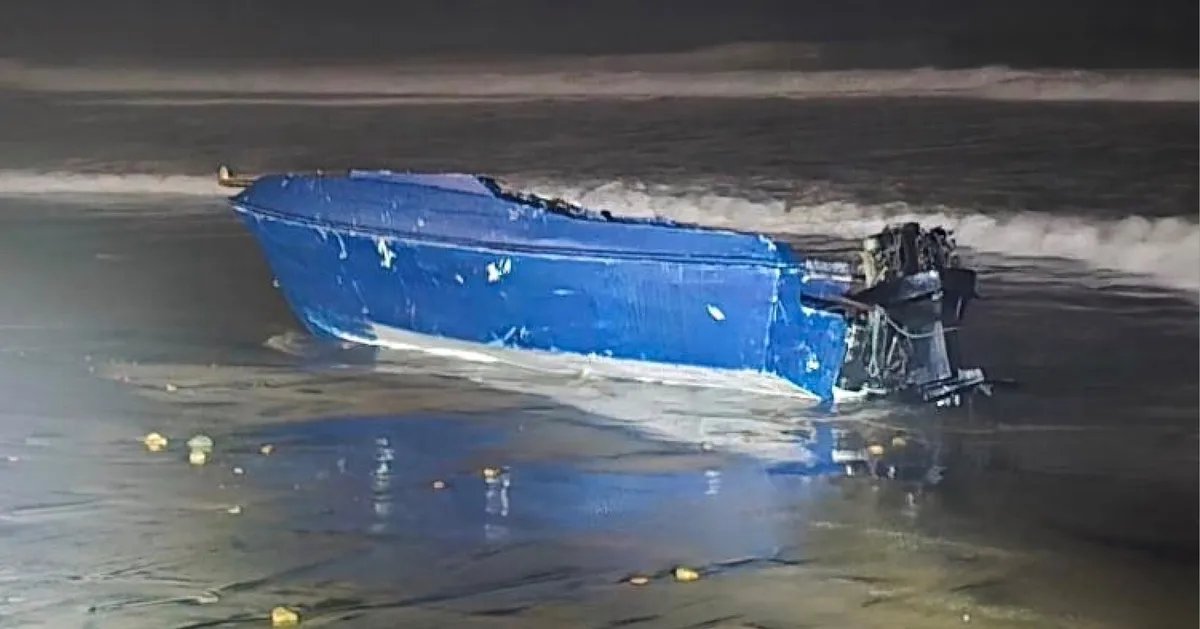
Rescue teams from multiple agencies converged rapidly: the U.S. Coast Guard, San Diego Fire-Rescue Department, San Diego Lifeguards, and Customs and Border Protection (CBP). They faced a harrowing task. The ocean, despite its beauty, can be brutally unforgiving. Eyewitnesses from the cliffs above, who had spotted the struggling vessel, described a frantic scene. “I saw people in the water, just trying to hold onto anything they could,” recounted Sarah Jenkins, a local resident out for her morning walk. “It was terrifying. The waves looked huge from up here, and you could hear the sirens getting closer.” The initial reports were grim, indicating multiple individuals were in the water, some unresponsive.
The Frantic Rescue Operation
The response was nothing short of heroic, a testament to the dedication of our first responders. Rescue swimmers plunged into the cold Pacific, battling strong currents and the inherent dangers of a search and rescue mission in open water. Helicopters hovered overhead, their spotlights cutting through the lingering gloom, scanning for survivors. Boats crisscrossed the area, their crews desperately searching among the debris of what was once a vessel carrying hopes and dreams.
“Every second counts in these situations,” stated Battalion Chief Brian Fennessy of San Diego Fire-Rescue, his voice heavy with emotion during a brief update. “Our crews worked tirelessly, pulling people from the water. We prioritize immediate medical attention for those we can reach.” Sadly, despite these valiant efforts, four individuals were pronounced dead at the scene or shortly after being recovered. Their identities were not immediately released, pending notification of next of kin, adding another layer of quiet tragedy to the unfolding events.
The survivors, many suffering from hypothermia and shock, were transported to various local hospitals for medical attention. Their numbers fluctuated in early reports, a common occurrence in chaotic rescue scenarios, but officials later confirmed that a significant number had been rescued, though the exact manifest of the vessel remains unclear – a common challenge with clandestine crossings.
The Perilous Journey: A Closer Look at Maritime Smuggling
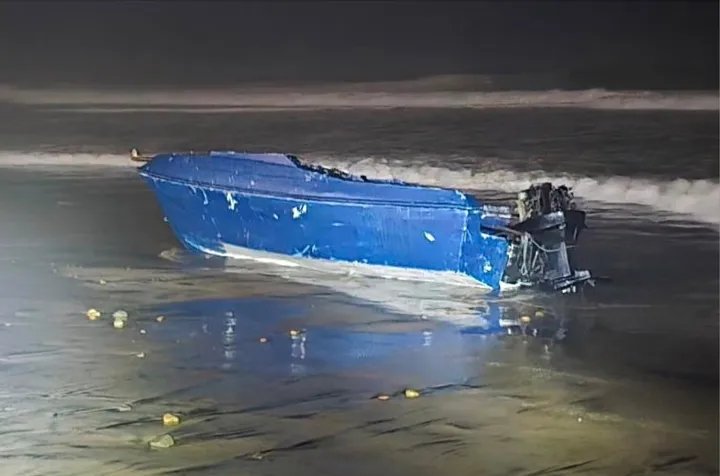
This incident, while tragic, is not an isolated one. The waters off the San Diego coast have increasingly become a dangerous conduit for human smuggling. Smugglers, often referred to as coyotes, exploit vulnerable individuals seeking to enter the United States, charging exorbitant fees for journeys in overcrowded, unsafe boats. These vessels, frequently pangas – small, open fishing boats designed for coastal waters – are completely unsuited for the long, open-ocean voyages they undertake. They often lack basic safety equipment like life jackets, navigation tools, or even proper lighting.
Why are these routes becoming more common? It’s a complex interplay of factors. Increased enforcement at land borders often pushes smuggling operations to more dangerous maritime routes. The allure of crossing by sea, perceived by some as less guarded, unfortunately masks the immense physical dangers. Weather conditions can change rapidly, and the Pacific Ocean, especially in winter or early spring, can be brutally cold and rough. Hypothermia is a constant threat, even in what might seem like mild temperatures, compounded by exposure to seawater.
Understanding the Risks Taken
It’s hard for many of us to truly grasp the desperation that drives someone to risk their life, and the lives of their loved ones, on such a perilous journey. Think about it: you’re trusting your fate to strangers, in a rickety boat, on an unpredictable ocean, all for the promise of a better tomorrow. This is not a choice made lightly. It speaks volumes about the conditions they are fleeing – poverty, violence, political instability, or a combination of all three – that such a gamble seems like the only option.
A former Border Patrol agent, Mark Thompson, who now works as a security consultant, offered his perspective. “These aren’t joyrides. People are paying thousands of dollars, often their life savings, to be crammed onto these boats. The smugglers don’t care about their safety; they only care about the money. They’ll tell them anything to get them on board, promise safe passage, then abandon them if things go wrong.” It’s a chilling reality.
The incident near San Diego joins a growing list of similar tragedies along the California coast. In May 2021, three people died when a suspected smuggling boat broke apart near Cabrillo National Monument in Point Loma, just south of San Diego. That incident involved a much larger vessel, but the underlying desperation and danger were identical. These recurring events underscore a persistent and tragic problem.
The Investigation and Aftermath
The investigation into the capsizing is now underway, a multi-agency effort led by Homeland Security Investigations (HSI) and involving the U.S. Coast Guard and Customs and Border Protection. Their primary objectives are to:
- Identify the deceased and notify their families.
- Interview survivors to gather details about the journey, the organizers, and any potential smuggling ringleaders.
- Determine the precise cause of the capsizing – was it overloading, rough seas, mechanical failure, or a combination?
- Identify and apprehend the operators of the vessel, who often flee the scene or attempt to blend in with the passengers.
This isn’t just about what happened on the water; it’s about dismantling the criminal networks that profit from human suffering. The operators of these vessels face severe penalties, including federal charges for human smuggling, which can carry lengthy prison sentences.
The San Diego medical examiner’s office will conduct autopsies to confirm the cause of death for the four victims. Meanwhile, survivors will face a complex legal and humanitarian path. Some may be processed for asylum claims, while others may face deportation, depending on their individual circumstances and legal standing. It’s a path fraught with uncertainty, even for those who managed to escape the ocean’s grasp.
A Call for Compassion and Policy Review
This tragedy off the San Diego coast forces us to confront uncomfortable truths. While border security is a legitimate concern, the human cost of these policies and the desperation they can inadvertently fuel cannot be ignored. The sight of innocent lives lost so close to shore, in pursuit of a better future, is a stark reminder that behind every statistic is a person with a story, a family, and a dream.
“We need to find a balance,” reflected Maria Rodriguez, a local community organizer working with migrant families. “Security is important, yes, but so is humanity. When people are so desperate they’ll risk everything, including their lives, on the open ocean, it tells us something about the system itself. We have to look at the root causes, at safe and legal pathways, so these tragedies don’t keep happening.”
The incident serves as a poignant, painful underscore to the ongoing debate about immigration policy. It compels us to ask difficult questions about how we, as a society, address the complex issues of global migration, and how we can prevent such profound losses of life. The waves off Black’s Beach will continue to crash, but for those who witnessed the horror, and especially for the families of the four deceased, the memory of this grim morning will forever ripple through their lives. It’s a call to reflect, a call to empathize, and perhaps, a call to seek more humane solutions to a crisis that continues to unfold on our shores.
Frequently Asked Questions
| What happened near San Diego regarding the boat capsizing? | A boat, believed to be carrying migrants, capsized off the coast of La Jolla, near San Diego’s Black’s Beach, resulting in the deaths of four individuals. Multiple others were rescued and transported to hospitals. |
| Why are maritime migrant crossings increasing off the California coast? | Increased enforcement at land borders has led some smuggling operations to shift to more dangerous maritime routes. Desperation driven by economic hardship, violence, and political instability in home countries also compels individuals to take these extreme risks. |
| What kind of boats are typically used in these smuggling attempts? | Smugglers frequently use panga-style boats, which are small, open fishing vessels. These boats are often overcrowded, lack proper safety equipment like life jackets, and are ill-suited for the challenging conditions of open ocean voyages. |
| Who is involved in the rescue and investigation of such incidents? | Rescue efforts typically involve multiple agencies such as the U.S. Coast Guard, San Diego Fire-Rescue, San Diego Lifeguards, and Customs and Border Protection. The subsequent investigation is often led by Homeland Security Investigations (HSI) to identify and prosecute smuggling organizers. |
| What are the primary dangers migrants face during these maritime journeys? | The primary dangers include treacherous ocean conditions (strong currents, large waves), hypothermia from cold water exposure, overloaded and unseaworthy vessels, lack of safety equipment, and the risk of abandonment by smugglers. Many individuals also suffer from shock and injuries. |
Important Notice
This FAQ section addresses the most common inquiries regarding the topic.