The Grand Unveiling: A Nation Watches
The moment arrives, usually on a chilly evening in late November or early December. You can almost hear the collective gasp, a soft murmur through the crowd gathered outside the iron gates, as the White House holiday decorations spring to life. This isn’t just about lights; it’s a meticulously choreographed event, often featuring performances, readings, and, of course, the First Family. The atmosphere is electric, charged with a blend of reverence and pure childlike wonder. “Every year, I bring my kids here,” shared Maria Rodriguez, a D.C. resident, clutching her daughter’s hand tightly. “It’s a tradition. Seeing their faces when the lights come on? That’s what Christmas is about for me.”
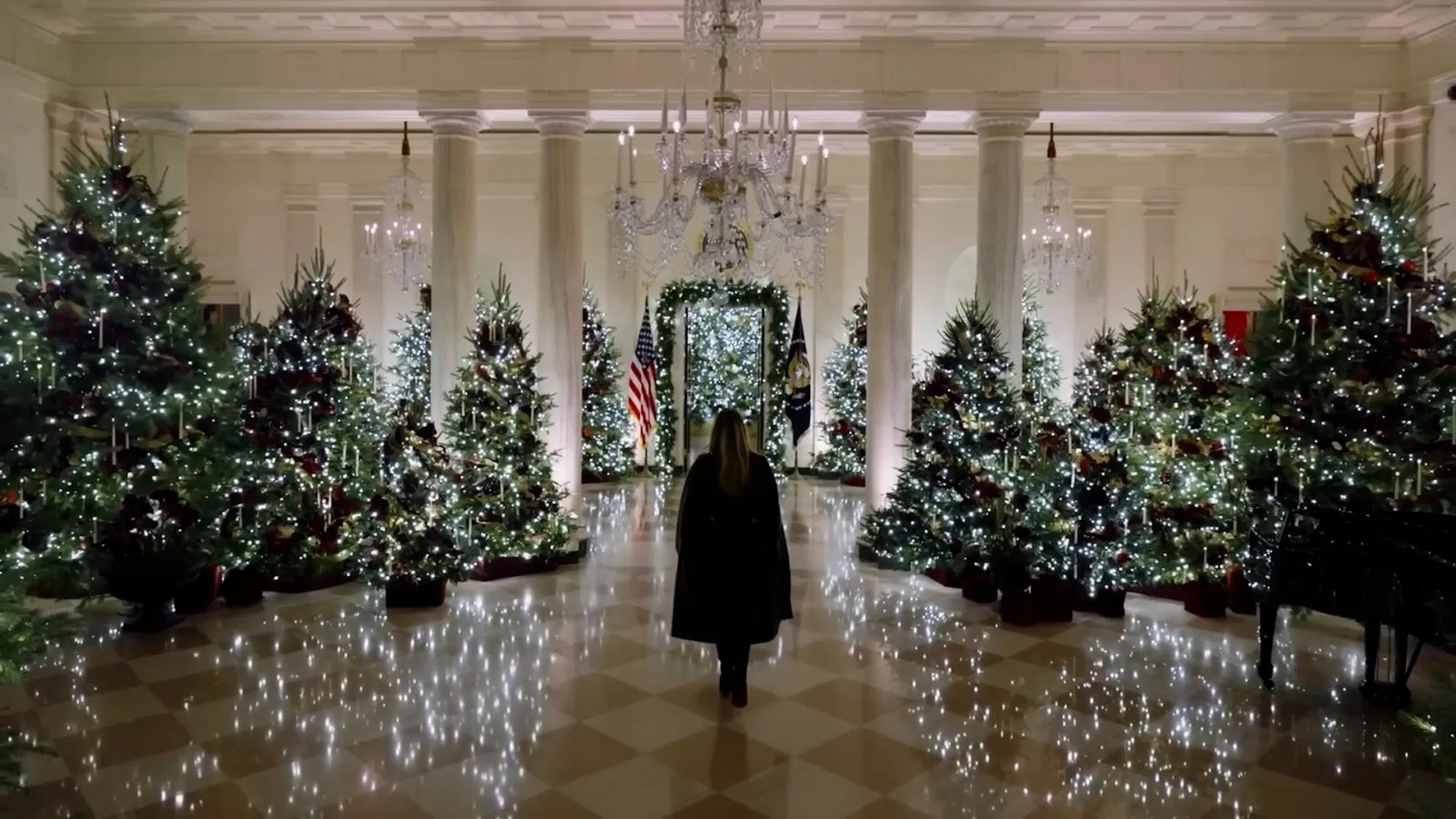
The South Lawn, typically a manicured expanse of green, transforms into a twinkling wonderland. Towering evergreens, often donated from farms across the country, are adorned with thousands of ornaments, each telling a story, representing a state, or honoring a specific theme chosen by the First Lady. Wreaths, larger than life, grace every window, their red ribbons a stark, beautiful contrast against the building’s white facade. Garlands, impossibly thick and lush, drape over doorways and balconies. It’s truly a sight to behold, a blend of patriotic pride and festive delight. The air fills with the scent of pine and cinnamon, perhaps a hint of hot chocolate from nearby vendors, creating an immersive sensory experience that you just have to be there for. It’s a snapshot, really, of America coming together.
A History of Sparkle and Presidential Traditions
The tradition of decorating the White House for Christmas dates back further than many realize, though its scale has certainly grown exponentially over the decades. It’s believed that the first decorated tree inside the White House was placed in 1889 during the Benjamin Harrison administration, though it was largely a family affair back then. Fast forward to the early 20th century, and the decorations became more public-facing, particularly under President Herbert Hoover, who began hosting annual Christmas parties. However, it was truly Jacqueline Kennedy who elevated the artistry and public profile of the White House holiday decorations in 1961, introducing the tradition of selecting a specific theme for the Christmas tree in the Blue Room. That decision, to make the decorations reflect a broader national story or theme, really changed everything.
Since then, each First Lady has left her unique mark, imbuing the decorations with personal style and a message for the nation. From Lady Bird Johnson’s focus on American wildflowers to Nancy Reagan’s whimsical “Nutcracker” theme, and later, more contemporary interpretations, the decorations are always a reflection of the times and the values of the administration. It’s an evolving canvas, you could say, telling a new chapter each year while respecting the deep roots of Presidential traditions. “It’s fascinating to see how each First Lady brings her own vision,” noted Dr. Eleanor Vance, a historian specializing in presidential residences. “It’s more than just aesthetic; it’s a subtle form of cultural diplomacy, a way to connect with the American people through shared seasonal joy.” The sheer ambition of these projects, year after year, never ceases to amaze me.
Behind the Scenes: The Unsung Heroes of Holiday Cheer
Have you ever stopped to think about what it takes to transform such an iconic building into a Christmas spectacle? It’s not a small feat, let me tell you. The planning for the White House holiday decorations often begins almost a year in advance, with the First Lady’s office collaborating with designers, florists, and horticulturists to conceptualize the theme and scope. Then, as Thanksgiving approaches, an army of volunteers descends upon the White House, often numbering in the hundreds, sometimes even thousands. These unsung heroes, many of whom return year after year, dedicate countless hours, often working around the clock, to bring the vision to life.
“It’s exhausting, but utterly exhilarating,” confessed Sarah Jenkins, a volunteer who has helped decorate for the past five years. “You’re part of something historic. You’re handling ornaments that have been part of previous administrations, placing garlands in rooms where momentous decisions are made. It’s surreal.” She described the frantic yet harmonious energy, the camaraderie among volunteers, and the shared sense of purpose. Imagine stringing thousands of lights on massive trees, carefully placing delicate ornaments, and weaving intricate floral arrangements, all while navigating the historical significance of your surroundings. It’s a delicate dance of artistic expression and logistical precision. The sheer volume of materials is staggering:
- Thousands of feet of garland and ribbon.
- Hundreds of wreaths, each individually crafted.
- Tens of thousands of ornaments, many handmade.
- Miles upon miles of Christmas lights.
- Dozens of large Christmas trees, including the iconic Blue Room tree.
This isn’t just a job for them; it’s a mission, a labor of love that ensures the spirit of the holidays shines brightly from the nation’s most famous address. They are the true elves of 1600 Pennsylvania Avenue, making sure every sparkle counts.
The Annual Theme: A Story in Every Ornament
Each year’s theme for the White House holiday decorations is carefully chosen to reflect a message of unity, hope, or American values. It’s more than just aesthetics; it’s a narrative woven through every room, every display. One year it might be “Gifts from the Heart,” another “America the Beautiful,” or perhaps “We the People.” These themes guide the entire creative process, influencing the color palettes, the types of ornaments, and even the selection of the trees themselves. For instance, a theme celebrating American craftsmanship might feature ornaments handmade by artisans from all fifty states, while a theme focusing on childhood might include whimsical displays and elements that spark nostalgia.
The Blue Room Christmas tree, often reaching up to 18 feet tall, is always the centerpiece, adorned with ornaments reflecting the annual theme. This tree, traditionally sourced from a national association of Christmas tree growers, undergoes a rigorous selection process, almost like a beauty pageant for pines. It’s a remarkable testament to how much thought and effort goes into making these displays not just beautiful, but meaningful. I always find myself wondering, what will they choose this year? What story will the White House holiday decorations tell us? It’s a lovely way to pause and reflect on our shared national identity during a time of year often focused on personal celebrations.
The Impact: Spreading Holiday Spirit Beyond the Gates
The lighting of the White House holiday decorations has an impact that stretches far beyond the fences of Lafayette Square. It’s a moment that captures national attention, a visual cue on news channels and social media feeds that the holiday season is truly here. For tourists visiting Washington D.C., seeing the White House adorned in its festive finest becomes a highlight of their trip. Local businesses, especially those near the National Mall, see a boost in foot traffic as visitors come to admire the decorations, grab a warm drink, and soak in the festive atmosphere.
“Our sales of hot chocolate and holiday-themed souvenirs definitely spike when the White House lights up,” remarked Brenda Lee, owner of a small café just blocks from the Executive Mansion. “People are just in a good mood, you know? They’re excited, they’re taking pictures, and that energy is contagious.” It’s not just about commerce, though. The spectacle ignites a sense of shared community and national pride. Schools incorporate visits to D.C.’s holiday displays into their curricula, and families plan annual trips to experience the city’s transformation. The images of the glowing White House are broadcast globally, offering a glimpse into American traditions and the festive side of its democratic heart. It reinforces the idea that even in the highest office, there’s room for wonder and celebration.
More Than Just Lights: A Symbol of Hope and Unity
Ultimately, the White House holiday decorations are more than just an impressive display of lights and ornaments. They serve as a powerful symbol, especially during a time of year when many reflect on peace, goodwill, and unity. The White House, as the People’s House, becomes a temporary beacon of hope and continuity, reminding us of enduring traditions amidst changing times. In a world often fraught with division, the simple act of decorating a national landmark for a widely celebrated holiday can, for a brief period, bring people together. It’s a quiet affirmation that, despite our differences, we share common aspirations for joy, peace, and connection.
When you witness the thousands of tiny bulbs ignite, transforming the historic residence into a glittering jewel, you can’t help but feel a flicker of that collective optimism. It’s a reminder that even in the most formal of settings, there’s a place for warmth, beauty, and the universal language of celebration. The holiday spirit, truly, is for everyone, and the White House, in its dazzling Christmas attire, extends that invitation to us all.
Conclusion
Watching the White House holiday decorations light up ahead of Christmas is more than a simple event; it’s an experience woven into the fabric of American tradition. From the meticulous planning and tireless efforts of hundreds of volunteers to the sheer spectacle of the illuminated mansion, every detail contributes to a sense of wonder and shared joy. It’s a powerful symbol that transcends politics, reminding us of the enduring beauty of our nation and the universal appeal of the festive season. As the lights twinkle against the crisp December sky, casting a warm glow over Washington D.C., it’s impossible not to feel a surge of that special holiday spirit. It truly serves as a beautiful, glowing invitation for all of us to embrace the hope, peace, and togetherness that the season embodies. And honestly, isn’t that what we all truly yearn for this time of year?
Frequently Asked Questions
| What is the main topic of the article? | This article focuses on the annual tradition of watching the White House holiday decorations light up ahead of Christmas, exploring the history, effort, symbolism, and impact of this beloved spectacle. |
| What are the benefits of the White House holiday decorations? | The decorations foster a sense of national unity and holiday spirit, attract tourism to Washington D.C., symbolize hope and tradition, and provide a beautiful, festive experience for both Americans and international visitors. |
| How are the White House holiday decorations implemented each year? | The implementation involves months of planning by the First Lady’s office and a team of designers, followed by weeks of intensive work by hundreds of volunteers who decorate the mansion with thousands of lights, ornaments, garlands, and wreaths according to a chosen annual theme. |
| What challenges are involved in decorating the White House for the holidays? | Challenges include the immense scale of the project, coordinating hundreds of volunteers, adhering to strict timelines, ensuring historical preservation, and meticulously executing the First Lady’s chosen theme across all rooms and outdoor spaces. |
| What is the future outlook for this White House tradition? | The White House holiday decorations tradition is deeply ingrained in American culture and is expected to continue evolving with each new administration, while always maintaining its core role as a symbol of national celebration and unity during the Christmas season. |
Important Notice
This FAQ section addresses the most common inquiries regarding the topic.