You know, the internet is a wild, unpredictable place, isn’t it? One moment you’re scrolling through cat videos, the next you’re utterly mesmerized by what appears to be a glimpse into a sci-fi future. That’s precisely what happened when videos of a supposed Dubai haircutting machine started flooding our feeds. Imagine it: a sleek, almost ethereal pod, nestled in what looks like a high-end salon, where you simply step inside, and robotic arms, with an almost surgical precision, give you the perfect trim. It was the stuff of dreams for anyone tired of small talk with their barber or simply yearning for ultimate efficiency. The sheer novelty, coupled with Dubai’s reputation for pushing technological boundaries, made it instantly believable for millions. (Who wouldn’t want a fully automated haircut in a luxurious pod?) But as these mesmerizing clips of the “barber pod” went viral, a quiet murmur of skepticism began to grow. Was this truly the next evolution in personal grooming, a testament to Dubai’s relentless innovation, or were we, once again, falling for a beautifully crafted digital illusion? The answers, as often happens with viral sensations, are far more intricate and revealing than the initial buzz suggests.
The Hypnotic Allure of the Viral Barber Pod
For weeks, those short, slickly produced videos were everywhere. They showed individuals, often looking relaxed and trusting, entering a futuristic capsule. Inside, a complex array of mechanical arms, equipped with clippers and combs, would meticulously sculpt hair. The visual appeal was undeniable: clean lines, polished chrome, soft ambient lighting – everything screamed “luxury meets tomorrow.” People shared these clips with awe, tagging friends, exclaiming about how “only in Dubai” something so advanced could exist. The comment sections exploded with a mix of wonder, envy, and a healthy dose of “I need this in my life!” It tapped into a universal desire for convenience and the fascination with automation, especially when it promised to solve an everyday chore like getting a haircut.
I remember my own initial reaction. I saw it pop up on my feed, a friend had shared it with the caption, “This is insane!” And honestly, for a moment, I believed it. The animations were so smooth, the reflections so realistic. It felt less like a concept and more like an operational prototype. “It’s astonishing how far technology has come,” I thought to myself, picturing a world where barbershops were replaced by these efficient, silent machines. It was a compelling narrative, easily digestible, and perfectly packaged for social media consumption.
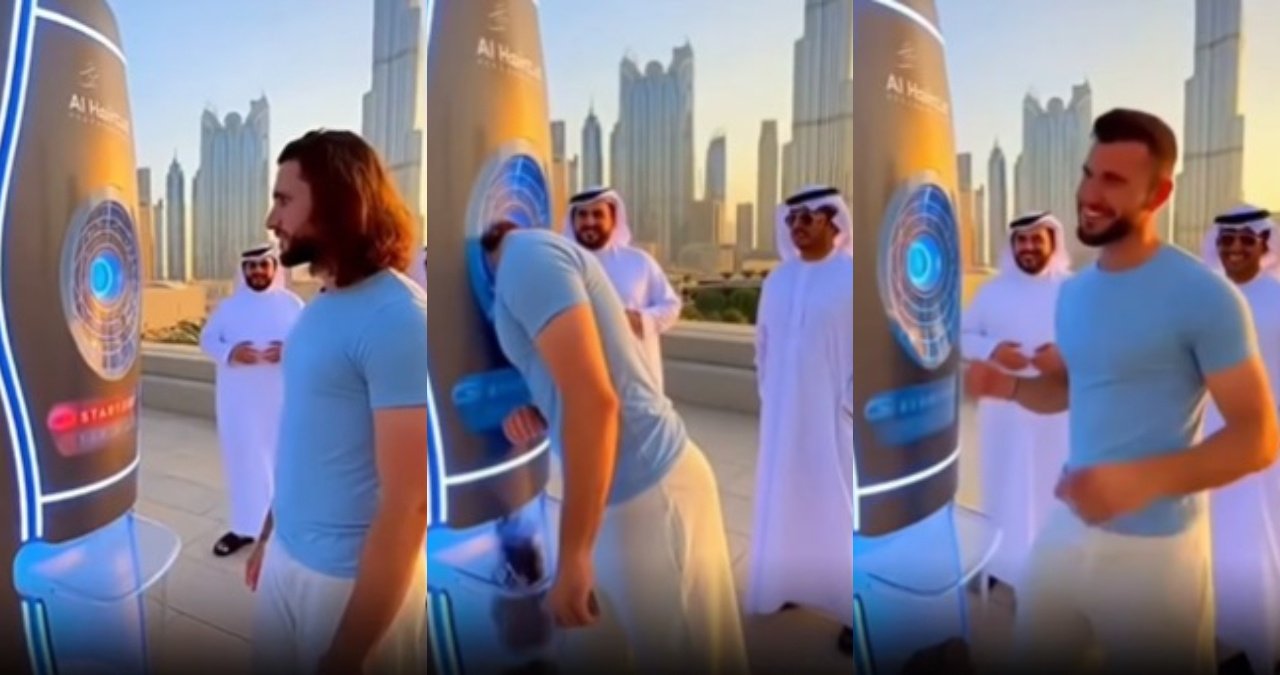
But as always, the devil is in the details, or in this case, the pixels. While the initial wave of excitement was intoxicating, a closer look, especially by those with a keen eye for digital artistry and a deeper understanding of robotics, started to reveal cracks in the futuristic facade. The clips, while stunning, lacked the subtle imperfections of reality. No stray hairs, no slight jerks in the robotics, no complex sensory feedback mechanisms visible. It was all a bit too perfect, a little too polished.
Unpacking the Digital Deception: Why Experts Raised Eyebrows
The first whispers of doubt didn’t come from casual viewers, but from professionals. People involved in animation, visual effects, and robotics began to scrutinize the videos. “My first thought was, ‘That’s incredible CGI work’,” noted Clara Jensen, a senior VFX artist based in London. “The way the light plays on the surfaces, the fluid motion of the arms – it’s all indicative of high-level rendering, not live footage of a fully functional machine.” Jensen highlighted that while the technology to create such a machine might exist in theory, the practical application for intricate tasks like haircutting, with varied hair types and head shapes, would be far more complex and clunky than what was portrayed.

One key indicator for many was the lack of any significant real-world presence. If a revolutionary automated barber pod like this truly existed in Dubai, a city known for its lavish launches and grand announcements, there would be extensive media coverage, official statements, and certainly more than a few short, looping videos. “You’d expect press conferences, detailed specifications, maybe even a waiting list!” laughed Omar Khan, a tech journalist based in the UAE. “Instead, we just had these anonymous clips circulating. It felt like a marketing stunt, but for what, we weren’t sure.” The silence from official Dubai channels was deafening, further fueling the skepticism.
The Tell-Tale Signs of CGI: A Deep Dive
Digital forensics experts and curious netizens started pulling the videos apart, frame by frame. They pointed out several inconsistencies:
- Uncanny Smoothness: Real-world robotics, especially those performing delicate tasks, often have subtle imperfections, vibrations, or delays. The movements in the videos were eerily fluid and perfect.
- Lighting and Reflections: While impressive, the lighting often seemed too ideal, almost rendered. Reflections on chrome surfaces sometimes didn’t quite align with the supposed environment.
- Lack of Real Hair Interaction: Hair is incredibly complex. It moves, it clumps, it resists. The way the robotic clippers interacted with the hair in the videos often looked too clean, too effortless, almost as if the hair itself was a simplified digital model.
- Absence of Mess: A haircut, even the tidiest one, involves fallen hair. The pods, upon completion, appeared spotless, which defied the reality of any haircutting process.
“It’s a masterclass in realistic rendering,” explained a popular YouTube debunker known for his deep dives into viral hoaxes. “The artists clearly understood physics and material properties, but they overlooked the messy reality of a barbershop.”
The Masterminds Behind the Illusion: An Art Project or Deception?
So, if it wasn’t real, who created these captivating videos, and why? The truth, as it often is, points to the incredible talent of digital artists. The videos were largely attributed to a visual effects collective, or individual artists, showcasing their prowess in CGI and 3D rendering. Their intent wasn’t necessarily malicious deception, but rather a demonstration of skill – a portfolio piece gone massively viral.

One artist, who preferred to remain anonymous but had a strong online presence, commented, “We create these concepts to push the boundaries of what’s possible with CGI. Sometimes, things just take on a life of their own. It’s a double-edged sword: amazing exposure for our work, but also the responsibility of clarifying that it’s not real.” This insight perfectly encapsulates the modern dilemma of digital content: the line between art, concept, and reality is increasingly blurred, especially when content is stripped of its original context and reposted without attribution. It’s fascinating how a creative exploration can evolve into widespread misinformation.
The Barbers React: Relief, Amusement, and a Dose of Reality
While the internet debated the authenticity of the Dubai haircutting machine, what about the people whose livelihoods would theoretically be impacted by such a device? Barbers around the world watched with a mixture of amusement and, perhaps, a tiny flicker of concern.
“I saw those videos, and honestly, my first thought was ‘Oh great, another thing AI is going to take over’,” chuckled Marco “The Clipper” Rossi, a veteran barber with twenty years of experience in a bustling downtown salon. “But then you look closer, and you know, it just doesn’t feel right. Haircutting is an art, not just a mechanical process. You feel the hair, you understand the texture, the flow. A machine can’t replicate that nuanced touch, not yet anyway.” Marco emphasized the human element – the conversation, the judgment, the ability to adapt to a client’s specific desires and head shape. “Imagine telling a machine, ‘Just a little off the top, but keep it edgy.’ Good luck with that!” he added with a grin, snipping expertly at a client’s sideburn.
This sentiment was echoed by many in the industry. The idea of a robot replicating the finesse required for a precision fade or a stylish layered cut seemed far-fetched. While machines excel at repetitive tasks, the artistry of hair styling involves intuition, creativity, and human connection. It’s a personal service, a ritual for many. “We don’t just cut hair; we build relationships,” said Sarah Chen, who owns a popular salon. “My clients tell me about their day, their worries, their triumphs. A machine can’t offer that therapeutic experience. And honestly, it wouldn’t know when to subtly adjust the angle because someone shifted their head slightly.”
Beyond the Hoax: The Blurring Lines of Digital Reality
The viral sensation of the Dubai haircutting machine serves as a potent reminder of our increasingly complex digital landscape. As CGI and AI-generated content become more sophisticated, distinguishing between what’s real and what’s rendered becomes progressively challenging for the average internet user. This incident isn’t isolated; from deepfake videos of politicians to hyper-realistic fictional events, the ability to create convincing illusions is advancing rapidly.
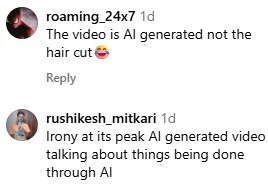
The allure of automation, especially in a city synonymous with futuristic advancements like Dubai, made the barber pod videos particularly effective. Dubai has a legitimate reputation for ambitious projects and groundbreaking technology, making it a credible backdrop for such a futuristic concept. This context played a significant role in the initial widespread acceptance of the videos as genuine. It highlights how our existing perceptions can influence what we believe to be true online.
Lessons in Media Literacy for the Digital Age
What can we learn from the viral spread and subsequent debunking of the Dubai haircutting machine? Perhaps the most important takeaway is the increasing necessity of media literacy. In an age where anyone with a decent computer and software can create incredibly convincing digital content, critical thinking skills are more vital than ever.
Here are a few quick tips I always try to remember when I see something incredible online:
- Check the Source: Is the video from a reputable news outlet, an official company page, or an anonymous repost?
- Look for Official Announcements: Revolutionary technology usually comes with press releases, detailed articles, and official product pages. A lack of these is a red flag.
- Examine the Details: Does it look *too* perfect? Are there any subtle glitches, unnatural movements, or missing real-world elements (like dust, reflections, or human interaction)?
- Consider the Context: Does the claim align with current technological capabilities and practical limitations?
- Reverse Image Search/Cross-Reference: Sometimes a quick search can reveal the original creator or previous debunkings.
The internet is a fantastic tool for connection and information, but it also requires us to be vigilant and discerning. It’s a bit like walking through a funhouse mirror maze – everything looks vaguely familiar, but nothing is quite as it seems.
Conclusion: The Enduring Power of Human Touch (For Now)
So, the futuristic Dubai haircutting machine, the sleek automated barber pod that promised to revolutionize our trips to the salon, was indeed an elaborate and incredibly well-executed digital hoax. It was a testament to the stunning capabilities of CGI artists, rather than a breakthrough in robotics. While the idea of a fully autonomous haircut is undeniably intriguing, for now, the nuanced touch, the intuitive judgment, and the comforting conversation of a human barber remain irreplaceable. The viral phenomenon served as a fascinating case study in how quickly captivating, yet fabricated, content can spread across the globe, challenging our perceptions of reality and underscoring the vital need for critical engagement with the digital world. Perhaps one day, a truly autonomous haircutting machine will emerge, but it will likely look and function quite differently from the flawless, digitally rendered pods that once captivated our imaginations. Until then, our barbers can breathe a collective sigh of relief.
Frequently Asked Questions
| Was the viral Dubai haircutting machine real? | No, the viral Dubai haircutting machine videos were not real. They were sophisticated computer-generated imagery (CGI) created by talented digital artists to showcase their skills, not a functional robotic barber pod. |
| What made people believe the barber pod videos were real? | Several factors contributed to their believability: the high quality of the CGI, Dubai’s reputation for futuristic innovation, the natural human fascination with automation and luxury, and the compelling visual narrative presented in the videos. |
| How were the Dubai haircutting machine videos debunked? | Experts in visual effects, robotics, and digital forensics identified several inconsistencies, such as unnaturally smooth movements, perfect lighting, lack of real-world mess (like fallen hair), and the absence of any official announcements or real-world prototypes. |
| What are the challenges of creating a real autonomous haircutting machine? | Creating a truly autonomous haircutting machine faces immense challenges, including accurately mapping diverse head shapes and hair textures, handling dynamic hair movement, ensuring safety with sharp tools, and replicating the nuanced artistry and human judgment required for precise styling. |
| What does this viral hoax teach us about digital content? | The incident highlights the increasing sophistication of CGI and AI-generated content, blurring the lines between reality and fiction. It underscores the critical importance of media literacy, source verification, and critical thinking when consuming information online. |
Important Notice
This FAQ section addresses the most common inquiries regarding the topic.