The crisp autumn air hung heavy with the electric tension of an NFL Sunday, a familiar hum that usually signifies fierce but fair competition. Yet, in a moment that sent a shockwave through the league and left fans utterly bewildered, that unwritten code was shattered. Imagine the scene: the game, already a hard-fought battle, simmered with intensity. Suddenly, amidst a scrum of players, a flash, a quick, violent motion – and then, chaos. It wasn’t a tackle, not a block, but a deliberate, closed-fist strike. Daron Payne, the formidable defensive tackle for the Washington Commanders, had punched Detroit Lions wide receiver Amon-Ra St. Brown. The roar of the crowd momentarily quieted, replaced by murmurs of disbelief and outrage. (Who would do such a thing in plain sight? It just beggars belief!) This wasn’t just another penalty flag; this was an act that transcended the bounds of acceptable on-field aggression, sparking an immediate and fierce debate about player conduct and league accountability. Now, the outspoken former NFL quarterback and analyst, Robert Griffin III, has stepped forward, his voice a clarion call, demanding that the NFL penalty for Payne be nothing short of “exemplary.” He insists that anything less would be a dereliction of duty, sending the wrong message about player safety and sportsmanship. We’re talking about setting a precedent here, folks, and the eyes of the football world are firmly fixed on what the league decides.
It was one of those plays that replays in slow motion, not just on the broadcast, but in your mind, burning itself into the collective memory of the NFL season. The incident occurred during a particularly feisty part of the game, a scramble for possession after a play had concluded. The whistle had blown, the action was ostensibly over, but the emotions were still running red hot. St. Brown, known for his relentless effort and competitive spirit, was tangled up with several Commanders players. It was in this post-whistle melee that Daron Payne delivered the punch. His fist connected squarely with Amon-Ra St. Brown, who immediately reacted, clearly stunned and hurt by the blow. The officials, caught in the thick of it, quickly intervened, separating the players and assessing penalties. But for many watching, a yellow flag simply wasn’t enough. It felt like a significant line had been crossed, a blatant disregard for the rules and the well-being of a fellow competitor. The immediate consequence on the field was a personal foul, but as the replays circulated, the gravity of the situation became undeniably clear. This wasn’t incidental contact; this was a deliberate act of aggression, a punch thrown with clear intent. You could almost feel the tension radiating through the screen, knowing this wasn’t going to just fade away with the final whistle.
The aftermath saw immediate condemnation from various corners, but few voices have been as forceful and unambiguous as that of Robert Griffin III. Known for his incisive analysis and unwillingness to shy away from controversial topics, RGIII took to social media and broadcast platforms to express his outrage. He didn’t mince words, calling the act “unacceptable” and demanding severe repercussions. “The NFL HAS to come down HARD on Daron Payne for punching Amon-Ra St. Brown,” Griffin stated emphatically, his tone leaving no room for misinterpretation. “This cannot go unpunished with a simple fine. This deserves an exemplary penalty that sends a message across the league that this type of behavior will NOT be tolerated. Player safety, folks, it’s paramount.” His argument is rooted not just in the immediate transgression but in the broader implications for the league’s integrity and commitment to protecting its athletes. He posits that a lenient penalty would inadvertently signal to players that such actions, while frowned upon, are not truly career-threatening or financially crippling, potentially emboldening others. And that, in his view, is a dangerous precedent to set. It really makes you wonder, doesn’t it, what message the league wants to send?
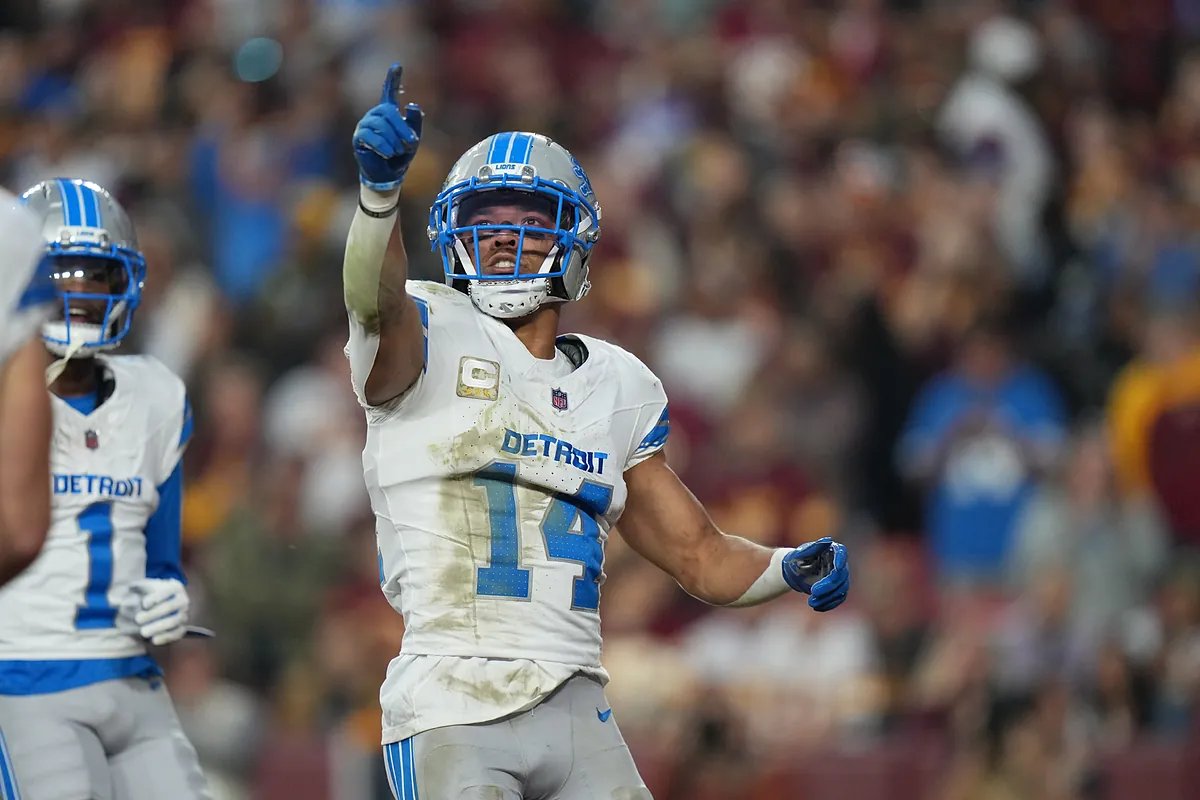
The Incident That Shook the Sidelines
Let’s rewind to the precise moment. The play itself was unremarkable: a short gain, perhaps, or an incompletion. The ball was dead. The whistle had blown. Yet, what unfolded next was anything but unremarkable. As players began to untangle from the pile, a skirmish broke out. Pushing, shoving, the usual post-play frustrations boiling over. Then, caught on multiple camera angles, was Daron Payne, his arm extended, a clear punching motion directed at Amon-Ra St. Brown. It wasn’t a push, nor an open-hand slap. It was a punch, delivered with discernible force. St. Brown immediately recoiled, clutching at his head area, though thankfully he appeared not to be seriously injured. The sheer audacity of the act, committed right in front of officials and countless onlookers, is what truly sets this apart. “I saw it happen live, and my jaw just dropped,” commented a veteran NFL sideline reporter, who preferred to remain anonymous to avoid influencing the league’s decision. “You see scuffles, sure, but a full-on punch? That’s just beyond the pale. It felt like a street fight, not a football game.” The atmosphere, already charged, intensified immediately, with players from both sides rushing in, though cooler heads eventually prevailed. This was not a spur-of-the-moment, heat-of-the-battle reaction during a live play; it was an act committed after the play had concluded, making it even more egregious in the eyes of many.
Robert Griffin III’s Fiery Call for Justice
Robert Griffin III’s impassioned plea for an “exemplary penalty” isn’t just about punishment; it’s about principle. As a former NFL player, he understands the physicality of the game, the emotional intensity. But he also understands the boundaries. His call comes from a place of deep concern for the long-term health and safety of athletes. “When you step onto that field, you accept a certain level of risk, a certain amount of contact,” RGIII explained in a recent segment. “But you do not sign up to be punched in the face after a play is dead. That’s assault, plain and simple, and the league has to treat it as such.” He argues that fines alone, even substantial ones, are often seen as the cost of doing business for highly paid athletes. A suspension, particularly a multi-game one, would hit harder, impacting team dynamics, player reputation, and truly sending a message. “An exemplary penalty,” he elaborated, “means something that makes every single player think twice, three times, before even considering such an action again. It means a significant suspension, not just a slap on the wrist.” It’s hard to argue with that logic, especially when you consider the millions the NFL invests in player safety initiatives.
A History of NFL Discipline: Setting the Precedent
The NFL has a long, if sometimes inconsistent, history of disciplining players for on-field misconduct. We’ve seen everything from fines for excessive celebrations to multi-game suspensions for egregious fouls. Remember Vontaze Burfict’s numerous suspensions for dangerous hits? Or Myles Garrett’s indefinite suspension (later reduced) for swinging a helmet at Mason Rudolph? These incidents, while different in nature, share a common thread: they involve acts that go beyond the accepted parameters of football. The league often cites “player safety” as its guiding principle. However, punching a defenseless opponent after the whistle blows feels like it should fall into a category of its own, perhaps even more severe than a late hit in some respects because of its blatant disregard for sportsmanship and the direct intent to injure. “The precedent here is critical,” an anonymous league official shared cautiously. “If you allow a punch to go with just a small fine, what’s next? We have to protect our players from each other, but also from themselves. The integrity of the game is at stake.” This isn’t just about Daron Payne and Amon-Ra St. Brown; it’s about every player in every future game, understanding where the line is drawn.
Player Safety: The NFL’s Paramount Concern?
The phrase “player safety” is constantly reiterated by the NFL, particularly in the wake of increased awareness around concussions and long-term health issues. But how deeply does that commitment run when faced with an incident like Daron Payne’s punch? The league has invested millions in rule changes, protective equipment, and concussion protocols. Yet, a deliberate punch after the whistle seems to undermine all those efforts if not met with significant disciplinary action. It’s a stark reminder that some dangers come not from the inherent violence of the game, but from individual choices. A lenient penalty could be perceived as a tacit endorsement, or at least a toleration, of such behavior, potentially leading to an escalation of similar incidents. “If you preach player safety, then you have to act on it when a player is clearly endangered by an act of malice,” asserted one former team doctor, who now advocates for retired players’ health. “A punch to the head, even if it doesn’t cause an immediate concussion, carries significant risks. The league can’t afford to look the other way.” It truly makes you think about what the term “player safety” really means in practice.
The Washington Commanders’ Perspective and Payne’s Reaction
Immediately after the game, there wasn’t a strong public statement from the Washington Commanders regarding Daron Payne’s actions, beyond acknowledging the penalty. This silence, or perhaps cautious approach, is typical as teams wait for the league’s official review and decision. However, behind the scenes, you can bet there are serious conversations happening. A player’s actions reflect not just on themselves, but on the entire organization. Payne himself, a Pro Bowl talent, is undoubtedly feeling the heat. While no public apology has been issued directly by Payne to St. Brown as of yet, it’s a common practice for players in such situations to express remorse, often through their team or agent, as part of the disciplinary process. “Daron is a passionate player, no doubt, but that was just completely out of line,” a team insider, speaking on background, mentioned. “The coaches and front office are going to be extremely disappointed, not just because of the penalty, but because it’s a bad look for the team and totally unprofessional.” His actions could cost him significantly, both in terms of reputation and financially, depending on the NFL’s ruling.
The Detroit Lions’ Stance and St. Brown’s Condition
On the other side of the equation are the Detroit Lions and Amon-Ra St. Brown. The Lions coaching staff and players undoubtedly expressed their displeasure over the incident, but they too generally defer to the league for disciplinary action. The primary concern, of course, was St. Brown’s well-being. Thankfully, he did not appear to suffer any significant injury that would sideline him, a fortunate outcome given the nature of the blow. However, the psychological impact of being intentionally targeted, especially after the play, should not be underestimated. “Amon-Ra is a tough kid, he’ll brush it off,” commented a Lions teammate off the record, “but it’s still messed up. You don’t come to play expecting to get punched. We expect the league to handle it the right way.” St. Brown himself has remained relatively quiet on the matter, likely focusing on the next game, but his team will be watching closely to see what message the NFL sends. The expectation is clear: protect the players, especially from actions that have no place in the sport.
What Constitutes an “Exemplary Penalty”?
So, what exactly does Robert Griffin III mean by an “exemplary penalty”? It’s likely a combination of a substantial fine and a multi-game suspension. A typical personal foul fine is usually around $15,000, which, while not insignificant, is often viewed as a minor inconvenience for a player earning millions. An “exemplary” fine would be in the six-figure range, perhaps even higher. More critically, a suspension would remove Daron Payne from competitive play, directly impacting his team and his own earning potential (as players typically don’t get paid for suspended games). Considering precedents for similar non-football related violent acts on the field, a suspension of at least two to four games seems to be what RGIII and many others are advocating for. The league’s internal rules and the collective bargaining agreement outline a range of potential punishments, and the NFL’s executive vice president of football operations, Jon Runyan, will be crucial in determining the severity. It’s a judgment call that will be dissected by everyone in the football world, and one that carries immense weight for the future conduct of players.
The Fan and Media Reaction: A Roar for Accountability
The outcry from fans and media alike has been swift and nearly universal. Social media platforms exploded with replays and condemnations, with #PaynePunishment trending for hours. Sports analysts across various networks have echoed RGIII’s sentiment, emphasizing the need for a strong response. Pundits debate not just the appropriate punishment, but the implications for the league’s image. “This isn’t rugby, this isn’t hockey, where fighting is sometimes tolerated,” argued one prominent sports columnist. “This is American football, a sport built on controlled aggression, not outright brawls. If the NFL doesn’t come down hard, they’re tacitly telling players that this kind of behavior is acceptable. And that’s a slippery slope.” The sheer volume of opinion underscores the seriousness of the incident and the widespread belief that the NFL must take a firm stance. People are truly fed up with what they perceive as a lack of accountability in some areas of the sport. The expectation for justice is palpable, a demand for the league to uphold the very principles it claims to cherish.
In the end, the ball is firmly in the NFL’s court. The incident involving Daron Payne’s punch to Amon-Ra St. Brown is more than just a momentary lapse of judgment; it’s a test of the league’s commitment to its own rules, to player safety, and to the integrity of the game. Robert Griffin III’s powerful call for an “exemplary penalty” resonates deeply because it speaks to a fundamental expectation: that egregious, unsportsmanlike conduct, especially outright violence, should have severe consequences. Anything less than a significant suspension and a hefty fine would not only be a disservice to St. Brown but would also send a chilling message to every other player in the league about what is truly tolerated. As fans, we watch not just for the athleticism and strategy, but for the inherent fairness and sportsmanship of the game. Let’s hope the NFL makes a decision that reflects those values, upholding the trust players and fans place in them to maintain a safe and honorable playing field.
Frequently Asked Questions
| Why did Robert Griffin III call for an “exemplary penalty” for Daron Payne’s punch? | Robert Griffin III believes Daron Payne’s punch to Amon-Ra St. Brown after the whistle was a clear act of assault and a severe violation of player safety rules. He called for an “exemplary penalty” to ensure the NFL sends a strong message that such behavior is unacceptable and to deter future incidents, rather than just imposing a minor fine. |
| What constitutes an “exemplary penalty” in the context of the NFL? | An “exemplary penalty” typically refers to a disciplinary action that goes beyond standard fines for personal fouls. It would likely include a significant multi-game suspension, potentially a six-figure fine, or a combination of both, designed to have a profound impact on the player and set a clear precedent for the entire league. |
| What is the NFL’s history with disciplining players for similar on-field altercations? | The NFL has a varied history, with some incidents leading to substantial suspensions (e.g., Myles Garrett’s helmet swing, Vontaze Burfict’s dangerous hits) and others resulting in fines. However, direct punches after the whistle are generally viewed very seriously, with the league emphasizing player safety as a paramount concern. |
| How does Daron Payne’s punch impact the NFL’s commitment to player safety? | Daron Payne’s punch directly challenges the NFL’s commitment to player safety. If the league’s response is perceived as lenient, it could undermine ongoing efforts to protect players from unnecessary violence and signal that deliberate acts of aggression are not met with the most stringent consequences. |
| What are the potential repercussions for Daron Payne and the Washington Commanders? | For Daron Payne, potential repercussions include a significant fine, a multi-game suspension affecting his pay and eligibility, and damage to his reputation. For the Washington Commanders, it reflects poorly on the team’s discipline and professionalism, and they will have to manage the absence of a key player if Payne is suspended. |
Important Notice
This FAQ section addresses the most common inquiries regarding the topic.