Final Fantasy 7 Revelation Weapon Boss Fights: Ruby, Emerald, and Ultima Weapon Confirmed in Epic New Trailer

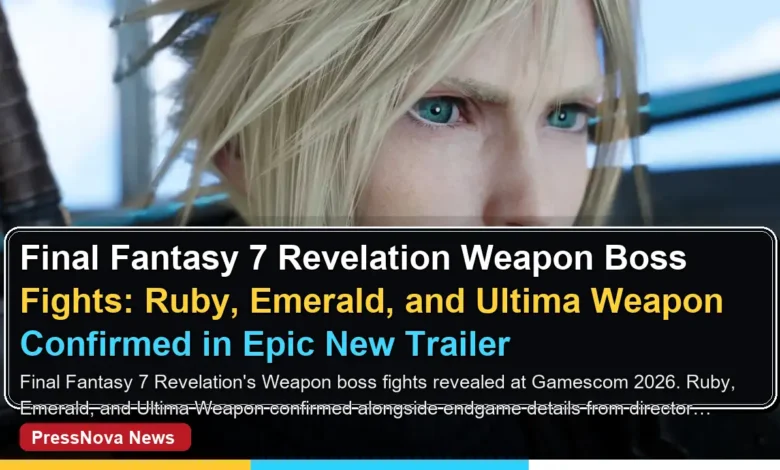
Final Fantasy 7 Revelation’s Weapon boss fights have taken center stage in a stunning new trailer unveiled during Gamescom 2026’s Opening Night Live showcase, giving fans their most detailed look yet at the colossal enemies Cloud and the party will face in the trilogy’s epic conclusion.
- Massive Weapon Reveals: Ruby Weapon, Emerald Weapon, and Ultima Weapon showcased in new trailer with dramatic visual overhauls
- Spring 2027 Launch: Final Fantasy 7 Revelation releases in spring 2027 on PS5, Xbox Series X/S, Nintendo Switch 2, and PC simultaneously
- Endgame Content: Level cap increased to 99 with extensive post-game challenges, including optional Weapon fights harder than the final boss
- Highwind Returns: Iconic airship featured prominently with new aerial combat mechanics and world exploration capabilities
- Director’s Promise: Naoki Hamaguchi teases an ending “that will be loved by everyone” and confirms Knights of the Round as an endgame encounter
The new footage, which premiered at Gamescom 2026’s Opening Night Live, begins with Rufus Shinra addressing the impending Meteor and the awakening of the Weapons—ancient guardians of the planet that now view humanity itself as a threat to be eliminated. This sets the stage for what promises to be the most cataclysmic chapter in the Final Fantasy 7 Remake trilogy, which began in 2020 and continued with Rebirth.
With Final Fantasy 7 Revelation scheduled for spring 2027, Square Enix is ready to start offering a steady stream of progress updates. At its core, the trilogy might be a remake of a game that’s nearly three decades old, but the developers have made enough changes that fans are curious to see how the ending is handled. Director Naoki Hamaguchi has teased that Final Fantasy 7 Revelation‘s ending will be loved by everyone, but it remains to be seen whether the developers will be able to reach that lofty goal.
Every Weapon Revealed in the Final Fantasy 7 Revelation Trailer
The latest trailer, viewable in full on Square Enix’s official YouTube channel, focuses heavily on three of the most iconic superbosses from the original 1997 game, each receiving a dramatic visual overhaul for the remake trilogy’s finale. These Weapon boss fights represent some of the most challenging encounters in the entire franchise.
Ruby Weapon makes its return as one of the most fearsome encounters from the original. In Final Fantasy 7, Ruby Weapon was notorious for its brutal difficulty, often requiring specific party setups and strategies to defeat. The Revelation version appears to retain this intimidating reputation with a significantly more detailed and imposing design that features glowing crimson tendrils and enhanced particle effects.
Emerald Weapon also features prominently in the trailer, with the footage showing what appears to be an underwater confrontation near Junon. This colossal creature was another optional superboss that demanded meticulous preparation and Materia setups in the original. The new design emphasizes its massive scale with improved lighting effects that make it far more cinematic than its 1997 counterpart.
Ultima Weapon, traditionally the first of the Weapons encountered in the original game’s story, is the third major reveal. In the original Final Fantasy 7, Ultima Weapon appears after the Mideel incident and can be chased across the world map. Its Revelation design maintains its distinctive blue and red color scheme while dramatically upgrading its visual presence with new attack animations and environmental destruction effects.
Square Enix has confirmed that not all Weapons will be mandatory story fights. Director Naoki Hamaguchi revealed in a Summer Game Fest interview that some Weapons will appear as optional challenges on the world map, offering dedicated side content for players seeking the ultimate test.
The Highwind Returns in Final Fantasy 7 Revelation
The trailer also provides another look at the Highwind, the iconic airship from the original Final Fantasy 7. Its inclusion is particularly significant given the expanded scope of the finale. Once the Highwind becomes available in the original game, players gain vastly greater freedom to explore the world—a freedom that Revelation will need to translate into the remake trilogy’s more structured gameplay design.
One of the trailer’s most dramatic sequences appears to show a Weapon battle taking place on the Highwind itself, suggesting that some encounters will take full advantage of the airship’s mobility. This aligns with the increased scale and cinematic ambition that Remake and Rebirth established. The aerial combat sequences seen in the footage indicate that players may be able to engage Weapons while piloting the Highwind, adding a new dimension to boss encounters.
The trailer begins with Rufus Shinra discussing the impending Meteor and the growing threat posed by the Weapons. These enormous creatures serve as guardians of the planet. Unfortunately for humanity, the planet now considers humans part of the threat, putting Cloud and practically everyone else directly in their path.
Final Fantasy 7 Revelation Gameplay: New Summons and Combat
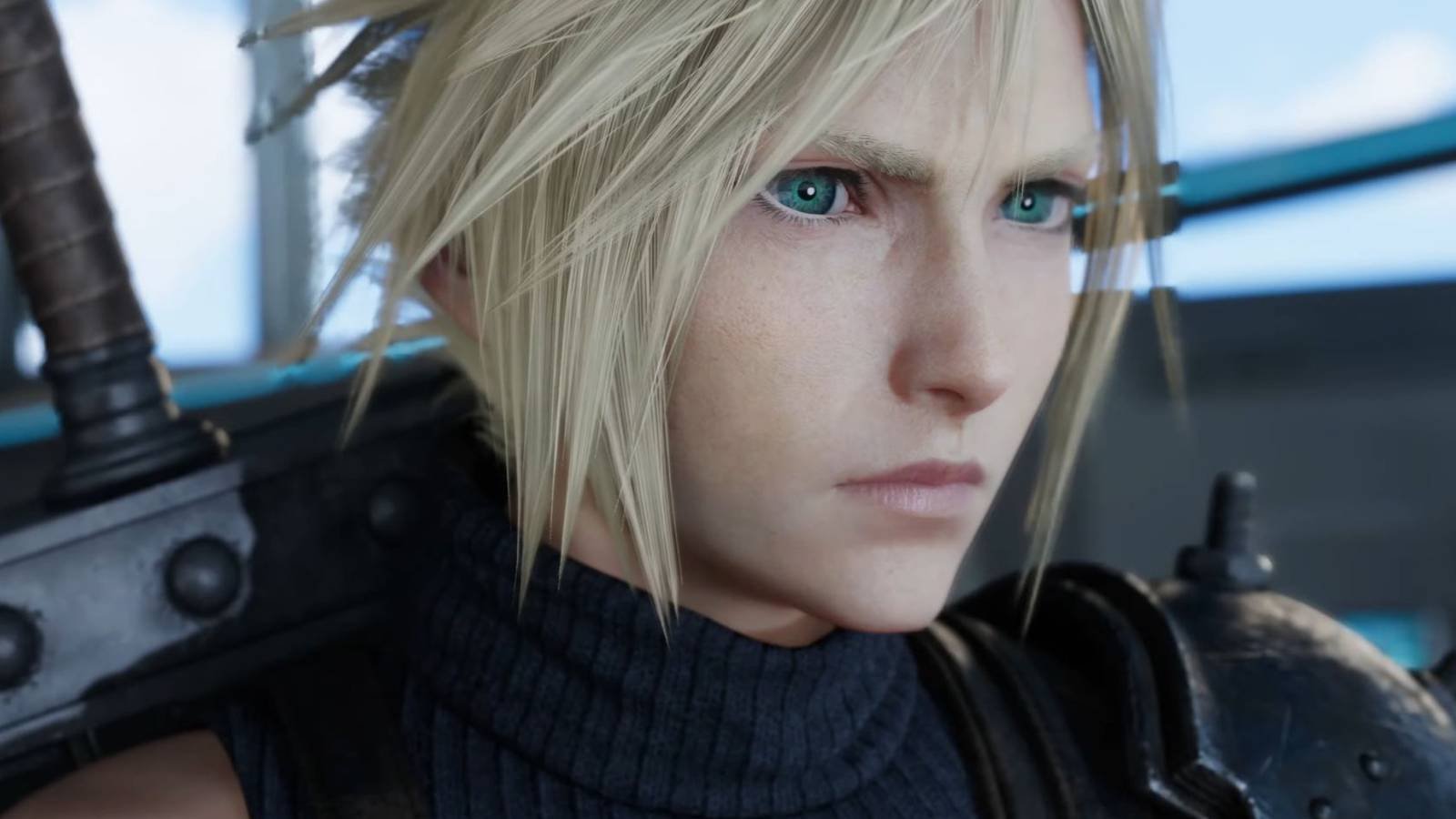
Beyond the Weapon reveals, the Gamescom Opening Night Live showcase offered extended gameplay footage that revealed new combat details. The trailer included what appears to be a new summon, with Tifa lifting her arm to summon what fans believe could be Typhon—a summon from the original Final Fantasy 7 that was previously absent from Remake and Rebirth. Typhon’s inclusion would bring the total summon count closer to the original game’s roster.
The footage also showcased new character outfits and additional combat mechanics, including what appears to be an expanded synergy system first introduced in Rebirth. Players noticed new team-based attack combinations that build upon the existing combat framework, suggesting Square Enix has refined the battle system further. However, specific gameplay systems remain under wraps.
Given the success of Rebirth‘s refined combat, which received widespread critical acclaim for its seamless blend of real-time action and tactical decision-making, expectations are high for further enhancements in the trilogy’s final chapter. The Revelation trailer hints at larger-scale battles that may require utilizing the entire party simultaneously, potentially including guest characters not yet revealed.
Final Fantasy 7 Rebirth ends at a pivotal point in the original game, with one party member facing their ultimate fate. Those familiar with the original version should have a good idea of where things are heading now, and the latest trailer for Final Fantasy 7 Revelation has a pretty massive scale. The entire planet is at risk, and it’s up to Cloud and his surviving friends to stop the Weapons from ending humanity, and Sephiroth from finding success at the same time.
Final Fantasy 7 Revelation Endgame Content and Level 99 Confirmed
Director Naoki Hamaguchi has confirmed that Final Fantasy 7 Revelation will feature significantly more endgame content than its predecessors in an exclusive interview with Italian gaming outlet Everyeye.it. Unlike Remake and Rebirth, which primarily encouraged players to replay the game on Hard Mode, Revelation will focus on post-game exploration and challenges.
Key endgame details include:
- Level cap increased to 99, allowing for more character progression than the earlier installments which capped at 50 and 70 respectively
- Optional Weapon fights positioned as challenges harder than the final story boss, continuing the tradition of Ruby and Emerald Weapon as ultimate tests
- The Knights of the Round confirmed as one of the high-difficulty endgame encounters, marking the return of the most powerful summon from the original
- Substantial world map exploration after completing the main story, with new areas and secrets unlocked only in the post-game
Hamaguchi explained the design philosophy shift to Italian media outlet Everyeye.it: “In this respect, I wanted to pay homage to the original and maintain the same structure. Therefore, some Weapons will be encountered and fought in the main story, while others will appear in specific areas of the world map and can only be challenged through side and optional content. These enemies will also have their own dedicated narrative content.”
This approach mirrors the original Final Fantasy 7‘s structure, where players could tackle Ruby and Emerald Weapon long after completing the main story. With Rebirth already offering over 160 hours of content for completionists, Revelation is positioning itself as the most substantial entry in the trilogy.
Fan Reactions and Social Media Buzz for Final Fantasy 7 Revelation
So far, reception to the new trailer has been overwhelmingly positive across social media platforms. On Twitter/X, the hashtag #FF7Revelation trended worldwide within hours of the trailer’s debut, accumulating over 250,000 posts within the first 24 hours.
While some fans expressed disappointment that Zack and Aerith didn’t make appearances in the footage, what was shown by Square Enix is clearly generating substantial excitement. Popular gaming content creator Maximilian Dood described the trailer as “absolutely insane” on his reaction stream, praising the Weapon redesigns as “exactly what I wanted.” The official Final Fantasy subreddit saw over 5,000 comments discussing the trailer, with particular focus on the Highwind combat sequences and the return of Knights of the Round.
The original Final Fantasy 7 still holds a special place in the hearts of a lot of gamers, but the remake trilogy has received a lot of praise from fans for how it has handled the material. In particular, the redesigned Weapons seem to be a lot more intimidating than they were back in 1997, with many fans noting the enhanced scale and detail make these encounters feel truly apocalyptic.
Final Fantasy 7 Remake and Rebirth both did an impressive job modernizing a lot of the designs from the original, and it seems that will continue with Revelation. The new trailer also suggests that the battle against the Weapons could be among the largest encounters in the entire remake trilogy, potentially rivaling some of the most ambitious boss fights in gaming history.
The biggest mystery remains the game’s ending. Director Naoki Hamaguchi has expressed considerable confidence in how the trilogy will conclude, while the changes introduced throughout Remake and Rebirth mean Square Enix isn’t simply recreating an ending fans have known for nearly three decades.
Final Fantasy 7 Revelation Launch Date, Platforms, and ESRB Rating
Final Fantasy 7 Revelation is currently scheduled to release in spring 2027, although Square Enix has not announced an exact launch date. Industry analysts suggest a late March or early April release window, consistent with previous major Square Enix RPG launches.
One of the most significant announcements is that the game will launch simultaneously on all platforms. Unlike Remake and Rebirth, which were timed exclusives on PlayStation, Revelation will arrive day-and-date on:
- PlayStation 5 (with confirmed 4K resolution and 60 FPS performance mode support)
- Xbox Series X|S (featuring Smart Delivery and Quick Resume support)
- Nintendo Switch 2 (optimized for portable play with reduced graphical settings)
- PC (via Steam and Epic Games Store, with ultrawide monitor support confirmed)
This multiplatform strategy ensures that Xbox, PC, and Nintendo fans won’t have to wait for the third chapter in the trilogy—a decision that has been widely welcomed by the gaming community. While the ESRB has not yet officially rated Revelation, based on the ratings of Remake and Rebirth (both rated T for Teen), the game is expected to receive a similar rating for fantasy violence, mild language, and suggestive themes. Square Enix has confirmed that all platforms will support the same visual features, with PC receiving additional graphics options including ray tracing support.
For more information on Final Fantasy 7 Revelation, visit the official Square Enix website. Additional coverage of Final Fantasy 7 Rebirth‘s developments can be found through Gamescom’s official news hub.
Final Fantasy 7 Revelation: What Comes Next?
With the launch window less than a year away, Square Enix appears to be ramping up its marketing campaign. More trailers and gameplay details are likely to arrive as Revelation moves closer to release, with potential showcases at Tokyo Game Show 2026 and The Game Awards later this year.
The most pressing questions remain unanswered: How will the Weapon battles be integrated into the story and gameplay? What role will Aerith and Zack play in the finale? And how will the trilogy—now vastly different from the original 1997 game—actually end?
For now, the latest trailer makes one thing clear: Final Fantasy 7 Revelation is dramatically increasing the scale for its finale, and its battles against the planet’s Weapons look set to play a major role in delivering what Hamaguchi has promised will be a universally beloved conclusion.