The late afternoon sun was just beginning to dip below the horizon, casting long, golden shadows across the asphalt of the Nürburgring Nordschleife. A low rumble, then a high-pitched snarl, echoed through the trees as a BMW M4 Competition roared past, its twin-turbo inline-six singing a mechanical symphony that sent shivers down my spine. That sound. That raw, visceral connection between driver and machine. It’s what countless automotive enthusiasts have cherished about the BMW M Competition lineup for decades. These weren’t just fast cars; they were emotion on four wheels, meticulously engineered for the thrill of the chase, the precision of a perfect apex, the sheer joy of unadulterated performance. (Honestly, you just *felt* alive behind the wheel of one.) But here’s the kicker, the news that’s been quietly rippling through the industry, leaving a mix of disbelief and grudging understanding in its wake: BMW is apparently hitting the brakes on its traditional M Competition models as we know them. It feels almost sacrilegious to even say it out loud, doesn’t it? The very idea of BMW, the purveyor of the “Ultimate Driving Machine,” altering a formula that has defined peak performance for so long. Yet, as bewildering as this sounds to the die-hard petrolhead, there’s a compelling, arguably necessary, strategic shift happening. It’s not a demise, but an evolution – a very calculated move by M GmbH to navigate the choppy, electrified waters of the future. And when you peel back the layers, you start to see that this isn’t just a marketing ploy; it’s a shrewd, forward-thinking decision made for what might be a very good reason indeed.
The Roar of Yesterday: The Unmistakable Legacy of M Competition
For years, the word “Competition” appended to an M model wasn’t just a trim level; it was a promise. It meant more power, sharper handling, stiffer suspension, and a generally more aggressive demeanor that separated it from its already potent M brethren. Think of the BMW M3 Competition or the BMW M5 Competition – these vehicles weren’t merely faster; they were finely honed instruments designed to deliver an even more intense, track-focused experience right out of the showroom. They captured the essence of what BMW M stood for: blending everyday usability with formidable track capability. (I still remember the first time I sat in an M4 Competition; the bolstered seats gripped you like a second skin, and the steering wheel felt alive in your hands.) This commitment to pushing boundaries, to extracting every last ounce of performance from their internal combustion engines, built a legendary reputation.
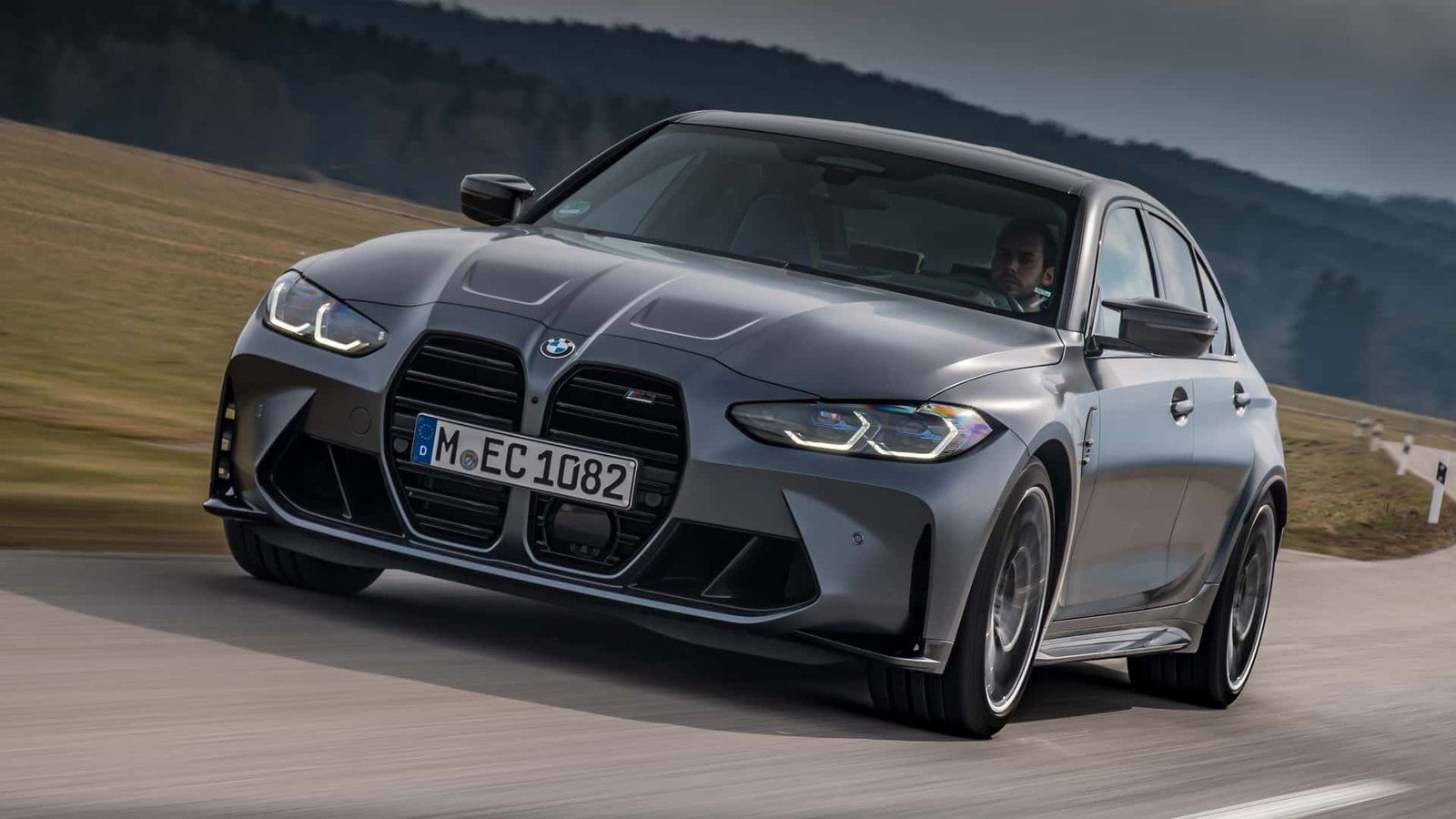
“The sound alone was intoxicating,” remarked Alex, a long-time M owner and track day regular, as we chatted over coffee. “That visceral snarl as you hit the redline… it’s a feeling, not just a sound. It’s what I bought into. It’s what ‘M’ meant to me.” He wasn’t alone. Generations of drivers have been drawn to this intense, analogue connection. The Competition models represented the pinnacle of this philosophy, a slightly wilder, more untamed version of an already wild beast. But the automotive landscape is changing at an unprecedented pace, driven by environmental regulations, technological advancements, and evolving consumer desires. This shift necessitates a re-evaluation, even for a brand as steeped in tradition and performance as BMW M.
A Whisper of Change: Why BMW is Rethinking Performance
So, why the shift? Why would BMW, a company synonymous with powerful petrol engines, begin to dial back its most potent internal combustion offerings? The answer, in short, is electrification. Global regulations on emissions are tightening faster than ever, and the industry is hurtling towards an electric future. BMW, like every major automaker, must adapt or risk being left behind. While pure electric M cars are already emerging – the i4 M50 and i5 M60 are prime examples, offering astounding acceleration – they fundamentally change the “Competition” paradigm. The traditional distinctions that defined a petrol-powered BMW M Competition model (engine tuning, exhaust note, gearbox calibration) simply don’t translate directly to an electric powertrain.
“We have to adapt, or we become obsolete,” an anonymous BMW insider shared with me recently, speaking on condition of anonymity. “The market is moving, customer preferences are shifting, and the regulatory environment is unforgiving. To keep the M brand relevant and thriving, we can’t just keep doing what we’ve always done, no matter how beloved it is.” This isn’t just about meeting emissions targets; it’s about staying competitive and attractive in a world increasingly focused on sustainability and new forms of performance. The instant torque of an electric motor offers a kind of acceleration that even the most tuned petrol engine struggles to match. The question then becomes, how does M GmbH redefine “Competition” for this new era?
The Grand Strategy: Electrification and the New Driving Dynamics
BMW’s strategic pivot isn’t about abandoning high performance; it’s about redefining it. The company isn’t “killing” M Competition in the sense of eliminating performance variants entirely. Instead, it’s evolving the concept. You’ll still see incredibly powerful BMWs, but the emphasis will shift dramatically. We’re talking about a strong move towards hybrid M cars and eventually fully electric M models. This means the traditional internal combustion engine (ICE) Competition models, with their specific tuning and badging, are likely to be phased out or absorbed into broader performance packages.

“It’s about redefining what ‘ultimate driving machine’ means in an electric age,” a high-ranking BMW executive, who prefers to remain unnamed in print, explained during a recent industry event. “The thrill isn’t going away; it’s just taking on a different form. Imagine the instant torque of an electric motor combined with the precise handling and chassis tuning M is known for. That’s a new kind of magic.” This holistic approach means focusing on battery technology, electric motor design, and sophisticated software that can deliver not just raw speed, but also the nuanced driving dynamics that M owners expect. Torque vectoring, intelligent all-wheel drive, and adaptive suspension systems will become even more crucial in shaping the character of future performance cars. The challenge is immense, but the opportunity to create something truly innovative is even greater.
The New Performance Metrics: More Than Just Horsepower
In the world of electric vehicles (EVs), horsepower figures can become almost meaningless in isolation. It’s the instant torque delivery, the weight distribution from battery placement, and the sophisticated control systems that truly define performance. BMW’s M division will increasingly focus on:
- Instantaneous Torque: The sheer, neck-snapping acceleration that EVs inherently offer.
- Chassis Rigidity & Balance: Compensating for battery weight to maintain M’s signature agility.
- Software Integration: Advanced algorithms for power delivery, traction control, and simulated sounds to enhance the driving experience.
- Thermal Management: Crucial for sustained track performance in electric and hybrid models.
This means that while the “Competition” badge might fade, the spirit of competition, of pushing the limits of automotive performance, will undoubtedly endure. It will just be expressed through new technological mediums, focusing on metrics beyond just engine displacement and turbo boost.
The Purist’s Dilemma: What Does This Mean for the M Enthusiast?
For many long-time fans, this news feels like a punch to the gut. The distinctive roar, the smell of burning petrol, the tactile feedback of a manual gearbox – these are intrinsic to the M Competition experience. The transition to electric or heavily hybridized powertrains, even if they’re faster, will inevitably feel different. “My heart aches, but my head understands,” confessed Sarah, a proud owner of an E92 M3, whose eyes held a flicker of resignation. “I love the sound of my V8, the way it screams. But I also know that era is fading. I just hope BMW can capture that M magic in a new way.”
This sentiment is echoed widely. There’s a profound emotional attachment to the legacy of internal combustion M cars. The task for BMW M GmbH is not just to build fast EVs, but to build M-badged EVs that still feel like a BMW M car. This means retaining the precise steering, the balanced chassis, the communicative feedback that has always defined the brand. It’s a monumental challenge, but also a chance for reinvention. We might see a blend of raw power with sustainable technology, a new kind of “ultimate driving machine” that respects its heritage while boldly stepping into the future. Imagine a hybrid M car that offers the best of both worlds: searing acceleration from electric motors for everyday driving, complemented by a powerful, albeit smaller, internal combustion engine for extended track sessions or pure emotional gratification. The compromise might be the new ideal.
Looking Ahead: The Future of M GmbH and High-Performance BMWs
The future of BMW M is not one of decline, but of transformation. We’re likely to see a tiered approach to performance, where the most extreme variants might eventually be fully electric, pushing boundaries in terms of acceleration and handling dynamics through sophisticated electronic controls. The “Competition” moniker might evolve into something different, perhaps denoting specific performance packages for electric models, focusing on battery capacity, motor output, or even advanced driver assistance systems that enhance track performance.
The shift also allows BMW to broaden its appeal. As noise regulations tighten in urban centers and environmental consciousness grows, a quieter, zero-emission M car could open up new markets and attract a different demographic of buyers who prioritize sustainable luxury and performance. This isn’t just about selling more cars; it’s about future-proofing the brand. The development of bespoke electric platforms, like the “Neue Klasse” architecture, will be critical. These platforms are designed from the ground up to accommodate electric powertrains, offering optimal battery placement, superior weight distribution, and the flexibility to integrate advanced M-specific technologies. This thoughtful engineering means that future M cars won’t simply be electrified versions of existing models; they will be purpose-built performance machines for the electric age.
Ultimately, while the traditional BMW M Competition models, with their specific internal combustion nuances, may be fading into the sunset, it’s not an end. It’s a metamorphosis. BMW is making a pragmatic, yet ambitious, decision to realign its most revered performance division with the realities and opportunities of the 21st century. It’s a gamble, certainly, but one rooted in a desire to ensure that the M badge continues to represent the pinnacle of driving excitement, even if that excitement comes with a different soundtrack and a plug. The roar might be replaced by a whisper, but the thrill of the chase, the precision, and the sheer joy of driving an M car will, hopefully, remain untouched. We can only wait, and perhaps, look forward to the new magic that M GmbH is cooking up.
Frequently Asked Questions
| Why is BMW reportedly scaling back its M Competition models? | BMW is strategically evolving its M Competition lineup primarily due to the global shift towards electrification, stricter emissions regulations, and changing consumer preferences. The traditional distinctions for petrol-powered Competition models are becoming less relevant in an electric future, prompting BMW to redefine high-performance for a new era. |
| What benefits does BMW foresee from this strategic shift? | BMW expects to future-proof its M brand, stay competitive in a rapidly evolving automotive market, and attract new demographics. The shift allows M GmbH to leverage the instant torque and advanced dynamics of electric powertrains, meet environmental targets, and develop innovative performance cars on bespoke electric platforms like the “Neue Klasse.” |
| How will BMW’s performance division, M GmbH, adapt to these changes? | M GmbH will focus on developing high-performance hybrid and fully electric M models. This involves optimizing battery technology, electric motor design, and sophisticated software for power delivery, traction control, and overall driving dynamics. The division will aim to maintain its signature driving precision and feedback, adapting them to the unique characteristics of electric powertrains. |
| What challenges might BMW face in transitioning its M Competition lineup? | Key challenges include maintaining the emotional connection and distinct character associated with traditional M cars (like engine sound and tactile feedback) in electric models. They must also manage increased vehicle weight due to batteries, ensure sustained track performance through advanced thermal management, and convince purist enthusiasts to embrace the new definition of M performance. |
| What can enthusiasts expect from the future of BMW M cars? | Enthusiasts can expect M cars that offer breathtaking acceleration from instantaneous electric torque, combined with BMW M’s renowned chassis tuning and precise handling. While the traditional “Competition” badge might evolve, the spirit of pushing performance boundaries will continue, likely through advanced hybrid powertrains and purpose-built fully electric M models designed for a new kind of ultimate driving experience. |
Important Notice
This FAQ section addresses the most common inquiries regarding the topic.