You’re driving down the highway, maybe a little lost in thought, the radio humming a familiar tune. Suddenly, a car whizzes past you on the shoulder, narrowly missing a concrete barrier, its front bumper held on by a prayer and a single zip tie, a temporary paper tag fluttering wildly in the breeze. No signal, no remorse, just pure, unadulterated chaos. You shake your head, a wry smile playing on your lips, and think, “Yep, that’s some serious Big Altima Energy right there.” It’s a phrase that has permeated internet culture, transcending mere automotive banter to become a shorthand for a very specific, often bewildering, type of driving behavior and vehicle aesthetic. You’ve seen the memes, the viral videos, the whispered warnings among friends about ‘that’ driver. But what exactly is this elusive Big Altima Energy? Is it just a joke, or is there a deeper, more curious truth behind this widespread observation? It’s almost as if the universe conspired to assign a particular aura to one specific sedan, turning it into an unwitting symbol of a certain disregard for conventional road manners and vehicle upkeep. It’s a fascinating dive into how a single car model, the humble Nissan Altima, became an icon of a distinctly wild, unpredictable, and sometimes downright baffling driving style that leaves onlookers simultaneously amused and a little terrified. We’re talking about a phenomenon that goes beyond simple brand loyalty or dissatisfaction; it’s a full-blown cultural moment.
The Genesis of a Meme: Where Did It All Begin?
The internet, in its infinite wisdom and capacity for collective observation, is the true birthplace of Big Altima Energy. It didn’t just appear overnight; it was a slow, creeping realization, much like watching a particularly daring Altima driver weave through rush hour traffic. It began, as many internet phenomena do, with anecdotal evidence shared across platforms like Reddit, Twitter (now X), and later, TikTok. People started noticing a pattern: specific behaviors, specific vehicle conditions, and almost invariably, a Nissan Altima at the center of it all. “I swear, every time I see someone driving like a maniac, it’s an Altima,” one user posted on a Reddit thread dedicated to bad driving, and countless others echoed the sentiment. This wasn’t just a handful of isolated incidents; it was a deluge of similar stories, all converging on one particular make and model.
Why the Nissan Altima, you might ask? That’s the million-dollar question, isn’t it? It’s a popular mid-size sedan, known for its affordability, decent fuel economy, and widespread availability. For years, it has been a staple in rental car fleets and a popular choice in the second-hand market, making it accessible to a broad demographic. This accessibility, some theorize, might be part of the equation. As the cars age, they become even more affordable, often falling into the hands of drivers who might not prioritize maintenance or adherence to strict road rules. “It became a joke at first,” says Sarah Chen, a long-time moderator of an online car enthusiast forum. “People would post pictures of Altimas with missing parts or crazy driving, and everyone just *got* it. It tapped into something we’d all silently observed.” It was almost as if a collective unconscious thought suddenly found its voice, identifying a truly unique subset of the driving population.
Defining Big Altima Energy: More Than Just a Car
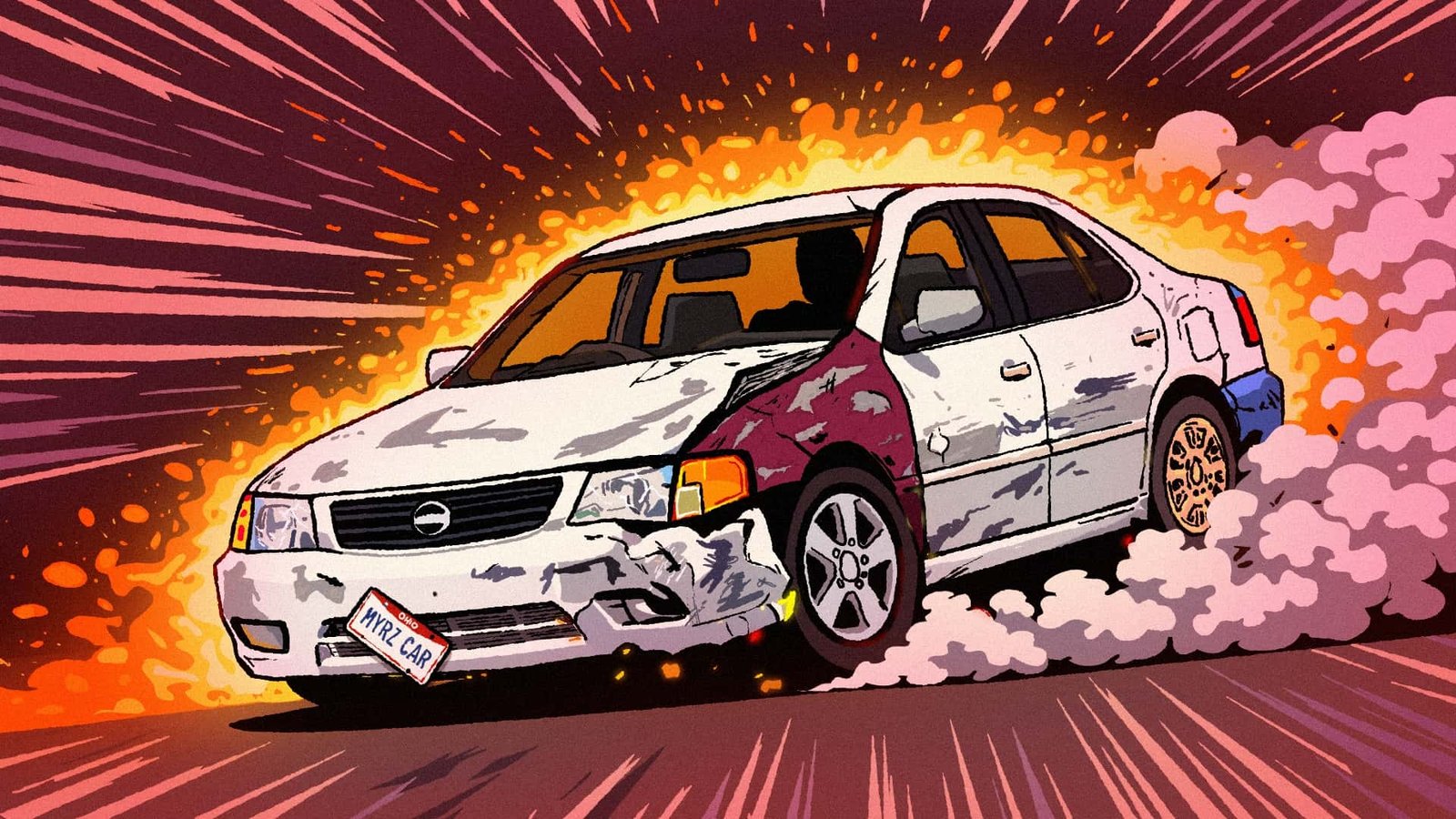
So, what are the tell-tale signs, the defining characteristics of this elusive Big Altima Energy? It’s an intoxicating cocktail of specific behaviors and aesthetics. First, there’s the driving itself. We’re talking about a distinct pattern of aggressive, often reckless, maneuvers. Think sudden, unannounced lane changes, tailgating with an almost religious fervor, speeding well beyond reasonable limits, and an uncanny ability to find the exact wrong moment to do something utterly unexpected. It’s not just speeding; it’s speeding with flair, a certain devil-may-care attitude that suggests the driver is either late for something critically important or simply exists outside the conventional laws of physics and common courtesy.
Then there’s the vehicle’s condition. This is where the visual storytelling really kicks in. A Nissan Altima exhibiting Big Altima Energy often comes with a unique set of battle scars. Missing hubcaps are practically a uniform requirement, as are bumpers that appear to be in a delicate negotiation with gravity, sometimes held on by duct tape, zip ties, or sheer willpower. Mismatched body panels, faded paint, and an abundance of temporary paper license plates that flap in the wind like a distress signal are also common sights. It’s almost as if the car itself reflects the driver’s philosophy: a utilitarian object, designed to get from A to B, with little to no regard for its aesthetic presentation or mechanical well-being. “It’s not just a car, it’s an entire aesthetic,” remarked avid car spotter, Michael “Gearhead” Green, during a recent podcast. “You see that combination – the driving and the condition – and you just know, that’s the real deal.” It speaks to a certain detachment from typical car ownership pride, a focus on function over form, or perhaps, simply a budget that doesn’t stretch to professional repairs.
The Psychology Behind the Wheel: Understanding Altima Drivers
This naturally leads us to a fascinating question: Is it the car that creates the driver, or do certain drivers gravitate towards the Altima? It’s a classic chicken-or-egg scenario, isn’t it? While it’s crucial to remember that this is a generalization and not every Altima driver embodies this stereotype (many are perfectly responsible, law-abiding citizens, bless their hearts!), the sheer volume of anecdotal evidence compels us to explore the underlying psychology. Perhaps the Altima, being an affordable and common sedan, attracts a diverse range of drivers, including some who might prioritize practicality and low cost over vehicle image or meticulous maintenance. It’s a reliable workhorse, often the default choice for someone needing dependable transportation without breaking the bank.

One might speculate that drivers exhibiting Big Altima Energy often operate with a mindset that is less concerned with external perception or strict adherence to rules. It might be a subtle form of rebellion, a quiet statement of “I’m going to do things my way,” or simply a reflection of an individual’s priorities. It could be a driver who is constantly running late, or someone who views their vehicle purely as a tool, not a statement. As Officer Ben Carter, a traffic patrol veteran of 15 years, once mused, “You see an Altima doing something completely wild—like trying to fit into a space that doesn’t exist—and you almost just shake your head and sigh. It’s not usually malicious, just… a bit unhinged, you know?” This lack of concern might extend to vehicle upkeep, as minor cosmetic damage or even more significant issues are left unaddressed, contributing to the distinct visual profile. It’s less about a deliberate act of defiance and more about a pervasive sense of “it is what it is,” a pragmatic approach to automotive life that often leaves others scratching their heads.
From Anecdotes to Academia: Is There Any Truth to the Stereotype?
Stereotypes are, by their very nature, broad generalizations, and it’s essential to approach the concept of Big Altima Energy with a critical eye. No single car model dictates a driver’s behavior, and millions of Nissan Altima owners drive safely and responsibly every day. However, the persistence and ubiquity of the “Altima meme” suggest there’s a kernel of truth, or at least a highly observable pattern, that underpins the humor. The sheer volume of anecdotal evidence, shared by diverse individuals across different regions, is compelling. It’s hard to ignore when so many independent observations align.
While there isn’t formal academic research specifically on “Big Altima Energy,” one could infer connections to studies on driver behavior, socioeconomic factors influencing car ownership, and the psychology of risk-taking on the road. For instance, vehicles that are more affordable and have lower insurance rates might attract a demographic more prone to certain driving styles, or perhaps those who simply can’t afford frequent repairs, leading to the cosmetically damaged vehicles we often associate with the meme. The internet, in this case, acts as a massive, informal data collection system, highlighting statistically significant (though unverified) trends in driver behavior linked to a specific car model. It’s the power of collective observation, amplified by social media, that gives this phenomenon its weight. “You can’t argue with what you see every day,” commented Dr. Emily Reynolds, a sociologist specializing in online communities. “The meme acts as a cultural shorthand for something people have genuinely experienced, making it resonate.”
Navigating the Culture: How to Spot Big Altima Energy in the Wild
So, you’re out there, cruising along, and you want to know how to spot Big Altima Energy for yourself? Think of it as a fun, albeit sometimes alarming, game of “I Spy.” The visual cues are often the first giveaways. Keep an eye out for a Nissan Altima (models from roughly 2007-2018 are particularly prone, though newer ones aren’t immune) with a perpetually dangling front bumper, perhaps one headlight out, or mismatched paint on different body panels. Those temporary paper license plates, often tattered and barely legible, are almost a canonical symbol. They wave like a flag, announcing their presence.
But it’s not just about the looks; it’s the performance. The driving habits are key. You’ll likely witness aggressive tailgating, sudden lane changes without signaling, or an inexplicable need to speed up just as the light turns red. They might hog the left lane, only to suddenly swerve right at the last second, or perhaps even perform an impromptu U-turn across three lanes of traffic. It’s a theatrical display, a public performance of vehicular anarchy. A friend of mine, David, once recounted, “The moment I saw that specific shade of faded metallic blue, combined with the missing rear view mirror and the driver trying to eat a burrito with one hand while weaving, I just knew. It was undeniable Big Altima Energy.” It’s an almost instinctive recognition, a pattern so ingrained in popular culture that it requires little explanation once witnessed.
Beyond the Memes: The Broader Impact on Automotive Perception
While Big Altima Energy is primarily a source of humor and internet folklore, it does highlight some interesting aspects of automotive perception and brand reputation. For Nissan, it’s a double-edged sword. On one hand, any publicity is publicity, and the Altima certainly has a unique, if infamous, place in the collective consciousness. On the other hand, it’s not exactly the brand image most automakers strive for. It underscores how deeply ingrained stereotypes can become, attaching specific narratives to certain vehicles.
This phenomenon isn’t unique to the Altima, of course. We have “soccer mom vans,” “bro trucks,” and the classic “mid-life crisis sports car.” Each carries its own set of cultural assumptions and often humorous observations. However, Big Altima Energy stands out for its specificity and the sheer volume of anecdotal evidence supporting its existence. It reflects how we categorize and understand the world around us, even down to the cars we drive and the way others drive them. It’s a fascinating sociological study in miniature, played out on the digital highways of the internet. It reminds us that cars are more than just transportation; they’re cultural artifacts, imbued with meaning and narratives, sometimes entirely unintended by their manufacturers. The phenomenon shows just how quickly internet culture can shape public perception, turning an ordinary sedan into a legend of the road, for better or worse.
Conclusion
So, there you have it: Big Altima Energy, explained. It’s a complex, often humorous, and sometimes genuinely concerning cultural phenomenon that has cemented the Nissan Altima’s unique place in automotive lore. It’s a testament to the power of collective observation and internet culture, transforming a common sedan into a symbol for a distinct set of driving habits and vehicle conditions. While we all know that stereotypes don’t define every individual, the sheer volume of shared experiences means that ‘Altima Energy’ resonates deeply with many drivers. It serves as a lighthearted, yet pointed, commentary on everything from driver behavior and road etiquette to socioeconomic factors and vehicle maintenance.
Next time you’re on the road and spot an Altima with a dangling bumper, a temporary tag, or executing a particularly audacious maneuver, you’ll know exactly what you’re witnessing. You might chuckle, you might sigh, or you might even give them a wide berth. But one thing’s for sure: you’ll recognize that unmistakable aura of Big Altima Energy. It’s a peculiar, enduring, and utterly fascinating part of our modern driving landscape, a truly unique imprint left by one of the most ubiquitous cars on our roads. It makes you wonder, doesn’t it, what other automotive archetypes are waiting to be fully recognized and embraced by the internet?
Frequently Asked Questions
| What exactly is ‘Big Altima Energy’ and where did it come from? | ‘Big Altima Energy’ is an internet meme and cultural phenomenon describing a specific, often aggressive, reckless, or oblivious driving style and a common aesthetic of disrepair (e.g., missing bumpers, temporary tags) frequently associated with Nissan Altima drivers. It originated from widespread anecdotal observations shared across social media platforms like Reddit, Twitter, and TikTok, where users noticed a recurring pattern of these behaviors and vehicle conditions linked to the Altima. |
| Are there any positive aspects or interpretations of ‘Big Altima Energy’? | While ‘Big Altima Energy’ is predominantly used in a humorous or critical context, one could interpret it as a symbol of unapologetic functionality or a rejection of conventional automotive vanity. It represents a vehicle and driver focused purely on utility, often without concern for aesthetics or social norms, which some might see as a form of freedom or pragmatism. It has also fostered a unique online community through shared humor and observations. |
| How has ‘Big Altima Energy’ manifested in popular culture and online communities? | It has manifested through viral memes, dedicated subreddits (e.g., r/NissanDrivers), TikTok trends, and countless social media posts showcasing videos and photos of Altimas exhibiting the characteristic behaviors and appearances. It’s used as a cultural shorthand to describe a certain type of chaotic driving or an unkempt vehicle, becoming a recognizable part of online car culture and general internet slang. |
| What are the common misconceptions or negative stereotypes associated with ‘Big Altima Energy’? | The primary misconception is that every Nissan Altima driver embodies these characteristics. ‘Big Altima Energy’ is a generalization and a stereotype; many Altima owners are responsible, safe drivers. The negative stereotype often implies a lack of care, poor driving skills, or financial irresponsibility, which is not true for the majority of Altima owners. It unfairly paints a broad stroke based on observable patterns among a subset of drivers. |
| Will the ‘Big Altima Energy’ phenomenon continue to evolve, and what’s its lasting impact? | It’s likely the phenomenon will continue to evolve as internet culture shifts and new generations of vehicles (and drivers) emerge. Its lasting impact lies in how it demonstrates the power of collective observation and social media in shaping cultural perceptions of specific brands and vehicles. It serves as a humorous, yet insightful, commentary on driving behavior, socioeconomic factors, and the unexpected ways objects can become cultural symbols. |
Important Notice
This FAQ section addresses the most common inquiries regarding the topic.