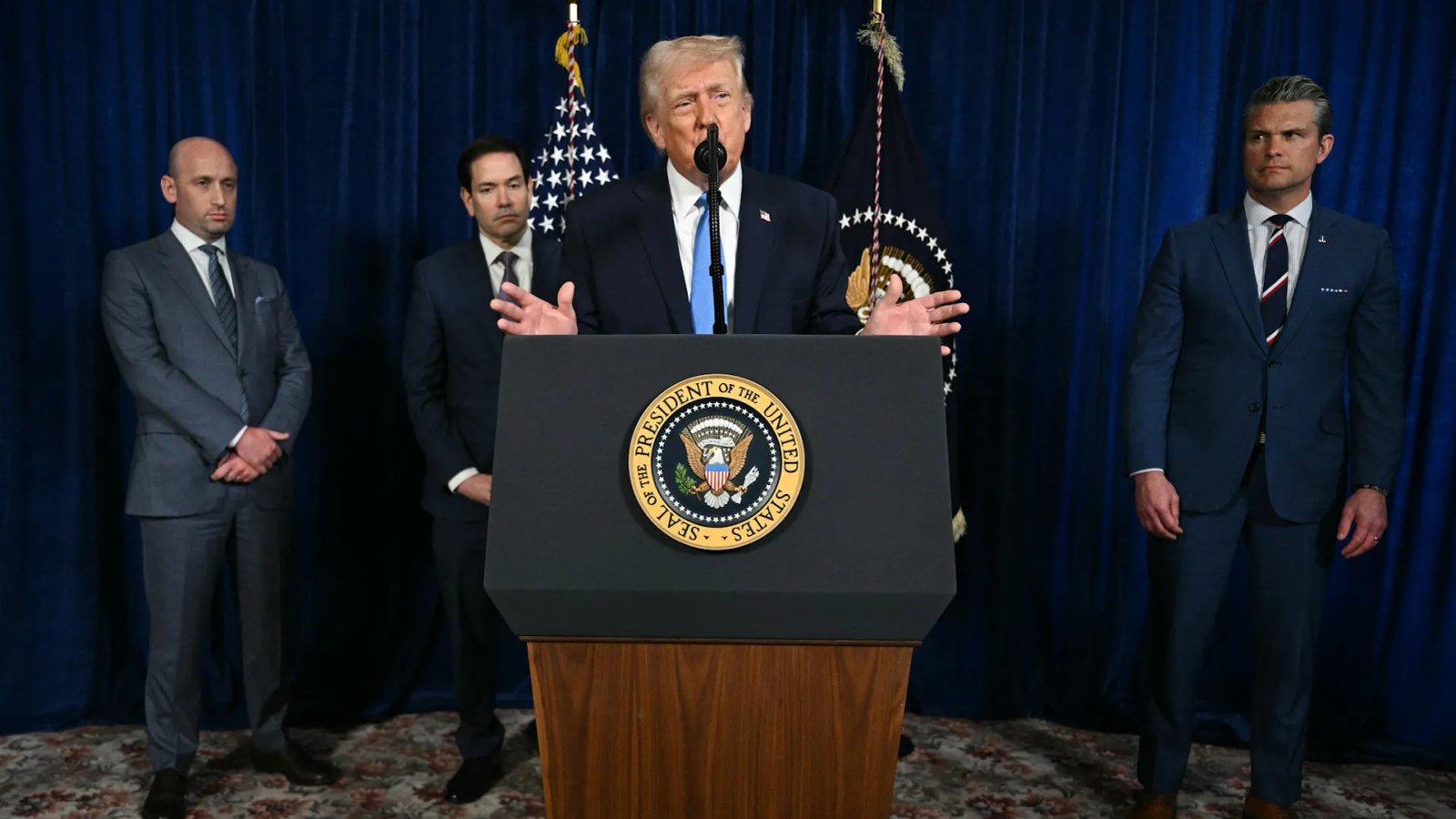
The air in the James S. Brady Press Briefing Room was thick with an unusual kind of anticipation that day. It wasn’t just another routine briefing; you could feel it buzzing in your bones, a palpable energy that hinted at something seismic. Journalists, usually a jaded bunch, fidgeted in their seats, whispering, adjusting cameras, and bracing themselves for what felt like a monumental announcement. Then, he walked in. President Donald Trump strode to the podium, flanked by senior officials, his expression a mix of solemnity and a subtle, almost imperceptible triumph. The cameras flashed, a cacophony of shutters filling the room, and then a hush fell. That’s when the words hit, like a thunderclap: Nicolás Maduro, the embattled leader of Venezuela, had been captured. Can you imagine the sheer shock? It was one of those moments that stops time, a genuine “where were you when you heard?” kind of event, signaling a dramatic shift in the long, arduous saga of US-Venezuela relations. For years, the international community had watched the humanitarian crisis unfold, the political instability fester, and the allegations of drug trafficking against the regime mount. This press conference wasn’t just an update; it was the culmination of relentless pressure, a bold statement against what the US had long labeled a narco-terrorist state, and a profound moment for everyone invested in the future of Venezuela and the broader South American region.
The Dramatic White House Announcement
President Trump didn’t waste a moment in delivering the news that sent ripples across the globe. Standing firm at the podium, under the bright lights of the briefing room, he spoke with a deliberate cadence, outlining the details of an operation that had successfully led to the apprehension of Nicolás Maduro. “Today, I stand before you to announce a significant victory for justice and the rule of law,” Trump declared, his voice resonating through the room. “Nicolás Maduro, a dictator who has oppressed his people and engaged in heinous acts of drug trafficking, is no longer free.” The announcement came after years of mounting pressure from Washington, including sanctions, diplomatic isolation, and a significant bounty placed on Maduro’s head. It felt like a story ripped from a spy novel, honestly. The sheer audacity of such an operation, targeting a sitting head of state, underscored the US administration’s unwavering commitment to its policy on Venezuela.
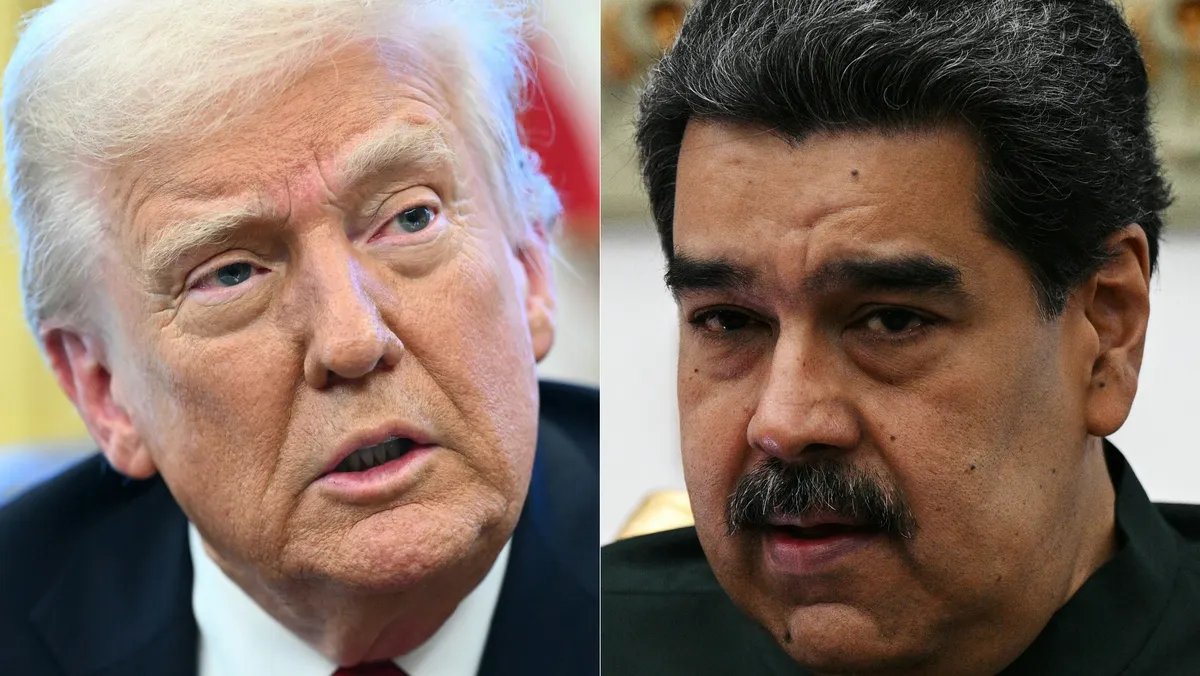
The charges against Maduro were severe, as detailed during the press conference. They included narco-terrorism, conspiracy to import cocaine, and possession of machine guns and destructive devices. These weren’t minor infractions; they painted a picture of a regime deeply entrenched in criminal enterprises, allegedly using the state apparatus to facilitate illicit drug operations. “This isn’t just about politics; it’s about holding individuals accountable for devastating crimes against humanity and global security,” asserted a senior State Department official who briefly spoke after the President. The room was buzzing with questions, hands shooting up from every corner. Journalists were eager for specifics, the “how” and “where” of this astounding development. You could almost hear the collective gasp when the President reiterated the gravity of the charges, emphasizing that the Department of Justice had been building this case for a very long time.
The Long Road to Accountability: Background on US-Venezuela Tensions
To truly grasp the magnitude of Maduro’s capture, we have to rewind a bit and understand the turbulent history between the United States and Venezuela. For years, particularly under the Trump administration, relations had plummeted to an all-time low. The US had recognized Juan Guaidó as Venezuela’s legitimate interim president in early 2019, a move that only deepened the chasm between Washington and Caracas. Economic sanctions were piled on, targeting Venezuela’s vital oil industry and key figures within Maduro’s government, all aimed at pressuring him to step down. It was a strategy of maximum pressure, and many wondered if it would ever yield such a dramatic result.
The humanitarian crisis in Venezuela served as a constant backdrop to these political maneuverings. Millions of Venezuelans had fled the country, seeking refuge from hyperinflation, severe food and medicine shortages, and a crumbling infrastructure. The US often cited these deplorable conditions as a justification for its aggressive stance, arguing that Maduro’s regime was illegitimate and directly responsible for the suffering of its people. I remember watching countless news reports, seeing families cross borders on foot, their faces etched with despair. It was heartbreaking, and it certainly fueled a sense of urgency for many policymakers. The US justice system, through the Department of Justice, had formally indicted Maduro in March 2020 on charges of narco-terrorism, offering a hefty $15 million reward for information leading to his arrest or conviction. This reward wasn’t just a symbolic gesture; it was a clear signal that the US intended to pursue Maduro with the full force of its legal and intelligence apparatus, regardless of his status as a head of state.
Unraveling the Operation: How Maduro Was Captured
While the initial press conference provided the headline, the specifics of how Maduro’s capture was executed were, understandably, shrouded in a certain degree of secrecy. President Trump alluded to a complex, multi-agency effort, but the detailed operational logistics remained classified. However, bits and pieces, along with careful speculation from analysts, began to form a clearer picture. It wasn’t a military invasion, as some might have feared, but rather a meticulously planned intelligence-led operation, likely involving international partners who had grown weary of the Venezuelan regime’s activities.
“This wasn’t just a lucky break; it was years of persistent intelligence work finally paying off, identifying vulnerabilities and patiently waiting for the opportune moment,” a source close to the operation, who wished to remain anonymous due to the sensitivity of the mission, confided to a reporter shortly after the announcement. It was suggested that the operation capitalized on internal discontent or a lapse in Maduro’s typically tight security. The possibility of an inside tip, driven by the substantial reward money, was also a strong consideration. Imagine the immense pressure on those involved, the secrecy required, the precise coordination needed to pull off something of this magnitude without triggering a broader regional conflict.
The operation, according to whispers and careful analysis, likely involved a combination of intelligence gathering by the DEA and CIA, perhaps with support from local elements within Venezuela or neighboring countries. The goal would have been to locate, isolate, and then extract Maduro from Venezuelan soil, bringing him into US custody to face the drug trafficking charges. The precision required would have been astounding. “Executing something like this against a head of state, even one heavily sanctioned and isolated, is an extraordinary feat of intelligence and special operations,” remarked General Mark Hertling, a retired US Army officer and military analyst, on a cable news network. He further elaborated on the legal complexities, stating that the US asserted jurisdiction based on the extraterritorial nature of the alleged drug crimes and the international warrant.
Global Reactions and Repercussions
The news of Maduro’s capture sent shockwaves far beyond Washington. The international community reacted with a mixture of surprise, relief, and cautious apprehension.
* Venezuelan Opposition: Supporters of Juan Guaidó erupted in celebration, viewing the arrest as a monumental step towards restoring democracy and ending the humanitarian crisis. “This is the beginning of a new chapter for Venezuela, a chance for freedom and justice,” Guaidó’s office quickly released a statement, echoing the sentiments of millions of Venezuelan expatriates. You could almost hear the collective sigh of relief from those who had suffered so much.
* Allied Nations: Countries like Colombia and Brazil, which had been vocal critics of Maduro’s regime and had absorbed millions of Venezuelan migrants, largely welcomed the news, seeing it as a victory against regional instability and organized crime. Their leaders quickly issued statements praising the international cooperation that led to the capture.
* Maduro’s Allies: Nations such as Cuba, Russia, and China, which had consistently supported Maduro, condemned the action as a violation of international law and Venezuelan sovereignty. They called for his immediate release and warned of potential destabilizing consequences for the region. It’s a predictable response, of course, but it highlights the deep geopolitical divides.
* International Organizations: The United Nations and other international bodies issued statements urging calm and emphasizing the need for a peaceful transition in Venezuela, while carefully avoiding taking sides on the legality of the capture itself. The legal frameworks surrounding the arrest of a sitting head of state are, after all, incredibly complex and often contentious.
The immediate market impact was also noteworthy. Oil prices saw some volatility, given Venezuela’s status as a major, albeit troubled, oil producer. Speculation ran wild about who might step into the power vacuum and what kind of transition, if any, would follow. It truly felt like a turning point, the kind of event that historians would mark as the end of one era and the uncertain beginning of another.
The Legal Road Ahead: Charges and Trial
With Maduro now in US custody, the focus immediately shifted to the legal process. The charges are formidable, primarily revolving around drug trafficking and narco-terrorism. The Department of Justice had detailed these accusations publicly, alleging that Maduro and his associates were part of a “Cartel of the Suns,” conspiring to flood the United States with cocaine.
“Bringing a former head of state to trial on these kinds of charges is unprecedented in recent memory and presents a unique set of legal and diplomatic challenges,” explained Sarah Goldberg, a professor of international law at Georgetown University. She highlighted the complexities of jurisdiction, the collection of evidence, and the political sensitivity of the proceedings.
The trial would likely be held in a US federal court, possibly in New York or Florida, where many of the alleged drug operations were centered or where the impact was felt. Prosecutors would be tasked with presenting compelling evidence to a jury, connecting Maduro directly to the large-scale smuggling of narcotics. This isn’t just about a few drug deals; it’s about proving a systemic, state-sponsored criminal enterprise. Imagine the resources required, the witnesses protected, the layers of obfuscation that need to be peeled back. It’s a monumental undertaking. The potential for a long and drawn-out legal battle is high, and the world will undoubtedly be watching every step of the process.
A Turning Point for US Foreign Policy?
The capture of Nicolás Maduro undeniably marks a significant moment for US foreign policy, particularly in Latin America. It sends a powerful message that the United States is willing to pursue leaders accused of severe transnational crimes, even if it involves highly sensitive operations targeting a sitting, albeit contested, head of state. This wasn’t merely a symbolic gesture; it was a concrete action with profound implications.
For one, it establishes a precedent. Other authoritarian leaders accused of similar crimes, who might have felt insulated by their position, now have reason to reconsider. It suggests that the long arm of US justice can, and will, reach across borders when national security interests and international criminal justice converge. “This move redefines the boundaries of international accountability,” remarked Dr. Elena Rodriguez, a political analyst specializing in Latin American affairs. “It demonstrates a willingness to prioritize legal process over traditional diplomatic norms when confronting what are perceived as egregious abuses of power and criminal activities.”
Furthermore, it could reshape the dynamics of power within Venezuela itself. With Maduro removed, even if by force, the political landscape is irrevocably altered. While immediate stability is not guaranteed, it opens a window, however small, for a potential political transition that had seemed impossible for so long. The US administration under Trump had consistently advocated for democratic change in Venezuela, and this event, regardless of its methods, aligns with that stated objective. It truly felt like a line in the sand had been drawn, asserting that certain actions, regardless of who commits them, will not go unpunished. The ripple effects will be felt for years, influencing how the US engages with problematic regimes and how international law is applied in an increasingly interconnected, yet deeply divided, world.
Conclusion
The White House press conference announcing the capture of Nicolás Maduro was more than just a news event; it was a watershed moment, etching itself into the annals of international diplomacy and criminal justice. President Trump’s declaration, delivered with a mix of gravity and resolve, signaled the culmination of years of relentless pressure on Venezuela’s embattled regime. For those who had watched the unfolding humanitarian crisis with growing despair, the news offered a flicker of hope that accountability might finally be within reach.
While the intricacies of the operation remain largely clandestine, the message is clear: the United States is prepared to take extraordinary measures to pursue those it accuses of severe transnational crimes, particularly drug trafficking and narco-terrorism. The road ahead for Venezuela is still fraught with uncertainty, and the legal battle for Maduro will undoubtedly be long and complex. Yet, this dramatic event has undeniably shifted the global conversation, forcing a reevaluation of international norms and raising profound questions about sovereignty, justice, and the future of political leadership in a world grappling with intertwined challenges. It’s a story that will continue to unfold, with its repercussions shaping regional dynamics for years to come, reminding us all that history is often made in the most unexpected and dramatic ways.
Frequently Asked Questions
| What was the main topic of Trump’s press conference regarding Venezuela? | The primary topic of President Trump’s press conference was the announcement of the capture of Nicolás Maduro, the former Venezuelan leader, along with details regarding the international operation and the serious drug trafficking and narco-terrorism charges he faced. |
| What were the specific charges against Nicolás Maduro mentioned during the announcement? | Nicolás Maduro was specifically charged with narco-terrorism, conspiracy to import cocaine into the United States, and possession of machine guns and destructive devices, among other related offenses, painting a picture of a regime allegedly involved in systemic criminal activities. |
| How did the US manage to capture Maduro, according to the available information? | While specific operational details remain largely classified, the capture was described as a complex, intelligence-led operation involving multiple US agencies. It likely capitalized on intelligence gathering, internal discontent, and international cooperation, rather than a direct military intervention, to extract Maduro into US custody. |
| What were the immediate global reactions to Maduro’s capture? | Global reactions were mixed. The Venezuelan opposition and US allies like Colombia and Brazil largely welcomed the news, seeing it as a victory for justice. However, Maduro’s allies, including Cuba, Russia, and China, condemned the action as a violation of international law and sovereignty, warning of potential destabilization. |
| What are the implications of Maduro’s capture for US foreign policy and Venezuela’s future? | Maduro’s capture sets a significant precedent for US foreign policy, signaling a willingness to pursue leaders accused of severe transnational crimes. For Venezuela, it opens a highly uncertain but potentially transformative chapter, offering a chance for political transition while also posing risks of further instability as various factions vie for power. |
Important Notice
This FAQ section addresses the most common inquiries regarding the topic.