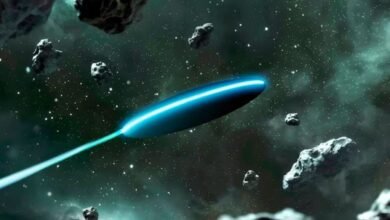
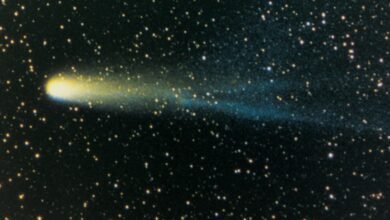
The cosmos offered us another fleeting glimpse of something truly extraordinary, and then, just as quickly, it was gone. Can you imagine the collective gasp, the shared pang of frustration, when the scientific community confirmed that 3I/ATLAS, that enigmatic interstellar visitor, had once again zipped past Earth without so much as a proper hello? It was a near miss, a cosmic whisper in the dark, reminding us just how much we still don’t know about the universe swirling around us. For a few frantic weeks, observatories across the globe — from the ATLAS network scanning the night skies to sophisticated orbital telescopes — tracked its peculiar trajectory, its non-gravitational acceleration hinting at something beyond a mere rock. (It truly was a fleeting whisper, wasn’t it? Like a stranger’s tantalizing perfume on a crowded street, gone before you can turn.) This wasn’t just another comet; this was another Oumuamua-like object, an alien artifact, perhaps, or at least a messenger from another star system, brushing tantalizingly close to our planetary doorstep. The internet buzzed with theories, from natural phenomena to something far more deliberate, and then, silence, as it receded into the inky blackness. But while most of us sighed in resignation, one prominent voice, that of Harvard Professor Avi Loeb, didn’t see a missed opportunity so much as a renewed call to action. He saw the flyby of 3I/ATLAS not as an end, but as a beginning, a powerful affirmation of his long-held belief that we need to fundamentally rethink our approach to finding extraterrestrial intelligence. He’s got a plan, a rather audacious one, for how humanity can finally bridge the cosmic divide, and it’s about far more than just passively listening.
The Enigmatic Visitor: 3I/ATLAS’s Close Shave
Let’s rewind to those tense weeks. The discovery of 3I/ATLAS sent ripples through the astronomical community, mirroring the excitement and bewilderment that accompanied Oumuamua in 2017. This object, designated “3I” for interstellar interloper, and “ATLAS” for the asteroid terrestrial-impact last alert system that first spotted it, exhibited a series of baffling characteristics. Its brightness curve suggested an unusual shape, perhaps elongated, or even flat. More critically, its trajectory showed an inexplicable acceleration, a “push” that couldn’t be fully accounted for by solar radiation pressure or outgassing from ice, typical of comets. “It was like watching a car drive by that suddenly speeds up without anyone pressing the pedal,” remarked Dr. Lena Petrova, a planetary scientist at Caltech, during a recent online seminar. “Our models just couldn’t quite fit it perfectly. There was always this residual anomaly.”
The collective hope was that as 3I/ATLAS neared its closest approach to Earth, we would be able to deploy advanced telescopes, perhaps even future space missions, to get a closer look. Imagine the thrill, the sheer awe, of resolving its surface, of seeing something truly alien up close for the very first time. But alas, our current technology, while impressive, simply isn’t equipped for such agile, last-minute intercepts of fast-moving interstellar objects. It passed, a silent ghost from another star, leaving behind a trail of unanswered questions and a growing sense of urgency among those who believe we are not alone.
Professor Avi Loeb: A Maverick Voice in Astrophysics
This brings us to Professor Avi Loeb, the former chair of Harvard University’s astronomy department, a man who has become synonymous with challenging scientific orthodoxy. Loeb isn’t just an astrophysicist; he’s a philosopher of the cosmos, constantly pushing the boundaries of what we consider plausible. You might remember his controversial yet compelling theories surrounding Oumuamua, the first confirmed interstellar object. He famously suggested it could have been an alien probe, a piece of advanced technology rather than just a weirdly shaped rock. His outspoken views have often placed him at odds with mainstream scientific consensus, but he remains undeterred, even invigorated, by the skepticism.
“The greatest risk in science is not making a mistake, but failing to discover something new because we are too afraid to ask the right questions,” Loeb often states, his voice calm but resolute during interviews. “We cling to our familiar explanations, to what we know, and that can blind us to the truly transformative possibilities right in front of our noses.” His approach is refreshingly pragmatic: extraordinary claims require extraordinary evidence, yes, but we must first *look* for that evidence, even if it leads us down unconventional paths. He’s got an infectious enthusiasm, a deep-seated curiosity that I find incredibly inspiring, even if some of his peers roll their eyes.
Why We Missed Our Chance (and Why It Matters)
The flyby of 3I/ATLAS highlights a critical deficiency in our current approach to space exploration and the search for extraterrestrial intelligence. We are largely passive observers, listening for faint radio signals or analyzing light curves from distant exoplanets. When an object from outside our solar system zooms through, an object that could potentially carry clues about advanced civilizations, we are simply not ready. We lack the rapid-response capabilities, the agile space probes, the “interstellar net” to catch these cosmic fish.
“It’s like sitting on a pier with a fishing rod, waiting for fish to swim into your line, while countless exotic species are zipping past just beneath the surface, unnoticed,” Loeb explained in a recent podcast. “We need to become deep-sea divers, actively exploring, not just passively waiting.” The implications are profound. If we continue to miss these opportunities, we might be overlooking the very evidence that could confirm humanity’s place in a populated universe. Every missed object is a missed conversation, a missed lesson, a missed chance to expand our understanding of existence itself.
Loeb’s Vision: The Galileo Project and Beyond
This brings us to the core of Professor Loeb’s proactive strategy: the Galileo Project. Frustrated by the scientific community’s perceived reluctance to seriously investigate anomalies like Oumuamua and now 3I/ATLAS, Loeb co-founded the project with a clear mission: to bring the search for extraterrestrial technology from the fringes of speculation into the mainstream of scientific inquiry. The Galileo Project is not about listening; it’s about looking. It’s about building a robust, systematic framework for identifying and studying potential technosignatures.
The project has several key pillars:
- UAP Investigation: Deploying arrays of sophisticated telescopes and sensors to systematically observe Unidentified Aerial Phenomena (UAPs) in Earth’s atmosphere. This isn’t about chasing blurry videos; it’s about collecting high-quality, multi-spectral data to understand what these objects truly are. “We need to treat UAPs like any other scientific phenomenon, not a fringe belief,” Loeb insists.
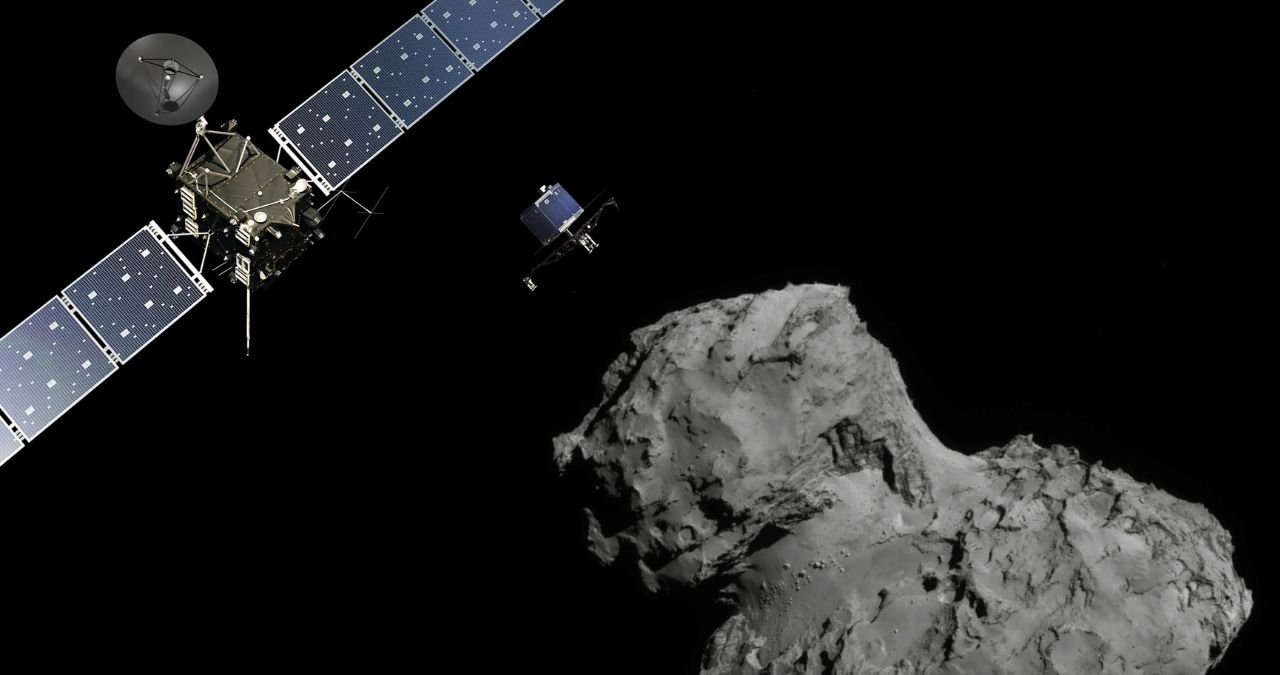
- Interstellar Object Reconnaissance: Developing the technology and protocols to rapidly identify, track, and, crucially, intercept future interstellar objects like Oumuamua or 3I/ATLAS. This might involve small, agile spacecraft that can be launched quickly to rendezvous with these fast-moving targets.
- Searching for ‘Technosignatures’: Beyond biosignatures (evidence of life), the project focuses on finding ‘technosignatures’ – signs of technology. This could be anything from artificial lights on exoplanets to industrial pollutants in their atmospheres, or even the remnants of advanced probes in our own solar system.
It’s a bold, ambitious undertaking, requiring significant funding and a shift in scientific mindset. But after the latest close call with 3I/ATLAS, many are starting to wonder if Loeb might be onto something truly essential.
From Passive Observation to Active Pursuit: Humanity’s Next Steps
Loeb argues that while SETI (Search for Extraterrestrial Intelligence) has traditionally focused on listening for radio signals, a more comprehensive approach requires us to actively pursue evidence of technology. This means not just observing, but preparing for active interaction. Imagine a future where, instead of merely watching 3I/ATLAS fade into the distance, we could have launched a small, autonomous probe, perhaps no bigger than a shoebox, powered by a light sail, to chase it down.
Concepts like Breakthrough Starshot, a project aiming to send tiny, light-sail-propelled probes to Alpha Centauri at 20% the speed of light, align perfectly with Loeb’s vision. Such technology, if miniaturized and adapted, could serve as our cosmic interceptors. We could, theoretically, have swarms of these tiny craft, patiently waiting for the next interstellar visitor, ready to deploy and gather invaluable data. It’s about shifting from a reactive stance to a proactive one, fundamentally changing humanity’s relationship with the vast, unknown universe.
The Interstellar Highway: What to Look For
If we are to actively search, what exactly should we be looking for? Loeb emphasizes that focusing solely on biosignatures (the chemical signs of life) might be too limiting. Advanced civilizations might not produce oxygen or methane in detectable ways. Instead, he suggests focusing on technosignatures, the unmistakable fingerprints of technology. These could include:
- Artificial lights: Unnaturally bright city lights on exoplanets, or even orbiting mega-structures.
- Industrial pollutants: Atmospheric compositions that indicate industrial activity rather than natural processes.
- Space debris: A ‘junkyard’ of discarded probes, broken satellites, or cosmic litter from another civilization’s space age, much like our own.
- Non-natural shapes or movements: Objects like Oumuamua or 3I/ATLAS with anomalous accelerations or highly geometric forms that defy natural explanation.
“Imagine finding a plastic bottle washed ashore on a pristine beach,” Loeb muses, painting a vivid analogy. “You know it wasn’t formed by nature. It’s a clear sign of intelligence. We’re looking for the cosmic equivalent of that plastic bottle, not just the unique shells.” This isn’t about proving aliens exist; it’s about systematically searching for evidence, wherever that evidence may lead.
Challenges and Skepticism: The Road Ahead
Of course, Loeb’s vision faces considerable hurdles. The scientific community, by its very nature, is conservative, demanding irrefutable evidence. Many still regard the search for alien artifacts as speculative, preferring to focus on more “conventional” astrophysics. Funding is another massive challenge; projects like the Galileo Project require significant investment, competing with established research priorities.
Then there’s the sheer vastness of space. The likelihood of an interstellar object like 3I/ATLAS passing close enough for us to study, let alone intercept, is incredibly low. And even if we find evidence of technology, how do we distinguish it from extremely rare natural phenomena? “The universe is full of surprises,” noted Dr. Kenji Tanaka, a senior researcher at the SETI Institute, in a recent conference. “We must be cautious not to prematurely attribute natural phenomena to artificial causes, as tempting as it might be.”
Yet, Loeb remains undeterred. He argues that the potential reward – the discovery of another intelligence – far outweighs the risks and challenges. “If we don’t look, we will never find,” he says simply, summarizing his unwavering philosophy.
The Philosophical Imperative: Why We Must Try
The bypass of 3I/ATLAS and the renewed urgency it brings to Professor Avi Loeb’s work is more than just a scientific quest; it’s a philosophical imperative. For millennia, humanity has gazed at the stars, wondering if we are truly alone. This fundamental question lies at the heart of our existence, shaping our understanding of life, intelligence, and our place in the cosmic tapestry. The search for extraterrestrial intelligence isn’t just about finding aliens; it’s about finding ourselves.
What would it mean for humanity if we were to discover an ancient, derelict probe from a long-lost civilization, or even an active one? It would redefine our purpose, our potential, and our limitations. It could spark a new golden age of scientific inquiry, technological advancement, and perhaps, a deeper sense of unity among humans. Loeb’s proposal, while ambitious, offers a tangible path forward, a blueprint for transforming our passive cosmic curiosity into an active, determined pursuit. The next time an object like 3I/ATLAS streaks through our solar system, perhaps, just perhaps, humanity will be ready not just to observe, but to reach out and touch a piece of the cosmos.
Frequently Asked Questions
| What is Professor Avi Loeb’s main proposal for contacting extraterrestrials after the 3I/ATLAS flyby? | Professor Avi Loeb advocates for a proactive and systematic search for technosignatures, moving beyond passive listening. His main proposal, embodied in the Galileo Project, involves deploying advanced telescopes and sensors to study Unidentified Aerial Phenomena (UAPs), developing rapid-response missions to intercept interstellar objects like 3I/ATLAS, and actively searching for technological remnants or signs of industrial activity from other civilizations. |
| What potential benefits could come from actively searching for and contacting extraterrestrial intelligence? | Actively searching for and potentially contacting extraterrestrial intelligence could lead to profound benefits, including a radical expansion of human knowledge about the universe, life, and technology. It could provide new insights into our own existence, foster global unity, drive unprecedented technological advancements, and inspire humanity to address its challenges with a broader, cosmic perspective. |
| How does the Galileo Project, led by Avi Loeb, aim to achieve its objectives? | The Galileo Project aims to achieve its objectives through three main pillars: 1) systematic investigation of UAPs using high-resolution sensor arrays, 2) developing capabilities for rapid reconnaissance and interception of interstellar objects, and 3) searching for ‘technosignatures’ – evidence of technology rather than just biological life – both in our solar system and beyond. |
| What are the primary challenges humanity faces in reaching or detecting extraterrestrial intelligence? | Humanity faces several primary challenges: the immense distances and time scales of space, the limited sensitivity and agility of current observational technology, significant funding requirements for ambitious projects, scientific skepticism towards unconventional approaches, and the difficulty in definitively distinguishing natural phenomena from potential technosignatures. |
| What does the future of interstellar exploration and the search for alien life look like according to Loeb’s vision? | According to Loeb’s vision, the future of interstellar exploration and the search for alien life involves a proactive, technological hunt. It includes deploying agile probes capable of intercepting fast-moving interstellar objects, using AI-driven analysis for vast datasets, and systematically observing our atmosphere for UAPs. This approach envisions humanity not just as passive listeners, but as active explorers and potential communicators in the cosmic neighborhood. |
Important Notice
This FAQ section addresses the most common inquiries regarding the topic.