Imagine the vibrant streets of Caracas, once pulsating with the rhythm of daily life and political fervor, now often hushed, sometimes erupting in protest, always shadowed by uncertainty. It feels like just yesterday, or maybe an eternity, that Nicolás Maduro stepped into the colossal shoes left by Hugo Chávez in 2013. The air was thick with expectation, hope, and a palpable sense of anxiety (a nation holding its breath, really, wondering what lay ahead). Could this former bus driver, a man known more for his unwavering loyalty than his fiery charisma, truly steer the complex, oil-rich ship of Venezuelan politics? His ascension marked a pivotal moment, ushering in an era that would redefine the country’s trajectory, impacting millions of lives in profound, often heartbreaking, ways. This isn’t just a dry chronicle of policy decisions; it’s a narrative woven with the daily struggles of ordinary citizens fighting for survival, the fierce ideological battles waged in public squares and private homes, and the relentless international scrutiny that has cast a long shadow over the nation. Getting a true, humanized grasp of Nicolás Maduro’s leadership means diving deep into a decade that has seen both steadfast defiance against external pressures and devastating internal decline, painting a complex portrait of resilience amidst relentless challenges in the heart of Venezuela politics. We’ll explore how his tenure has reshaped everything, from the economy to the very fabric of society.
It wasn’t an easy inheritance, that’s for sure. When Maduro took the helm, the foundation laid by Chávez, though popular with many, was already showing cracks beneath its socialist veneer. Oil prices, the lifeblood of the Venezuelan economy, were high, masking underlying inefficiencies and a burgeoning national debt. The country was deeply polarized, a legacy of Chávez’s charismatic but divisive rule, and this division would only deepen under Nicolás Maduro’s leadership. People were hopeful, yes, but also incredibly weary from years of intense political struggle. The transition itself, following Chávez’s death, was fraught with constitutional questions and an immediate, hotly contested election that Maduro won by a razor-thin margin. This early challenge set a precedent for the turbulent years to come, where legitimacy and popular support would constantly be debated, both internally and on the world stage.
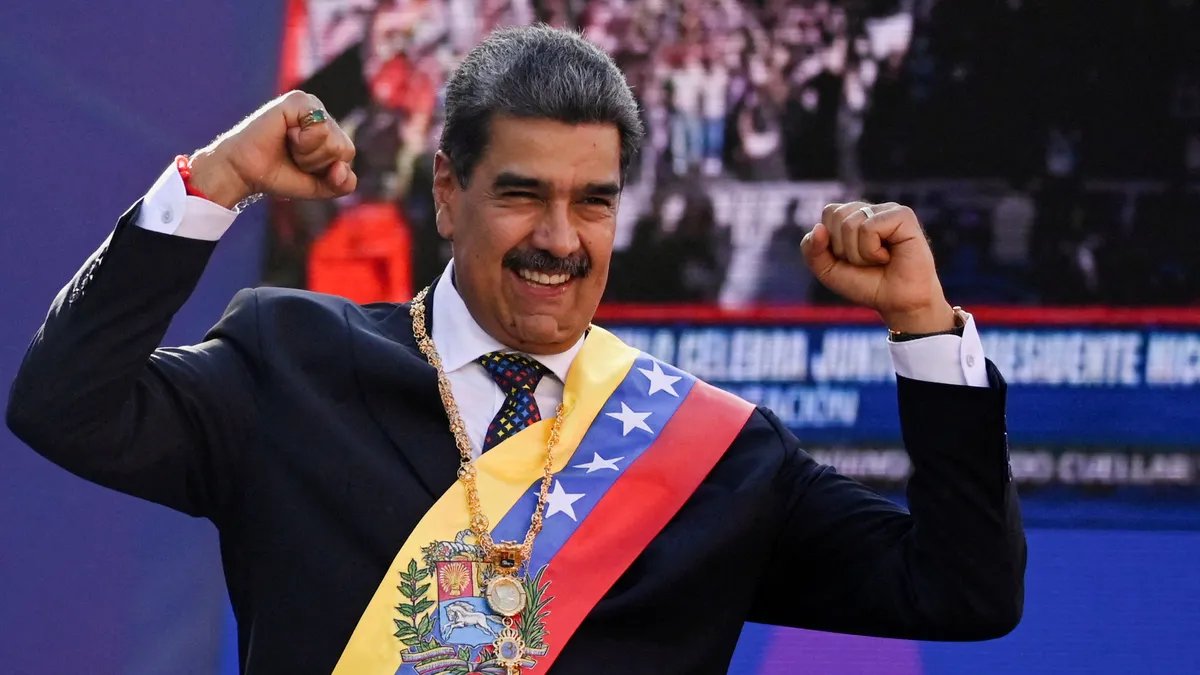
The Inheritance: A Nation at a Crossroads
Stepping into the presidency, Nicolás Maduro inherited a nation deeply committed to the socialist ideals of the Bolivarian Revolution, but also one heavily reliant on oil revenue and grappling with increasing social and economic imbalances. The “Chavista” model, characterized by extensive social programs funded by petrodollars, had undeniably improved living standards for many poor Venezuelans. However, it also fostered a culture of state dependency, neglected domestic production, and saw a significant rise in corruption. “Chávez was a hurricane, a force of nature,” recounted María Elena, a retired teacher from Maracaibo, her voice tinged with nostalgia and weariness. “Maduro, he tries to fill those shoes, but the wind changed, and the ship was already taking on water.” Indeed, the stage was set for immense challenges. The international price of crude oil, which had soared during Chávez’s time, began its precipitous decline shortly after Maduro took office, plunging from over $100 a barrel to less than $30 by early 2016. This was an absolutely catastrophic blow for a country where oil accounted for over 95% of export earnings and a significant portion of the national budget. Overnight, the government’s ability to fund its vast social programs, import essential goods, and maintain public services evaporated. It was like suddenly losing your main source of income, only on a national scale, and the repercussions were immediate and brutal. This sudden shift exposed the deep vulnerabilities of Venezuela’s oil-dependent economy and marked the beginning of its most severe economic crisis in modern history under Maduro’s leadership.
Economic Descent: The Oil Curse and Hyperinflation
The economic unraveling under Nicolás Maduro’s leadership is arguably the most defining, and certainly the most devastating, aspect of his presidency. The collapse of oil prices coincided with what many economists describe as severe economic mismanagement. Years of price controls, expropriations, and currency exchange controls had already crippled private sector production. With plummeting oil revenue, the government resorted to printing money at an unprecedented rate, igniting hyperinflation that quickly spun out of control. “You’d get paid, and literally, by the afternoon, the money was worth less,” explained Carlos, a former shop owner who now drives a taxi in Colombia. “We used to count money in bolívares; then we started weighing it because it was just paper.” The shelves of supermarkets, once bustling, became starkly empty. Basic necessities like food, medicine, and hygiene products disappeared, leading to widespread scarcity. People spent hours, sometimes days, in endless queues, hoping to find whatever scraps were available. The term ‘economic war’ was frequently invoked by Maduro’s government, blaming external actors and internal saboteurs for the crisis, particularly the increasingly stringent sanctions imposed by the United States and other international bodies. While sanctions undoubtedly exacerbated the country’s financial woes by limiting its access to international markets and capital, critics argue that the core issues were deeply rooted in domestic policy failures that predated and continued throughout the sanctions regime. The result was a dramatic contraction of GDP, estimated to have shrunk by over 70% since 2013, and one of the highest inflation rates in the world, at one point reaching over one million percent annually. It’s a staggering figure, almost impossible to comprehend unless you lived through it, watching your savings vanish into thin air.
Political Consolidation and Democratic Erosion
Amidst the economic turmoil, Nicolás Maduro’s leadership also saw a significant consolidation of political power, often at the expense of democratic institutions. The initial years of his presidency were characterized by increasing clashes with the opposition-controlled National Assembly, especially after the opposition won a supermajority in the 2015 parliamentary elections. This set the stage for a constitutional crisis, with the Supreme Court, largely loyal to Maduro, nullifying many of the assembly’s decisions. “The rules of the game changed, and then they threw out the scoreboard,” remarked an anonymous Caracas-based political analyst, shaking his head. “It became clear that the government would not tolerate any real checks on its power.” A pivotal moment came in 2017 when, following widespread anti-government protests that left over a hundred dead, Maduro moved to create a new, all-powerful National Constituent Assembly (ANC). This body, elected under controversial circumstances and largely boycotted by the opposition, effectively sidelined the legitimate National Assembly and rewrote parts of the constitution. This move was widely condemned internationally as a power grab and a definitive step towards authoritarianism. Subsequent presidential elections in 2018, which saw Maduro re-elected, were also heavily criticized by the international community and major opposition parties for a lack of transparency and fairness. Many nations, including the United States, refused to recognize the results, instead backing opposition leader Juan Guaidó as interim president. This dual presidency scenario further complicated Venezuela politics and deepened its international isolation, but Maduro’s grip on the military and key state institutions remained unshakeable.
The Social Cost: Migration and Humanitarian Crisis
The human toll of Venezuela’s crisis under Nicolás Maduro’s leadership is truly heartbreaking. The economic collapse and political instability have triggered one of the largest mass exoduses in recent history, with over 7 million Venezuelans (more than 20% of the population) leaving the country since 2015. Imagine having to leave everything you know, your home, your family, your entire life, just to find food or medicine for your children. That’s the reality for millions. This migration crisis has strained neighboring countries and created immense personal suffering. Basic public services like healthcare and education have deteriorated catastrophically. Hospitals lack essential medicines, equipment, and even running water, leading to preventable deaths. Schools struggle with absent teachers and students, many of whom are forced to work or simply cannot afford transportation. “We see children arriving in Colombia malnourished, without proper vaccinations, carrying the trauma of what they’ve left behind,” shared Laura Gómez, a humanitarian aid worker at a border crossing. “It’s not just an economic crisis; it’s a profound breakdown of society.” The daily struggle for survival has become paramount for those who remain. Access to clean water, reliable electricity, and affordable food are constant challenges. While the government has implemented some social programs, such as subsidized food boxes (CLAP), critics argue they are insufficient, politically motivated, and plagued by corruption. The sheer scale of the humanitarian emergency continues to alarm international organizations, which have often been restricted in their ability to provide full-scale assistance within Venezuela.
International Relations and Geopolitical Chess
Nicolás Maduro’s leadership in foreign policy has been characterized by a strategic pivot away from traditional Western allies and a strengthening of ties with countries like Russia, China, Iran, and Cuba. These alliances have been crucial in providing diplomatic support, economic lifelines, and even military assistance, helping Maduro’s government withstand immense international pressure. Russia, for instance, has invested heavily in Venezuela’s oil sector and provided military hardware, while China has extended billions in loans, often repaid in oil. These relationships have allowed Venezuela to circumvent, to some extent, the impact of sweeping sanctions imposed by the United States, Canada, and the European Union. These sanctions, targeting Venezuela’s oil industry, government officials, and financial transactions, were intended to pressure Maduro into democratic reforms and to step down. However, they have also been criticized for exacerbating the humanitarian crisis and providing the government with a convenient scapegoat for its economic failures. “The sanctions were meant to weaken Maduro, but they often only strengthened his narrative of external aggression and pushed him further into the arms of our adversaries,” opined a former Venezuelan diplomat, who requested anonymity. The relationship with the United States has been particularly tense, marked by mutual accusations of interference and hostility. Regionally, Venezuela’s standing has also shifted dramatically, moving from a key player in Latin American integration under Chávez to a pariah state for many of its neighbors, particularly those with conservative governments, leading to its suspension from Mercosur and other regional bodies.
Resilience and Resistance: The Venezuelan Spirit
Despite the overwhelming challenges and the profound changes under Nicolás Maduro’s leadership, the Venezuelan people have shown remarkable resilience. Opposition movements, though fragmented and often suppressed, have continued to fight for democratic change, organizing protests, advocating for international intervention, and participating in elections when conditions allowed, even if reluctantly. There’s a powerful spirit of resistance that persists, manifesting in countless ways, from the students on the streets demanding change to community organizers trying to rebuild local food networks. For those who remain in the country, daily life is a testament to human adaptability. Venezuelans have developed ingenious, if often desperate, strategies for survival: bartering goods, relying on remittances from relatives abroad, and finding creative ways to make ends meet in a dollarized, informal economy. While state institutions have weakened, grassroots initiatives and independent media (operating under immense pressure) continue to emerge, striving to provide support and information. Maduro’s ability to remain in power, despite the immense domestic and international pressure, is a complex phenomenon. It’s often attributed to the unwavering loyalty of the military, the backing of key international allies, the effectiveness of social programs (however limited), and the strategic division of the opposition. His government has proven remarkably adept at navigating crises, consolidating power, and maintaining a narrative of national sovereignty against perceived foreign interference. The future of Venezuela politics remains uncertain, but one thing is clear: the Venezuelan people continue to demonstrate incredible strength in the face of adversity.
Conclusion
Looking back at Nicolás Maduro’s years of leadership, it’s impossible to escape the profound sense of transformation, often painful, that Venezuela has undergone. What began as an inheritance of a polarized but oil-rich nation quickly spiraled into a complex humanitarian crisis, driven by economic collapse, political consolidation, and intense international pressure. Maduro’s tenure has been a relentless battle for survival, both for his government and for the millions of ordinary Venezuelans navigating unimaginable daily struggles. His ability to remain at the helm, defying predictions of his downfall, speaks volumes about the intricate dynamics of power, loyalty, and geopolitical maneuvering. Yet, beneath the headlines and political rhetoric, the true story is etched in the faces of those who have left, and those who remain, holding onto hope amidst the ruins. The path forward for Venezuela politics is anything but clear, but understanding this tumultuous decade is crucial for grasping the resilience of a people and the enduring, complex legacy of a leadership that has indelibly shaped a nation.
Frequently Asked Questions
| What are the main criticisms of Nicolás Maduro’s leadership? | Critics primarily point to the catastrophic economic mismanagement leading to hyperinflation and scarcity, the erosion of democratic institutions through political consolidation, widespread human rights abuses, and the severe humanitarian crisis that has prompted a massive exodus of Venezuelans. |
| How did the Venezuelan economy change under Maduro’s presidency? | Under Maduro, Venezuela’s economy experienced a dramatic collapse, driven by plummeting oil prices, severe mismanagement, and international sanctions. This resulted in an over 70% GDP contraction, hyperinflation, and a severe shortage of basic goods, transforming a once oil-rich nation into one facing extreme poverty. |
| What role have international sanctions played in Venezuela’s crisis? | International sanctions, primarily from the U.S. and its allies, have significantly impacted Venezuela’s economy by restricting its access to international financial markets and limiting oil sales. While intended to pressure Maduro’s government, they have also been criticized for exacerbating the humanitarian crisis and strengthening the government’s anti-imperialist narrative. |
| How has Maduro maintained power despite widespread opposition and crisis? | Maduro has maintained power through several key factors: unwavering loyalty from the military, strategic alliances with countries like Russia and China, effective control over state institutions, the implementation of some social welfare programs, and the fragmentation and strategic missteps of the Venezuelan opposition. |
| What is the current state of the humanitarian crisis in Venezuela? | The humanitarian crisis remains severe, characterized by widespread food insecurity, a crumbling healthcare system, limited access to clean water and electricity, and the ongoing mass emigration of over 7 million Venezuelans. International aid efforts are ongoing but face significant challenges. |
Important Notice
This FAQ section addresses the most common inquiries regarding the topic.