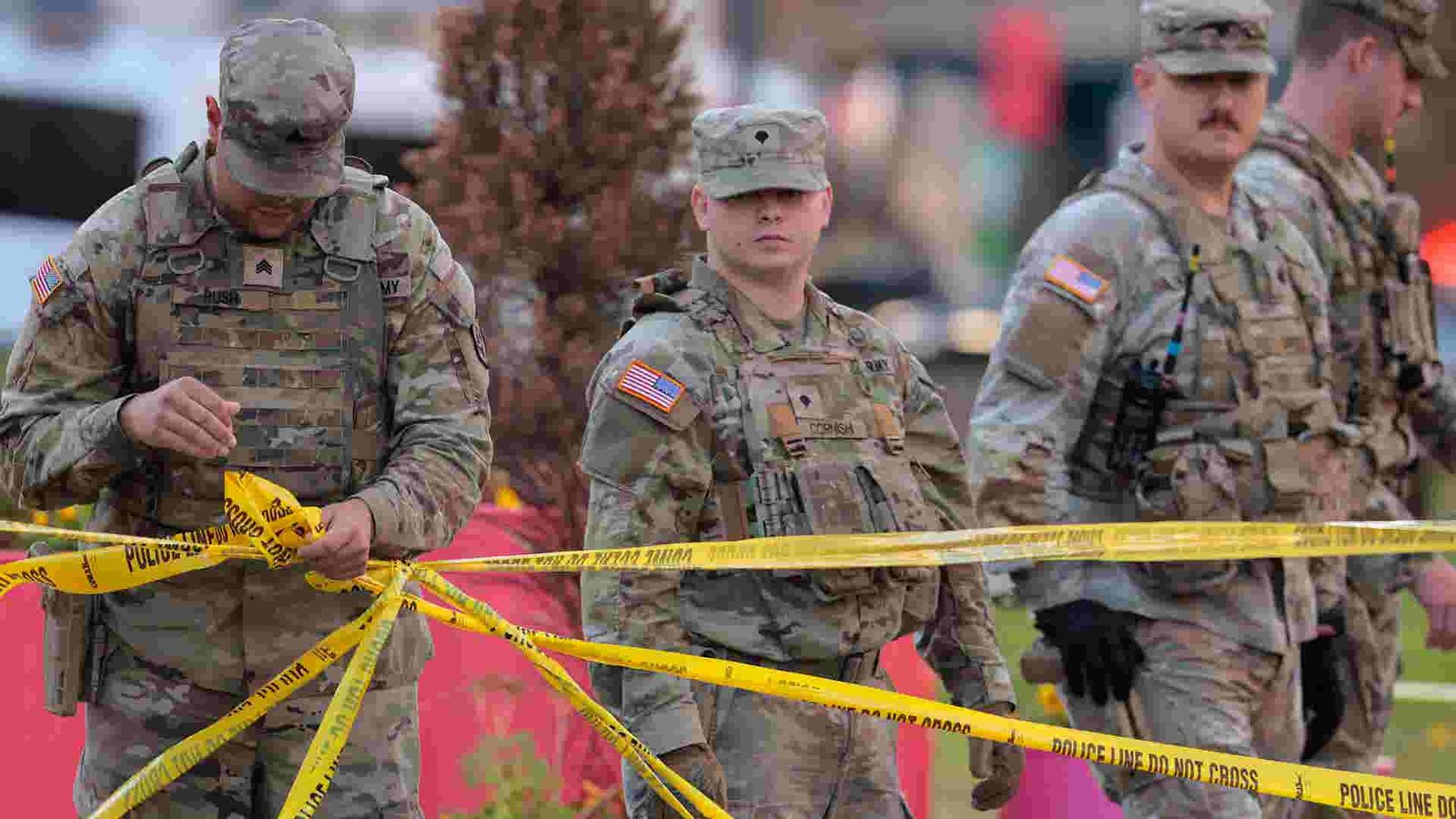
The air crackled with tension. You could almost taste it, couldn’t you? It was a Tuesday afternoon, and the sky over Washington D.C. was a bruised purple, threatening rain. News vans lined Constitution Avenue, their satellite dishes pointed skyward, transmitting breaking news. A small group of protesters had already gathered near the White House, their voices a low hum that promised to swell. And the news had just broken: President Trump had authorized the deployment of 500 additional National Guard troops to the city. This wasn’t just a routine security measure; it felt different, heavier. The decision to send more National Guard troops to DC comes amidst a backdrop of increasing political polarization and anxieties about potential unrest. It’s hard not to feel a knot of worry in your stomach, wondering what this means for the days ahead.
The official explanation, of course, was to ensure the safety and security of the city and its residents. But many saw it as a pre-emptive move, a show of force designed to deter any potential protests or demonstrations. One source close to the White House, speaking on condition of anonymity, said, “The President wants to make it abundantly clear that any attempts to disrupt the peace will not be tolerated. We’re prepared to take whatever steps are necessary to maintain order.” (Honestly, that statement felt more chilling than reassuring.) The deployment of the National Guard, even though presented as protective, raises serious questions about the role of the military in domestic law enforcement. Is this a necessary precaution or an overreach of federal power? The answer, as always, depends on who you ask.
The debate surrounding the National Guard deployment is fierce. Some argue that it’s a vital measure to protect federal property and prevent violence. Others see it as a heavy-handed response that could inflame tensions and further divide the country. I spoke to a local resident, Sarah, who lives just a few blocks from the White House. “I’m scared,” she admitted, her voice trembling slightly. “It feels like the city is becoming a fortress. I don’t know what to expect.” This sentiment is echoed by many in the community, who fear that the increased military presence will create a climate of fear and intimidation. This decision by President Trump has certainly ignited a firestorm of controversy, placing Washington D.C. squarely in the center of a national debate.
The Official Justification
The White House has consistently maintained that the deployment of the National Guard is purely for defensive purposes. Press Secretary Kayleigh McEnany stated in a press briefing, “The President’s priority is the safety of American citizens and the protection of federal property. The National Guard is there to support local law enforcement and ensure that any protests remain peaceful.” This official line emphasizes the need to maintain order and prevent violence, particularly in light of past incidents of unrest in DC.
However, critics argue that the deployment is disproportionate to the actual threat level. They point to the fact that many protests in Washington D.C. have been largely peaceful, and that local law enforcement is capable of handling most situations. The decision to send in the National Guard, they say, is a political one, designed to project an image of strength and control. “It’s about sending a message,” said one political analyst. “The President wants to show that he’s in charge and that he won’t tolerate dissent.”
Reactions from D.C. Officials
The response from local officials in Washington D.C. has been mixed. Mayor Muriel Bowser has expressed concerns about the increased military presence, arguing that it could undermine the city’s autonomy and create unnecessary tension. She has repeatedly called for the federal government to respect the District’s right to self-governance and to avoid heavy-handed tactics.
“We need to find a way to de-escalate the situation,” Mayor Bowser said in a statement. “The presence of the National Guard can be intimidating and can actually provoke conflict rather than prevent it.” Other local officials have been more supportive of the deployment, arguing that it’s a necessary measure to protect the city from potential violence. They point to the fact that Washington D.C. is a frequent target for protests and demonstrations, and that the National Guard can provide valuable support to local law enforcement.

The Role of the National Guard
The National Guard is a unique component of the U.S. military. It’s a reserve force that is primarily under the control of state governors, but can be federalized by the President in times of national emergency. In the case of Washington D.C., the National Guard is under the command of the President, as the District is not a state.
The National Guard can be used for a variety of purposes, including disaster relief, law enforcement, and military operations. In the context of Washington D.C., the National Guard is primarily being used to support local law enforcement and protect federal property. However, the deployment of the National Guard raises concerns about the militarization of domestic law enforcement. Critics argue that using military personnel to police civilians can erode civil liberties and create a climate of fear.
Legal Considerations
The legal authority for deploying the National Guard in Washington D.C. is based on the President’s constitutional power to protect federal property and maintain order. However, there are legal limitations on the use of the National Guard in domestic law enforcement. The Posse Comitatus Act generally prohibits the use of the military for law enforcement purposes, but there are exceptions, including situations where authorized by law or in cases of emergency. The legality of the National Guard deployment in DC has been challenged in court, with some arguing that it exceeds the President’s constitutional authority.
Potential Impact on Protests
The deployment of 500 additional National Guard troops to DC is likely to have a significant impact on future protests and demonstrations. The increased military presence could deter some people from participating in protests, while others may be emboldened to take more drastic action. The potential for clashes between protesters and the National Guard is a real concern, and any such incidents could further escalate tensions.
One protester, who wished to remain anonymous, said, “We’re not going to be intimidated by the National Guard. We’re going to keep fighting for what we believe in, no matter what.” However, other protesters expressed concern about the potential for violence. “I’m worried that things could get out of hand,” said one woman. “I don’t want to see anyone get hurt.”

The Broader Political Context
The decision to deploy the National Guard to DC must be seen in the context of the broader political climate. The country is deeply divided, and tensions are running high. The upcoming election is adding to the sense of unease, and many people are concerned about the potential for violence and unrest. The deployment of the National Guard is just one example of the increasing polarization and the erosion of trust in institutions.
This isn’t just about one event; it’s about a trend. A trend towards greater militarization, greater division, and greater uncertainty. And it’s a trend that should concern all of us. The future of Washington D.C., and the country as a whole, depends on our ability to bridge these divides and find common ground.
Long-Term Implications
What are the long-term implications of this decision? Will it normalize the use of the military in domestic law enforcement? Will it further erode trust in government? Will it lead to more violence and unrest? These are questions that we must grapple with as a nation. The answers are not easy, but they are essential if we want to preserve our democracy and build a more just and equitable society. The deployment of the National Guard to Washington D.C. is a stark reminder of the challenges we face, and the importance of engaging in thoughtful and informed dialogue about the future of our country.
I truly believe that we, as citizens, have a responsibility to hold our leaders accountable and to demand that they act in the best interests of the country. We must also be willing to listen to each other, even when we disagree, and to find common ground on the issues that divide us. The future of our democracy depends on it.
The situation in Washington D.C. remains fluid and uncertain. The deployment of the National Guard is a significant development, and its impact will be felt for weeks and months to come. It is crucial that we stay informed, engage in constructive dialogue, and work together to build a more peaceful and just society.
The decision to send more National Guard troops to Washington D.C. is undoubtedly a contentious one, sparking debate about federal overreach, the militarization of law enforcement, and the right to protest. As the nation watches and waits, the true impact of this deployment remains to be seen. Will it quell potential unrest, or will it fuel further division? Only time will tell.
Frequently Asked Questions
| Why did President Trump send more National Guard troops to DC? | President Trump authorized the deployment of 500 additional National Guard troops to Washington D.C., citing the need to ensure the safety and security of the city and its residents amidst rising tensions and potential unrest. |
| What are the potential benefits of deploying the National Guard? | Proponents of the deployment argue that it can help prevent violence, protect federal property, and support local law enforcement in maintaining order during protests or other disturbances. |
| How is the National Guard typically implemented in situations like this? | The National Guard is typically used to support local law enforcement by providing security, assisting with crowd control, and protecting infrastructure. They operate under the command of either the state governor (in most cases) or the President (in the case of Washington D.C.). |
| What are the potential challenges or criticisms of deploying the National Guard? | Critics argue that deploying the National Guard can lead to the militarization of domestic law enforcement, erode civil liberties, create a climate of fear, and potentially escalate tensions between protesters and authorities. Some also question the legality and appropriateness of using the military for civilian policing. |
| What are the potential future implications of this deployment? | The long-term implications include the potential normalization of military involvement in domestic affairs, a further erosion of trust in government, and increased political polarization. It could also influence future decisions regarding the use of federal forces during times of civil unrest. |
Important Notice
This FAQ section addresses the most common inquiries regarding the topic.