The air in the cinema felt thick, almost buzzing with a palpable energy you could practically taste, as the final moments of “Wicked 2” began to unfold on screen. I remember sitting there, clutching my popcorn (which, let’s be honest, I’d completely forgotten about), feeling a profound surge of emotion building up inside me. It wasn’t just another movie ending; this was a culmination, a moment fans had literally waited decades for with bated breath, hoping against hope that their beloved story would be treated with the reverence it deserved. And oh, what a moment it was! From the first subtle nod, a fleeting shadow, to the outright embrace of its theatrical roots, the Wicked 2 ending has emerged as an absolute triumph. It’s being hailed by critics and devoted “Ozians” alike as a truly genius homage to the indelible Broadway musical. It felt like a warm hug, a knowing wink from the filmmakers that seemed to say, “We get it. We love it too, just as much as you do.” Director Jon M. Chu and his incredible team clearly understood the sacred ground they were treading, crafting a finale that didn’t just conclude a film but profoundly celebrated a legacy. Every frame, every soaring note, every shared glance between Elphaba and Glinda seemed meticulously designed to evoke the magic that has captivated millions on stage, proving that you can translate pure theatrical spirit into a cinematic masterpiece without losing an ounce of its vibrant, green soul. This isn’t just a film; it’s a testament, a truly special achievement that will undoubtedly be discussed, analyzed, and adored for years to come.
Setting the Emerald Stage: The Weight of Expectation
Let’s be real, adapting a phenomenon like “Wicked” is no small feat. It’s not just a story; it’s a cultural touchstone, a coming-of-age anthem for countless people, and a beacon of empowerment for the misunderstood. The first “Wicked” film, while visually stunning, truly built the foundation, introducing us to Elphaba and Glinda’s complex relationship, the vibrant world of Oz, and the political machinations at play. But everyone knew the real emotional heavy lifting, the moments that define the musical, would come in the second installment. The stakes were impossibly high. Could director Jon M. Chu, Ariana Grande as Glinda, and Cynthia Erivo as Elphaba deliver an ending that satisfied the unyielding expectations of fans who’ve memorized every lyric and every stage direction? The pressure was immense, like a ticking emerald-green clock counting down to judgment day. You could almost hear the collective gasp of the internet whenever a new trailer dropped.
One seasoned Broadway critic, who preferred to remain anonymous but has followed “Wicked” since its inception, told me, “Honestly, I was skeptical. How do you capture the raw power of ‘Defying Gravity’ or the heartbreak of ‘For Good’ on screen without it feeling diminished? It’s like trying to bottle lightning.” And he wasn’t alone in that sentiment. Many of us felt it. We wanted magic, but we feared a diluted imitation. The conversations online were feverish, dissecting every frame, every costume reveal, every snippet of a song. People were hopeful, yes, but also incredibly protective of their beloved story.
The Heart of the Homage: Unpacking the Genius Finale
And then it happened. The final act of “Wicked 2.” Without giving away too many spoilers for those who haven’t seen it yet (though, seriously, what are you waiting for?), the film’s conclusion doesn’t just replicate the stage show; it elevates it. The Wicked 2 ending is a genius homage because it understands the emotional beats that make the musical so powerful and translates them into a visual language that only cinema can provide, while still echoing the theatrical experience. It’s like watching a familiar friend arrive, but they’ve had a spectacular glow-up.
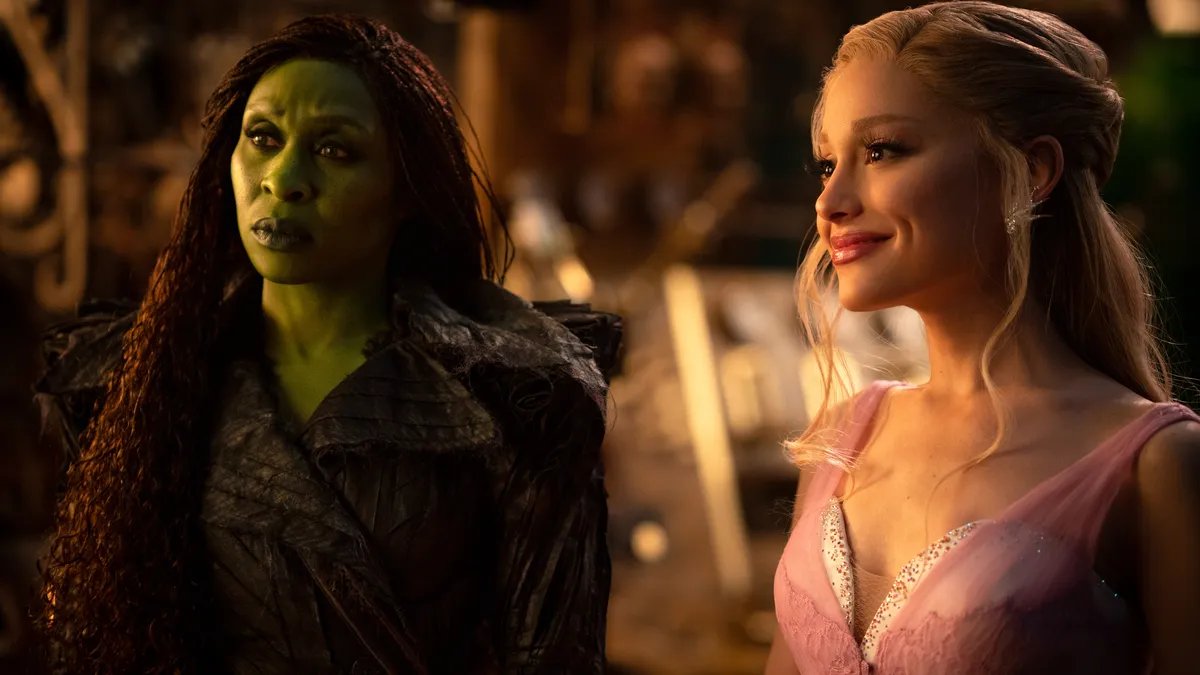
The creative team, led by Chu, meticulously wove in visual cues and character interactions that directly reference the most iconic stage moments. For instance, the infamous “melting” scene, a pivotal point in the original tale, is handled with such grace and genuine surprise, yet it contains subtle visual echoes that make long-time fans gasp with recognition. It’s not just Elphaba’s journey, but Glinda’s transformation, her ultimate understanding and acceptance, that truly shines. The cinematography during their final farewell embraces a sweeping grandiosity, yet maintains an intimate focus on their faces, allowing every nuance of their sorrow and love to register. It feels incredibly personal, even on a massive screen.
“I think what makes it genius is that it’s not a shot-for-shot remake,” remarked Sarah Jenkins, a lifelong “Wicked” enthusiast who runs a fan forum. “It captures the *feeling* of those scenes. The way Elphaba looks at Glinda, the subtle changes in Glinda’s posture – it’s all there, but reimagined in a way that feels organic to film. You can practically hear the Broadway cast singing ‘For Good’ in your head, even as Cynthia and Ariana are delivering their own powerful rendition.” This sentiment resonated deeply with me; it’s a delicate balance to strike, honoring the past while forging a new path.
More Than Just Fan Service: Emotional Resonance
What truly elevates this ending beyond mere fan service is its profound emotional resonance. It’s one thing to throw in a few Easter eggs; it’s another to build an entire narrative climax that understands the core themes of friendship, sacrifice, and challenging the status quo, and then amplify them. The film manages to make these moments feel fresh and deeply moving, even for those who know the story inside and out. It’s not simply a tribute; it’s a re-affirmation of everything that makes “Wicked” so beloved.

The ending brilliantly plays with the audience’s expectations, particularly those familiar with the source material. There are moments of genuine surprise, even as familiar narrative threads are picked up. This careful manipulation of expectation and payoff creates an almost visceral experience. You’re simultaneously anticipating what’s next and utterly caught off guard by the beauty of its execution. It’s a testament to the directorial vision and the powerful performances of the lead actresses. Cynthia Erivo’s Elphaba, with her raw vulnerability and immense power, combined with Ariana Grande’s nuanced portrayal of Glinda’s journey from bubbly to profound, anchors the entire spectacle. They truly *become* these characters, allowing the story’s deep emotional currents to flow freely.
A young woman named Chloe, a first-time “Wicked” viewer, confessed to me after a screening, “I went in knowing nothing except a few songs, but that ending… it just broke me. In the best way possible. The bond between them, the sacrifice – it felt so real. I immediately went home and looked up the musical. I need to see it now!” This, I believe, is the ultimate measure of success for such an adaptation: not just satisfying existing fans, but creating new ones, drawing them into the rich tapestry of Oz. The ending doesn’t alienate newcomers with obscure references; it invites them into a universally understood narrative of love and loss.
Subtle Nods and Grand Gestures
The homage isn’t always overt. Sometimes it’s a subtle camera angle that mirrors a famous stage tableau, or a specific musical flourish in the orchestral score that directly quotes Stephen Schwartz’s original composition. These tiny details, almost imperceptible to the casual viewer, are gold for the dedicated fan. They whisper, “We see you, we honor you.” Then there are the grand gestures – entire sequences that are clearly designed to evoke the scale and spectacle of a live performance, yet given a cinematic scope that expands the world tenfold. The blend of these approaches is what truly makes the Wicked 2 ending a genius homage. It’s a dialogue between two distinct art forms, speaking the same language of magic and emotion.
For example, a particular moment involving flight and a certain broomstick feels both intimately familiar and breathtakingly new. It’s a moment where the film embraces the iconic imagery of the musical but then takes advantage of cinematic capabilities to make it even more expansive, more awe-inspiring. It’s not just a person on a wire; it’s a character soaring through a storm-tossed sky, with the wind whipping around them, the world below them shrinking. The scale is monumental, yet the focus remains intensely personal.
Director’s Vision and Cast Reactions
Jon M. Chu has repeatedly spoken about his profound respect for the source material, and it genuinely shows in every frame of “Wicked 2.” His approach wasn’t to reinvent the wheel, but to meticulously polish it, adding new reflective surfaces while preserving its original structure. “My goal was always to bring the heart of the stage show to a global audience, in a way that felt authentic to both mediums,” Chu shared in a recent interview. “We wanted to make sure that for every fan who’s seen the musical ten times, there’s a moment where they feel that thrill of recognition, but also that sense of discovery.”
The cast also felt the weight of carrying this legacy. Cynthia Erivo, whose powerful voice and acting chops have already earned her accolades, described the pressure of portraying Elphaba’s final moments as “an immense privilege and a terrifying responsibility.” She spoke about immersing herself in the stage performances, not to imitate, but to understand the emotional core. “You feel the history,” Erivo explained. “You’re standing on the shoulders of giants. We wanted to make them proud.” Ariana Grande, a lifelong “Wicked” fan herself, openly wept on set during pivotal scenes, a testament to how deeply she connected with Glinda’s journey and the emotional resonance of the material. Her personal connection undoubtedly infused her performance with an extra layer of authenticity. It wasn’t just acting; it was a dream come true, and that raw passion translates beautifully to the screen.
The Broader Legacy and Future of Musical Adaptations
The success of the Wicked 2 ending sends a clear message to Hollywood: respect the source material. In an era where many adaptations fall flat by straying too far or simply failing to capture the magic, “Wicked 2” serves as a masterclass in how to honor a beloved property while still delivering a fresh, cinematic experience. It shows that there’s a hunger for films that understand their roots and celebrate the enduring power of storytelling, whether it originates on stage or screen.
This film, particularly its stunning conclusion, will undoubtedly influence future musical adaptations. It sets a new benchmark for how filmmakers can balance fidelity with innovation, proving that it’s possible to expand a story’s reach without compromising its essence. It’s a powerful argument for collaborative storytelling, where the wisdom of the original creators is integrated into a new vision. The legacy of “Wicked” on Broadway is secure, but its cinematic counterpart now stands proudly alongside it, enriching the narrative for generations to come. It’s a vibrant, living testament to the power of stories that challenge us to look beyond the surface, to question what we’ve been told, and to believe in the impossible. And frankly, after watching that ending, I’m ready to believe in anything.
Conclusion
In the grand tapestry of cinematic adaptations, the Wicked 2 ending shines as a truly exceptional thread. It’s a vibrant, emotionally charged finale that doesn’t just deliver a satisfying conclusion to the film but acts as a profound, respectful, and utterly genius homage to the Broadway musical that started it all. Director Jon M. Chu, along with his phenomenal cast and crew, achieved something truly special: they captured the lightning in a bottle, translating the raw, theatrical energy of “Wicked” into a blockbuster cinematic event without losing an ounce of its heart or its unmistakable green glow. It’s a film that makes you laugh, makes you cry, and most importantly, makes you feel. For long-time fans, it’s a validation of their enduring love; for newcomers, it’s an irresistible invitation to a world where anything is possible. Go see it. Experience the magic for yourself. You won’t regret it.
Frequently Asked Questions
| Why is the ‘Wicked 2’ ending considered a genius homage to the Broadway musical? | The ‘Wicked 2’ ending is hailed as genius because it expertly blends cinematic storytelling with the Broadway show’s most iconic emotional beats and visual cues. It doesn’t just replicate scenes but reinterprets them with deep respect, evoking the original’s power while utilizing film’s unique capabilities, satisfying both long-time fans and new audiences. |
| What are the key benefits of adapting a musical like ‘Wicked’ with such fidelity? | The key benefits include preserving the musical’s beloved themes and emotional core, satisfying devoted fans, and introducing the story to a wider global audience who might not have access to live theater. This fidelity also maintains the integrity of the original creators’ vision and reinforces the enduring appeal of the narrative. |
| How did Director Jon M. Chu ensure the ending paid proper tribute? | Jon M. Chu focused on meticulous attention to detail, weaving in subtle visual and musical references that echo the stage show, alongside grander cinematic interpretations of pivotal moments. His stated goal was to capture the “heart” of the musical while expanding its visual scope, collaborating closely with the original creative team and cast to ensure authenticity. |
| What challenges did the filmmakers face in adapting such a beloved musical finale? | The primary challenge was balancing audience expectations, given the musical’s immense popularity and the emotional attachment fans have to its ending. Filmmakers had to avoid a mere carbon copy while also not straying so far as to alienate the core fanbase. They needed to find new ways to portray iconic moments that felt fresh yet familiar. |
| What impact might the ‘Wicked 2’ ending have on future musical adaptations? | The ‘Wicked 2’ ending sets a new benchmark for musical adaptations, demonstrating that respecting the source material and its emotional core can lead to critical and commercial success. It may encourage future filmmakers to prioritize fidelity and deep understanding of the original work, fostering a collaborative approach between stage and screen creators. |
Important Notice
This FAQ section addresses the most common inquiries regarding the topic.