The buzz used to be electric on campuses across the United States. Walk through any university quad in late August, and you’d hear a vibrant symphony of languages – Mandarin, Hindi, Spanish, Arabic – a clear sign of the global talent flocking to American shores for higher education. It was a testament to the unparalleled quality and prestige of a US education, drawing the brightest minds from every corner of the world. For decades, the United States has been the undisputed leader, the dream destination for millions of ambitious young people seeking advanced degrees and unparalleled opportunities. But something has shifted. That vibrant hum, once a constant, now feels a little muted, a little less diverse. You might even feel a subtle chill in the air, a sense of unease creeping into admissions offices and international student services departments nationwide. We are witnessing a significant, even alarming, trend: the US sees steep decline in new international student enrollments, a phenomenon that has profound implications far beyond just university budgets. It’s a story of changing global dynamics, evolving perceptions, and policies that are making a once-irresistible magnet a little less shiny. This isn’t just about statistics; it’s about real lives, real dreams deferred, and a potential future where America’s academic landscape looks very different indeed. What’s going on here? And why should we all be concerned?
The whispers started a few years ago, growing louder and more insistent, until now they’re an undeniable roar. Data from the Open Doors Report, published by the Institute of International Education (IIE), paints a stark picture: after years of consistent growth, the number of new international students choosing the United States as their study destination has plummeted. We’re not talking about a gentle dip; this is a steep decline, impacting institutions from Ivy League giants to smaller regional colleges. For many universities, international students represent not just academic diversity but also a crucial revenue stream, often paying full, out-of-state tuition. Imagine the shockwaves this sends through their financial planning. “It’s like watching a vital artery slowly constrict,” lamented Dr. Evelyn Reed, Provost at a Midwestern public university, during a recent conference call I overheard, her voice tinged with genuine concern. “The talent pool is shrinking right before our eyes, and with it, our ability to innovate and compete.” This isn’t just a numerical problem; it’s a deeply human one, affecting students, faculty, and entire communities that have long benefited from this global exchange.
You might wonder, what does this actually look like on the ground? Well, think of a bustling campus tour group. A few years back, you’d easily pick out students from dozens of countries, their excited chatter filling the air. Now, while still diverse, the sheer volume of new faces from certain regions feels noticeably diminished. The common room in the international student dorm, once a hub of multicultural activity, might feel a touch quieter, its vibrancy slightly dimmed. This decline isn’t uniform across all fields, either. While some graduate programs, particularly in STEM, still attract significant numbers, the undergraduate cohort and certain humanities programs are feeling the pinch acutely. The question on everyone’s mind is, why? What has changed so dramatically to push away students who once saw the US as the absolute pinnacle of academic aspiration? It’s a complex tapestry woven with threads of policy, economics, and shifting global perspectives.
The Shrinking Classroom: A Closer Look at the Numbers
Let’s dive into the specifics, shall we? The data doesn’t lie, and it’s quite sobering. Recent reports indicate a significant drop, sometimes in double-digit percentages, for new international student enrollments. This isn’t just a blip; it’s a trend spanning several academic years. For instance, the 2017/18 academic year marked the second consecutive year of decline in new international student enrollment, a trend that unfortunately continued and, in some cases, accelerated in subsequent years, even before the global pandemic introduced its own set of challenges. When you examine the country-specific data, the picture becomes even clearer. While China and India still represent the largest sending countries, their growth rates for new students have either stagnated or seen noticeable drops. Other key markets, like South Korea and Saudi Arabia, have also shown significant decreases.
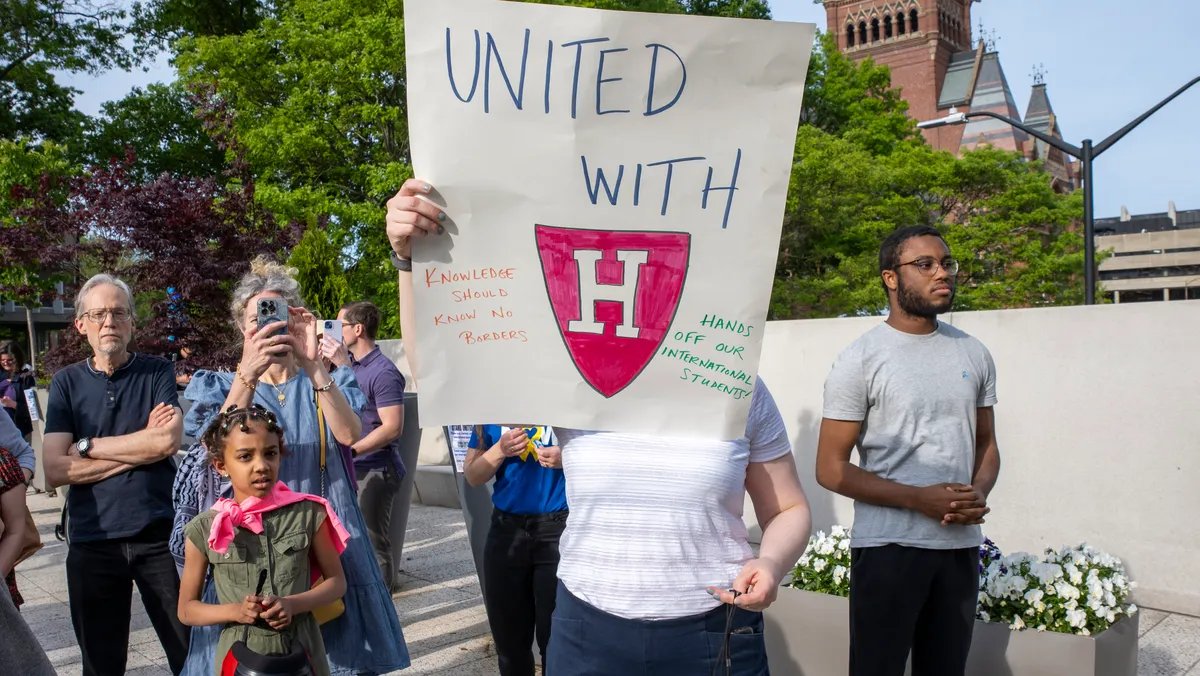
Imagine the faces of admissions officers, pouring over these numbers, perhaps at their desks late at night, the only sound the distant hum of the campus air conditioning. Sarah Chen, Director of International Admissions at a prominent West Coast university, shared her frustration with me over a lukewarm coffee. “We used to have waitlists for certain programs; now we’re working twice as hard to fill spots, especially for our non-STEM graduate programs,” she confided, running a hand through her hair. “The quality of applicants is still high, but the sheer volume? It’s just not there like it used to be. It’s disheartening, truly.”
Impact on Universities
The repercussions of this steep decline in new international student enrollments are multifaceted for American universities. Financially, it means less tuition revenue. Many public universities rely on these out-of-state tuition fees to subsidize in-state students and fund critical programs. A significant drop can lead to budget cuts, fewer course offerings, and even layoffs. Beyond finances, the academic environment suffers. International students bring diverse perspectives, enriching classroom discussions and fostering a global outlook among their American peers. Their presence is vital for research collaboration and innovation, particularly in STEM fields.
“It’s not just about the money, although that’s a huge piece,” explained Professor David Lee, who teaches international relations at a large state university. “It’s about the intellectual vibrancy. When you have students from twenty different countries debating a global issue, the insights are incredibly rich. When that diversity wanes, so does the depth of the conversation. It’s a loss for everyone.”
Why the Shift? Unpacking the Reasons
So, what’s behind this unsettling trend? It’s rarely one single factor, is it? Instead, it’s a convergence of several powerful forces, each contributing to the diminishing appeal of the US as a prime destination for global academic talent. Let’s peel back the layers and examine the root causes.
Visa Hurdles and Immigration Policies
This is arguably one of the most frequently cited reasons. Over the past few years, there’s been a perception, and sometimes a reality, of more stringent visa policies and a less welcoming immigration climate in the United States. Students report longer visa processing times, increased scrutiny during interviews, and a general feeling of uncertainty about their ability to stay and work after graduation.

“My visa interview felt like an interrogation,” recounted Li Wei, a graduate student from China, now studying engineering in Canada instead of his first choice, the US. “They asked about my parents’ income, my social media, every detail. My friend who applied for the same program to the UK had a much smoother experience. The uncertainty just wasn’t worth it.” This sentiment is echoed by many. The perception of the US being less welcoming directly translates into fewer applications.
Rising Costs and Financial Strain
Let’s be honest, higher education in the US is expensive. Very expensive. Tuition fees, living expenses, health insurance – it all adds up to a formidable sum. While American universities offer world-class education, the financial burden is increasingly difficult for many families to bear, especially when compared to more affordable options in other countries.
Consider this:
- Average annual tuition (public university, out-of-state): $27,000 – $40,000
- Average annual tuition (private university): $40,000 – $60,000+
- Living expenses (excluding tuition): $10,000 – $20,000 per year
These figures are often significantly higher than those found in Canada, the UK, Germany, or Australia, which are now actively recruiting international students with competitive scholarship packages. “My parents sold a portion of their land just so I could think about applying to the US,” shared a prospective student from India, who ultimately chose a university in Australia due to lower costs and better scholarship opportunities. “But even then, it felt like a gamble. The Australian university offered a partial scholarship that made it feasible.”
Global Competition and Alternatives
The world hasn’t stood still while the US grappled with its enrollment challenges. Other countries have proactively stepped up their game, recognizing the immense value that international students bring. Nations like Canada, Australia, the UK, and Germany have invested heavily in marketing, streamlined visa processes, and even offered post-study work opportunities that are more attractive and less convoluted than the Optional Practical Training (OPT) program in the US. They are making a compelling case, and students are listening.
“We used to see the US as the only real option for top-tier research in my field,” explained Dr. Anya Sharma, a professor of computer science now teaching in Vancouver. “But now, institutions in Toronto, London, and Berlin are making incredible strides. And their immigration pathways for skilled graduates are much clearer.” This global competition is fierce, and the US is finding itself in a more crowded marketplace than ever before.
Safety Concerns and Social Climate
While perhaps less quantifiable, the perception of safety in the US, particularly concerning gun violence, and the broader social and political climate, also plays a role. Parents sending their children thousands of miles away are naturally concerned about their well-being. News cycles that highlight social unrest or divisive rhetoric can undoubtedly influence decisions.
“My mother was very worried after seeing news reports about certain events in the US,” admitted Kenji Tanaka, a Japanese student who chose a university in New Zealand. “She felt it would be safer, and I didn’t want to add to her stress.” While the daily reality on most campuses is safe, the broader perception can be a deterrent.
Beyond the Numbers: The Broader Implications
The steep decline in new international student enrollments isn’t just an issue for universities; it’s a challenge for the entire nation. The impact ripples through various sectors, affecting the economy, innovation, and America’s global standing.
Economic Contributions
International students are not just students; they are economic contributors. They spend money on tuition, housing, food, transportation, and entertainment. This expenditure supports local businesses and creates jobs. A 2023 NAFSA report estimated that international students contributed over $40 billion to the U.S. economy and supported over 400,000 jobs. A significant drop in their numbers means a direct hit to these economic benefits. Imagine local coffee shops near campus seeing fewer customers, or landlords struggling to fill apartments that once housed eager foreign scholars. It’s a tangible economic ripple effect.
“Our town’s economy relies heavily on the university, and a good chunk of that comes from international students,” observed Martha Jenkins, owner of a bookstore near a large state university. “When they spend less, or when there are fewer of them, we feel it. It’s a real concern for small business owners like me.”
Innovation and Research
International students, especially those pursuing graduate degrees in STEM fields, are critical to America’s research enterprise. They fill labs, contribute to groundbreaking discoveries, and drive innovation. Many go on to work for leading tech companies or start their own ventures, creating jobs and further advancing the economy. The pipeline of global talent is essential for maintaining the US‘s competitive edge in science and technology.
“I’ve had international students make breakthroughs in my lab that American students, through no fault of their own, often don’t have the background or funding to achieve,” stated Dr. Lena Petrova, a research lead in biotechnology. “Their diverse educational experiences and relentless drive are invaluable. Losing that input would be devastating for our research output.”
Cultural Exchange and Soft Power
Beyond economics and innovation, international students serve as crucial cultural ambassadors. They build bridges between nations, fostering understanding and goodwill. When they return home, they often become leaders in their fields, retaining a positive impression of the United States and its values. This “soft power” is immeasurable and vital for America’s geopolitical influence. A decline in these exchanges weakens these vital connections.
“I learned more about different cultures sharing a dorm with students from Beijing, Cairo, and Berlin than I did from any textbook,” remarked Emily Davis, an American alumna. “That cultural exchange is priceless. It makes you a more empathetic, globally aware citizen.” The diminishing presence of international students means fewer such opportunities for American students as well.
What’s Being Done?
Recognizing the gravity of the situation, various stakeholders are working to address the steep decline in new international student enrollments. It’s a multi-pronged effort, involving both institutions and policymakers.
University Efforts
Universities are not standing idly by. Many are intensifying their recruitment efforts abroad, sending representatives to international fairs, and building stronger relationships with overseas high schools and educational consultants. They are also trying to be more flexible with scholarships and financial aid where possible, though budgetary constraints often limit these options. Some institutions are also focusing on improving the campus experience for international students, offering enhanced support services, and clear pathways for career development.
“We’ve really had to rethink our entire international recruitment strategy,” admitted Maria Rodriguez, an international student advisor. “It’s no longer enough to just have a great reputation; you have to actively engage, demonstrate value, and reassure students and their families about safety and future prospects.”
Policy Debates
At the policy level, there’s a growing awareness within government circles about the importance of international students. Discussions are ongoing about streamlining the visa process, making it more predictable and less intimidating. There’s also advocacy for clearer and more accessible post-study work options, which are a major draw for students considering other countries. However, political complexities often mean that significant policy changes can be slow and challenging to implement.
“We need to send a clear message: ‘You are welcome here, and we value your contributions’,” emphasized Senator Alex Thompson in a recent press statement. “Our immigration policies for students should reflect that, not deter them. This isn’t just about higher education; it’s about our future as a nation.”
The path forward isn’t simple, but the urgency is clear. Reversing the steep decline in new international student enrollments requires a concerted effort from all sides, a renewed commitment to openness, and a recognition of the invaluable role these bright minds play in shaping America’s future. It’s time to reignite that electric hum on our campuses and welcome the world back with open arms.
Frequently Asked Questions
| What is the primary reason for the steep decline in new international student enrollments in the US? | The decline is multifaceted, driven by a combination of more stringent visa policies and a less welcoming immigration climate, the high cost of US higher education compared to other countries, increased global competition from nations actively recruiting international students, and sometimes, concerns about safety and the social climate in the US. |
| What are the main benefits international students bring to the US? | International students contribute significantly to the US economy through tuition and living expenses, support innovation and research, particularly in STEM fields, and enrich the academic and cultural environment on campuses, fostering global understanding and acting as future ambassadors for American soft power. |
| How are US universities responding to this decline? | Universities are intensifying their international recruitment efforts, exploring more flexible financial aid options, and enhancing support services and career development pathways for international students. They are also working to build stronger relationships with international educational partners. |
| What challenges do international students face when considering the US? | Key challenges include navigating complex and sometimes uncertain visa application processes, the significant financial burden of tuition and living costs, limited post-study work opportunities compared to other countries, and concerns related to safety or the sociopolitical environment. |
| What could be the long-term impact if this decline continues? | A sustained decline could lead to significant financial strain for US universities, a diminished capacity for innovation and research, a less diverse and globally aware academic environment, and a weakening of America’s cultural and diplomatic influence on the world stage. |
Important Notice
This FAQ section addresses the most common inquiries regarding the topic.