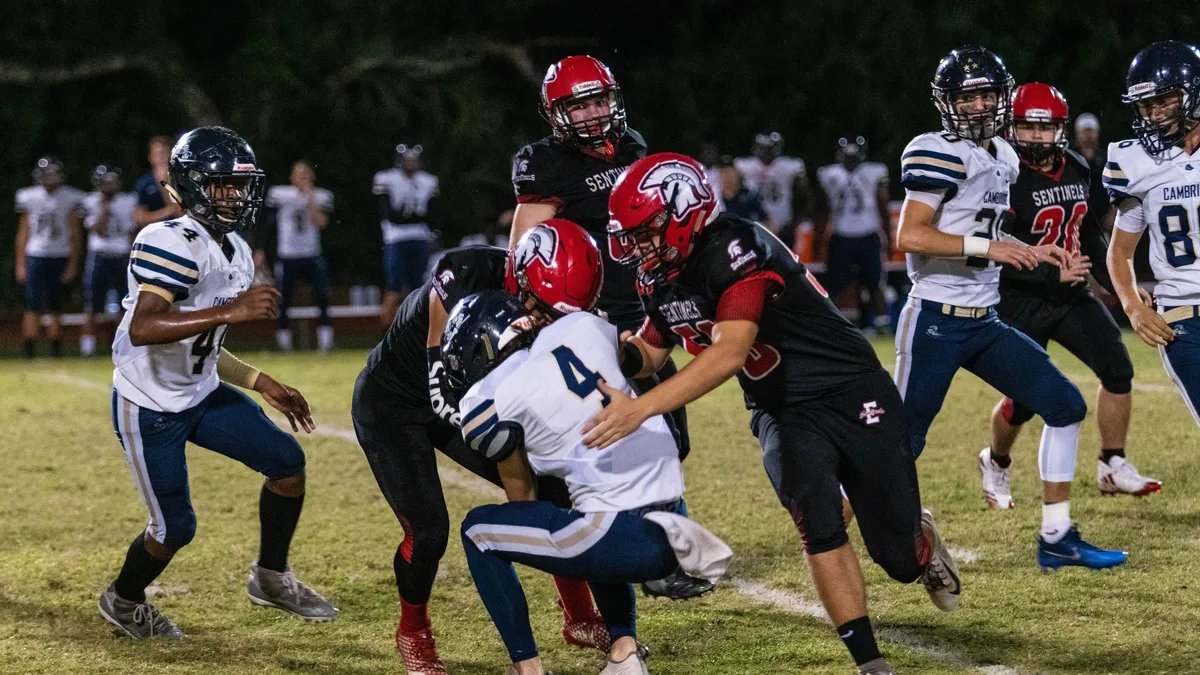
The crisp autumn air, the roar of the crowd, the bright stadium lights cutting through the twilight – it’s a scene etched into the very fabric of American culture: Friday night football. But imagine, for a moment, that pre-game ritual, the one that sometimes includes a public prayer, suddenly thrown into constitutional question. You might think we’ve settled this, right? Not quite. This past week, the news dropped like a fumbled pass: the Supreme Court rejects case about public prayers at football games. (Honestly, my first thought was, “Again? Haven’t we been over this ground?”). It wasn’t a ruling on the merits, mind you, but a refusal to even hear the case, leaving a lingering, almost palpable uncertainty for countless communities across the nation. This decision, or rather, non-decision, reignites a long-standing, often fiery debate about the delicate balance between religious freedom and the separation of church and state in public education. It’s a tension that plays out not just in legal briefs, but on the sidelines, in locker rooms, and in the hearts of students, parents, and coaches who just want to understand where the lines are drawn. For many, it’s about deeply held beliefs; for others, it’s about protecting every student’s right to feel included, regardless of their faith, or lack thereof. The legal landscape surrounding public school prayers continues to be a complex, often emotionally charged terrain, and this latest move by the highest court has certainly added another layer to the discussion.
The Lingering Echoes of a Previous Ruling: Why This Case Mattered
To truly grasp the significance of the Supreme Court’s rejection of this latest case, we need to rewind a bit. You might remember the high-profile 2022 decision in Kennedy v. Bremerton School District, where the Court sided with former football coach Joseph Kennedy, affirming his right to engage in personal prayer on the 50-yard line after games. That ruling sent ripples through school districts nationwide, prompting many to revisit their policies on religious expression. However, that case was very specific: it focused on a coach’s private, demonstrative prayer. The case the Supreme Court just declined to hear pushed the boundaries further, touching upon more organized, team-wide or event-wide public prayers, which many saw as potentially coercive. (It really makes you wonder, doesn’t it, how many shades of grey there are in “public” versus “private” when you’re wearing a school uniform under the lights?)
This recent rejected case, which originated from a different circuit, sought to clarify whether broader, more visible forms of prayer at school-sponsored events, particularly those involving student leadership or official encouragement, crossed the line of the Establishment Clause. “It felt like a natural follow-up,” remarked Sarah Jenkins, a constitutional law professor at a prominent East Coast university. “After Kennedy, there was an expectation that the Court would eventually need to define the outer limits of permissible religious expression in public schools, especially concerning student-led or organized activities that might feel pressured.” This rejection, then, isn’t a definitive statement on the constitutionality of such prayers, but rather a strategic sidestep, leaving the lower court’s ruling in place, which means the legal landscape remains fragmented and, frankly, a bit confusing for school administrators trying to do the right thing.
The Court’s Silence: What Does a Rejection Really Mean?
When the Supreme Court rejects a case, it’s not an endorsement or repudiation of the lower court’s decision. It simply means that fewer than four of the nine justices deemed the case worthy of their review. There are a myriad of reasons for this, often procedural or tactical, and it rarely speaks to the merits of the case itself. It could be that the justices felt the issue wasn’t “ripe” enough, or that there wasn’t a clear enough “circuit split” – meaning different federal appeals courts coming to opposing conclusions on the same legal question. (Imagine trying to solve a puzzle, but half the pieces are from entirely different boxes – that’s a circuit split in a nutshell for the Court.)
“This isn’t a ruling; it’s a non-ruling,” explained civil liberties attorney Mark Davison. “It means the legal precedent set by the lower court stands for now in that particular jurisdiction, but it doesn’t create a national precedent. So, what’s allowed in one state might still be challenged, or even explicitly prohibited, in another.” This judicial silence, while perhaps intended to allow more time for the legal issues to crystalize, leaves school districts in a tricky position. They have to navigate existing state laws, local policies, and the general guidance from Kennedy, all without a definitive word from the highest court on more communal forms of prayer. It’s like being handed a rulebook with a few missing pages right before the big game.
The Persistent Tug-of-War: Religious Freedom vs. Non-Establishment
The heart of this ongoing debate lies squarely within the First Amendment of the U.S. Constitution, which contains two crucial clauses regarding religion: the “Establishment Clause” and the “Free Exercise Clause.” The Establishment Clause prohibits the government from establishing a religion (often interpreted as not endorsing or favoring any religion), while the Free Exercise Clause protects individuals’ right to practice their religion freely. On the surface, they seem straightforward, but in practice, especially in the context of public schools, they are often in tension.
Advocates for more robust religious expression argue that allowing public prayers at football games, even those initiated by students, is simply an extension of their protected free exercise rights. “Why should students be forced to hide their faith just because they’re at a school event?” asked Reverend Thomas Miller, a local pastor and father of two high school athletes. “Their faith is a part of who they are, and expressing it, especially in a moment of team unity or personal reflection, should be welcomed, not suppressed.” On the other side, proponents of a strict separation argue that school-sponsored events, by their very nature, carry an implicit endorsement. When a prayer is announced over a loudspeaker, or led by a team captain in a huddle, it can create a coercive environment for students who don’t share that particular faith, or any faith at all. “My son felt incredibly uncomfortable when he was expected to bow his head for a prayer he didn’t believe in,” shared Maria Rodriguez, a parent from a neighboring district. “He loves football, but he shouldn’t have to choose between his team and his conscience.” It’s a valid point, isn’t it? No one wants to feel like an outsider in their own community, especially when they’re just trying to play a game.
Navigating the Ambiguity: What Schools and Students Can Expect Now
So, with the Supreme Court’s rejection, where do we stand? The answer, unfortunately, is “it depends.” For most schools, the legal framework remains guided by the *Kennedy* decision, which protects individual, private religious expression by employees (like a coach) and students. However, the legal landscape surrounding explicitly organized or officially sanctioned *group* prayers at school events is still murky. Here’s a quick breakdown of what this continued ambiguity implies:
- Individual Prayer Remains Protected: Students and coaches can still engage in private prayer, even if it’s visible, as long as it’s not disruptive or coercive. Think of a student quietly praying before a test or a coach kneeling alone.
- No Official School Endorsement: Schools cannot organize, promote, or officially endorse prayer at events. This means no PA announcements for prayer, no school-led prayer sessions, and no school personnel leading or participating in a way that suggests endorsement.
- Student-Initiated, Non-Disruptive Prayer: Students can generally engage in voluntary, student-initiated prayer, as long as it’s not disruptive and doesn’t involve school staff coercion. The challenge is defining “coercion” in a team setting. Is a team captain leading a prayer inherently coercive for a non-believing teammate? This is precisely the kind of question the Court avoided.
- Local Interpretation is Key: Without a clear national ruling on broader public prayers, local school boards and districts will continue to interpret existing precedents, potentially leading to varied policies from one town to the next.
“It’s going to be a patchwork,” predicted Dr. Emily Chen, a superintendent from a rural school district. “We’ll have districts that lean one way, and others that lean another, all trying to stay within the bounds of what they understand to be constitutional. It’s a headache, honestly, because you want to support religious freedom but also ensure inclusivity for every child.” This lack of a definitive national standard places a significant burden on local administrators, who are often caught between passionate community members with differing views.
Beyond the Gridiron: The Broader Impact on Public Education
While the immediate focus is on public prayers at football games, this legal limbo has broader implications for religious expression across all facets of public education. From classroom discussions to graduation ceremonies, the questions of when and how faith can be expressed in a public school setting are constantly being re-evaluated.
This situation highlights the core tension in a pluralistic society: how do we accommodate diverse religious beliefs without establishing or favoring any one? It’s not just about Christian prayers; it’s about all faiths, and even no faith at all. If one group is allowed to hold a public prayer, what about other religious practices? “We’re not just talking about Christianity anymore,” noted Anya Sharma, a local interfaith advocate. “Our schools are incredibly diverse. Whatever policy we have for one faith, we must have for all. And that includes protecting those who don’t wish to participate in any religious act at school.”
The conversation isn’t going away. In fact, by declining to hear this specific case, the Supreme Court has, in a way, ensured that the debate will continue to simmer at the state and local levels. We might see more grassroots efforts to push for specific policies, more legal challenges in lower courts, and perhaps, eventually, another case that makes its way up to the Supreme Court, offering a clearer opportunity for the justices to weigh in on the nuanced complexities of communal prayer in school-sponsored contexts. It feels a bit like a game of legal whack-a-mole, doesn’t it? One issue gets addressed, and two more pop up in its place.
The Supreme Court’s decision to reject the case about public prayers at football games is a moment of significant non-action, leaving the contentious issue of religious expression in public schools in a state of continued ambiguity. While individual, private prayers remain constitutionally protected, the question of more organized, potentially coercive prayers at school-sponsored events still lacks a definitive national answer. This ongoing legal tightrope walk underscores the profound difficulty in balancing the fundamental right to religious freedom with the equally important principle of non-establishment, ensuring that all students, regardless of their beliefs, feel respected and included in their educational environment. For now, the Friday night lights will continue to shine, but the legal and social debate over what happens under them will undoubtedly continue, evolving with each community’s unique interpretation and experience. It’s a conversation that touches the very heart of who we are as a diverse nation, and it’s far from over.
Frequently Asked Questions
| What was the recent Supreme Court decision regarding public prayers at football games? | The Supreme Court recently rejected a high-profile case concerning public prayers at football games, meaning they declined to hear the case. This was not a ruling on the merits of the case but rather a procedural decision, leaving the lower court’s ruling intact for that specific jurisdiction. |
| What are the broader implications of the Supreme Court’s rejection for public schools? | The rejection creates continued ambiguity for public schools regarding organized or officially encouraged public prayers at school-sponsored events. It reinforces that individual, private prayer is protected, but it does not provide clear national guidance on group prayers that might be perceived as coercive or endorsed by the school, leaving interpretation to local districts. |
| How does this decision relate to the previous Kennedy v. Bremerton ruling? | The 2022 Kennedy v. Bremerton School District ruling affirmed a football coach’s right to engage in personal, demonstrative prayer. The recently rejected case aimed to clarify if more organized, team-wide public prayers also fell under constitutional protection. The rejection means the Court did not extend or further define the scope of religious expression beyond the individual, private prayer established in Kennedy. |
| What challenges might schools face in interpreting current guidelines on prayer? | Schools face challenges in distinguishing between protected individual religious expression and potentially unconstitutional school endorsement or coercion. They must navigate differing community expectations, state laws, and the lack of clear Supreme Court guidance on group prayers, leading to varied policies and potential legal disputes at the local level. |
| Is this the final word on public prayer in schools, or can we expect future challenges? | No, this is likely not the final word. The Supreme Court’s rejection signals a continued, evolving debate. Legal experts anticipate more challenges, potentially leading to another case reaching the high court in the future, offering a clearer opportunity to define the boundaries of religious expression in public school settings. |
Important Notice
This FAQ section addresses the most common inquiries regarding the topic.