The late afternoon sun was beginning to dip below the horizon, casting long, dramatic shadows across the bustling auto repair shop parking lot. Sarah, a busy professional, just needed a quick check-up on her sleek, expensive Audi A6. She’d rushed over after work, hoping to beat the closing time, but a minor snag meant the technician couldn’t quite finish before the clock hit 5 PM. “I’m sorry, ma’am, but we’re done for the day,” the tech had said, a hint of weariness in his voice. Sarah, naturally, was a bit flustered. “But I really need my car for tomorrow morning,” she pleaded, thinking of her early client meeting. The tech, seemingly unmoved, simply shrugged. “Not my problem that you couldn’t pick up the car earlier,” he replied, a phrase that would echo with chilling irony just hours later. He assured her the car would be safe, just parked out front, ready for her to collect first thing. What could possibly go wrong? It was a simple, everyday interaction, or so it seemed. The thought of leaving her beloved luxury Audi overnight wasn’t ideal, but what choice did she have? Little did she know, this seemingly minor inconvenience was about to spiral into a full-blown nightmare, involving a mysterious crash, significant damage, and a very messy dispute over liability. This wasn’t just about a damaged car; it was about trust, responsibility, and the stark reality of what can happen when lines of duty blur.
The Unsettling Evening: A Car Left Vulnerable
Sarah recounted the evening with a mix of frustration and disbelief. She remembered the brisk, almost dismissive tone of the technician. “He said, ‘We’re not staying late for one car. Just leave it, it’ll be fine,'” she explained, still sounding a bit agitated even days after the incident. “I mean, it’s a reputable shop, right? You expect a certain level of care.” Her Audi, a symbol of her hard work and a significant investment, was left in the front parking area, not even tucked away in a more secure, gated section of the lot that she knew the shop possessed. It was just sitting there, exposed to whatever the night might bring. The tech, focused on clocking out, probably didn’t give it a second thought. For Sarah, it was a necessary compromise. “I had a tight schedule, and they were the only ones who could see me that day,” she shared, a sigh escaping her. It felt like a small gamble, a minor inconvenience, yet it set the stage for an unforeseen disaster that would leave her questioning everything.
The Shocking Discovery: Morning Brings Mayhem
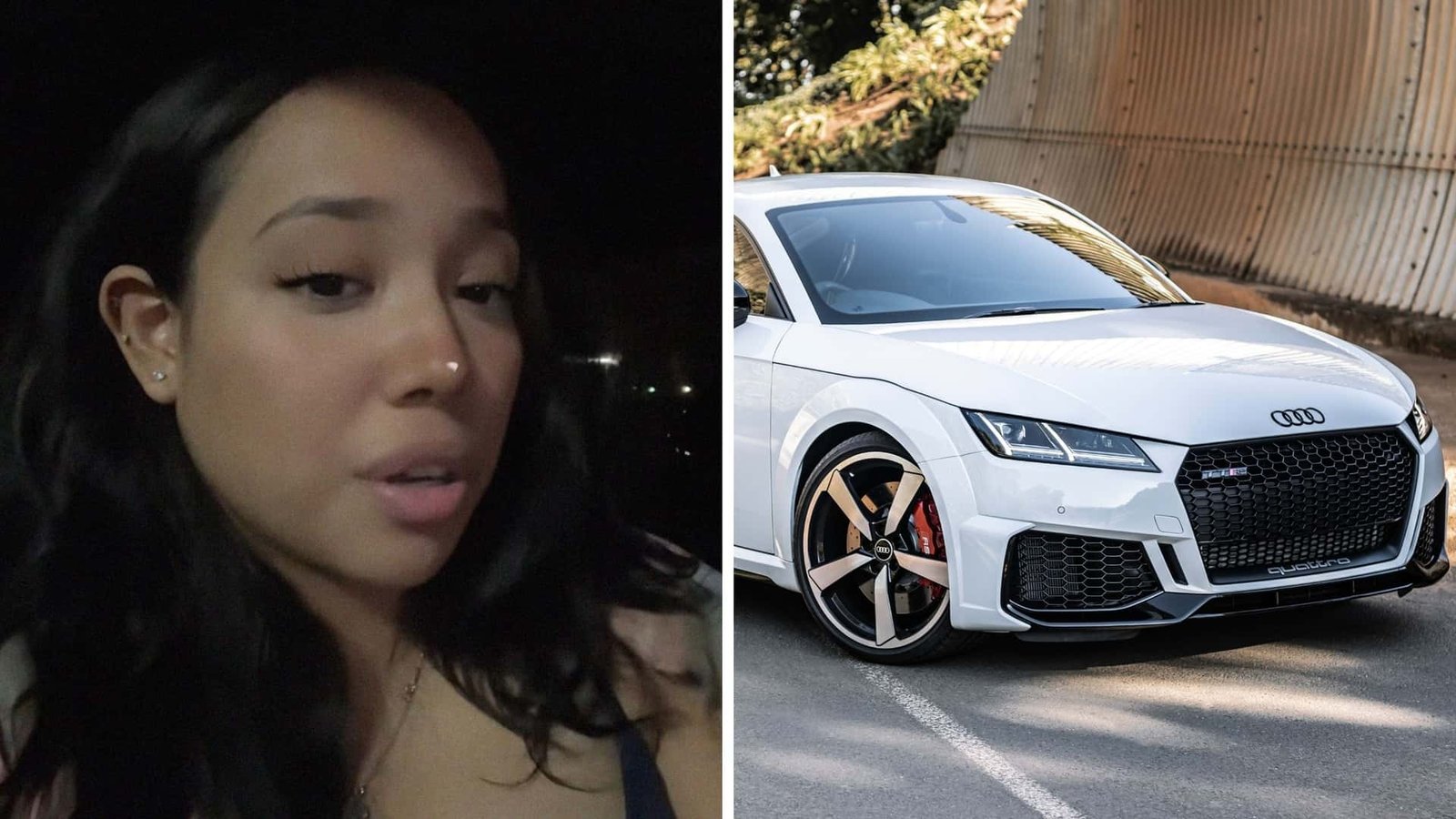
The next morning, the call came. It wasn’t the “your car is ready” call Sarah expected. Instead, it was the shop manager, his voice grave. “Ma’am, there’s been an accident,” he stammered. Sarah’s heart sank. She raced back to the shop, the short drive filled with dread. What she found was horrifying. Her beautiful Audi A6 was no longer pristine. The front end was crumpled, headlights shattered, the grille mangled. It looked as if it had been in a head-on collision. Glass shards glittered on the asphalt, reflecting the morning sun. A large dent marred the driver’s side door, suggesting a violent impact. It was clear this wasn’t a minor fender bender. Someone had crashed into her car, hard, right there in the repair shop’s parking lot, sometime during the night. The sight was sickening. “I felt a wave of nausea,” Sarah admitted, recounting the scene. “My hands were shaking. It was just… devastating.” The manager explained that a security camera had captured a blurry image of another vehicle, possibly a truck, speeding through the lot in the early hours, but the license plate was unreadable. The driver had simply vanished, leaving behind a scene of utter destruction and a trail of questions about auto repair shop liability.
Immediate Aftermath and Initial Reactions
The air was thick with tension. Sarah stood there, staring at her ruined car, while the shop manager made hushed calls. The technician from the previous evening was nowhere to be seen, likely avoiding the inevitable confrontation. “We have surveillance, but it’s not clear enough to identify the vehicle,” the manager told Sarah, his voice low. “We’ve already filed a police report.” The police had been there, taken notes, but without a clear suspect, their hands were tied. It was a classic hit-and-run, made even more infuriating by the fact that it happened on what should have been a secure property. Sarah felt a surge of anger. “This wouldn’t have happened if my car had been inside, or if someone had just stayed five more minutes,” she fumed, but the words felt hollow in the face of the crumpled metal. The manager offered condolences but little in the way of immediate solutions, leaving Sarah feeling isolated and confused about her next steps. This wasn’t just about replacing parts; it was about the disruption to her life, the stress, and the sheer inconvenience of dealing with a situation that she felt was entirely preventable.
Navigating the Maze of Responsibility and Insurance Claims
The question on everyone’s mind quickly became: whose fault is this? And, more importantly, whose insurance would cover the massive repair bill? Sarah immediately contacted her own insurance company. “They were sympathetic, but also very clear,” she recounted. “They said, ‘This happened on their property, so we need to investigate the shop’s responsibility.'” This immediately escalated the situation from a simple insurance claim to a complex dispute. The auto repair shop, naturally, was hesitant to accept full blame. “We have signs stating we’re not responsible for vehicles left overnight,” an anonymous shop employee later claimed, though Sarah couldn’t recall seeing such a prominent sign, especially not when she was being rushed out the door. This ambiguity is precisely where many such disputes get bogged down.

From a legal standpoint, the concept of a “bailment” comes into play here. When you leave your car at a repair shop, you’re essentially entrusting it to their care. This creates a bailment relationship, which implies a certain duty of care on the part of the shop, known as the “bailee.” The extent of this duty can vary, but generally, they are expected to exercise reasonable care to protect the vehicle. If the shop failed to provide adequate security, or if their policies for overnight storage were insufficient, they could be held partially or even fully liable. “Any business that accepts a vehicle for service, especially for overnight storage, implicitly accepts a level of responsibility for its safekeeping,” stated Attorney Michael Chen, a local legal expert specializing in property liability cases. “While disclaimers exist, they don’t always absolve a business of negligence. The key is to determine if reasonable steps were taken to protect the property.” This means investigating the shop’s security measures, the lighting, the presence of security personnel, and even the clarity of their policies communicated to the customer.
The Role of Surveillance and Shop Policy
The blurry surveillance footage was a double-edged sword. It proved that a third party caused the damage, which helps the shop avoid direct blame for the act of crashing. However, it also raised questions about the effectiveness of their security. If the cameras couldn’t even capture a clear license plate, were they truly a deterrent? What about the location where the Audi was parked? Was it in a well-lit area? Was it close to the street, making it an easy target? Sarah pointed out, “They have a fenced-off area in the back. Why wasn’t my car parked there if it was staying overnight?” This highlights a critical point: while a shop isn’t an insurer of every vehicle, they are expected to take reasonable precautions. If their standard practice for overnight vehicles is to park them in an unsecured, easily accessible area when a more secure option exists, that could constitute negligence. The shop’s written policy, if any, on overnight vehicle storage also becomes crucial. Was it clearly communicated to Sarah? Did she sign anything acknowledging the risks? Often, these details are overlooked in the rush of daily operations, only to become points of contention after an unfortunate incident.
The Human Cost: Beyond the Dented Fenders
Beyond the financial implications and legal complexities, this incident took a significant emotional toll on Sarah. “It’s not just the car,” she confided, her voice tinged with weariness. “It’s the stress, the endless phone calls, the feeling of being helpless. I rely on my car for work, for my kids. Now I’m stuck with a rental, dealing with insurance adjusters and lawyers, all because of someone else’s carelessness, and what feels like the shop’s indifference.” This sentiment is common in such situations. A car is often more than just a mode of transport; it’s a critical part of daily life, and its unexpected loss can disrupt everything. The incident forced Sarah to re-evaluate her trust in businesses and question the level of customer care she could expect. She felt disrespected by the initial “not my problem” attitude, a feeling that only intensified as she faced the aftermath. “It felt like they washed their hands of it,” she said, visibly upset. “Like my problem became *their* problem, but they still didn’t want to own it.” This kind of experience can erode customer loyalty and spread negative word-of-mouth far faster than any positive review.
Preventative Measures and Lessons Learned
This unfortunate incident serves as a stark reminder for both vehicle owners and auto repair shops. For customers, it underscores the importance of:
- Clear Communication: Always ask about overnight storage policies. Where will the car be parked? Is it secure?
- Document Everything: Take photos of your car’s condition when you drop it off. Ask for written confirmation of drop-off and pick-up times.
- Understand Disclaimers: Read any signs or forms about liability. If you’re uncomfortable, discuss it.
- Review Your Insurance: Know what your policy covers in situations where your car is not in your direct possession.
For auto repair businesses, the lessons are equally vital:
- Robust Security: Invest in high-quality, clear surveillance cameras, adequate lighting, and secure parking areas for overnight vehicles.
- Transparent Policies: Clearly communicate overnight storage policies to customers, preferably in writing.
- Employee Training: Ensure staff understand the importance of customer service and the implications of their actions, including how they handle vehicle drop-offs and after-hours situations.
- Proactive Communication: In the event of an incident, communicate openly and compassionately with the customer, outlining the steps being taken.
“This kind of incident highlights the critical need for clear communication and robust security protocols from both sides,” commented an insurance adjuster familiar with such claims. “It’s about managing expectations and mitigating risks. A little extra effort upfront can save a lot of headaches and disputes later on.”
The Ongoing Battle for Resolution
As of now, Sarah’s struggle continues. Her insurance company is in communication with the repair shop’s insurance provider, attempting to determine the exact proportion of liability. The repair costs for the damaged Audi are substantial, easily running into tens of thousands of dollars, considering it’s a luxury vehicle. She’s exploring her legal options, unwilling to simply absorb the costs of an incident she believes could have been prevented. The “not my problem” attitude, initially just a dismissive remark, has now become a central theme in her fight for justice. This situation underscores a broader point about consumer rights and business responsibility. When we entrust our valuable possessions to others, there’s an inherent expectation of care. When that care falls short, and a disastrous outcome occurs, the ripple effects extend far beyond the immediate damage, touching upon trust, fairness, and the core principles of good business practice. Sarah’s story is a vivid, frustrating example of how a simple oversight can lead to a costly, emotionally draining ordeal, a poignant reminder for everyone who leaves their car in someone else’s hands.
Frequently Asked Questions
| What legal recourse does a car owner have if their vehicle is damaged at a repair shop overnight? | A car owner generally has legal recourse based on the principle of “bailment.” When you leave your car at a repair shop, a bailment relationship is created, obligating the shop (bailee) to exercise reasonable care for your vehicle. If the car is damaged due to the shop’s negligence (e.g., inadequate security, improper parking), the owner may sue for damages or file a claim with the shop’s liability insurance. Evidence of the shop’s standard practices, security measures, and any disclaimers are crucial. |
| How can car owners protect themselves when leaving their vehicle at a service center? | To protect yourself, always ask about the shop’s overnight parking and security policies. Take photos of your vehicle’s condition (inside and out) when dropping it off. Get a written receipt detailing the drop-off time and the services to be performed. Understand any liability disclaimers the shop may have. Ensure your personal auto insurance policy covers damage when your car is not in your direct possession or on your property. If possible, avoid leaving your car overnight in unsecured areas. |
| What steps should an auto repair shop take to prevent such incidents and manage liability? | Auto repair shops should implement robust security measures, including well-lit, fenced, and monitored parking areas with clear, high-resolution surveillance cameras. They need to clearly communicate their overnight vehicle storage policies to customers, preferably in writing and with customer acknowledgment. Staff should be trained on proper vehicle handling, security protocols, and customer service. Maintaining adequate business liability insurance is also critical to cover potential claims arising from such incidents. |
| What are the common challenges in determining liability after a car is damaged on private property? | Determining liability often involves several challenges. If a third party caused the damage (e.g., a hit-and-run), identifying that party can be difficult, especially with poor surveillance. The shop’s level of negligence, if any, must be proven, which can be subjective. Contradictory accounts from the customer and shop, and ambiguous or poorly communicated disclaimers, further complicate matters. Insurance companies often dispute who is primarily responsible, leading to lengthy investigations and potential legal battles. |
| How might technology and evolving customer expectations impact future policies for vehicle storage at service centers? | Technology will likely lead to enhanced security, such as AI-powered surveillance for better object and license plate recognition, and advanced alarm systems. Customer expectations for transparency and convenience may push shops towards digital check-in/check-out processes, real-time vehicle tracking, and clearer digital liability agreements. There might also be a greater demand for insured, secure storage solutions, perhaps even with premium options for higher-value vehicles, adapting to a more tech-savvy and security-conscious clientele. |
Important Notice
This FAQ section addresses the most common inquiries regarding the topic.